




✨ AI Summary
- Discover the power of Fiat-to-RWA conversion in the evolving landscape of white-label neo banking apps!
- This feature simplifies the process of converting fiat to tokenized assets, eliminating traditional complexities and increasing user engagement.
- By integrating compliant payment rails, custody structures, and liquidity solutions, businesses can enhance operational efficiency and regulatory adherence.
- The future of crypto neo banking development lies in scalable, interoperable solutions that prioritize compliance and user experience.
- Embrace Fiat-to-RWA as the cornerstone of next-gen banking services to attract institutional partners and drive financial innovation.
Are you also wondering about the thought “Why This Moment Matters?”. Well, institutional momentum behind tokenized real-world assets (RWA) has moved from pilot projects to scaled adoption. On-chain statistics show RWA values growing rapidly and institutional entrants launching tokenized funds and custody products, evidence that enterprises expect regulated, auditable, and fiat-native access to tokenized assets. For enterprise decision-makers building or evaluating a white label crypto neo bank platform, integrating fiat-to-RWA rails solves a central question: how do our corporate and retail clients buy tokenized assets without detours through volatile crypto markets or complex custody chains? The answer creates a direct path from bank accounts to tokenized assets, building the legal, operational, and UX trust enterprise buyers require.
Understanding Fiat to RWA & How It Works in Web3 Neo Banking
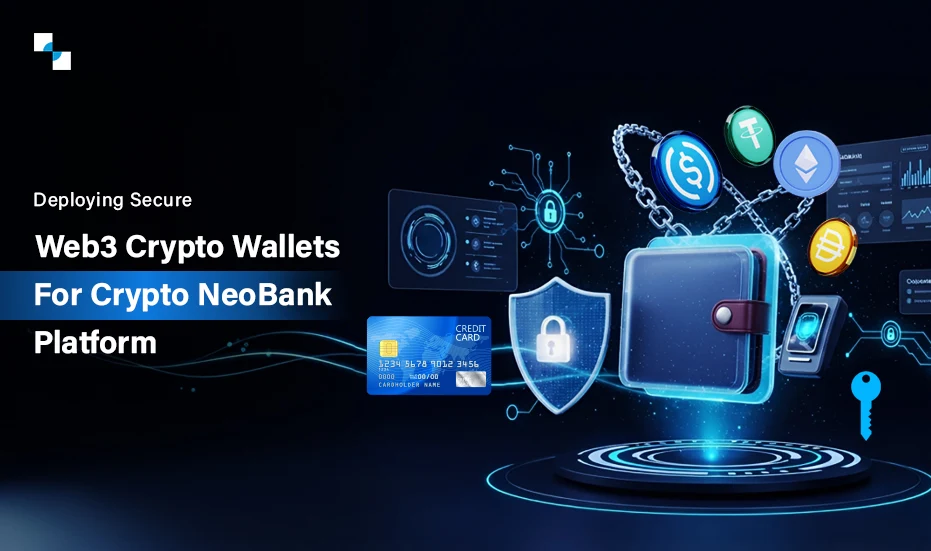
Fiat-to-RWA is a friction-free conversion flow: users deposit fiat (card, bank transfer, local rails such as UPI, Pix, SEPA) and receive a tokenized representation of a real-world asset — e.g., tokenized T-bills, tokenized real estate fractions, or RWA-backed fund units. A compliant fiat-to-RWA pipeline consists of payment rails, AML/KYC gating, licensed custodians or trustee structures, on-chain token issuance (often via a regulated token issuer), and a secondary market or marketplace for trading. This eliminates the traditional multi-step route (fiat → stablecoin → exchange → RWA) and drastically reduces operational complexity, time to position, and counterparty risk. Enterprises seeking a customized crypto neo bank development prioritize these rails because they convert everyday fiat into yield-bearing tokenized assets while preserving regulatory traceability and auditability.
Pain Points of Earlier Models in White-Label Neo Banking
Legacy attempts to combine fiat and tokenized assets exposed these recurring enterprise pain points:
- Fragmented Onboarding & Friction : Multiple conversions (fiat → stablecoin → token) force users through unfamiliar steps, causing drop-offs.
- Liquidity & Price Discovery Gaps : Small secondary markets for many RWAs made fair pricing and exits uncertain.
- Custody & Legal Ambiguity : Unclear custody chains and legal wrappers increased institutional counterparty risk.
- Regulatory Compliance Burden : Ad hoc integrations forced each bank to rebuild compliance flows for tokenized products.
- Poor UX for Enterprise Clients : Complex KYC journeys and reconciliation mismatches discouraged treasury and wealth teams.
These pain points reduced trust, slowed enterprise onboarding, and made lead conversion for white-label providers difficult. This is where the Fiat to RWA conversion comes into play in the current white label crypto neo bank apps. Let us scroll through the blog to have a deeper understanding of how this integration solves all the above-mentioned challenges of the traditional models.
How Fiat-to-RWA Conversion Feature in White-Label Neo Banking Apps Solve the Issues?
Businesses exploring customzied BaaS solutions often face concerns around stability, liquidity, and seamless integration of fiat with blockchain-powered assets. This is where Fiat-to-RWA conversion emerges as a practical bridge, ensuring smoother financial operations while keeping pace with enterprise demands. By embedding this feature into modern neo banking platforms, institutions can create a more credible, future-ready foundation for digital finance adoption. Here is how enterprise-grade white-label neo banks can deliver concrete value:
- One-Step On-Ramp (Fiat → Token) : Simplifies flows so users convert fiat directly to tokenized assets, increasing completion rates and customer LTV.
- Integrated Compliance Stack : Built-in KYC/AML and region-aware legal wrappers let enterprises offer regulated tokenized products without rebuilding compliance.
- Institutional Custody & Auditable Ledgering : Partnering with licensed custodians and using verifiable on-chain proofs reduces counterparty risk and supports auditability.
- Liquidity Integration & Market Access : Aggregated liquidity through token marketplaces and programmatic market-making delivers price discovery and exit options.
- Localized Payment Rails : UPI, Pix, SEPA, ACH, card rails—integrated to support global users and corporate treasury accounts, improving conversion speed and reducing FX friction.
- Enterprise UX & Reporting : Whitelabeled dashboards for treasury teams with reconciliation, tax reporting, and compliance exports accelerate enterprise procurement and reduce onboarding churn.
Result? Enterprises can market tokenized asset products confidently, with legal wrappers, clear custody, and a simple UX, restoring trust among conservative buyers and treasury functions.
Businesses can confidently align compliance, innovation, and financial reliability with white label neo bank services to thrive in the decentralized financial ecosystem.
Launch Your Own Fiat-to-RWA-Enabled White Label Crypto Neo Bank
Compliance Considerations for Fiat-to-RWA in Crypto Neo Banking
White Label Neo Bank solutions, regulatory integrity is the cornerstone of trust. Fiat-to-RWA conversions traverse a complex regulatory ecosystem encompassing AML, KYC, securities legislation, and cross-border payment protocols. Enterprises increasingly demand fully compliant infrastructures that ensure tokenized assets are legally recognized, auditable, and secure for treasury and investment operations. By embedding rigorous compliance measures, neo banking platforms not only fortify investor confidence but also mitigate legal exposure and accelerate seamless adoption of crypto-friendly neobanking solutions.
- KYC & AML Compliance : Ensure every user or corporate entity undergoes verification to prevent fraud and illicit activities.
- Regulated Custody : Partner with licensed custodians for the underlying real-world assets to guarantee security and auditability.
- Securities & Token Legal Structure : Define whether tokens are securities, commodities, or utility assets and comply with relevant jurisdictional laws.
- Cross-Border Payment Regulations : Ensure fiat rails comply with SEPA, ACH, UPI, or other local and international standards.
- Transparent Reporting & Audit Trails : Provide enterprise-ready dashboards and downloadable reports for reconciliation and regulatory audits.
- Licenses & Partnerships : Work with licensed financial institutions and trustees to mitigate operational and legal risk.
Why Compliance Matters?
Enterprises and investors adopt customzied crypto neo bank solutions only when risk, legal clarity, and auditability are guaranteed. Fiat-to-RWA features without compliance create friction, limit institutional adoption, and increase counterparty risk.
The Future of Fiat to RWA in the Blockchain Neo-Banking Development Landscape
The next phase of Fiat to RWA in the crypto neo banking development landscape will be about scale, interoperability, and institutional ecosystems. Expect three converging trends:
- Regulated tokenized funds at scale, large asset managers issuing tokenized ETFs and money-market instruments on permissioned and public chains.
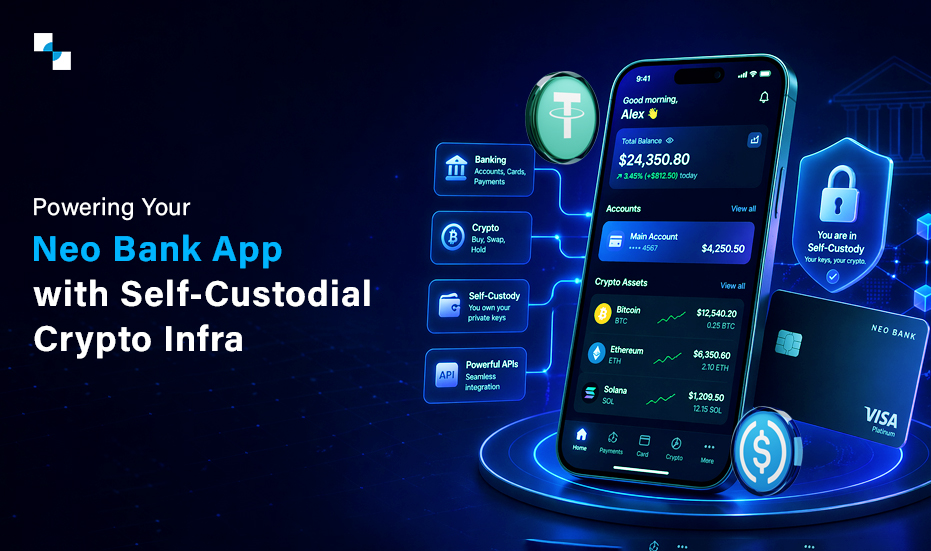
- Embedded fiat rails inside neo banks, native card and account rails that mint RWA tokens at point-of-sale or treasury decision (reducing latency to seconds).
- Interoperable custody & composability — legal wrappers and standardized token schemas enabling RWAs to work across DeFi primitives while remaining compliant.
These shifts will be accompanied by active regulatory scrutiny (e.g., targeted pauses and regional rules) that force white-label providers to bake compliance at the architecture level. For enterprises choosing neo bank app platform development, the time to embed fiat-to-RWA is now; it’s a competitive moat that converts conservative capital into on-chain yield while preserving enterprise control and governance.
The Bottom Line
Fiat-to-RWA is emerging as the backbone of next-generation banking. Regulatory clarity is accelerating, global banks are piloting asset-backed rails, and Web3 infrastructure is rapidly maturing with CBDCs and stablecoins. If you are vetting a crypto neo bank development company, make fiat-to-RWA the priority feature. Build legal clarity, ship attestation-backed custody, and offer a one-step fiat on-ramp; do that, and you will convert skepticism into signed agreements and scalable enterprise partnerships. For enterprises shaping the future of finance, the direction is clear:
- Build compliance-first White Label Neo Bank Services
- Integrate fiat, CBDCs, and stablecoins seamlessly
- Design interoperable ecosystems across chains and financial networks
- Engineer liquidity and real-time settlement from inception
Antier is a globally reputed white label neo banking app development company, driving innovation at the intersection of fiat, blockchain, and real-world assets. We specialize in customzied crypto neo bank platform development, embedding compliance, scalability, and trust into every deployment. From delivering fully regulated neo bank platforms in the Middle East to next-gen equity banking platforms in Asia, our expertise ensures your vision becomes reality. Partner with us to build your future-ready today.
Frequently Asked Questions
01. What is the significance of fiat-to-RWA integration in neo banking?
Fiat-to-RWA integration provides a direct and frictionless conversion from fiat to tokenized real-world assets, allowing clients to access these assets without navigating volatile crypto markets or complex custody chains.
02. What are the main components of a compliant fiat-to-RWA pipeline?
A compliant fiat-to-RWA pipeline includes payment rails, AML/KYC gating, licensed custodians, on-chain token issuance, and a secondary market for trading, ensuring regulatory traceability and auditability.
03. What pain points did earlier models of white-label neo banking face?
Earlier models faced issues such as fragmented onboarding, liquidity gaps, unclear custody chains, regulatory compliance burdens, and poor user experience, which hindered the adoption of tokenized assets.