


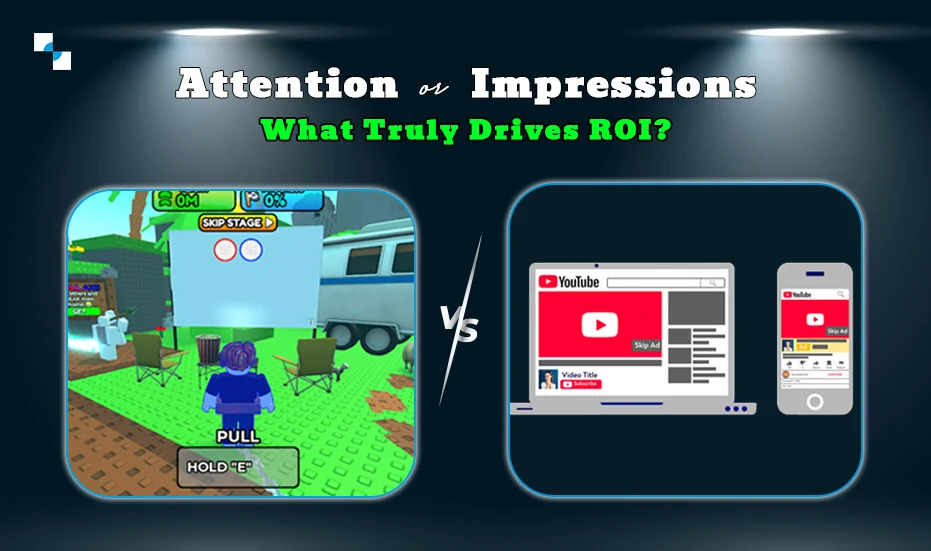

✨ AI Summary
- Global ad spend has crossed $1 trillion, but individual marketing budgets remain at 7.7% of company revenue.
- This discrepancy is driving a rethinking of marketing strategies.
- Traditional digital advertising, which focuses on visibility and reach, is being challenged by platforms like Roblox, which focus on participation and engagement.
- The blog suggests that attention, rather than impressions, is the real currency in today's marketing landscape.
- Roblox, with its immersive and interactive environments, can hold users' attention longer, leading to deeper engagement and stronger brand recall.
Global ad spend has crossed the $1 trillion mark for the first time, yet individual marketing budgets remain flatlined at just 7.7% of company revenue. The market is bigger than ever. The budgets are not. That gap is forcing a fundamental rethink. Growth expectations are rising, but the resources to achieve them are not.
For years, brands have relied on traditional digital advertising to scale visibility, more impressions, broader reach, and tighter targeting. That playbook still works for acquisition. But its efficiency is under pressure. Simultaneously, platforms like Roblox are introducing a different model, one built not on exposure but on participation, where Roblox game development for brands is emerging as a new engagement layer rather than a campaign channel.
This guide breaks down how traditional digital advertising and Roblox-driven experiences differ in cost, engagement, and return, and how brands can allocate budget more effectively between them.
What If Attention, Not Impressions, Is the Real Currency?
Most digital strategies are still built on a simple assumption: more visibility leads to more impact. That assumption worked when attention was easier to capture and less fragmented.
Today, visibility is abundant. Attention is not. This is forcing a shift in how performance is evaluated. Instead of asking how many people saw a message, the more relevant questions are starting to change:
- How long did someone engage?
- Did the interaction require participation?
- Was the experience remembered later?
These questions point to a different framework. Attention combines time, interaction, and cognitive involvement, and unlike impressions, it cannot be scaled purely through spend. It has to be earned.
Platforms built around participation are gaining strategic relevance. It is highly efficient at delivering messages, but less effective at holding attention beyond a few seconds. The result is a measurable gap between what is delivered and what actually influences behaviour, and that gap is precisely where platforms built around sustained engagement, such as Roblox, start to gain strategic relevance.
What Attention Looks Like Inside Roblox Experiences
Impressions measure visibility. They answer how often a message appears.
This is valuable for:
- Awareness campaigns
- Broad audience targeting
- Fast scalability
However, impressions operate within limited interaction windows. Most exposures last only a few seconds, with passive engagement and inconsistent recall. In practice, impressions indicate presence, not impact.
That difference becomes critical when budgets are constrained, and expectations are high. This is where the shift toward attention-driven environments becomes more relevant. Roblox represents a fundamentally different engagement model. Users do not scroll through content. They enter environments where they interact, explore, and return over time. Engagement is not confined to a moment. It unfolds across sessions.
Average time spent in virtual environments reaches approximately 168 mins per day among younger audiences, exceeding time spent on platforms like TikTok or Instagram.
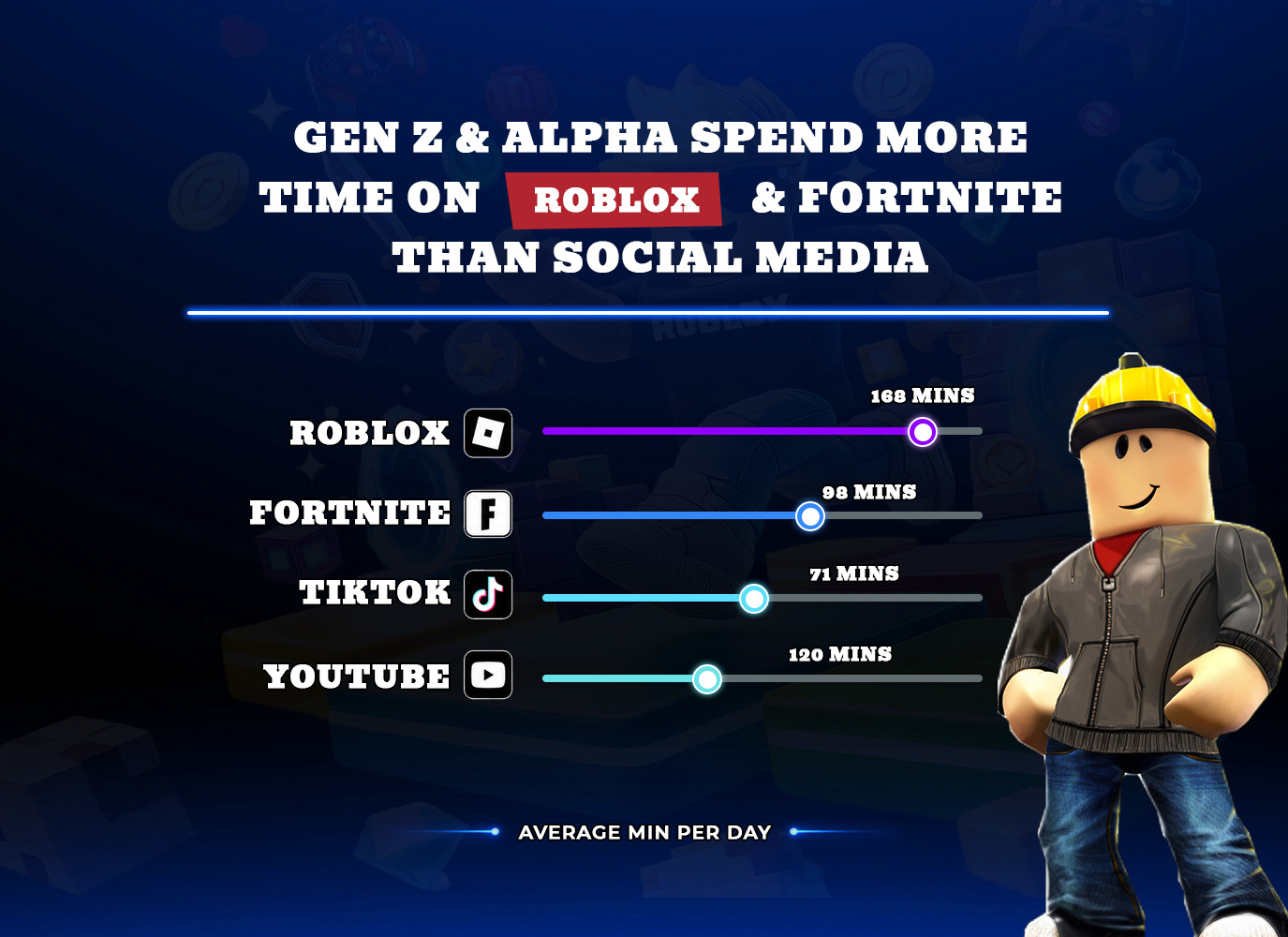
Source: State of Brands on Roblox & UGC Gaming 2025
This level of engagement changes how brands are experienced. Instead of a brief exposure, brands become part of an interactive environment. Participation replaces interruption. Time spent replaces impressions as the primary signal of value. This is where Roblox game development for brands moves beyond experimentation. It becomes a structured approach to building sustained engagement and a deeper brand connection.
Looking to connect with Gen Z where they actively spend time?
Roblox vs Traditional Advertising: A Practical Comparison
The difference between traditional digital advertising and Roblox is not just in format. It is in how value is created and measured. Traditional advertising is designed for scale. Roblox is designed for depth.
A clearer way to understand this is through direct comparison:
| Dimension | Traditional Digital Advertising | Roblox Experiences |
|---|---|---|
| Attention span | Seconds per impression | 168 Minutes per session |
| Interaction type | Passive viewing | Active participation |
| User intent | Interrupted browsing | Voluntary engagement |
| Engagement depth | Limited | High |
| Brand recall | Variable; often low | Up to 211% higher unaided recall |
| Visual attention | Baseline | Greater visual attention |
| Measurement focus | Impressions, clicks, ROAS | Time spent, repeat visits, engagement rate |
| Primary outcome | Visibility and conversion | Experience, memory, and loyalty |
These figures reflect a fundamental shift in how engagement translates into impact. Traditional digital advertising remains highly effective for delivering reach and converting existing demand. Roblox operates differently; it holds attention for longer, builds engagement through interaction, and creates stronger recall and brand association. That distinction is where budget decisions start to evolve.
Where Does the Budget Actually Go? A Channel-by-Objective Map
The most effective budgets are built by aligning spend with business goals and using each channel for the value it delivers best.
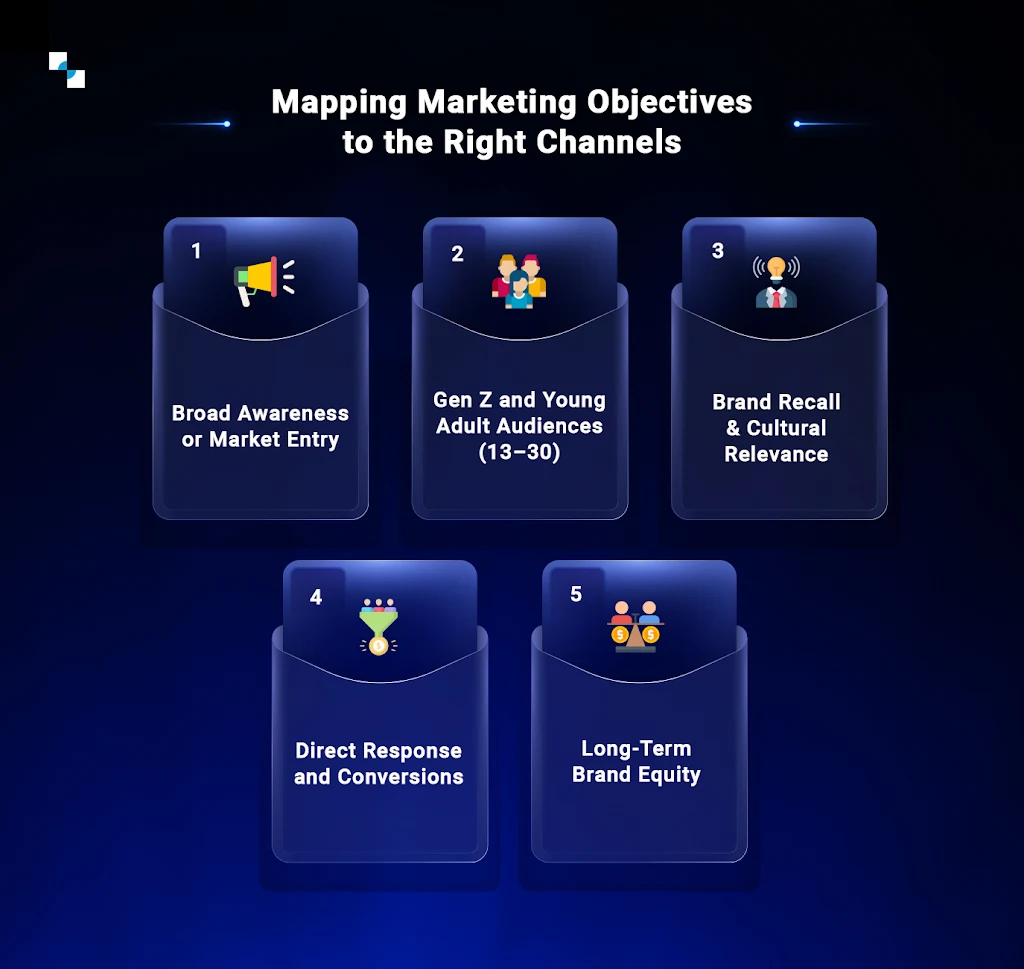
1. Broad Awareness or Market Entry
Traditional digital advertising continues to lead when the objective is rapid scale. It provides immediate access to large audiences, making it effective for entering new markets or launching products where visibility is the primary goal.
Roblox, in this context, functions as an early engagement layer. While it may not match the instant scale of paid media, it allows brands to begin building interaction and familiarity from the outset. This creates a stronger foundation for future campaigns rather than relying solely on repeated exposure.
2. Gen Z and Young Adult Audiences (13–30)
Brands are beginning to shift investment more aggressively toward this audience segment. With over 132 million daily active users and a rapidly growing audience above the age of 17, Roblox provides direct access to a demographic that is increasingly difficult to engage through traditional channels.
More importantly, this audience does not behave like traditional media consumers. They are not passively scrolling. They are spending time inside environments, interacting, and returning regularly. For brands targeting this segment, Roblox is not a secondary channel. It becomes a primary layer of engagement.
3. Brand Recall and Cultural Relevance
When the objective moves beyond visibility into memory and perception, Roblox begins to outperform. Users show significantly higher brand recall in immersive environments compared to traditional social media. This is driven by the nature of interaction. Instead of seeing a message once, users experience a brand repeatedly within a context they actively participate in.
This level of engagement allows brands to move from being noticed to being remembered, which is where long-term value is created.
4. Direct Response and Conversions
For immediate performance outcomes, traditional digital advertising remains the most efficient channel. Search, paid social, and retargeting systems are optimized for capturing existing demand. They are designed to convert users who are already in a decision-making phase.
Roblox does not replace this function. It supports it. It improves the effectiveness of performance channels downstream by building familiarity and engagement earlier in the journey.
5. Long-Term Brand Equity
Brands are increasingly prioritizing sustained engagement in this area. Traditional advertising can create awareness, but it struggles to sustain engagement over time. Its impact is often tied to campaign duration and spend levels.
Roblox, on the other hand, creates environments where users return, interact, and build familiarity with a brand over multiple sessions. This sustained interaction reinforces memory, strengthens perception, and builds a level of connection that traditional formats rarely achieve on their own.
Each channel plays a distinct role, but the shift is becoming clearer. Traditional digital advertising is built to capture demand that already exists. Roblox, through immersive experiences, creates the conditions where that demand begins. It allows brands to engage users before intent forms, building familiarity, interaction, and memory over time. The brands seeing the strongest results are moving beyond channel comparison. They are using Roblox as a foundational layer for engagement, while traditional channels amplify and convert that interest. This is where the difference becomes visible in execution.
How Nike, Chipotle, and Walmart Are Using Roblox & What It Delivered
Leading brands are not approaching Roblox as a one-time campaign channel. They are building environments designed for sustained engagement and measurable outcomes.
1. Nike
Nike’s Nikeland attracted over 7 million visits within its first year, demonstrating how persistent environments can drive large-scale engagement. The strategy focused on repeat interaction and digital asset integration, positioning the brand within user activity rather than outside it.
2. Chipotle
Chipotle’s Roblox activation generated 25.6 million visits and enabled over 100,000 real-world redemptions, directly linking virtual engagement with physical consumption. The campaign also delivered a 10.1-point lift in brand search behavior, indicating strong post-engagement impact.
3. Walmart
Walmart’s activation reached over 30 million visits and 2.1 million hours of engagement, with 65% of users aged 18+, validating the platform’s relevance for adult consumers. The strategy extended beyond engagement into commerce, integrating physical product discovery within the experience.
Across these cases, the pattern is consistent: engagement is structured, measurable, and directly linked to business outcomes, from brand recall to real-world conversions.
Want to see how these campaigns were structured and measured?
Is Roblox the Right Fit for Your Brand Right Now?
Roblox is not a universal solution. It is a strategic tool that performs best under specific conditions.
Roblox makes sense when:
- Your primary audience is aged 13–35
- You are investing in long-term brand equity and recall
- You have the capacity to develop and maintain an interactive experience
- Success metrics include engagement depth, time spent, and unaided recall
- You are targeting Gen Z audiences who are difficult to reach through traditional media
Traditional channels remain more effective when:
- Immediate conversion or direct response is the primary objective
- Campaign cycles are short (under 4 weeks)
- Your core audience is aged 40+ and less active in immersive environments
- Budget is highly constrained, and performance must be measurable within days
This distinction matters. Roblox strengthens the outcomes of performance marketing by building memory, loyalty, and repeat engagement. Brands that use Roblox as a foundational engagement layer consistently report stronger downstream performance from paid channels, because audiences arrive with prior familiarity.
Cost vs Value: A More Honest ROI Comparison
Budget decisions are rarely made on engagement alone. They are made on how efficiently outcomes are generated.
A clearer way to understand the difference between traditional advertising and immersive platforms is to compare how the same budget performs across both.
| Metric | Traditional Digital Advertising | Roblox-like Experiences |
|---|---|---|
| Investment | £100,000 | £100,000 |
| Reach | ~12–13 million impressions | ~400K–600K users |
| Interaction rate | Typically <0.5% | ~10–15% active engagement |
| Time spent | A few seconds per impression | 15–20 minutes per session |
| Total engagement volume | Low depth, high spread | Lower reach, high concentration |
| Nature of engagement | Passive exposure | Active participation |
| Brand recall impact | Variable | Stronger due to interaction |
| Value distribution | Broad but shallow | Focused and deep |
Source: Jasmine Directory
This comparison highlights how value is created differently across formats. Traditional advertising distributes attention across a wide audience, optimizing for visibility and short-term interaction. Immersive environments concentrate attention within a smaller audience, where engagement is deeper and more sustained.
For a growing number of brands, this shift is positioning Roblox game development as a strategic investment, with budgets moving toward sustained engagement and long-term impact over short-term visibility.
The Direction of Budget Shift
The move toward attention-led investment is already in motion. As digital environments become more saturated, brands are gradually redirecting spend toward platforms that deliver sustained engagement rather than momentary exposure. Roblox is emerging as a central layer in this transition. Through Roblox game development, brands are able to engage audiences through interaction rather than interruption, creating a more durable form of connection.
For brands targeting younger demographics, this shift is increasingly critical. It enables engagement that is not limited to a single touchpoint, but develops over time through repeated interaction within immersive environments. Early participation creates a distinct advantage: lower competition, deeper audience relationships, and stronger long-term recall through consistent presence.
The brands achieving the strongest results are not choosing between Roblox and traditional advertising. They are using Roblox as a foundational engagement layer, while traditional channels amplify and convert the interest it builds. This is where the competitive difference becomes visible in execution.
Where Attention Becomes Advantage
Budgets are under pressure, and the gap between visibility and impact is widening. Traditional digital advertising continues to capture demand efficiently. At the same time, Roblox is enabling brands to build attention earlier through sustained interaction and engagement.
Early movers gain both visibility and strong brand recall. For brands looking to act on this shift, Antier helps brands realize the potential of Roblox game development through immersive experiences that drive measurable engagement. If you’re evaluating your next move, we can help translate strategy into execution.
Frequently Asked Questions
01. What is the current state of global ad spend and marketing budgets?
Global ad spend has surpassed $1 trillion for the first time, but individual marketing budgets remain stagnant at just 7.7% of company revenue.
02. How are traditional digital advertising and Roblox-driven experiences different?
Traditional digital advertising focuses on visibility and impressions, while Roblox-driven experiences emphasize participation and engagement, offering a new layer of interaction for brands.
03. Why is attention becoming more important than impressions in digital marketing?
As visibility becomes abundant, capturing attention requires deeper engagement and participation, leading to a shift in performance evaluation from mere impressions to meaningful interactions.