
✨ AI Summary
- Studio's struggle with player churn, losing millions annually as players abandon games, taking their assets with them.
- NFT interoperability offers a solution by allowing players to retain and transfer assets across games, fostering lasting community loyalty.
- NFT marketplaces enable real-time trading of assets, creating interconnected economic ecosystems.
- Integrating NFT marketplaces in games strengthens player loyalty by offering ownership and value continuity.
- Benefits for developers and investors include continuous revenue streams, reduced churn, and collaboration opportunities.
Studio’s lose millions of dollars every year due to one core issue: churn. When it’s no longer fun to play a title, the player’s investment in that title’s assets also goes away. After many hours and dollars invested, players walk into their lives with nothing. This limits their incentive to grow an engaged community that lasts beyond the time in the game.
This is where NFT interoperability becomes critical!
By allowing players to retain and transfer their earned assets across multiple games and platforms, studios can create continuity in ownership and value—turning transient engagement into lasting community loyalty.
NFT marketplaces for games and interoperability promise a way to retain every earned item, achievement, and collectible item across multiple worlds – thus not only incentivizing loyalty, but also economic durability.
What Is NFT Interoperability and Why Does It Matter in Gaming?
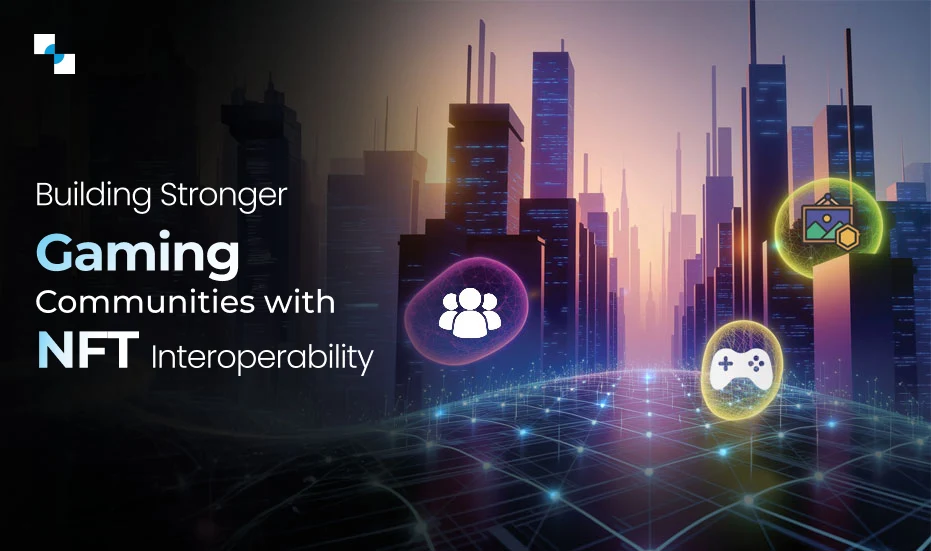
With the gaming sector moving toward the next generation of digital ownership, NFT interoperability has become a key pillar for long-term, player-directed ecosystems. Interoperability involves enabling non-fungible tokens (NFTs)—like weapons, avatars, collectibles, etc.—to work across games and virtual worlds. In traditional paradigms, players time and monetary investments are limited to in-game assets found only in that game. Interoperable NFTs break that paradigm by enabling assets to be interoperable across ecosystems while maintaining identity and value.
At the center of this is NFT Marketplaces for Games that allow players to buy, sell, and trade interoperable assets in real-time. Marketplaces are the connective tissue that enable cross-game liquidity, turning isolated experiences into interrelated economic ecosystems. For investors and studios, interoperability represents much more than a technical challenge; it represents the dawn of a new digital economy with player engagement that is equal to ecosystem growth.
How Does Integrating NFT Marketplace in Games Strengthen Player Loyalty?
In the evolving Web3 landscape, brands can no longer depend on content updates or seasonal activations to develop loyalty; the expectation has progressed to ownership tied to value continuity. By implementing NFT Marketplace in Games, developers offer their players the ability to manage, sell, or lease their digital assets without barriers. This ownership position turns casual players into co-investors, fostering a more profound emotional and financial stakeholder relationship with the community and developer.
As an example, one player may own a rare NFT sword from one fantasy RPG and later have the ability to use — or sell — that sword in a different title within their interoperable ecosystem. The interoperability strengthens engagement, as players no longer feel bound to one ecosystem. It also creates a pattern of persistent progression, in which accomplishments and assets are likely to hold value within the experience.
Interoperability enhances this experience by maintaining an NFT’s identity among systems, reducing player appetite and improving retention. Further, the more utility an asset has, the more ingrained a player’s connection is to whatever ecosystem supports that asset.
Boost Your NFT Journey with the Experts
What Are the Key Benefits for Game Developers and Investors?
The rise of NFT game development has changed how developers and investors perceive game economies. The emergence of NFTs with interoperability allows for value to be continuous and engagement to be maintained for extended periods outside a single title. For developers, it is innovative potential to build connected gaming universes with shared monetization opportunities. For investors, it is an entry into an asset-backed digital economy that continues to create value long after they buy the game. The Industry is shifting from selling a game once, to player driven economies that are living entities rewarding efforts and contributions of other creators and supporters.
1. Continued Stream of Revenue
Traditional games typically do not see revenue after either the launch phase or a DLC. However, with an NFT Marketplace in Games, studios are eligible to earn transaction fees, and or royalties and or commissions whenever an asset is traded or resold. This secondary market will provide a much-needed, continual stream of income that does not rely solely on DLCs or passes each quarter.
2. Reduced Churn and Improved Retention
When players have the ability to take assets with them between titles, players are much more likely to remain in the developer’s gaming ecosystem. Retaining valuable NFT enables emotional continuity that helps to reduce churn and increasingly develop persistent and loyal communities for the studios’ games over time.
3. Investor-Friendly Market Dynamics
Interoperable NFTs carry real-tradeable value—converting in-game items into digital assets that may appreciate in value. This provides investors exposure to a decentralized economy with potential for liquidity, diversified risk, and quantifiable performance.
4. Opportunities for Collaboration and Partnership
Interoperable assets lead to collaboration between different game studios and IP holders. Developers may co-sponsor events or asset crossovers or NFT bundles that drive more exposure and potentially more investors.
5. Player-Informed Advancements through Data Analytics
NFT Marketplaces for Games allow for the tracking of player asset trading behavior, preferred categories, invested player base, and high-value players. This value can be used by developers to iterate on their in-game economies, incentivizing player engagement, and projecting trends for future releases.
How Are Interoperable NFTs Building Cross-Game Communities?
Interoperability is not just about the transfer of assets; it is about building bridges to gaming worlds, facilitating connections in the player experience through shared ownership and identity. By integrating NFT Marketplace in Games, developers create a digital social fabric in which players are connected not only by a title, but by assets, achievements, and reputations. This social fabric builds on itself, allowing players to experiment within the same eco-system and strengthen community and brand narrative.
1. Persistent Player Identity Across Worlds
Interoperable NFTs allow a player’s profile, achievements, and assets to transfer from game to game. With integrated, or interoperable, NFTs, players will have a persistent identity that enhances belonging and allow gamers to maintain a continuous presence across ecosystems.
2. Continuation of Progression and Value
Players will no longer have their progression reset every time they engage a new title. Players will be able to have their collectibles, weapon, or characters come forward from previous title to contribute to a narrative of continuity to their game experience. This prospect of a persistent progression will create pride, motivate action, and foster player loyalty that will keep players returning.
3. Community Based Economy
With Game NFT Marketplaces, players will participate in peer-to-peer trading and create what come to be known as natural economic communities. These decentralized economies are based on trust, engagement and shared value, changing players as consumers to creator of their own wealth.
4. Guilds Across All Titles and Social Growth
Interoperability allows for guilds and clans to form between games and co-op missions that link players across titles. This social association provides social engagement which keeps players coming back and communities active during gaps in content releases.
5. Event-Based Crossovers and Co-Growth
Interoperable NFTs enable developers to create collaborative events – for example, using an NFT in a challenge in a different game with a different asset – which encourages players to engage across experiences and brings new players to their games. It allows developers to not only grow their reach, it promotes community.
6. Greater Player Retention and Organic Word of Mouth
When players see their assets have longevity, and can contribute to growth or buy/sell or trade – not only do they care more, they will continue to advocate organically for your ecosystem – which can create a growing group of ambassadors.
The idea of NFT interoperability is not merely a technical improvement—it’s a paradigm shift in building value, loyalty, and community in contemporary gaming. By incorporating NFT game development for marketplaces, developers give players real digital ownership and a guarantee that every asset has a purpose across multiple experiences. For studios, it opens up sustainable revenue models and long-term engagement; for players, it transforms gaming into an interwoven journey of growth and identity. The emergence of NFT Marketplaces for Games will redefine the gaming future as ecosystems, where creativity, commerce, and community coexist in an enhanced and seamless way, continue to evolve.