


✨ AI Summary
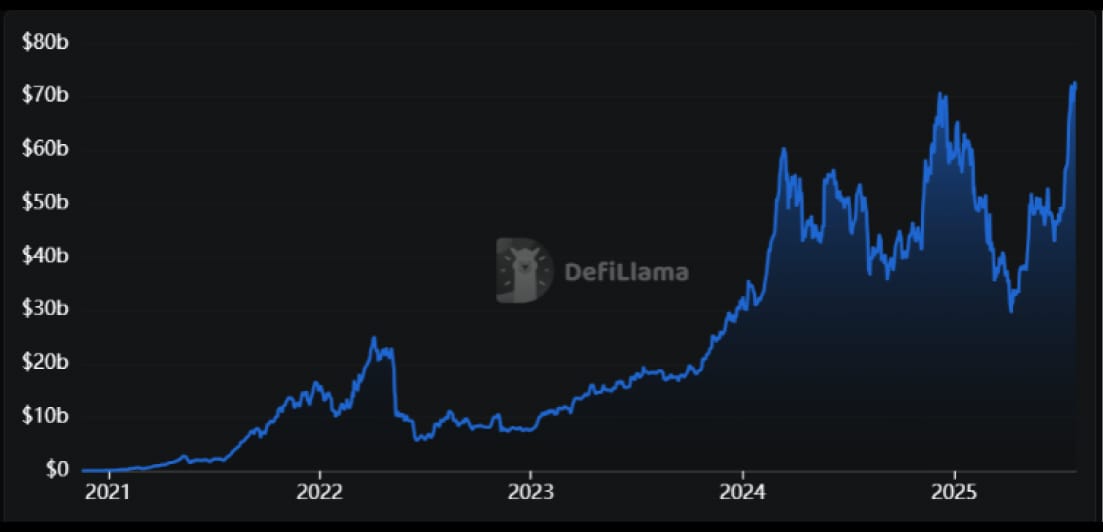
- In July 2025, liquid staking protocols have hit a record $70 billion TVL, with Lido leading the pack.
- The blog post provides a step-by-step guide to developing a next-gen DeFi staking platform to rival Lido.
- Key steps include defining objectives, choosing the blockchain and architecture, building smart contracts, designing the front-end, ensuring security, launching, and growing the platform.
- To outpace Lido, the post suggests incorporating features like restaking support, multi-chain deployment, deep DeFi composability, a dual token model, a permissionless validator marketplace, auto-compounding vaults, instant unstaking options, cross-chain governance, dynamic fee sharing, and KYC-enabled pools.
- The final takeaway emphasizes the importance of innovation and iterative development to create a cutting-edge liquid staking platform that goes beyond existing solutions like Lido.
As of July 2025, the total value locked (TVL) in liquid staking protocols has surpassed its all-time high, reaching the $ 70 billion mark. Lido, however, tops the charts in the liquid staking scenario in terms of locked liquidity, but how? Like any DeFi staking platform, it allows users to lock coins in PoS chains and receive tradable tokens in return, representing their stake. This dual reward plus liquidity model is a win-win for all, including platform owners, PoS chains, and liquidity providers.
In this blog, we’ll walk you through a step-by-step process for next-generation DeFi staking platform development while highlighting key features that can help new platforms outpace Lido.
DeFi Staking Platform Development like Lido: Step-by-Step Guide
Building a liquidity staking platform like Lido Finance involves many pieces. Below are the high-level steps entrepreneurs, CTOs, or product owners may typically take.
- Define Your Vision and Objectives.
- Clarify why you’re building a liquid staking product and who you serve.
- Analyze competitors (Lido, Binance staked ETH, Rocket Pool, etc.) to find market gaps.
- Decide your unique value: will you target retail users, institutions, or a niche chain?
- Determine core features (e.g., multi-chain support or instant exit) so you can build a compelling roadmap.
Just after you’re clear about your requirements, you may partner with the best DeFi staking platform development company for their expertise in smart contracts, wallets, and audits.

- Choose Blockchain and Architecture
- Select one or more PoS chains for staking.
- Common choices are Ethereum (security, DeFi integrations), Solana or Polkadot (fast/cheap), or an L2. (You can choose based on security, fees, and user base.)
- In parallel, decide your validator model: will you whitelist trusted node operators (permissioned), or open access to anyone (permissionless)? Modern liquid staking protocols increasingly lean toward permissionless validator sets.
- Build Core Smart Contracts and Tokenomics
- Collaborate with your DeFi Staking Platform Development Company to develop the backend smart contracts to handle staking, unstaking, rewards, and LST issuance. This usually includes:
- A Staking contract that accepts deposits, delegates to validators, and distributes rewards/fees.
- A Liquid Staking Token (LST) contract responsible for minting and burning a 1:1 pegged ERC-20 (or chain-equivalent) token tied to the staked asset.
- (Optionally) A Governance token contract, if you plan to separate rewards vs. governance.
- Define fee splits during your DeFi staking development. Your smart contract logic must reflect any dynamic fees or revenue-sharing models you want to implement. (Lido charges ~10% of yield split 50/50 between validators and treasury)
- Integrate wallet support (MetaMask, Ledger, etc.) so users can easily connect and stake.
- Design Front-End & UX.
- Make staking as frictionless as possible with an intuitive yet user-friendly web/mobile interface. Users should see how much ETH (or other token) they stake and the equivalent LST they receive. You should also show estimated rewards, current APR, and the current unbonding period upfront. There should be no fuss or fluff.
- During your DeFi staking platform development, include dashboards for rewards and simple buttons to stake/unstake. Complex flows or surprise waits will scare off mainstream users.
- Security, Audits, and Testing.
- Collaborate with your DeFi staking platform development company to build a robust security layer for your platform. It must include multi-sig admin controls, timelocks on critical functions, reentrancy guards, oracle manipulation protection, slashing logic, and validator monitoring, etc.
- Before your liquid staking platform launch, rigorously test your platform. Perform unit and integration tests of the smart contracts, and hire security auditors to check for vulnerabilities.
- Liquid staking deals with large sums, so audits (and bug bounties) are non-negotiable. Also, simulate extreme conditions during the testing phase of your DeFi staking development (high load, price volatility, edge cases) to ensure your contracts are capable of handling them. Many teams do multiple rounds of audits and a testnet beta phase.
- Launch and Growth Strategy.
- With code audited and tested, deploy your liquid staking platform on mainnet.
- Plan a marketing push that justifies your platform’s benefits and USPs clearly (e.g., “stake without lockups, earn yield plus DeFi utility”).
- Often, new DeFi staking platforms incentivize early users by offering boosted rewards or governance perks. You can also implement such tricks to create an early hype.
- And don’t forget to engage on forums, Twitter/Discord, and collaborate with existing DeFi protocols (e.g, get your LST listed on DEXes and lending platforms) to boost your platform adoption.
- Ongoing Operations and Governance.
- Post-launch, maintain and improve your liquid staking platform.
- Establish a governance framework (on-chain DAO voting or Snapshot) so stakeholders can tweak fees, add features, or fund new chains.
- Keep deploying upgrades to optimize gas, add new chains, launch compounding vaults, etc., and fix issues as soon as they arise. You must consistently monitor all the metrics (TVL, active users, vault performance) to iteratively improve the product.

How to Outpace the Leading DeFi Staking Platforms like Lido Finance?
To stand out beyond Lido, incorporate cutting-edge features and broaden your platform’s appeal. Here are high-impact features to consider for your beyond-Lido DeFi staking platform development strategy:
- Restaking Support
Let users restake their staked assets or LSTs in other protocols to earn additional yield. Liquid restaking is gaining massive traction. - Multi-Chain LST Deployment
Launch liquid staking tokens across Ethereum, Layer-2s, and non-EVM chains like Cosmos or Solana to reach broader DeFi markets. - Deep DeFi Composability
Ensure your LSTs plug into DEXs, lending protocols, and yield farms for maximum utility, liquidity, and integration. - Dual Token Model
Separate your reward token from your governance token to avoid sell pressure and optimize for protocol health. - Permissionless Validator Marketplace
Let any qualified node operator join and earn, decentralizing validation like Lido’s community staking module. - Auto-Compounding Vaults
Offer vaults that auto-reinvest staking rewards to boost user yields without manual actions. - Instant Unstaking Options
Enable liquid exit mechanisms so users can unstake anytime via pools or third-party liquidity providers. - Cross-Chain Governance
Use tools like Snapshot and messaging protocols to align voting across chains where your LSTs live. - Dynamic Fee Sharing
Split protocol fees across DAO, stakers, and developers, not just a flat fee model. Create flexible and sustainable revenue streams. - KYC-Enabled Pools (Optional)
Offer optional KYC-compliant staking pools to attract institutional users without disrupting retail UX.
Final Takeaway
Drop the clone game now. Lido Finance’s playbook won’t make you win, as the DeFi staking platform landscape isn’t only about pooling funds and earning rewards in 2025. Build iteratively, start with core staking features, then add advanced ones (restaking, governance, instant exits).
Track Lido and other incumbents closely to borrow best practices, but push innovation in areas they’ve overlooked. With careful planning, execution, and liquid staking platform development partner, your platform can offer entrepreneurs and crypto investors a next-generation solution that truly goes beyond Lido.
At Antier, we engineer secure, scalable, and DeFi-native staking infrastructure, from LST issuance and validator ops to DeFi integrations, auto-compounding vaults, and smart contract audits. Whether you’re launching a staking dApp, protocol-owned validator network, or cross-chain staking suite, we’ll build it right.