




✨ AI Summary
- The tokenized commodities market, now valued at $7.3 billion, signals that the institutional infrastructure supporting it is maturing.
- The market size reflects key operational elements such as regulated custody, transparent reserve backing, and settlement systems capable of handling high transaction volumes.
- Tokenized commodities aim to reduce the friction often found in traditional commodity ownership, such as high entry thresholds and jurisdictional barriers.
- As the market matures, evaluation criteria are focusing on aspects like custody integration, secondary liquidity design, and regulatory preparedness.
- Decision-makers are now assessing how tokenized commodity infrastructure can enhance systems architecture and institutional governance.
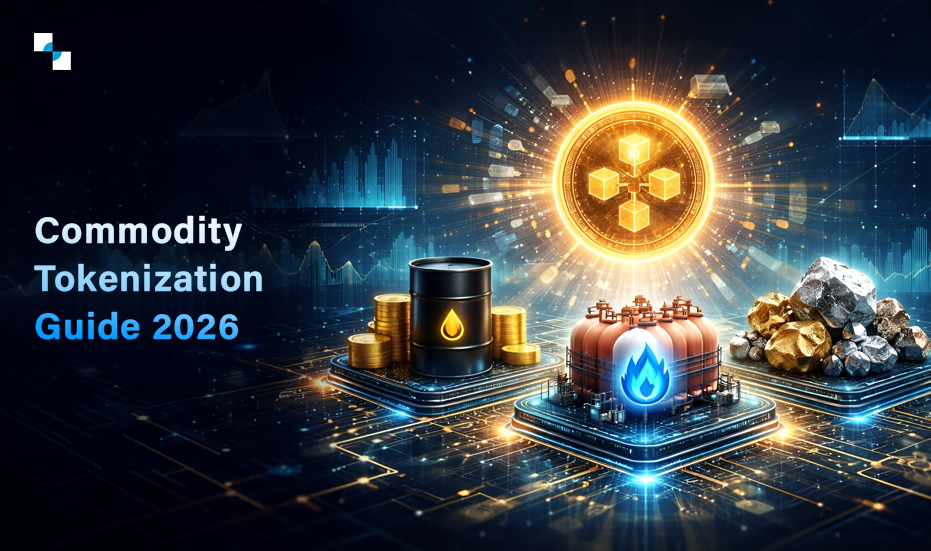
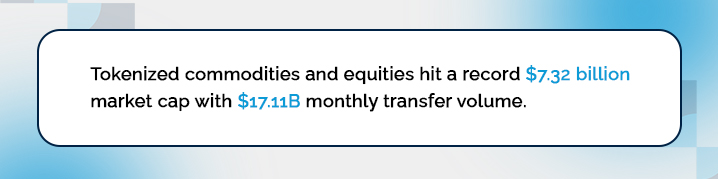
Tokenized commodities have moved beyond proof-of-concept discussions and niche pilot programs. A market crossing $7.3 billion is not merely a headline figure—it is a signal that institutional infrastructure is beginning to mature. For decision-makers across banks, family offices, commodity houses, sovereign entities, and private capital firms, market size matters only when it reflects durable operating rails: regulated custody, enforceable ownership structures, transparent reserve backing, and settlement systems capable of supporting real transaction volumes.
What institutions are evaluating today is not whether blockchain exists, but whether tokenized commodity infrastructure can reduce long-standing friction embedded in traditional commodity ownership. Conventional exposure often relies on layered intermediaries, delayed settlement cycles, fragmented reporting, jurisdictional barriers, and high minimum entry thresholds. Tokenized models aim to compress these inefficiencies into programmable ownership units that can be transferred, pledged, reported, and redeemed through a more efficient digital framework—creating demand for enterprise-grade tokenized asset platform development services.
The conversation is therefore shifting from speculation to systems design. Commodity issuers are exploring faster distribution channels. Wealth platforms are evaluating new access products. Treasury teams are assessing collateral mobility. Administrators are examining automated reporting. Compliance teams are reviewing transfer controls, onboarding standards, and cross-border participation frameworks.
These are fundamentally questions of systems architecture, operational control, and institutional governance.
As the market matures, evaluation criteria are increasingly centered on custody integration, token lifecycle management, secondary liquidity design, interoperability with financial systems, and regulatory preparedness. This is where mature tokenized commodities solutions are beginning to distinguish themselves through execution capability, resilience, and enterprise readiness.
This blog explores what the $7.3 billion market milestone signals, the evolving role of tokenized commodities within the RWA landscape, the infrastructure behind institutional adoption, and the key standards organizations should evaluate when selecting long-term technology partners.
Why the $7.3B Market Size Signals Institutional Readiness, Not Speculative Hype
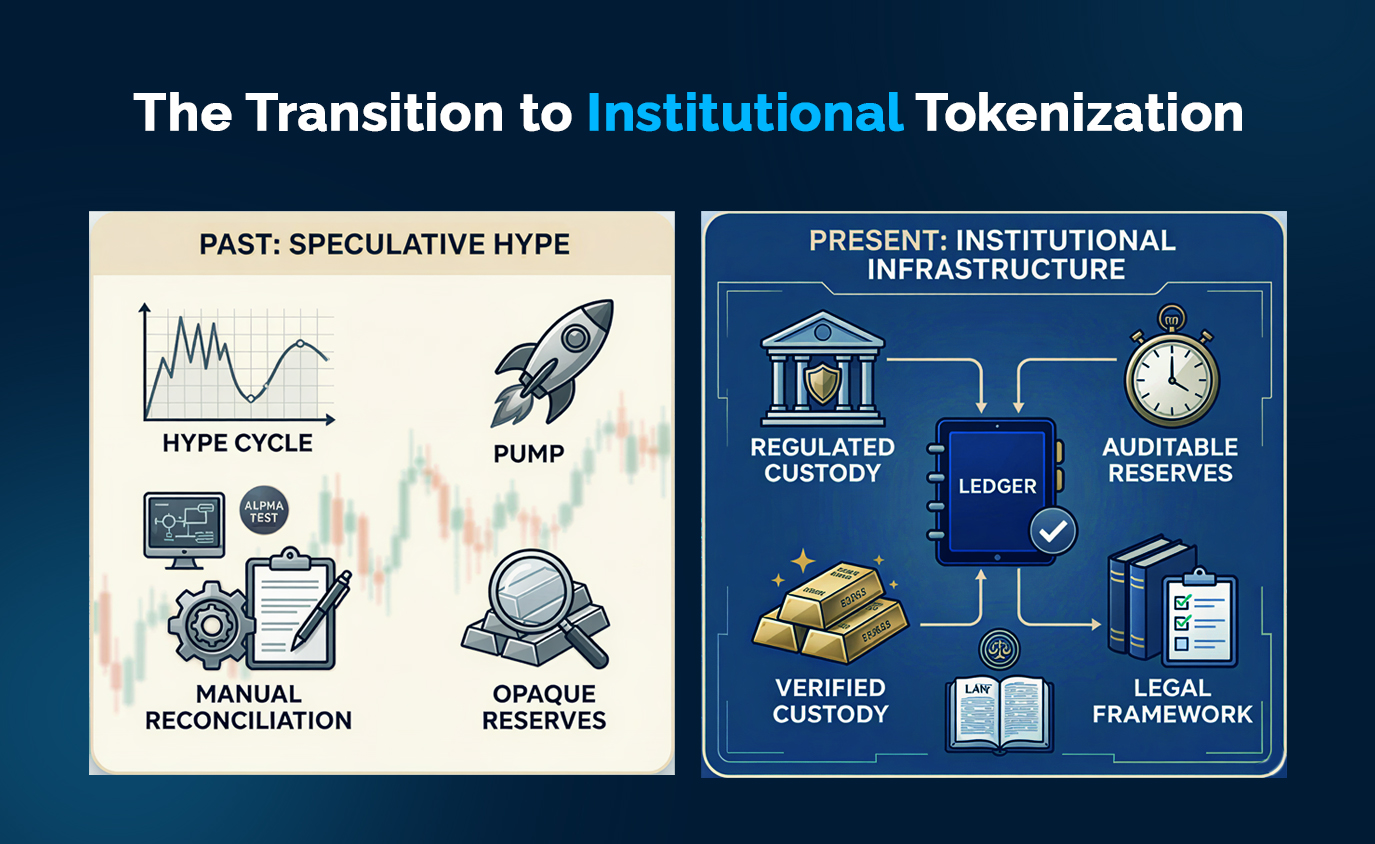
Institutional markets r expands when operating risk declines, standards mature, and infrastructure becomes dependable. The $7.3 billion tokenized commodity market is significant because it suggests that core systems are beginning to meet institutional procurement thresholds.
1. Growth Is Driven by Reserve-Backed Structures
Unlike speculative digital assets with no underlying collateral, many tokenized commodity products are linked to vaulted gold, metals inventory, or custody-backed claims. Institutions typically favor exposures where reserves can be independently verified.
2. Settlement Friction Is Being Reduced
Traditional commodity transfers can involve intermediaries, delayed confirmations, and manual reconciliation. Tokenized models introduce faster transfer rails and more efficient post-trade processes.
3. Custody Standards Have Improved
Modern platforms increasingly support segregated storage, insurance-backed custody, multi-party approvals, and auditable ownership records—key requirements for institutional participation.
4. Tokenization Is Becoming Operational Infrastructure
The strongest use cases now extend beyond investment access into treasury mobility, collateral optimization, reserve management, and controlled digital distribution.
5. Regulatory Discussions Are Maturing
Global regulators are focusing less on whether tokenization should exist and more on how custody, investor protections, disclosures, and transfer controls should operate. That shift is an important maturity signal.
6. Capital Is Becoming More Selective
Institutions are not allocating broadly across all issuers. They are prioritizing platforms with transparency, governance, security controls, and proven execution capability.
For decision-makers, the market size matters less than what it implies: a growing portion of the ecosystem is now being built to institutional standards. This trend will accelerate as the tokenized commodity regulation in 2026 becomes clearer across major jurisdictions.
Launch a Commodity Tokenization Platform with Institutional Controls
Where Tokenized Commodities Stand Among RWA Asset Classes in 2026
Within the broader real-world asset landscape, tokenized commodities hold a strategically strong position because they combine globally understood value, transparent pricing benchmarks, and practical treasury utility.
Compared With Tokenized Real Estate
Real estate tokenization often faces local title systems, tenant risk, maintenance obligations, valuation complexity, and slower transfer mechanics. Commodities such as gold or industrial metals benefit from more standardized grading, custody norms, and market pricing references.
Compared With Tokenized Private Credit
Private credit products may involve borrower concentration risk, servicing complexity, collateral recovery issues, and underwriting variability. Directly backed commodity exposure can present a simpler ownership model.
Compared With Tokenized Treasuries
Tokenized treasuries are attractive for yield and cash management. Tokenized commodities are often more relevant for inflation hedging, macro diversification, and reserve strategies.
Compared With Carbon or ESG Assets
Carbon-linked instruments continue to grow, but methodologies and verification frameworks are still evolving in many markets. Commodities generally benefit from broader historical acceptance and institutional familiarity.
Why Commodities Stand Out
- Globally recognized value stores
- Transparent reference pricing
- Existing storage and custody ecosystems
- Utility in collateral and treasury workflows
- Relevance across multiple economic cycles
Constraints Still to Solve
- Secondary liquidity depth
- Multi-jurisdiction transfer rules
- Continuous reserve transparency
In 2026, tokenized commodities increasingly sit between treasuries (capital preservation) and private markets (higher complexity), offering a balanced infrastructure-grade asset category. Confidence is further supported by advancing Tokenized assets regulation MiCA frameworks in Europe.
Core Architecture of an Institutional-Grade Tokenized Commodity Platform
The architecture of a commodity tokenization platform is not analogous to a standard DeFi protocol or a securities tokenization system. Physical commodity custody introduces dependencies that software-only systems cannot abstract away. A complete institutional-grade stack has five distinct layers, and the weakest one determines the risk profile of the entire system.
The custody and verification layer
This is the foundation. For gold, this means allocated storage in a vault operated by a recognized custodian — Brink’s, Malca-Amit, G4S, or equivalent — with LBMA approval and third-party auditing. The vault must provide segregated storage (the specific bars assigned to specific token holders must be identifiable, not pooled), regular proof-of-reserve attestations, and documented insurance coverage against theft, damage, and custodian insolvency.
For energy or agricultural commodities, the custody model is fundamentally different. Electricity cannot be stored in the same sense as gold. Tokenized megawatt-hours represent delivery rights or generation certificates, not physical units in a vault. Agricultural commodity tokens require warehouse receipts, quality inspection certificates, and integration with commodity exchange delivery systems. Platform architecture must accommodate these distinctions at the data model level — a generic “asset backing” schema is insufficient.
The issuance engine
Token issuance should be mint-on-demand, not pre-minted. Pre-minted supply introduces unbacked token risk — the interval between token creation and corresponding asset verification is a systemic vulnerability. Institutional-grade systems mint tokens only after the underlying asset has been verified, custodied, and recorded. The minting event is triggered by a verified custody event, not by a user request.
The issuance engine must also handle corporate actions: splits, redemptions, transfers to different vault locations, quality downgrades (for agricultural commodities), and expiry handling (for carbon credits with vintage cutoffs). These are not edge cases. They are operational certainties at an institutional scale, making this a core capability for any RWA tokenization development company 2026 targeting enterprise-grade deployments.
The smart contract settlement layer
Settlement in tokenized commodity systems should achieve delivery versus payment (DvP) in a single atomic transaction — the token changes hands at the same block as the cash leg settles. This eliminates counterparty risk during the settlement window, which in traditional commodity markets can span two to five days.
The smart contract architecture must handle access control lists (KYC-gated transfer restrictions), programmable compliance rules (jurisdiction-based transfer blocks, accredited investor verification), automated fee distribution (management fees, custody fees, storage charges), and upgrade mechanisms that do not break existing token positions or custody mappings.
The Oracle and data integration layer
On-chain commodity tokens require reliable off-chain price feeds, custody verification updates, and quality attestation data. Oracle failure is not a hypothetical risk — it is the single most common source of on-chain commodity system failures. A robust architecture uses redundant oracle providers (Chainlink is the current institutional standard), with circuit breakers that pause settlement operations if price feed deviation exceeds defined thresholds.
The compliance and reporting layer
Every token transfer must generate an immutable audit trail. Compliance reporting must be extractable in formats compatible with existing fund administration systems — SWIFT MT messaging, FIX protocol for execution reporting, and increasingly ISO 20022 for cross-border settlement. This layer is where most end-to-end tokenization platform development projects fail in production — they build the issuance and settlement layers to institutional standard, then bolt on compliance reporting as an afterthought.
How Tokenized Commodities Services Integrate with Existing Financial Operations
The most common failure mode in enterprise tokenization deployments is not technical — it is operational. A platform can have architecturally sound smart contracts, verified custody, and robust oracle integrations, and still fail in production because it does not connect to the systems that institutional back offices actually use.
Integration is not a feature. It is the core delivery requirement.
SWIFT connectivity
SWIFT announced live trials of digital asset and currency transactions on its network beginning 2025. This is significant for commodity tokenization because it means tokenized settlement can now be initiated and confirmed through the same messaging infrastructure that institutional treasury teams use for traditional commodity trades. A platform that is not designed for SWIFT compatibility will require manual reconciliation between on-chain settlement records and SWIFT-based trade confirmations — a process that introduces operational risk and is unacceptable to compliance teams at tier-one institutions.
ISO 20022 message mapping
ISO 20022 is the global standard for financial messaging, and its adoption is accelerating across central banks, custodians, and correspondent banks. Tokenized commodity platforms must be able to produce and consume ISO 20022 messages for trade confirmations, settlement instructions, and custody updates. This is not a future consideration — it is a current integration requirement for institutions operating in EUR, GBP, and cross-border Asian markets.
Fund administration and NAV calculation
Tokenized commodity positions must appear correctly in fund accounting systems — Bloomberg AIM, SimCorp, SS&C Geneva, and their equivalents. This requires real-time position feeds, accurate pricing data mapped to NAV calculation schedules, and corporate action handling that the fund administrator’s system can process without manual intervention. Most tokenization platforms do not ship with these integrations pre-built. They require bespoke middleware development.
ERP and treasury management system integration
For corporate treasuries using tokenized commodities as balance sheet assets or hedging instruments, ERP integration (SAP, Oracle Financials) is non-negotiable. The tokenized position must flow into the company’s financial statements, be marked to market on the correct schedule, and generate the correct accounting entries for storage costs, unrealized gains, and redemption events.
These integrations are where tokenized commodities services deliver or fail. A vendor who cannot demonstrate working production integrations with at least two of these system categories should not be on a shortlist for enterprise deployment.
Build Reserve-Backed Commodity Products With Proven Experts
Regulatory Compliance Architecture in 2026
Tokenized commodity regulation in 2026 is not a single framework — it is a matrix of jurisdiction-specific requirements that a production platform must navigate simultaneously.
In the EU, tokenized assets regulation MiCA has been fully applicable since December 30, 2024. MiCA classifies commodity-backed tokens as asset-referenced tokens (ARTs) when they reference a non-currency asset. ART issuers face capital requirements, reserve asset management obligations, redemption rights, and ongoing disclosure requirements. The ESMA has issued implementation guidance covering whitepaper requirements, custody arrangements, and conflict-of-interest policies. Any EU-facing commodity token issuer operating without MiCA compliance documentation is operating outside the regulatory perimeter.
In the United States, the GENIUS Act (signed July 2025) established a framework for payment stablecoins with one-to-one reserve requirements. The Digital Asset Market CLARITY Act, working through Congress, aims to resolve the CFTC/SEC jurisdictional overlap that has historically created regulatory uncertainty for commodity-backed tokens. The practical effect for 2026: commodity tokens that are clearly backed by a physical commodity (gold, silver, copper) are more likely to fall under CFTC commodity regulations than SEC securities law — but this determination must be made on a token-by-token basis with legal counsel.
In Asia-Pacific, Hong Kong’s SFC published its “ASPIRe” roadmap for tokenized securities, Singapore’s MAS has issued guidance on digital payment tokens and tokenized fund products, and the UAE’s VARA and ADGM frameworks are attracting issuers seeking a more accommodating regulatory environment with clear operating rules.
A platform operating across these jurisdictions must implement Tokenized commodities compliance controls that are jurisdiction-aware at the transfer level — the same token may have different transfer restrictions depending on whether the buyer is an EU AIF, a US qualified purchaser, or a Singapore-licensed fund. This is not a legal problem with a one-time solution. It is an operational system that must be maintained as regulations evolve.
On-chain KYC and AML controls
Permissioned chains offer native KYC enforcement — transfer restrictions baked into the token contract that prevent transfers to non-whitelisted addresses. Public chains require middleware KYC layers that intercept transfers and verify counterparty compliance status before execution. Both architectures are valid; neither is inherently superior. The institutional question is whether the compliance controls are enforced at the chain level (where they cannot be bypassed) or at the application level (where they can be circumvented by interacting with the contract directly).
Engineering the Future of Institutional Commodity Markets
Tokenized commodities are progressing into a stage where institutional relevance will be defined by infrastructure maturity rather than market narrative. Financial institutions, commodity houses, wealth platforms, and sovereign allocators are assessing whether tokenization frameworks can meet enterprise requirements across custody assurance, reserve transparency, atomic settlement, interoperability with legacy financial systems, and jurisdiction-specific compliance controls. As adoption advances, the most durable platforms will be those capable of combining robust systems architecture with operational governance, positioning tokenized commodities as a scalable extension of modern capital markets infrastructure.