



AI Summary
- In a fast-evolving crypto landscape, wallets are transforming into comprehensive financial hubs, integrating storage, transfer, conversion, and decision-making functions.
- Leading markets like India and the US are driving crypto adoption, with South Asia emerging as the fastest-growing region.
- Stablecoins are revolutionizing remittances and commerce, emphasizing the importance of in-wallet exchange capabilities.
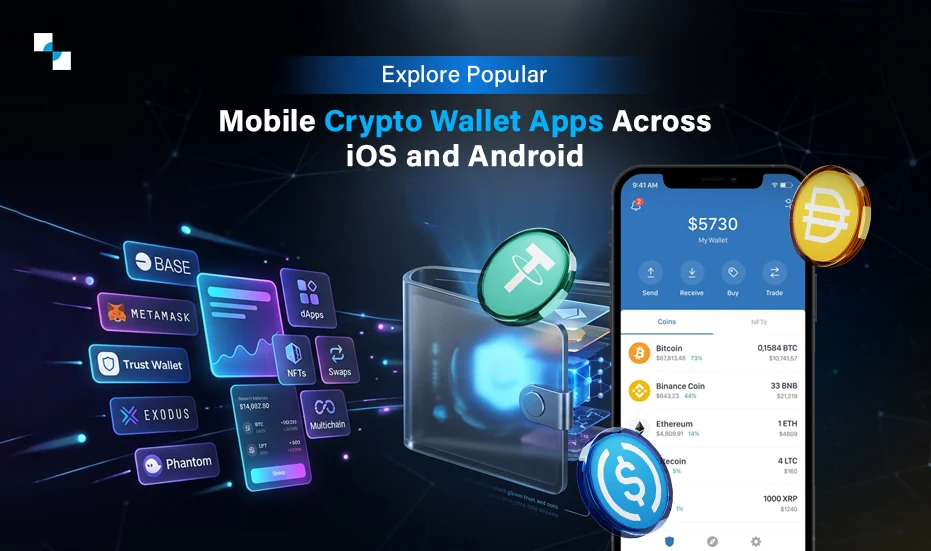
- Wallets like MetaMask and Trust Wallet offer built-in exchange features, streamlining asset movement within the app.
- These exchange tools reduce friction, enhance user retention, and cater to both novice and experienced users.
The crypto wallet is no longer just a digital vault. In 2026, it is becoming the user’s full financial cockpit: storage, transfer, conversion, and decision-making all in one place. The strongest signal is adoption itself. Chainalysis and TRM Labs show that India and the United States are leading crypto use in 2025, South Asia is the fastest-growing region, and retail-led activity is accelerating across markets such as Pakistan, Brazil, Nigeria, Vietnam, and Ukraine. At the same time, stablecoins are expanding in remittances, commerce, and inflation hedging, which makes fast in-wallet conversion feel less like a feature and more like infrastructure.
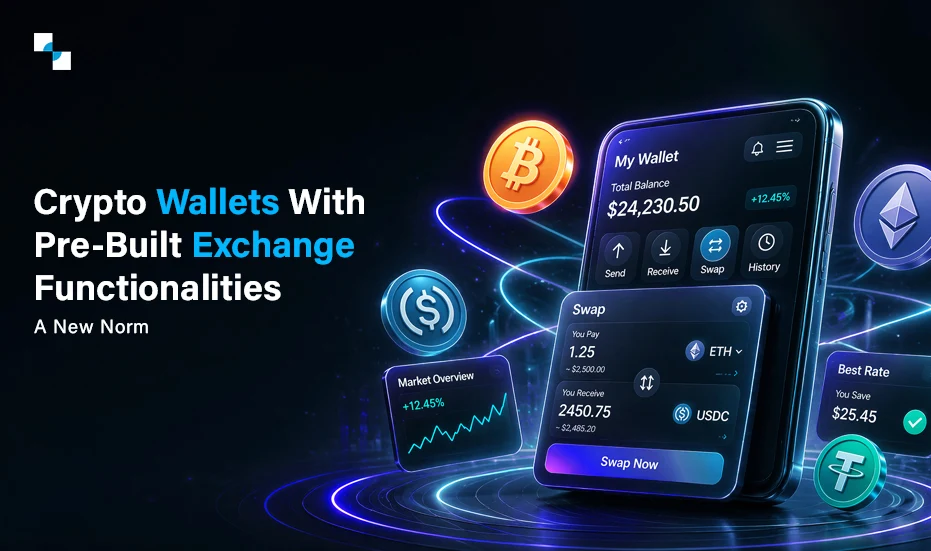
That is why the best white label crypto wallets are now being shaped around exchange access, not just custody. MetaMask, Trust Wallet, Ledger, and Coinbase Wallet all document swap flows inside the wallet experience, which shows how strongly the market is moving toward frictionless asset movement without forcing users to leave the app.
Crypto wallets with built-in exchange features are trending right now
This trend is strongest where crypto is used for everyday financial behavior, not only speculation. In South Asia, adoption is rising fast, with India, Pakistan, and the Philippines showing especially high momentum; TRM says South Asia became the fastest-growing region for crypto adoption in 2025. In Latin America, the story is closely tied to payment efficiency and value preservation. In Sub-Saharan Africa, retail activity and cross-border settlement use cases are prominent, while Nigeria’s exchange-driven surge and South Africa’s more institutionalized market show that the same product category can serve very different user motivations.
The investor mix is also broader than many teams assume. Retail users want speed and simplicity. High-net-worth investors want portfolio mobility and faster execution. Institutions and treasury teams want controlled conversion flows, settlement flexibility, and operational efficiency. Chainalysis’ 2025 geography report explicitly breaks down grassroots retail versus institutional activity across major regions, and TRM notes that global retail-led adoption accelerated while institutional participants increasingly shaped transaction patterns.
The deeper reason for the trend is practical: stablecoins, cross-chain activity, and market volatility have made “hold it here, convert it there” too slow for serious users. If a wallet can store value but cannot help users move it intelligently, it feels incomplete. That is why wallets with built-in exchange rails are increasingly positioned as the interface layer for modern crypto behavior.
Why should your white label crypto wallet have built-in exchange features?
- It reduces user friction. Users can convert assets without leaving the wallet flow, which shortens the distance between intent and action.
- It improves retention. A wallet that helps users transact, not just store, becomes part of their daily routine.
- It supports multi-chain behavior. Users increasingly move across networks, and in-wallet exchange tools make that movement easier to manage.
- It serves both beginners and advanced users. New users want a simple swap path; experienced users want faster execution and better routing.
- It creates a stronger product moat. Built-in exchange logic makes the wallet more valuable than a plain custody app.
- It opens monetization paths. Conversion activity, routing, spreads, and partner integrations can all support a stronger business model.
- It aligns with how crypto is actually used. People are using crypto for payments, remittances, savings, and treasury movement, not only for storage.
- It makes the wallet enterprise-ready. Businesses increasingly expect one environment for custody, conversion, and operational control.
Launch your crypto wallet with integrated exchange feature
Primary exchange features to definitely have in a white label crypto wallet
- Token swap
- Cross-chain swap
- DEX aggregation
- Best-rate routing
- Fiat on-ramp
- Fiat off-ramp
- Limit orders
- Market orders
- Gas-fee estimation
- Price alerts
- Slippage control
- Transaction preview
- Multi-network support
- Portfolio conversion view
- Trade history
- API-based liquidity integration
- Order status tracking
- Swap confirmation screen
Compliance considerations for crypto wallets with built-in exchange features
- Know the regulatory classification first. In many jurisdictions, wallets and exchange-linked flows may trigger virtual asset service provider obligations, especially when exchange, transfer, or transmission occurs through the platform. FATF’s Recommendation 15 applies AML/CFT measures to virtual assets and VASPs, and FinCEN has long treated certain convertible virtual currency business models as regulated money transmission activity.
- Build KYC/KYB into the right journey points. Customer and business verification should be tied to risk, transaction type, geography, and volume thresholds.
- Prepare for Travel Rule obligations. FATF’s 2025 supervision update shows continued global expansion of Travel Rule legislation, and jurisdictions are still at different implementation stages.
- Screen sanctions exposure continuously. OFAC explicitly says virtual currency firms must avoid prohibited dealings and should maintain a risk-based sanctions compliance program.
- Monitor suspicious activity in real time. FinCEN’s 2025 notice on CVC kiosks is a reminder that convenient crypto access points can also be abused by scammers and other illicit actors.
- Use transaction monitoring and audit logs. Compliance teams need visibility into route selection, counterparties, conversion behavior, and abnormal patterns.
- Respect jurisdiction-specific restrictions. Some regions allow broad VASP activity, some partially permit it, and some restrict it heavily, so geofencing and policy controls matter.
- Keep custody and execution logic clearly separated. That reduces confusion, improves governance, and helps define operational responsibility.
Summary
A white label crypto wallet with built-in exchange features is not just a nicer product; it is a more complete product. The market is moving toward wallets that can hold value, move value, and convert value without forcing users into a fragmented journey. That shift is visible in global adoption patterns, regional retail growth, stablecoin usage, and the way leading wallets already embed swap functionality directly into their experience.
For enterprises, the strategic question is no longer whether exchange features are useful. It is whether the wallet can remain competitive without them. A well-designed built-in exchange layer improves usability, broadens adoption, and strengthens product stickiness, but only when it is matched with serious compliance architecture and clean execution. That is where Antier becomes a strong partner. With a legal expertise team, certified experts, and deep capability across AI and blockchain, Antier is positioned to help enterprises design white label crypto wallet solutions that are commercially sharp, technically robust, and ready for real-world Web3 markets.
Frequently Asked Questions
01. What is the primary function of crypto wallets in 2026?
In 2026, crypto wallets are evolving into a comprehensive financial cockpit that allows users to store, transfer, convert, and make financial decisions all in one place.
02. Which regions are leading in crypto adoption as of 2025?
As of 2025, India and the United States are leading in crypto adoption, with South Asia being the fastest-growing region, particularly in countries like Pakistan, Brazil, Nigeria, Vietnam, and Ukraine.
03. Why are crypto wallets with built-in exchange features becoming popular?
Crypto wallets with built-in exchange features are trending because they facilitate frictionless asset movement, catering to everyday financial behaviors rather than just speculation, and meet the needs of various user types, from retail to institutional investors.