



AI Summary
- In 2026, the best mobile crypto wallet is not just about flashy features but about offering secure, user-friendly experiences.
- The top wallets blend biometric security, multichain support, QR connectivity, and touch-optimized design for real-world use.
- Mobile wallets now offer advanced security measures such as hardware-backed key storage and biometric authentication.
- Leading wallets like MetaMask, Phantom, Trust Wallet, Tangem, Coinbase Wallet, OKX Wallet, Exodus, Rainbow, and Rabby cater to different user personas, from beginners to power users.
- Enterprises looking to choose a wallet should consider factors like custody model, security features, multichain support, recovery options, user experience, and scalability.
The best mobile crypto wallet in 2026 is not simply the one with the most coins or the flashiest interface. It is the one that turns a phone into a secure, portable command center for self-custody, trading, swapping, on-chain access, and recovery without making the user feel like they are decoding aerospace software. In 2026, the strongest mobile friendly cryptocurrency wallet solutions blend biometric security, multichain support, QR-based connectivity, and touch-first design into a single experience built for real-world use.
That matters because mobile wallets no longer live in the shadow of desktop apps. On modern iPhones, the Secure Enclave keeps sensitive data isolated from the main processor, while Android devices can use hardware-backed Keystore protections and StrongBox-class secure elements to harden key storage. In plain terms, a well-built mobile wallet can be more than convenient; it can be architecturally resilient.
This guide is written for two audiences at once: the newcomer who wants a clear answer and the serious investor or enterprise buyer who wants to know what sits under the hood. It is also structured for modern search behavior, which means fast answers, clear categories, and direct comparisons instead of fluff.
What Makes a Mobile Crypto Wallet “Mobile-First” in 2026?
A truly mobile-first Web3 crypto wallet is not a desktop product squeezed into a smaller screen; it is purpose-built for how users actually interact with crypto on smartphones.
Core Mobile-First Capabilities
- Biometric-first security- Face ID, fingerprint unlock, and device-level authentication replace traditional password-heavy flows, making access both secure and frictionless.
- Device-native protection layers- Wallets leverage secure hardware (like secure enclaves/keystores) to store sensitive data, reducing exposure even if the OS is compromised.
- QR & seamless connectivity (WalletConnect)
- Scan-to-connect instead of manual address entry
- Faster, safer dApp interactions
- Reduced clipboard risks
- Widely supported via WalletConnect
- Push notifications & real-time alerts- Instant updates for transactions, approvals, and suspicious activity- critical for active users.
- Touch-optimized UX (not desktop UI shrunk down)
- Clean, thumb-friendly swap interfaces
- Clear fee, slippage, and confirmation views
- Minimal friction for on-the-go actions
- Integrated fiat on-ramps- Buy crypto directly using Apple Pay, Google Pay, or regional payment methods within the app.
The Mobile Threat Model is Different
Phones are convenient, but they create a different attack surface. Users face fake app listings, clipboard replacement, SIM-swap pressure, public Wi-Fi exposure, and physical theft risk far more often than in a locked-down desktop environment. That is why the best mobile blockchain wallet development solutions in 2026 are not judged only by features; they are judged by how they minimize exposure when the device itself is a moving target.
Security features that matter most include hardware-backed key storage, biometric gates, transaction warnings, simulation or risk scanning, and the ability to pair with a hardware wallet when balance size justifies it. MetaMask, Phantom, and Trust Wallet all support hardware-wallet workflows; Tangem goes further by making the hardware itself the wallet.
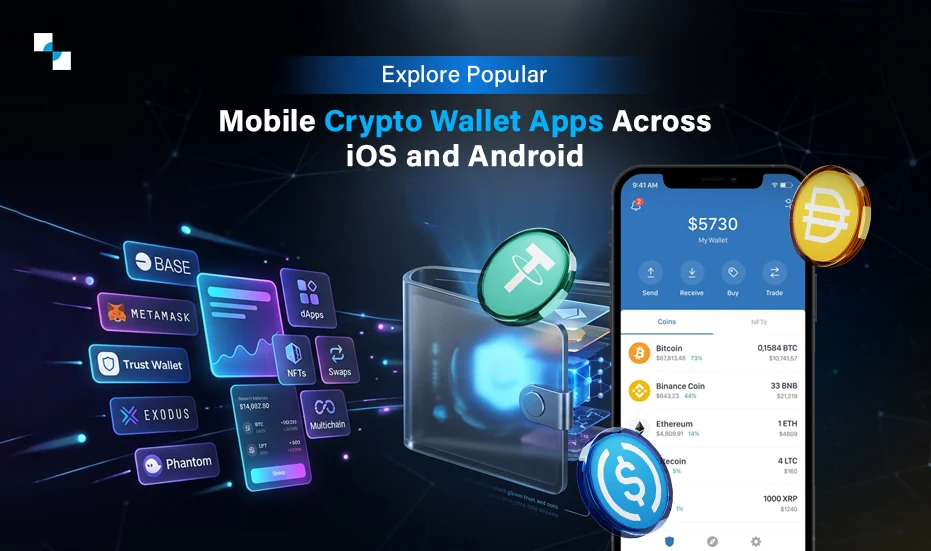
Let Us Discuss Some Of The Best Mobile Crypto Wallets in 2026
1) MetaMask
MetaMask remains one of the most feature-rich mobile options because it combines self-custody, broad chain coverage, mobile app support, buy flows, hardware crypto wallet integration, and advanced safety tooling. Its official materials describe it as a mobile app and browser extension for managing multiple blockchain keys and interacting with dapps, while newer features extend into swaps, bridging, tokenized assets, perps, and rewards.
For mobile buyers, the practical appeal is strong: MetaMask supports Apple Pay, Google Pay, PayPal, and other regional payment rails for buying crypto, while its Hardware Wallet Hub lists Ledger, Trezor, Keystone, NGRAVE ZERO, and others, including mobile-compatible options. It also offers security snaps and phishing-related protections that are increasingly important on smaller screens where users sign faster and inspect less.
2) Phantom
Phantom has evolved into a clean, mobile-friendly cryptocurrency wallet for users who want speed without feeling buried in complexity. Its official site emphasizes multiple chains in one wallet, real-time activity and notifications, NFT support, and fast trading tools, while its developer docs now list support across major networks, including Solana, Ethereum, Bitcoin, Base, Polygon, Sui, Monad, and HyperEVM.
It also has strong mobile hardware-wallet support: Phantom’s help center confirms Ledger integration on mobile via Bluetooth, which is a major plus for users who want phone convenience without surrendering offline key protection. For mobile-first users who value a sleek interface and broad consumer appeal, Phantom is one of the strongest choices in 2026.
3) Trust Wallet
Trust Wallet remains compelling among all the other crypto wallet platforms because it leans hard into self-custody, encryption, and broad network support. Its official materials highlight true ownership, encrypted backups, no personal tracking, biometric authentication, and integrated buying, swapping, staking, and DeFi features across 100+ blockchains.
For mobile users, this is a strong blend of simplicity and reach. Trust Wallet also supports hardware-wallet pairing through its browser extension and promotes proactive security warnings, hidden unsafe NFT handling, and encrypted cloud backups, which makes it attractive for users who want an all-rounder rather than a niche specialist.
4) Tangem
Tangem is different from the usual software crypto wallet because it behaves like a mobile-native hardware wallet. Its official materials describe NFC-based cards or ring-style hardware, no batteries or cables, support for 16,000+ assets across 85+ networks, optional seed phrases, access-code protection, and biometric authentication.
That makes Tangem especially compelling for long-term holders and users who place security above everything else. The value proposition is simple: your phone becomes the interface, but the signing authority stays in the physical hardware. For large balances, that distinction matters.
5) Coinbase Wallet
Coinbase’s wallet stack is a strong answer for users who want mobile onboarding to feel almost invisible. Coinbase Wallet is a self-custody crypto wallet that can import other wallets and recover through cloud backup or a recovery phrase. At the same time, Base Smart Wallet adds passkey-based access that works with Face ID, fingerprints, and other device-native authentication methods.
This is important for newer users who are intimidated by seed phrases but still want on-chain ownership. For teams building consumer crypto experiences, the Coinbase/Base model shows where mobile onboarding is heading: fewer manual steps, more device-native security, and less friction at the point of entry.
Make Your Wallet Launch Successful & User-Friendly!
6) OKX Wallet
OKX Wallet is designed for users who want a customized crypto wallet that can behave like an on-chain operating system. Its official materials highlight full key control, up to 1,000 sub-accounts, an in-app browser, QR-based transfers, and three swap modes that range from beginner-friendly to advanced and meme-focused.
That makes it a smart pick for active traders, frequent chain hoppers, and users managing multiple strategies through a single mobile interface. If the wallet has to serve both as a portfolio dashboard and a transaction hub, OKX is one of the more ambitious options in the market.
7) Exodus
Exodus continues to stand out for users who want a visually clean crypto wallet without sacrificing useful depth. Its official materials emphasize 1,000,000+ assets, mobile availability on iOS and Android, built-in buy/sell flows, staking, and passkey protection. Exodus also documents encrypted iCloud or Google Drive backups for mobile and explains that the passkey protects access to the encrypted secret key.
It is a strong fit for users who want a wallet that feels familiar, modern, and relatively easy to operate. The trade-off is that Exodus is still a software wallet, so larger holders may still prefer to pair it with stronger backup discipline or cold-storage practices.
8) Rainbow and Rabby
Rainbow is a mobile-first Web3 crypto wallet for users who care about clean design and active bridging/swapping. Its help content confirms swap and bridge support on Android and iOS, backup options on iCloud and Google Drive, and a mobile app experience built around accessibility.
Rabby, by contrast, is the wallet for users who care about Ethereum and EVM-native workflows. Its official app listing emphasizes portfolio tracking across EVM chains and seamless dapp connections, which makes it highly relevant for DeFi-heavy users who live inside the EVM universe.
Which Wallet Fits Which Persona?
For first-time users, Coinbase Wallet / Base, Exodus, and Rainbow are the easiest entry points because they reduce friction and simplify navigation. For traders and on-chain power users, MetaMask, Phantom, and OKX Wallet provide a deeper toolkit. For security-first holders, Tangem and hardware-paired setups deserve the most attention. For EVM specialists, Rabby and MetaMask remain highly credible picks. These are not just feature choices; they are operational choices tied to risk appetite, frequency of use, and how much control the user wants to keep in their own hands. And if you are planning to build a wallet solution, something similar to them for long-term success in this highly competitive market, then it is recommended that you partner with a renowned firm that has existing white label wallet software and helps you build customized and tailored solutions leveraging the modules.
What Enterprises Should Evaluate Before Choosing a Wallet?
- Key custody model– Who controls the private keys?
- Security features– Biometric login, encryption, and fraud alerts.
- Hardware wallet support– Can it connect to Ledger, Trezor, or similar devices?
- Multichain support– Does it support the networks you use?
- Recovery options– Is backup and account recovery simple and safe?
- User experience– Is the interface clean, fast, and mobile-friendly?
- Swap and DeFi access– Can users trade and connect to apps easily?
- Transaction clarity– Are fees, slippage, and approvals easy to review?
- Team credibility– Is the wallet backed by a trusted, transparent provider?
- Scalability– Can it support both beginners and high-volume users?
Conclusion
The best mobile crypto wallet app in 2026 is the one that matches the user’s risk profile, activity level, and comfort with self-custody. Some wallets win on design, some on multichain depth, and some on hardware-backed security. The most intelligent choice is the one that reduces mistakes while expanding what the user can do from a phone. For businesses, the wallet conversation is bigger than storage. It is about mobile trust, onboarding, transaction safety, and whether the product can carry both beginners and serious investors without breaking either experience.
Antier fits into that conversation as a crypto wallet development company for investors who want more than a wallet build. With a legal expertise team, certified experts, and deep capability across AI and blockchain, Antier is positioned to help shape mobile-first Web3 products with the right mix of strategy, security, and product discipline. For enterprises looking to move beyond a generic wallet and into a serious, revenue-ready solution, that combination matters.
Frequently Asked Questions
01. What features make a mobile crypto wallet "mobile-first" in 2026?
A mobile-first crypto wallet in 2026 includes biometric security, device-native protection layers, QR-based connectivity, push notifications, touch-optimized user experience, and integrated fiat on-ramps for seamless transactions.
02. How does biometric security enhance mobile crypto wallets?
Biometric security, such as Face ID and fingerprint unlock, replaces traditional password methods, providing a more secure and frictionless access experience for users.
03. Why are mobile crypto wallets becoming more important than desktop apps?
Mobile crypto wallets are becoming essential as they leverage advanced security features like secure enclaves and hardware-backed protections, making them architecturally resilient and more convenient for on-the-go transactions.