




✨ AI Summary
- The blog post discusses the rising trend of P2P chat-based crypto wallet development, emphasizing the importance of creating a seamless and engaging user experience in the digital asset movement.
- It highlights the current market trends, such as wider adoption, regulatory attention, and the significant role of stablecoins.
- The post explains how chat-based wallets work by merging communication and transaction layers, making crypto transfers feel as natural as chatting.
- It also explores the industries that can benefit from this technology, including fintech, e-commerce, gaming, and more.
- Additionally, the post mentions the advantages of using white-label modules for enterprises to speed up development and customize their chat-based wallet solutions.
P2P chat-based crypto wallet development is no longer just a product idea; it is becoming a practical answer to how modern users prefer to move value. People do not want a payment journey that feels cold, complex, or disconnected from real interaction. They want speed, clarity, trust, and a familiar flow that feels closer to messaging than banking. That is exactly where chat-based wallets stand apart. They combine conversation, transfer, and confirmation inside one intuitive layer, making digital asset movement feel natural. For businesses, this is more than convenience. It is a chance to build engagement, reduce friction, and create a wallet experience that serves both first-time users and serious crypto participants.
The Current Market of P2P Crypto Wallets and Chat-Based Transactions
The current crypto market is being shaped by three forces at once: wider adoption, stronger regulatory attention, and the rise of stablecoins as a serious settlement rail. Chainalysis reports that India and the United States lead the 2025 global adoption index, while TRM Labs notes that India, the US, Pakistan, the Philippines, and Brazil ranked highest for crypto adoption in the January to July 2025 window. TRM also found that stablecoins accounted for 30% of crypto transaction volume in that period, and stablecoin volume reached over 4 trillion dollars between January and July 2025. At the same time, the FCA’s 2025 consumer research shows that crypto users are shifting toward larger holdings, while regulators are moving toward more structured oversight.
That environment matters because a P2P chat-based wallet does not live in isolation. It sits at the intersection of user experience, compliance, and transaction utility. In simple terms, the market is rewarding products that feel easy for users and credible for institutions. A Web3 crypto wallet that makes transfers, confirmations, and communication happen in one flow can stand out in exactly that kind of market.
Why Are P2P Chat-Based Crypto Wallets Gaining Attention?
P2P chat-based cryptocurrency wallet solutions appeal because they solve a real behavior gap. Users do not always want to jump between a wallet, a chat app, an exchange interface, and a support desk. They want the transaction to happen where the conversation is already happening. Consensys’ 2024 global survey found that crypto wallet ownership is high in markets like India, where 50% of respondents reported owning a wallet, and overall web3 participation increased across several activities. That suggests a user base that is already familiar with wallets, but still open to simpler and more social transaction flows.
For enterprises, this means the product is not just about sending tokens. It is about creating context around the transaction. When payment, intent, and confirmation exist in one chat-led workflow, the experience becomes faster, more personal, and easier to adopt. P2P chat-based crypto wallet development is a powerful shift for retail, trading communities, enterprises, e-commerce, fintech creator economies, remittance use cases, peer networks, and much more.
How Does a Chat-Based Wallet Work?
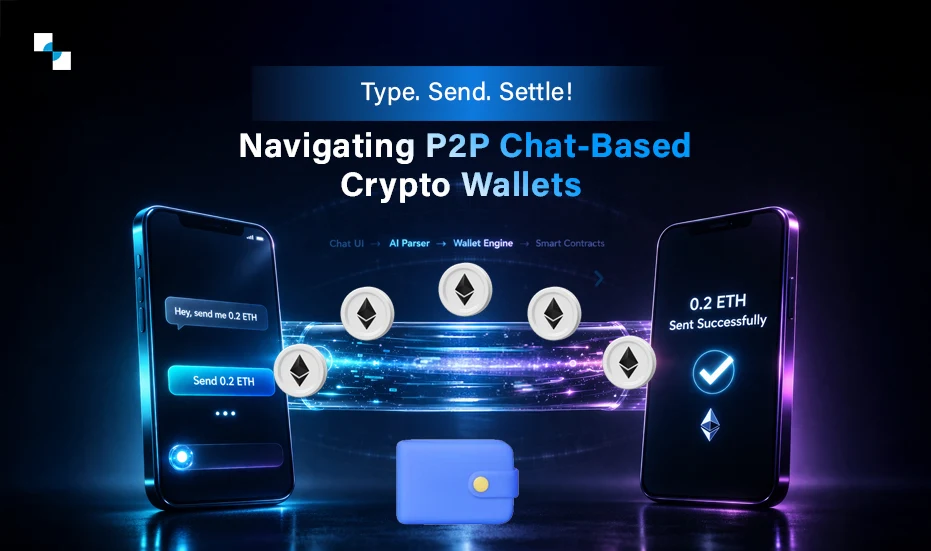
A chat-based blockchain wallet app works by merging communication and transaction layers into a single interface, allowing users to initiate, negotiate, and complete transfers directly within a conversation. Instead of navigating multiple screens, users can send crypto as naturally as sending a message. At its core, it operates on a peer-to-peer model, where funds move directly between wallet addresses without relying on a central intermediary.
When a user initiates a transaction in chat, the crypto wallet platform triggers a blockchain transaction, verifies it through network consensus, and reflects the real-time status within the conversation. Advanced systems also integrate escrow mechanisms to hold funds securely until both parties meet agreed conditions, reducing counterparty risk. This combination of messaging, automation, and decentralized execution makes the experience faster, more transparent, and far more intuitive for both new users and experienced crypto participants.
What Industries Can Use It?
The applicability of P2P chat-based crypto wallets is expanding across industries where real-time interaction and instant value exchange are critical. The most relevant ICPs include:
- Fintech & Neo Banking Platforms- For enabling instant crypto payments, remittances, and hybrid banking experiences
- Crypto Exchanges & Trading Platforms- To facilitate direct P2P trading with integrated chat negotiation and escrow
- E-commerce & Social Commerce Platforms- For enabling conversational payments, merchant chats, and in-chat checkout
- Gaming & Metaverse Ecosystems- For peer payments, in-game asset trading, and reward distribution
- Remittance & Cross-Border Payment Providers- To reduce dependency on intermediaries and enable faster settlements
- Freelancer & Creator Economy Platforms- For direct payouts, tipping, and contract-based escrow payments
- DeFi Platforms & Web3 Communities- For DAO interactions, community-driven transactions, and treasury flows
- Enterprise Marketplaces & B2B Networks- For secure deal negotiations, milestone payments, and escrow-based settlements
- Messaging Platforms & Super Apps- To embed financial functionality directly into user communication flows.
If you are a visionary investor who is interested in crypto wallet development that has chat features or integrations in it, then it is always recommended that you connect with an experienced mobile crypto wallet development company that holds years of experience in the field of blockchain, AI, and Web3.
Launch Your Conversational Wallet Solution Now!
How Can Enterprises Build It Faster with White Label Modules?
For enterprises, speed to market is often the difference between leading and lagging. White label crypto wallet modules significantly reduce development complexity and timelines by providing a pre-built, customizable foundation.
Instead of building from scratch, businesses can leverage ready-made architecture that already includes wallet infrastructure, transaction engines, and security layers. This eliminates the need for extensive backend development and allows teams to focus on customization and user experience.
White label wallet development modules also come with pre-integrated features such as multi-chain support, KYC frameworks, and transaction monitoring, which reduces compliance and technical overhead. Since these modules are designed for scalability, enterprises can easily adapt them to different use cases, whether it is fintech, gaming, or marketplace integration.
Another major advantage is flexibility. Businesses can rebrand the solution, customize workflows, and integrate it with existing systems without disrupting their current ecosystem. This makes the transition from Web2 to Web3 faster, smoother, and more cost-efficient while still maintaining control over the final product.
The Future Nexus of P2P Chat-Based Crypto Payments
The future of chat-based crypto payments is closely tied to how digital interactions are evolving. As users increasingly prefer conversational interfaces over traditional dashboards, financial transactions are expected to follow the same path. Chat-based cryptocurrency wallets are likely to become a standard layer within messaging platforms, super apps, and even enterprise systems, turning conversations into transaction environments.
At the same time, the rise of stablecoins is pushing crypto toward real-world utility, especially in payments and cross-border transfers. Combined with advancements in AI, automation, and identity verification, chat-based wallets will become more intelligent, capable of guiding users, detecting risks, and simplifying complex transactions.
For enterprises, this shift represents a clear opportunity. The products that succeed will not be those that simply enable transfers but those that create seamless, secure, and context-aware financial experiences within everyday interactions.
Antier Doesn’t Just Help You Build a Wallet; It Helps You Build Experience
P2P chat-based crypto wallet development is quickly emerging as a practical answer to how modern users want to handle digital value, with less friction, more context, and a far more natural transaction flow. As the market continues to lean toward stablecoin utility, peer-driven experiences, and tighter compliance expectations, businesses need solutions that feel both intuitive and dependable. The real opportunity lies in building wallets that do not just store assets but actively improve how people communicate and transact.
Antier stands out as a reliable partner for this shift, backed by legal expertise, certified professionals, and a white label cryptocurrency wallet app designed for faster market entry. From custom Web3 development to seamless Web2 to Web3 transformation, Antier helps businesses shape solutions around their exact goals. With deep technical capability and tailored delivery, it enables enterprises to launch stronger, scale faster, and stay aligned with the future of digital finance. Connect today to share your business requirements and planning.
Frequently Asked Questions
01. What are P2P chat-based crypto wallets?
P2P chat-based crypto wallets are digital wallets that integrate conversation, transfer, and confirmation into a single intuitive interface, allowing users to move value in a way that feels more natural and engaging, similar to messaging.
02. Why are P2P chat-based wallets becoming popular?
They are gaining attention because they address the need for a seamless transaction experience, allowing users to conduct transactions directly within their chat conversations without switching between multiple apps.
03. What factors are influencing the current market for P2P crypto wallets?
The market is being shaped by wider adoption of cryptocurrencies, increased regulatory scrutiny, and the rise of stablecoins, which together create a demand for user-friendly and compliant wallet solutions.