




AI Summary
- Discover how Agentic AI is revolutionizing customer relationship management (CRM) systems by introducing autonomous AI agents that manage and optimize customer interactions.
- These intelligent systems go beyond traditional CRM functionalities by automating lead qualification, personalized communication, sales pipeline management, predictive decision-making, and customer support.
- The blog post highlights the key components of Agentic AI CRM platforms, the strategic framework for developing AI agents, and the benefits of adopting such advanced systems.
- It also discusses the growing need for autonomous CRM systems in large enterprises and the transformative impact of Agentic AI on streamlining operations and enhancing customer experiences.
- Stay ahead of the curve by embracing Agentic AI-powered CRM platforms to drive revenue growth and deliver personalized customer interactions at scale.
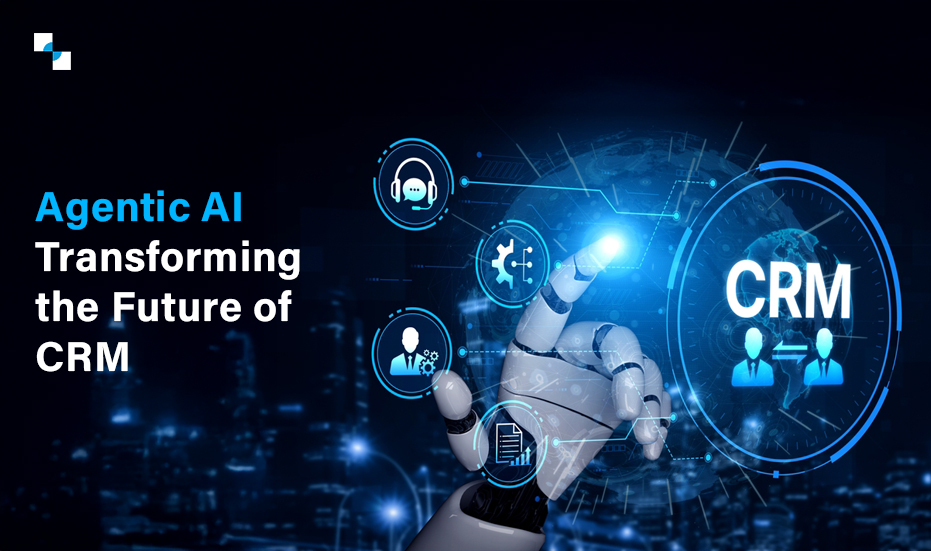
Customer Relationship Management (CRM) platforms have long been central to modern business operations, enabling organizations to track customer interactions, manage sales pipelines, and build lasting relationships. However, as customer ecosystems become increasingly complex and data-driven, traditional CRM systems struggle to keep pace. The emergence of Agentic AI-powered CRM marks a major transformation in how organizations manage customer engagement. Agentic AI systems use autonomous AI agents capable of perceiving data, reasoning about goals, executing tasks, and learning from outcomes. These intelligent systems can automate complex business workflows without constant human intervention, transforming CRM platforms into self-operating customer management ecosystems.
According to Gartner, the adoption of AI agents in enterprise applications is accelerating rapidly. The firm predicts that 40% of enterprise applications will include task-specific AI agents by 2026, compared with less than 5% today.
This shift signals a new era where CRM systems are no longer just data repositories but autonomous decision-making platforms that drive customer engagement and revenue growth.
What is an Agentic AI-Powered CRM?
An Agentic AI-powered CRM represents the next evolution of customer relationship management, where intelligent AI agents actively manage and optimize customer interactions across the entire business ecosystem. These platforms go beyond basic data management by enabling autonomous systems to analyze customer behavior, execute workflows, and continuously improve engagement strategies.
An Agentic AI-powered CRM represents the next evolution of customer relationship management, where intelligent AI agents actively manage and optimize customer interactions across the entire business ecosystem. These platforms go beyond basic data management by enabling autonomous systems to analyze customer behavior, execute workflows, and continuously improve engagement strategies.
At the core of an agentic CRM environment are AI agents designed to perform complex tasks such as lead qualification, personalized customer communication, sales forecasting, and support workflow management. These agents operate with contextual awareness, enabling them to interpret data patterns, align actions with business goals, and respond dynamically to changing customer needs.
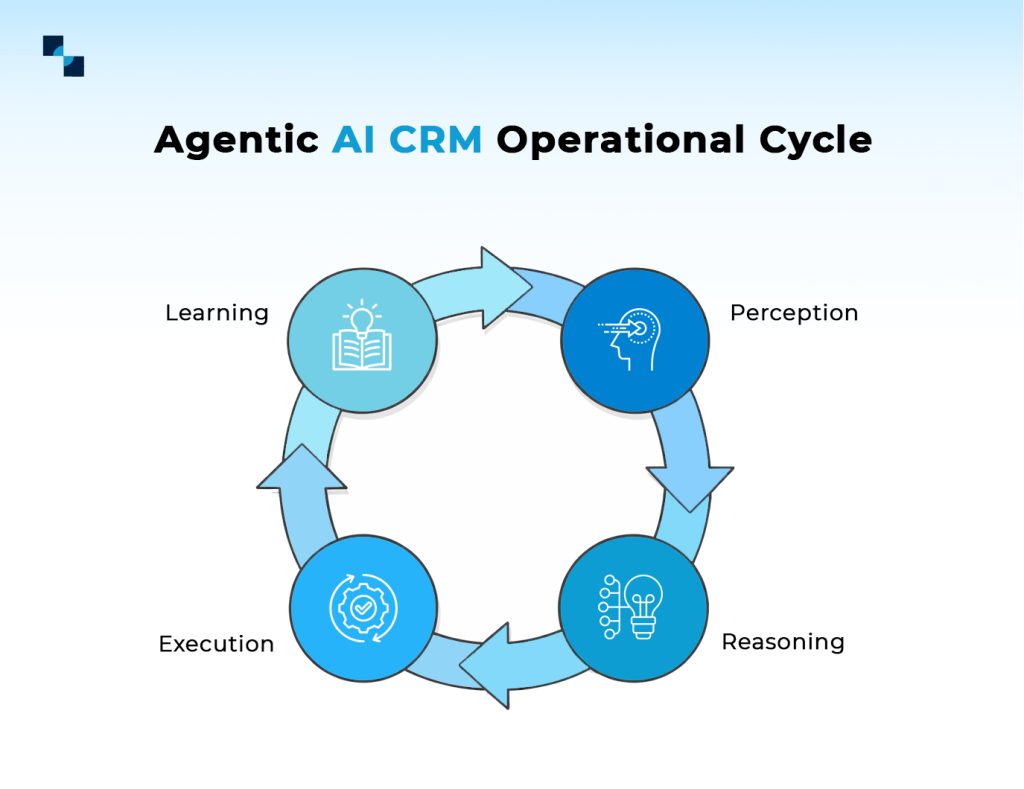
Most Agentic AI CRM platforms operate through an intelligent operational cycle that includes:
- Perception
Collecting and analyzing customer data from multiple enterprise systems, including CRM databases, marketing platforms, and communication tools.
- Reasoning
Interpreting contextual signals and identifying the most effective strategy to improve customer engagement or sales outcomes.
- Execution
Performing automated actions across integrated enterprise platforms, such as sending personalized outreach, updating pipelines, or initiating support workflows.
- Learning
Evaluating results and continuously improving future decisions through adaptive AI models and feedback loops.
By embedding autonomous AI agents directly into CRM infrastructure, organizations can transform traditional CRM environments into intelligent, self-operating customer management systems. Businesses often collaborate with an experienced Agentic AI Development Company to design and deploy these advanced platforms, ensuring scalable architecture, seamless integrations, and enterprise-grade automation capabilities.
The result is a new generation of CRM systems that actively manage customer relationships, optimize sales performance, and deliver highly personalized customer experiences at scale.
The Growing Need for Autonomous CRM Systems
Traditional CRM systems have improved operational efficiency but still rely heavily on manual processes and rule-based automation. In large enterprises, sales teams often spend significant time on administrative work instead of focusing on customer relationships and strategic decision-making. Agentic AI introduces a more advanced paradigm where digital agents handle operational workloads while human teams focus on high-value activities.
Research from IBM highlights that AI agents are already transforming enterprise workflows across departments such as HR, procurement, finance, and sales. When deployed across enterprise operations, these digital agents significantly improve productivity and operational efficiency. IBM also reported that internal deployments of enterprise AI automation generated billions of dollars in productivity impact, demonstrating the massive potential of autonomous AI systems in enterprise environments.
In CRM environments, these capabilities enable organizations to automate lead management, customer communication, and support workflows at scale.
How Agentic AI Is Transforming CRM Systems
Agentic AI is fundamentally changing how organizations manage customer interactions and operational workflows. Below are some of the most important capabilities driving the adoption of Agentic AI in CRM systems.
1. Autonomous Lead Qualification
AI agents can analyze behavioral signals such as website interactions, email engagement, and purchasing patterns to automatically identify high-value leads. These insights enable sales teams to focus on prospects with the highest conversion potential.
2. Intelligent Customer Engagement
Agentic CRM platforms use advanced analytics and AI reasoning to deliver personalized communication across channels including email, chat, mobile applications, and social media. These systems dynamically adjust messaging strategies based on customer behavior and preferences.
3. Automated Sales Pipeline Management
AI agents can monitor sales pipelines, identify stalled deals, and automatically initiate follow-up actions such as scheduling meetings or sending personalized outreach messages. This ensures that opportunities move efficiently through the sales funnel.
4. Predictive Decision Intelligence
Agentic CRM systems leverage large datasets and machine learning models to predict customer behavior, identify churn risks, and recommend strategic actions. These predictive capabilities enable businesses to make data-driven decisions faster.
5. Autonomous Customer Support
Agentic AI can independently resolve many customer service requests by analyzing knowledge bases, past support interactions, and contextual data. As a result, enterprises can significantly reduce operational costs while maintaining high customer satisfaction.
Transform Your CRM with Intelligent Automation
How Agentic AI is Redefining Enterprise CRM Operations
Large enterprises operate across complex digital ecosystems where customer interactions occur through mobile apps, websites, contact centers, and marketing platforms. Managing these touchpoints efficiently requires intelligent systems capable of processing large volumes of customer data and coordinating actions across departments.
Agentic AI introduces autonomous AI agents within enterprise CRM systems that analyze customer behavior, automate engagement strategies, and execute workflows across sales, marketing, and support operations. These AI agents continuously learn from data, enabling businesses to deliver highly personalized customer experiences at scale.
Industry research suggests that AI agents are rapidly becoming a core component of modern enterprise software ecosystems. As organizations increasingly adopt intelligent automation, Agentic AI-powered CRM platforms are evolving into critical infrastructure for streamlining operations, accelerating data-driven decision-making, and enhancing customer relationship management across global markets.
Key Components of Agentic AI CRM Platforms
Developing enterprise-grade Agentic AI CRM platforms requires multiple technology layers working together to enable intelligent automation, seamless integrations, and autonomous customer engagement across the organization.
1. Data Intelligence Layer
The data intelligence layer aggregates and processes customer data from multiple enterprise sources, including CRM systems, marketing platforms, and customer support tools. This unified data foundation allows AI agents to analyze behavioral signals, engagement history, and transactional insights. High-quality, structured data is essential for enabling accurate decision-making and contextual customer interactions within an agentic CRM environment.
2. AI Agent Layer
The AI agent layer consists of specialized autonomous agents designed to manage specific CRM functions across the customer lifecycle. These agents may include lead qualification agents, sales engagement agents, customer support agents, and marketing automation agents. Each agent operates independently while collaborating with other agents to execute complex workflows, automate customer interactions, and improve operational efficiency across sales and marketing teams.
3. Orchestration Layer
The orchestration layer acts as the coordination engine that manages communication between AI agents and enterprise systems. It ensures that tasks are executed in the correct sequence, workflows remain synchronized, and decision processes align with business objectives. By orchestrating interactions between agents and enterprise platforms, this layer enables smooth automation of multi-step CRM processes.
4. Integration Layer
The integration layer connects the agentic CRM platform with critical enterprise tools such as marketing automation platforms, ERP systems, customer support platforms, and communication tools. These integrations allow AI agents to trigger actions across the entire enterprise ecosystem, enabling real-time customer engagement, automated updates, and seamless data exchange between systems.
Building AI Agents for CRM: A Strategic Framework for Agentic AI CRM Development
Modern businesses are turning to Agentic AI-powered CRM platforms to streamline customer engagement and automate complex workflows. To achieve this, Agentic AI development companies design scalable AI agents that integrate enterprise data and enable intelligent decision-making.
Step 1: Identify CRM Automation Opportunities
The first step involves identifying high-impact CRM workflows that can benefit from AI-driven automation. These opportunities often include processes such as lead qualification, sales follow-ups, customer support responses, and marketing campaign optimization. Prioritizing the right automation areas helps organizations maximize efficiency and improve customer engagement outcomes.
Step 2: Design AI Agent Architecture
In this phase, specialized AI agents are designed with clearly defined capabilities and responsibilities across the CRM ecosystem. Organizations typically deploy agents such as sales assistant agents, marketing optimization agents, and customer engagement agents. Each agent performs specific tasks while collaborating with other agents to execute complex customer workflows.
Step 3: Integrate Data Infrastructure
AI agents require access to unified and reliable enterprise data to function effectively. This step focuses on integrating CRM databases, marketing platforms, analytics tools, and customer support systems into a centralized data infrastructure. A well-integrated data environment enables AI agents to analyze customer signals and generate context-aware actions.
Step 4: Deploy Decision Intelligence Models
At this stage, machine learning models and large language models are deployed to power the reasoning and decision-making capabilities of AI agents. These models allow agents to interpret customer intent, generate intelligent responses, and automate decision-driven workflows across sales, marketing, and service operations.
Step 5: Monitor and Optimize
Continuous monitoring ensures that AI agents operate accurately, securely, and in alignment with business objectives. Performance metrics, feedback loops, and model updates help optimize agent behavior over time. This ongoing improvement process ensures that CRM systems deliver measurable business value and maintain consistent customer experiences.
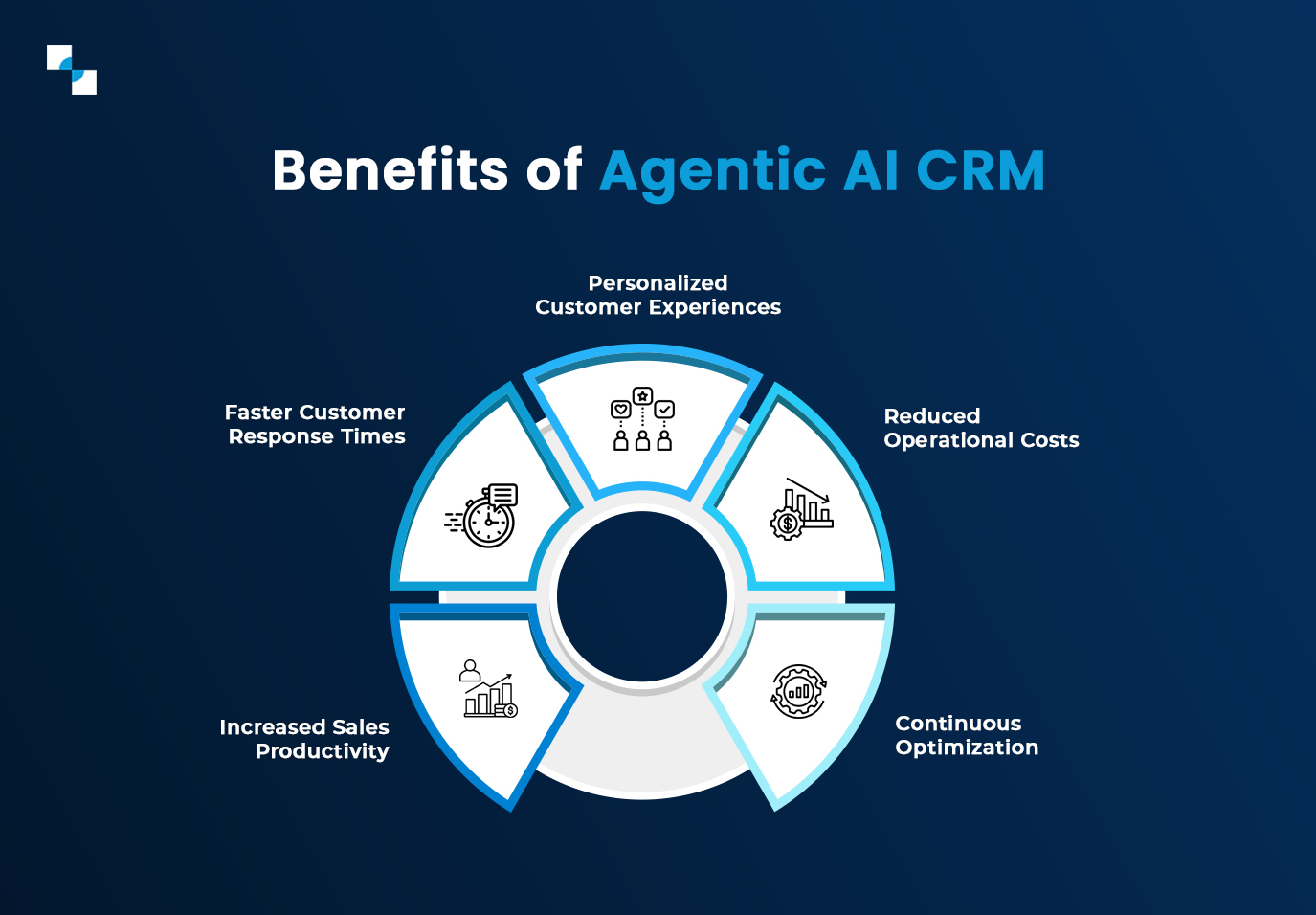
Benefits of Agentic AI CRM Platforms
Organizations adopting Agentic AI CRM platforms can unlock multiple strategic advantages.
1. Increased Sales Productivity
Sales teams spend less time on administrative tasks and more time closing deals.
2. Faster Customer Response Times
AI agents respond instantly to customer queries and engagement signals.
3. Personalized Customer Experiences
Advanced analytics enable hyper-personalized communication strategies.
4. Reduced Operational Costs
Automation reduces reliance on manual processes and repetitive tasks.
5. Continuous Optimization
Agentic systems learn from data and continuously improve workflow performance.
The Future of Agentic AI in CRM Systems
Agentic AI is expected to become a foundational technology across enterprise software ecosystems.
Industry experts believe enterprises will begin seeing measurable business impact from agentic AI deployments within the next 18 to 24 months as adoption matures.
As organizations continue integrating autonomous AI agents into enterprise systems, CRM platforms will evolve into intelligent ecosystems capable of managing customer relationships independently.
Future CRM systems will likely include:
- Multi-agent collaboration frameworks
- Autonomous revenue operations
- Predictive customer lifecycle management
- Real-time decision automation
Companies that adopt agentic CRM technologies early will gain a significant competitive advantage.
Create Intelligent CRM Systems with Agentic AI
As businesses move toward autonomous operations, Agentic AI-powered CRM platforms are becoming essential for delivering intelligent customer experiences.
At Antier, we help organizations build advanced Agentic AI CRM platforms designed to automate customer workflows, optimize sales pipelines, and transform enterprise CRM infrastructure.
As a trusted Agentic AI development company, Antier delivers comprehensive Agentic AI development services that enable enterprises to design and deploy intelligent CRM systems powered by autonomous AI agents.
Whether you are exploring Agentic AI in enterprise CRM or planning building AI agents for CRM, our experts can help you create scalable, secure, and future-ready AI-driven customer platforms.