






✨ AI Summary
- In a rapidly evolving landscape, stablecoins are revolutionizing global payments, offering faster, cheaper, and more inclusive transactions.
- From remittance to retail, stablecoin adoption is skyrocketing, reshaping how value moves across borders.
- Transaction volumes are soaring, regulatory clarity is boosting confidence, and millions are embracing this reliable form of digital finance.
- The surge in stablecoin usage is redefining global commerce, with key countries like the USA, UAE, and Russia leading the way.
- As institutions drive legitimacy and adoption soars, businesses are investing in resilient stablecoin payment platforms for the future.
What if the old rules of global payments were quietly being replaced by something faster, smarter, and more inclusive? Right now, stablecoins are changing how value moves across borders while unlocking possibilities that old payment networks could never deliver. Across continents, from bustling fintech hubs to emerging markets, stablecoin remittance is proving it can settle billions in minutes with near-zero fees. Banks, airlines, and retailers are already weaving stablecoin rails into their payment flows to gain an edge that competitors are still struggling to understand.
It is happening in real time, and the numbers tell the story. Transaction volumes are breaking records, regulatory clarity is driving confidence, and millions of users are embracing a simpler, more reliable way to send and receive funds through stablecoin remittance platform development and adoption. If you want to stay at the forefront of digital finance, take a closer look at the countries fueling this transformation and see how enterprises are creating resilient platforms for the future of payments.
Keep reading to discover why stablecoin remittance is becoming the most important shift in global commerce and how you can be ready to lead instead of catching up.
Why Global Trends Are Powering Stablecoin Remittance Across Economies?
Stablecoins have surged from a $5B market in 2020 to $251.55B in 2025, with annual transaction volume hitting $27.6T in 2024, even outpacing Visa and Mastercard by 7.7%. With remittance costs as low as < $0.01 (vs. $7+ via banks), they’re transforming cross-border payments.
- Cross-Border Payments Are Leading the Surge: Monthly volumes rose from $1.9T (Feb 2024) to $4.1T (Feb 2025), a 115% YoY increase. May 2025 alone saw $1.4T in remittance volume, pushing year-to-date totals to $20.2T.
- Adoption Is Global, Infrastructure Is Ready: Tron leads with $2.9T in USDT, favored in Asia. Ethereum, BSC, Solana, and Layer 2s like Base and Arbitrum process billions. Stablecoins operate 24/7, even surpassing weekday volumes on weekends.
- Institutions Are Driving Legitimacy: By 2025, 90% of global institutions were using or piloting stablecoins. Regulatory clarity from the GENIUS Act (U.S.) and MiCA (EU) has boosted trust, with 88% of North American firms viewing regulation positively.
- Adoption on the Ground Is Soaring: Active users grew 53% YoY to 30M. Total holders reached 121.67M, and average transaction sizes nearly doubled to $3.8K, showing rising trust for real-world use.
Stablecoins have moved beyond hype to become essential infrastructure for global remittance. Stablecoin remittance is redefining how money moves across economies, with rising adoption, lower costs, and strong institutional support. This momentum shows no signs of slowing as stablecoin remittance platform development empowers businesses and communities to embrace faster, more reliable digital finance.
How Are Enterprises Building Resilient Stablecoin Payment Platforms?
For CTOs, payment processors, and banks exploring stablecoin payment platform development, architectural design is pivotal. In an environment defined by regulatory scrutiny and evolving market expectations, building infrastructure that balances compliance, security, and scalability is non-negotiable. Secure custody, compliant KYC/AML modules, and liquidity orchestration remain the core pillars that determine the long-term viability of any stablecoin remittance ecosystem.
Key technical considerations include:
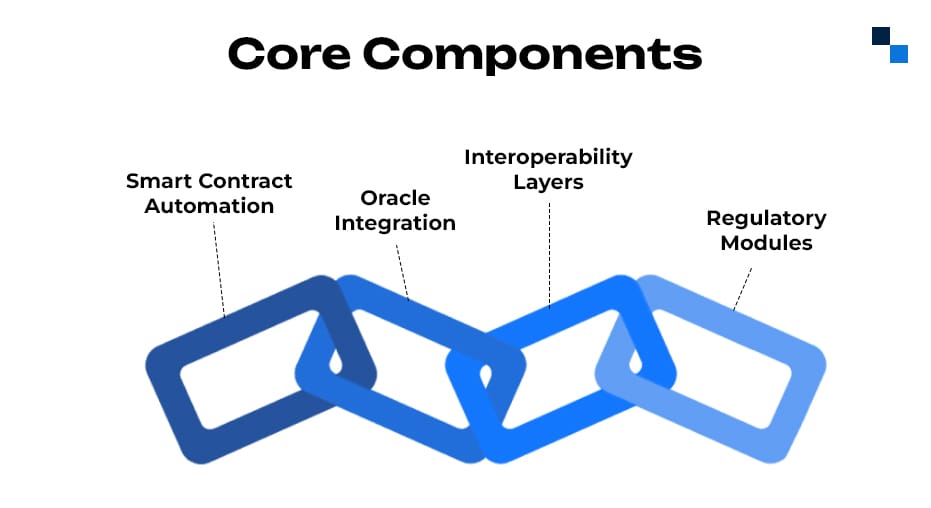
- Smart Contract Automation: Enables instant, rule-based disbursements.
- Oracle Integration: Delivers real-time FX rates and compliance triggers.
- Interoperability Layers: Connects to major public and private chains.
- Regulatory Modules: Enforces local laws, sanctions, and transaction limits.
The result is faster cash flows, programmable payouts, improved customer trust, and hyper-competitive pricing that disrupts legacy remittance corridors. As the market matures, organizations that invest early in resilient infrastructure will be uniquely positioned to capture the next wave of digital remittance volume. Investing in a secure and scalable stablecoin remittance platform empowers institutions to future-proof their payment operations, strengthen customer relationships, and unlock new revenue streams in the era of Web3 payments.
Top 7 Countries Leading the Stablecoin Remittance Movement
As the world moves beyond slow, costly legacy payment systems, stablecoins are emerging as a unifying force for frictionless, digital remittances. The nations below stand at the forefront of this evolution, setting the pace for the future of cross-border value exchange.

- USA
The United States is taking the lead in stablecoin remittance innovation. As dollar-backed stablecoins gain traction across fintech platforms, banks and money service providers are exploring faster, more cost-effective cross-border rails. A major development came when Guatemala’s largest bank integrated U.S.-based stablecoin infrastructure to improve its remittance payment systems. As regulatory clarity improves in the U.S., stablecoin adoption is becoming increasingly viable for remittance companies, migrant workers, and financial institutions.
- UAE
The United Arab Emirates is setting new standards for stablecoin remittance platform development regulation and programmable money. With Bahrain’s newly introduced stablecoin rules and the UAE’s domestic push to implement programmable payment systems, businesses, and consumers are experiencing a shift in how financial interactions are executed. This creates fertile ground for advanced stablecoin solutions that streamline rent payments, contractor settlements, and digital remittance infrastructure.
- Russia
Faced with economic sanctions and geopolitical isolation, Russia is turning to stablecoins as a strategic tool for financial autonomy. Rostec’s move to develop a TRON-based stablecoin is aimed at facilitating both domestic and cross-border trade while providing an alternative to traditional banking systems. For remittance senders and receivers, stablecoins offer fast, censorship-resistant digital money transfers that bypass SWIFT dependencies.
- EU
The European Union is evolving its regulatory stance on stablecoins, positioning them as complementary to the digital euro and traditional payment systems. The ECB’s forward-looking policies reflect growing confidence in stablecoins as a legitimate layer of financial innovation. These developments signal stronger support for stablecoin payments across intra-European corridors.
- South Korea
A tech-driven nation, South Korea is actively piloting stablecoin-powered cross-border payments. The recent partnership between Travel Wallet and Avalanche introduced a Korean won-pegged stablecoin, bringing faster settlements to retail merchants and remittance corridors. This innovation positions South Korea at the forefront of stablecoin adoption for regulated digital payments.
- Brazil
Brazil’s fintech momentum continues with stablecoin-based forex swaps and remittance enhancements. The Conduit and Braza Group collaboration allows enterprises and migrant workers to access transparent, real-time settlement options. Businesses exploring stablecoin remittance platform development in Brazil now find a favorable environment to build blockchain-enabled remittance and payment platforms.
- Africa
Africa is emerging as the most dynamic region for stablecoin utility, driven by high remittance inflows, currency volatility, and widespread mobile adoption. The groundbreaking partnership between Visa and Yellow Card is transforming digital remittances across the continent, making cross-border transfers faster, more transparent, and significantly more affordable. As more households and small businesses embrace crypto wallets and blockchain-based payment networks, Africa’s appetite for decentralized finance is accelerating. This momentum positions the continent as a vibrant market for companies offering stablecoin remittance platform development services and innovative solutions tailored to local needs.
The momentum behind stablecoin remittance adoption is unmistakable. Whether to improve transparency, drive financial access, or modernize outdated rails, these nations are proving that digital currencies can deliver real-world benefits on a global scale.

What’s Next for Retailers, Airlines, and Institutions Entering the Stablecoin Remittance Space?
Retailers, airlines, and large institutions are moving into stablecoin remittance as demand for faster, more predictable transfers gains momentum. Businesses in these sectors see clear benefits, settlements that occur in minutes rather than days, cost reductions that protect margins, and payment rails that remain operational across time zones. A growing number of airlines plan to issue refunds or process partner settlements using digital assets pegged to fiat, cutting reliance on costly intermediaries. Retailers are exploring checkout integrations that accept stablecoin payments, this approach appeals to younger customers who already keep balances in digital wallets.
Institutions view these tools as a practical method to reduce exposure to currency swings, stablecoins hold their value, giving treasuries more control when moving funds between markets. Many regions now offer clearer rules, so firms can launch pilots without legal uncertainty. As more players join this movement, the shift toward stablecoin payment platform development will accelerate, reshaping how funds move across borders. Companies that invest early can establish trust, gain efficiency, and build a reputation for modern, responsive payment experiences that meet global expectations.
The Shift Has Started. Will You Lead or Lag?
Stablecoin remittance is rewriting the rules of global payments, offering instant transfers and near-zero fees that traditional systems can’t match. Enterprises worldwide are adopting stablecoin remittance platform development to gain an edge and meet rising customer expectations. A powerful Stablecoin Remittance Platform enables seamless, secure, and compliant cross-border transactions. Investing in stablecoin payment platform development positions your business to reduce costs, improve transparency, and stay ahead of competitors.
Antier stands at the forefront of blockchain innovation, delivering world-class stablecoin remittance platform development solutions. Renowned for technical excellence and regulatory expertise, we empower enterprises to launch secure, compliant, and high-performance stablecoin remittance platforms. Redefine cross-border payments with Antier’s signature blend of innovation, compliance, and flawless execution. Partner with Antier to architect a transformative stablecoin remittance ecosystem that accelerates settlements, fortifies compliance, and redefines what’s possible in global payments.