




✨ AI Summary
- In 2025, the real estate sector is rapidly adopting smart contracts to streamline property transactions with speed, accuracy, and trust.
- Smart contracts eliminate delays, reduce fraud risk, and simplify processes for various real estate agreements, such as rent-to-own deals, zoning compliance, fractional ownership, carbon credit projects, inheritance transfers, title dispute resolutions, regulatory compliance, crowdfunding, and more.
- These smart contracts automate tasks, ensure transparency, and offer efficient solutions benefiting buyers, sellers, investors, tenants, brokers, crowdfunding platforms, and the real estate industry as a whole.
- With AI integration, smart contracts are evolving to enable autonomous real estate platforms, AI-powered lease management, dispute resolution, and governance in smart cities.
- As the real estate industry embraces digital transformation, the demand for trusted smart contract development services is on the rise to create secure and tailored blockchain solutions.
Property deals often get stuck in a cycle of delays, paperwork, and back-and-forth negotiations. Missed deadlines, unclear clauses, and reliance on multiple intermediaries make even a straightforward transaction time-consuming and prone to disputes. Now imagine a digital agreement that holds the funds, tracks every step, and releases ownership automatically only when all conditions are met. This is exactly what a smart contract on real estate can deliver.
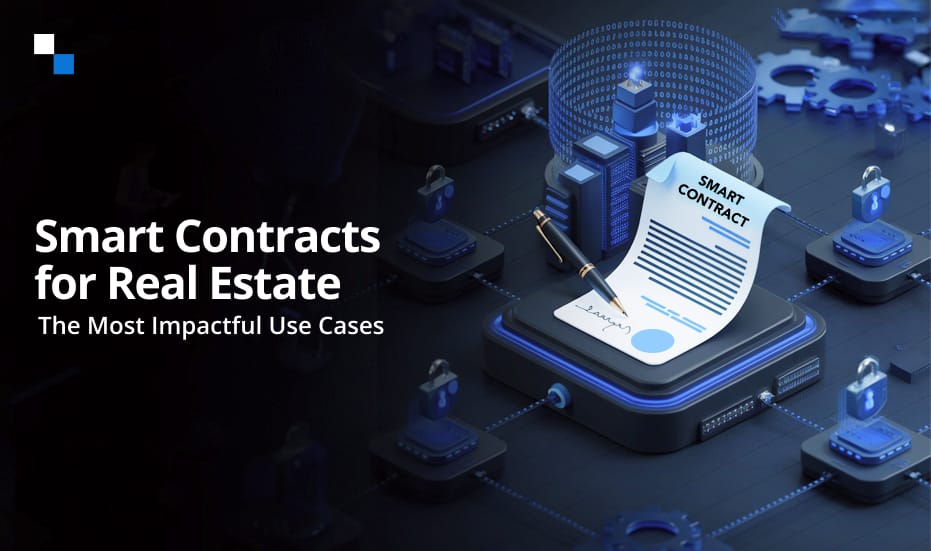
With growing adoption in 2025, smart contracts for real estate are rapidly becoming the preferred method for executing property agreements with speed, accuracy, and trust. Whether it’s a rental contract, a commercial lease, or a multi-investor ownership model, smart contracts are removing long-standing inefficiencies, reducing fraud risk, and simplifying processes that once took weeks.
As more companies adopt blockchain-backed systems, demand for trusted smart contract development services continues to rise. Whether it’s automating lease agreements, securing cross-border sales, or enabling fractional property ownership, the role of a skilled smart contract development company is now more crucial than ever.
This blog highlights the most impactful real estate smart contract use cases in 2025 and the key stakeholders who can turn them into real business advantages.
The Most Impactful Use Cases of Smart Contracts in the Real Estate Sector
1. Escrow-Free Rent-to-Own Agreements with Tokenized Milestones
Challenge: Rent-to-own real estate deals often require escrow agents, which leads to delays, high costs, and legal ambiguity.
Smart Contract Solution: A smart contract on real estate can replace escrow entirely. Ownership is broken into programmable, tokenized segments. Each rent payment auto-triggers a percentage shift in ownership, recorded immutably on-chain. This removes third-party involvement.
Example: A tenant pays $1,000 monthly. After 12 on-time payments, the contract reflects 10% ownership. All rights, obligations, and access are updated in real time. This model is gaining traction in US metro markets where younger buyers seek alternative financing models.
2. Auto-Enforced Zoning Compliance with Smart Contract Conditions
Challenge: U.S. developers face fines or delays due to misinterpreted zoning laws and non-compliance with local regulations.
Smart Contract Solution: Smart contracts for real estate can embed local zoning rules into the transaction logic. Development permits or funding transfers only proceed if the zoning data aligns. With increased focus on urban sprawl and green zoning in states like California and Oregon, such enforcement models are being considered by local planning bodies.
Example: A smart contract restricts a developer’s NFT-based building permit transfer if height or utility codes are violated. Geospatial API data feeds help validate real-time compliance.
3. Fractional Commercial Real Estate Ownership via Stablecoin Streams
Challenge: Access to premium U.S. commercial properties is out of reach for most individual investors.
Smart Contract Solution: Smart contracts on real estate tokenize ownership into micro-shares and automate stablecoin-based profit sharing. Every investor receives a continuous USDC stream tied to their stake.
Example: A 50,000 sq ft Dallas warehouse is tokenized. Each investor receives 0.1% daily rental earnings in USDC. No property manager, no delay.
4. Smart Contracts for Carbon Credit-Linked Real Estate Projects
Challenge: Sustainable real estate lacks real-time tracking of carbon milestones and financial incentives.
Smart Contract Solution: Smart contract development services can be built on carbon benchmarks. Verified reductions trigger the release of carbon credit NFTs or stablecoin bonuses.
Example: A housing project installs solar panels. Once 80% are live, the smart contract unlocks tradeable carbon credits or USDC rewards for the developer. With tax credits under the U.S. Inflation Reduction Act, such smart contract models can automate payouts and verification for green developers.
5. Probate-Free Inheritance Transfer of Tokenized Property
Challenge: Inheritance processes in the U.S. often stretch for months, involving court systems and legal fees.
Smart Contract Solution: Smart contracts on real estate automate property transfers using blockchain death verification and wallet inactivity logic.
Example: If a property owner’s wallet is inactive for 12 months and a certified death NFT is submitted, the ownership automatically transfers to the next-of-kin wallet.

6. On-Chain Title Dispute Resolution via NFT Metadata Voting
Challenge: Property disputes are slow and rarely transparent, especially in high-density U.S. urban zones.
Smart Contract Solution: NFT-titled properties can include metadata that defines a smart contract-based dispute mechanism. Community validators or licensed professionals vote using staked tokens. This model is being explored by Web3 land registries in Florida and Texas, where title fraud has increased.
Example: Two users claim rights to a single lot. The dispute contract initiates a validator vote that closes within seven days. The final decision updates the title NFT.
7. US-Backed Real Estate Token Compliance with Smart AML/KYC Filters
Challenge: SEC enforcement has made KYC and AML non-negotiable for real estate tokenization.
Smart Contract Solution: Smart contract development services now integrate compliance oracles like TRM Labs or Chainalysis. Token transfers are blocked unless the receiving wallet is KYC-verified.
Example:
Before a tokenized apartment share is sent, the smart contract checks if the recipient wallet is whitelisted. If not, it halts the transfer. This model satisfies U.S. regulatory demands for compliant on-chain securities while enabling peer-to-peer trading.
8. Crowdfunded Real Estate with Performance-Based Refund Clauses
Challenge: Property backers on crowdfunding sites lack legal recourse if projects fail or are delayed.
Smart Contract Solution: Smart contracts for real estate tie investor protection to progress. If development lags, refund votes can be triggered.
Example: If only 30% of a site is completed by month 8, the smart contract initiates a vote. If a refund threshold is met, partial or full refunds are executed immediately.
Who can benefit from Real Estate Smart Contracts?
Real Estate Buyers: Gain faster property ownership transfers and automated, secure transactions without relying on intermediaries.
Property Sellers: Receive prompt payments as soon as contract terms are met, reducing fraud and closing delays.
Rental Property Owners: Automate rent collection, enforce lease terms, and reduce tenant-related disputes.
Tenants and Renters: Experience clear rental terms, timely receipts, and less dependency on landlords for documentation.
Real Estate Investors: Track fractional ownership, automate profit distribution, and streamline investment exits with on-chain proof.
Brokerage Firms and Agents: Get instant and transparent commission distribution with no post-sale confusion or delays.
Real Estate Crowdfunding Platforms: Protect investor funds with contract-bound conditions and build trust through automated fund release or refunds.
Why Smart Contracts Matter for the Real Estate Sector in the Future?
Autonomous Real Estate Platforms
AI models can now assess property values, flag legal risks, screen tenants, and interpret market trends. A smart contract on real estate can auto-adjust terms based on AI inputs or revoke access if anomalies in ownership records are detected, driving the rise of autonomous real estate platforms.
No-Code Real Estate Transactions
The next generation of users will prefer platforms where buying property is as easy as shopping online. AI will help populate contracts with relevant data and guide users through the process, while the smart contract executes without manual intervention.
AI-Powered Lease Management
Smart contracts can govern leases where rent payments, late fees, and even maintenance alerts are triggered by events. With AI monitoring tenant behavior, lease clauses can dynamically evolve. For example, an AI can recommend rent hikes or renewal bonuses, while the smart contract applies those changes without renegotiation.
Autonomous Dispute Resolution with Smart Contract Escrows
Disputes are inevitable in real estate, including missed deadlines, deposit disagreements, or condition-based payments. Smart contracts can hold funds in escrow, and AI can help mediate by analyzing evidence. The contract executes based on AI consensus or triggers human review if confidence is low. This reduces the need for prolonged arbitration.
Smart Cities Will Run on Smart Contracts
Smart cities in the U.S. are already adopting decentralized ownership and shared utility models. Whether it’s community-owned solar panels or co-living developments, smart contract development services will govern access, usage, and profit-sharing based on AI input.

Conclusion
From automating rent agreements and fractional ownership to facilitating AI-driven dispute resolution and autonomous lease management, real estate smart contracts are solving long-standing inefficiencies with transparency and trust. As AI integrates deeper, these contracts are becoming more intelligent, adjusting terms dynamically, executing based on real-time data, and powering decentralized ownership models in emerging smart cities. With this growing complexity, the need for secure, tailored, and scalable blockchain solutions is paramount. As a leading smart contract development company, Antier delivers custom smart contract development services that merge blockchain and AI to future-proof real estate ecosystems and unlock their full digital potential.