

✨ AI Summary
- The blog post delves into the complexities of fractional ownership in India, emphasizing the importance of compliance, regulatory understanding, and strategic structuring beyond just technological advancements like blockchain.
- It stresses that successful platforms focus on building a strong compliance foundation before tokenization.
- The four-layer framework for a compliant fractional platform covers legal structuring, Demat integration, distribution strategy, and tokenization readiness.
- The post highlights the evolving landscape of real asset ownership in India, focusing on the convergence of financialization in real estate and the intersection of traditional capital markets infrastructure with blockchain technology.
- It outlines a phased roadmap for building a scalable platform, emphasizing the strategic progression from SPV to Demat to SM REIT to eventual tokenization.
The narrative around fractional ownership in India is often oversimplified. While blockchain is widely perceived as the driving force behind its future, the reality is far more nuanced.
The next generation of market leaders will not be defined by technological superiority alone. Instead, success will be determined by a deep understanding of regulatory frameworks, financial structuring, and disciplined execution.
A critical insight often overlooked is this: tokenization is not the starting point—it is the outcome of a well-architected compliance and ownership framework. Platforms that attempt to bypass this progression risk regulatory setbacks and operational inefficiencies.
At Antier, this philosophy underpins the approach to building scalable fractional ownership ecosystems—where compliance architecture and technology innovation evolve in parallel rather than in isolation.
The Wrong Question Is Limiting Market Potential
Across India’s startup ecosystem, a recurring question dominates conversations:
“How can real estate be tokenized in India?”
This question, however, diverts attention from what truly matters.
The more strategic approach is:
“How can a regulator-aligned ownership infrastructure be built today that seamlessly transitions into tokenization tomorrow?”
India’s legal system continues to recognize ownership through traditional frameworks—securities, land registries, and regulated entities. Blockchain, in its current state, does not replace these systems but complements them by enabling programmability and transparency.
Understanding this progression is critical. Tokenization represents the third stage in an evolutionary journey—preceded by robust structuring and compliant distribution models.
The Four-Layer Framework for Building a Compliant Fractional Platform
Fractional ownership platforms must be approached as financial ecosystems powered by technology, not merely digital products. This shift in perspective defines the architecture, compliance strategy, and scalability potential.
Layer 1 — The Legal Foundation
The first and most critical decision revolves around asset ownership structure.
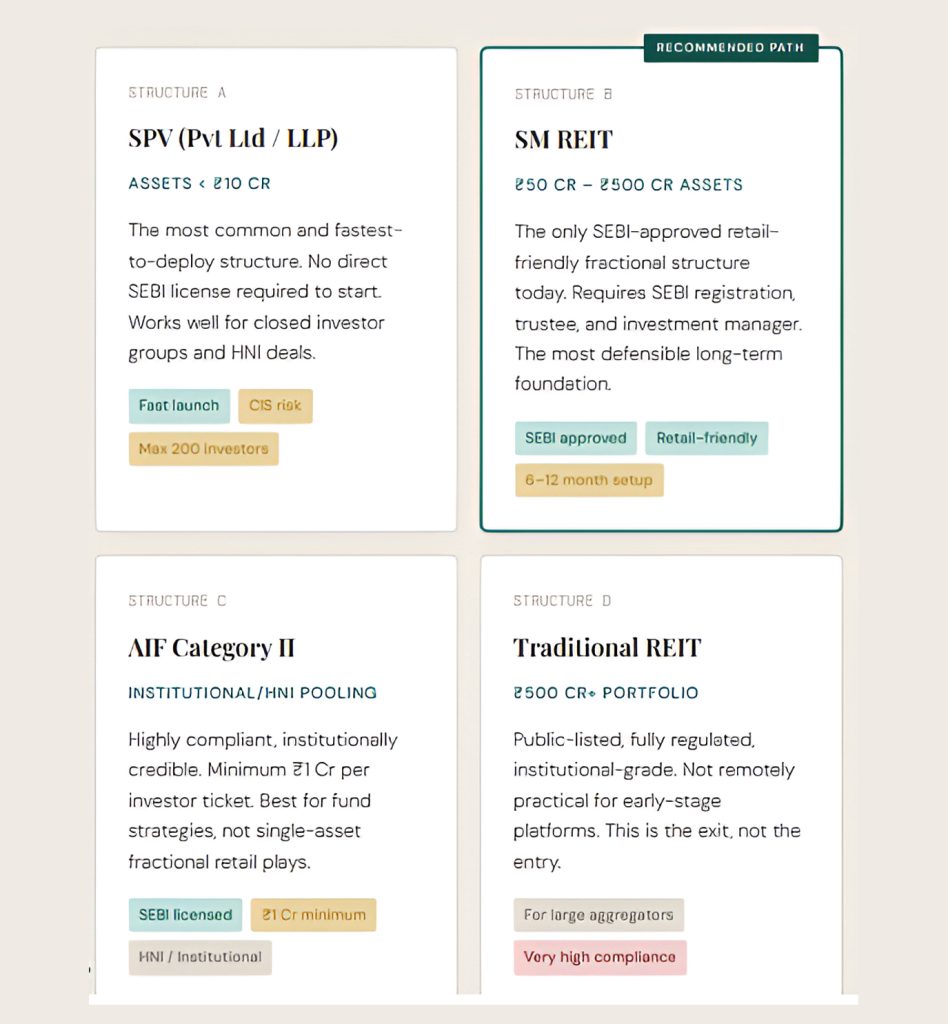
In India, the widely adopted model involves a Special Purpose Vehicle (SPV)—typically structured as a Private Limited Company or LLP. The SPV holds the underlying asset, while investors own shares in the entity rather than direct property rights.
This approach aligns with regulatory expectations while enabling fractional participation.
Antier supports enterprises in designing such compliant ownership structures, ensuring alignment with legal frameworks while preparing the foundation for future tokenization layers.
Layer 2 — Demat: Bridging Informal Ownership with Institutional Infrastructure
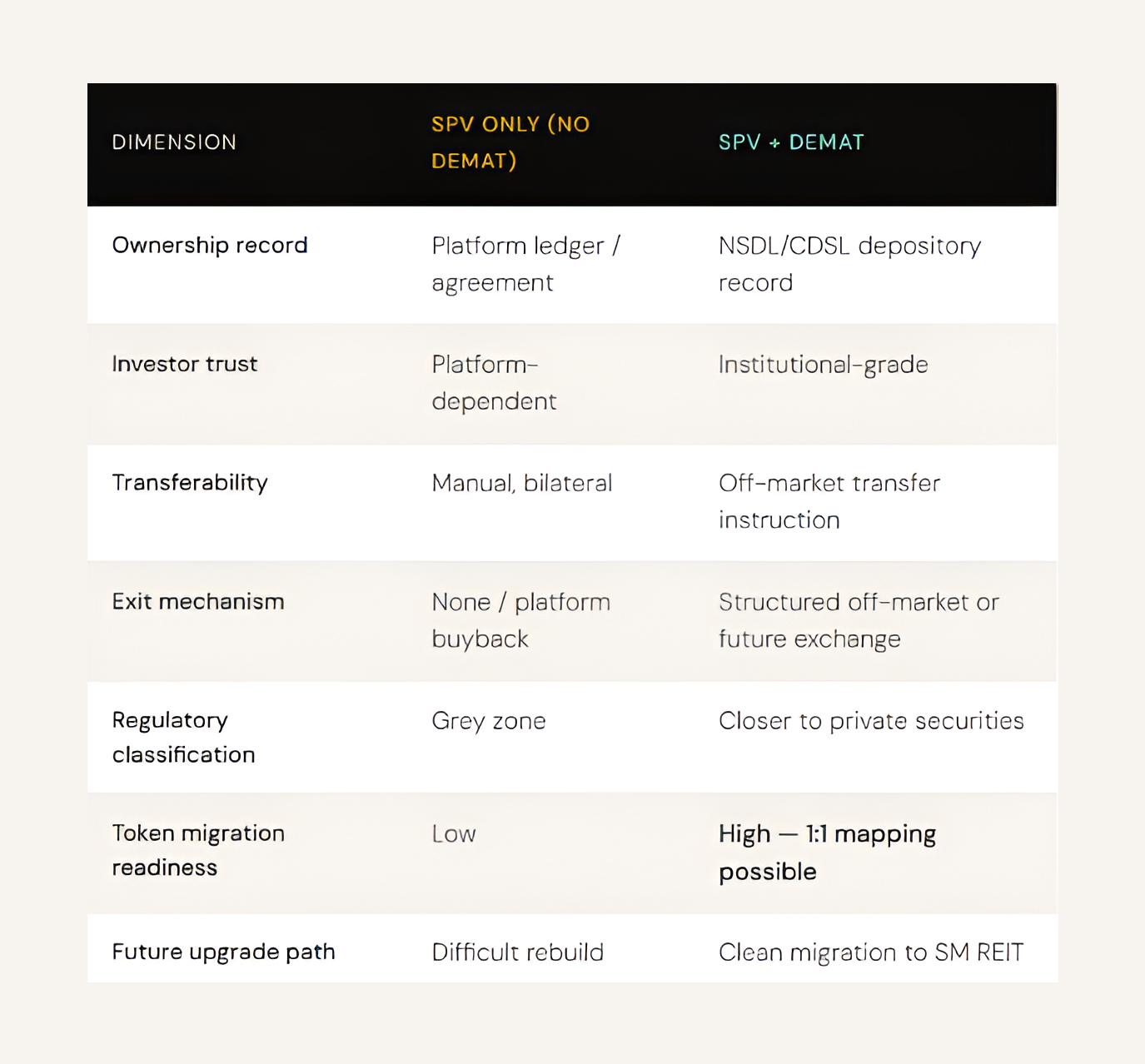
Integrating Demat infrastructure transforms fractional ownership into a more standardized and credible investment model.
By issuing SPV shares directly into investor Demat accounts via depositories like NSDL or CDSL, platforms gain:
- Recognized securities infrastructure
- Transparent and auditable ownership records
- Integration with India’s capital market ecosystem
Demat doesn’t make you compliant. It makes you compliance ready. That distinction is worth understanding deeply.
Antier enables seamless integration of such financial infrastructure with digital platforms, ensuring that enterprises are not only technologically but also operationally aligned with capital market standards.
Layer 3 — Distribution Discipline
One of the most underestimated aspects of fractional ownership platforms is distribution strategy.
In India, regulatory scrutiny is driven more by how investments are offered rather than how they are structured.
Platforms risk classification under the Collective Investment Scheme (CIS) framework if they:
- Market aggressively to retail investors
- Promote assured or indicative returns
- Pool funds at scale without investor governance
- Operate centralized asset management without transparency
Such classification can result in severe consequences, including operational shutdowns and legal liabilities.
A more sustainable Phase 1 approach involves:
- Private placements (≤200 investors annually)
- Focus on HNIs and sophisticated investors
- No public marketing or return guarantees
- Strong governance and reporting mechanisms
Antier advises clients on designing compliant distribution models, combining regulatory foresight with scalable investor onboarding strategies.
Critical Risk: SEBI rarely grants new CIS licenses. If your platform is classified as CIS without registration, you face forced wind-down, investor refunds, and potential liability. The current climate around CIS scrutiny is intensifying—not softening.
Layer 4 — Tokenization: Building for the Future, Today
Tokenization remains the most anticipated layer—but also the most misunderstood.
Currently, tokens in India represent economic interest, not legal ownership. Regulatory recognition for blockchain-based ownership is still evolving.
However, forward-looking platforms are not waiting for clarity—they are preparing for it.
The strategic approach involves building a parallel tokenization layer, where:
- Each Demat share is mapped to a digital token
- Smart contracts manage governance and distributions
- Blockchain enables transparency and programmability
When regulatory frameworks mature—through sandbox initiatives or formal guidelines—this infrastructure can be activated instantly.
Antier specializes in developing such tokenization-ready architectures, enabling enterprises to transition seamlessly once regulatory conditions align.
The Convergence Shaping the Future of Fractional Ownership
Convergence 1 — Financialization of Real Estate
Indian real estate is undergoing a structural reclassification—from a traditionally illiquid, ownership-driven asset class to a financialized instrument characterized by yield, governance, and portfolio allocation relevance.
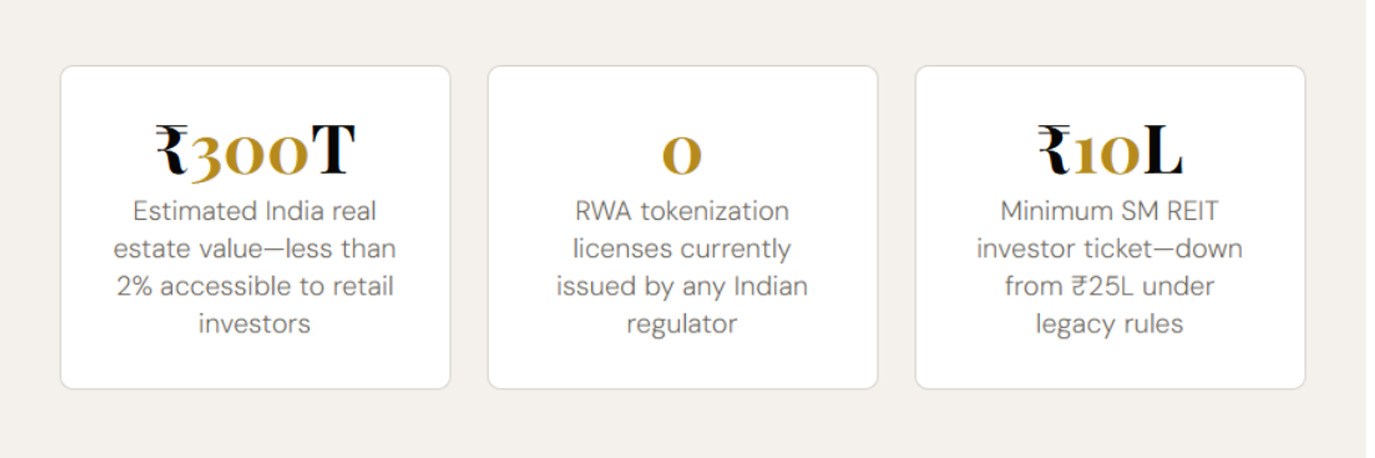
The introduction of the SEBI SM REIT framework is not merely regulatory evolution; it represents category creation, formalizing fractional ownership within a recognized investment structure. This transition is unlocking a new investable universe where real estate behaves more like a managed financial product than a static asset.
Importantly, the opportunity is not the entire ₹300 trillion real estate market, but the emerging financialized subset—estimated at ₹5–10 trillion over the next decade—that will migrate toward structured, yield-generating investment vehicles. Platforms that align with this shift will be positioned to capture disproportionate value.
Convergence 2 — Capital Markets Infrastructure Converging with Blockchain Rails
India’s capital markets infrastructure has reached unprecedented scale, with over 192 million active Demat accounts and depository networks such as NSDL covering nearly the entire geographic footprint of the country.
This deeply entrenched, regulator-backed system—built over decades—is now intersecting with blockchain-based architectures. However, the future is not defined by displacement, but by layered convergence.
- Demat infrastructure will continue to provide legal enforceability, investor protection, and institutional trust
- Blockchain rails will introduce programmability, real-time settlement capabilities, and global interoperability
The resulting hybrid model enables platforms to operate with regulatory legitimacy on one layer and technological innovation on another. The defining platforms of this decade will be those that architect solutions at this intersection—rather than choosing one system over the other.
Convergence 3 — Regulatory Evolution Follows Market Adoption
India’s regulatory trajectory has consistently followed a use-case-first, framework-later approach. The evolution of UPI is a prime example—market experimentation preceded formal standardization, with regulatory bodies refining frameworks based on observed adoption patterns.
A similar pathway is emerging for real-world asset (RWA) tokenization. Regulatory bodies are already signaling intent through controlled experimentation:
- IFSCA-led initiatives within GIFT City
- SEBI’s fintech sandbox environments
- Incremental exploration of digital asset frameworks
These signals indicate that formal regulation will be iterative and adoption-driven, rather than pre-emptive.
For founders and platform builders, this creates a narrow strategic window:
- Delaying execution until regulatory clarity emerges results in missed market positioning
- Operating outside regulatory boundaries invites enforcement risk
If you wait for regulation, you’re too late. If you ignore regulation, you’re shut down. The game is to build ahead—but always within the system.
From Compliance to Tokenization—Launch Your Platform the Right Way
Roadmap to Building a Scalable Platform
Phase One — Now
SPV + Demat Foundation
Incorporate your SPV. Run private placements under Companies Act Section 42 (max 200 investors). Issue shares directly to investor Demat accounts via NSDL/CDSL. Build KYC, escrow, and documentation infrastructure. Keep distribution HNI-only, no public marketing, no yield guarantees. Build your track record—2 to 4 assets, clean cap tables, quarterly reporting.
- SPV (Pvt Ltd)
- Demat via NSDL/CDSL
- ≤200 investors
- Private placement only
- HNI focus
Phase Two — 12–24 Months
Build the Shadow Token Layer + Migrate to SM REIT
In parallel with Phase 1 operations: build your internal token ledger. Map each Demat share to a token. Develop smart contract logic for income distribution and governance. Simultaneously begin SM REIT registration with SEBI—this is a 6–12-month process. Once registered, migrate your portfolio into the SM REIT structure, giving you institutional credibility, a clean regulatory status, and the ability to onboard broader investor segments.
- SM REIT registration
- Internal token layer
- Smart contract development
- Broader investor access
Phase Three — Regulatory Unlock
Activate Tokenization Rails
When SEBI, RBI, or IFSCA opens a framework—through a sandbox notification, formal RWA guideline, or GIFT City route—you are not starting from scratch. Your token ledger is live, your smart contracts are tested, your investor base is onboarded. You flip the switch: token layer becomes primary, Demat becomes the fallback. You enable secondary liquidity, global investor access, and programmable yield distribution at scale.
- Token = primary ownership
- Secondary liquidity
- Global investor access
- GIFT City / RBI sandbox
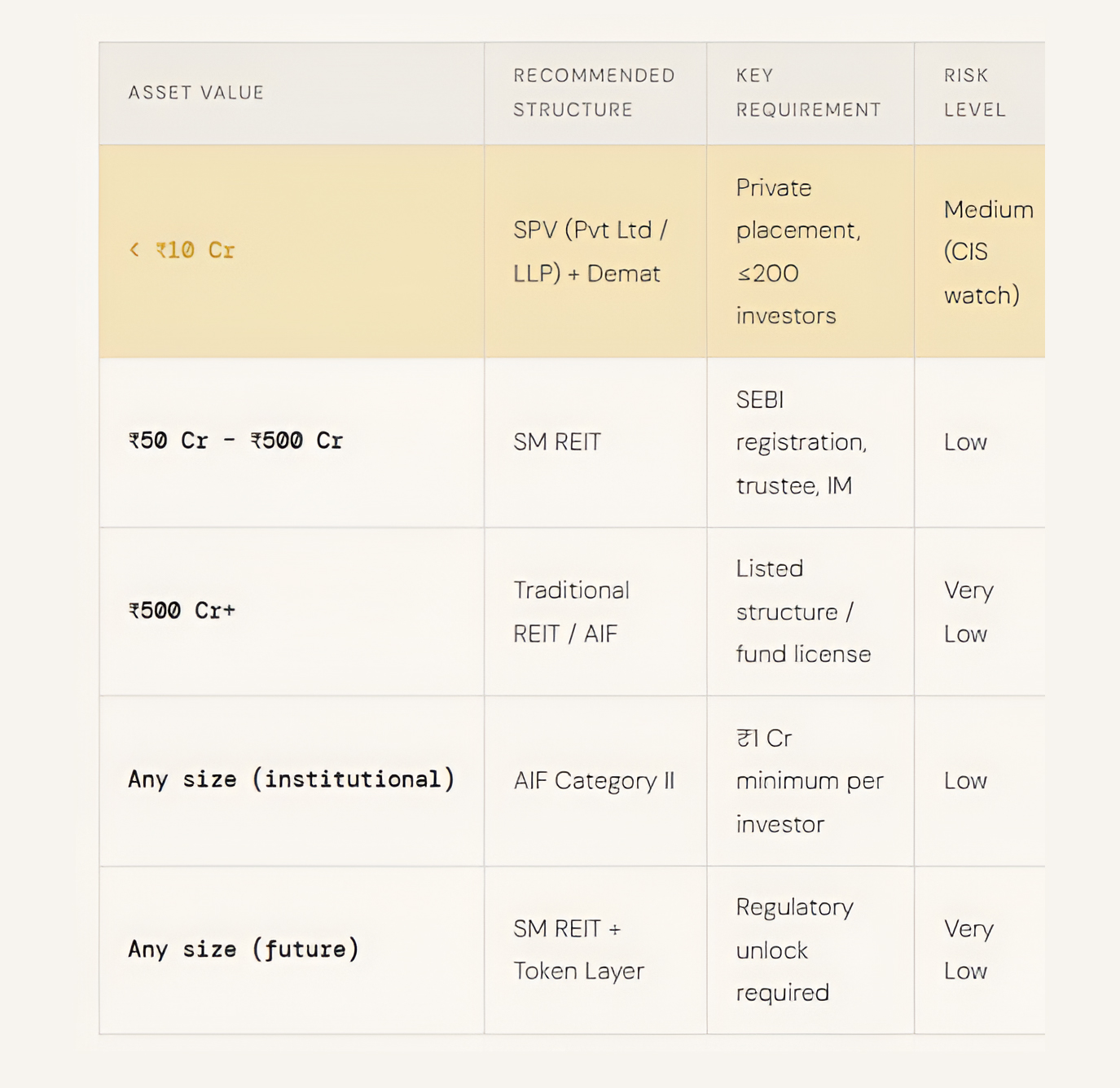
Choosing the Right Structure for Different Asset Classes
Not all assets require identical structuring. Real estate, private equity, invoices, and financial instruments each demand tailored frameworks based on liquidity, investor profile, and regulatory exposure.
A flexible yet compliant architecture is essential for long-term scalability.
The Real Risk: Misaligned Foundations
The primary challenge is not regulatory uncertainty—it is architectural misalignment.
Platforms that delay entry waiting for regulatory clarity risk losing first-mover advantage. Conversely, those that rush into tokenization without compliance frameworks risk operational shutdowns.
The optimal path lies in structured progression:
SPV → Demat → SM REIT → Tokenization Layer
This phased approach ensures resilience, scalability, and regulatory alignment.
Building Ahead of the Curve with the Right Partner
India stands at the threshold of a transformative shift in real asset ownership. As fractional ownership models evolve and tokenization frameworks mature, the market will favor platforms that are structurally prepared—not reactively built.
Antier, with its deep expertise in blockchain, tokenization, and financial infrastructure development, enables enterprises to design and deploy future-ready fractional ownership platforms. From legal structuring and Demat integration to tokenization architecture and smart contract development, Antier delivers end-to-end solutions aligned with evolving regulatory landscapes.