




✨ AI Summary
- Traditional payment processing in global retail is inefficient, with delays in settlement, high fees, and currency issues.
- A new wave of merchants is adopting stablecoin payment platforms for POS terminals, offering instant settlement, lower fees, and global payment acceptance.
- The evolution of stablecoins into reliable financial instruments is reshaping retail payments, with widespread adoption expected.
- The architecture of POS-integrated stablecoin payments includes wallet infrastructure, payment gateway, liquidity layer, and compliance engine.
- Integration methods range from native integration to SDK/API integration and mobile POS solutions, catering to different merchant needs.
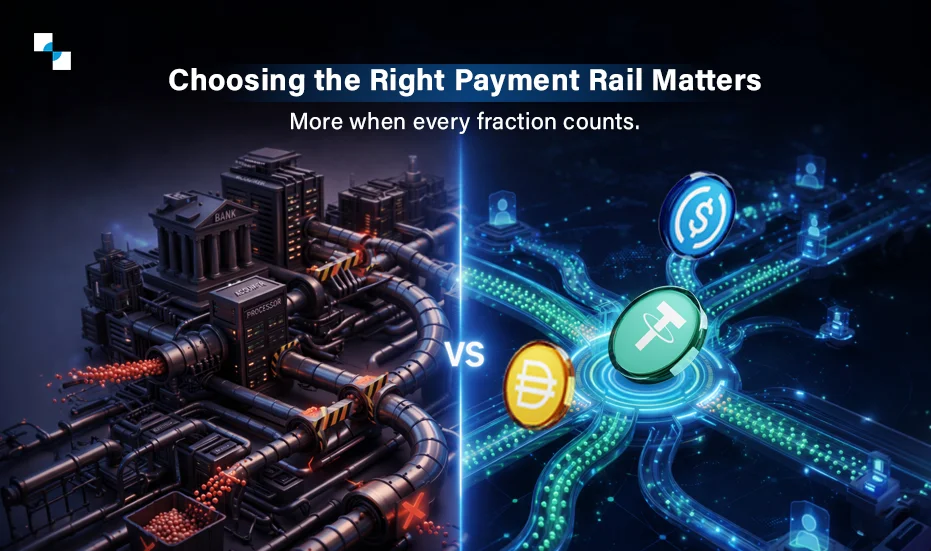
Traditional payment processing is broken for global retail. Merchants in the US wait 1–3 days for settlement, lose 2–3% to processor fees, and face currency friction on every cross-border transaction. Customers pay hidden markups. Chargebacks create compliance headaches. International shoppers abandon carts because checkout options do not support their preferred payment methods.
A new generation of merchants is taking a faster path. They have built stablecoin payment platforms for POS terminals and are now operating on a completely new model: settlement in seconds, transaction fees below 0.5%, instant access to working capital, and payment acceptance from any customer with a digital wallet, anywhere in the world.
This complete guide breaks down the architecture, implementation steps, and business case for integrating stablecoins into your POS infrastructure, revealing how top payment networks and fintech innovators are already building systems that merchants demand.
Why Stablecoins Are Entering the POS Market
Stablecoins have evolved from experimental crypto assets into reliable financial instruments, reshaping how businesses process payments. The A16z State of Crypto Report (Oct 2025) shows stablecoin volumes rising from $27.64 trillion in 2024 to over $46 trillion in 2025, a 106% YoY increase. Adjusted volumes hit $9 trillion, up 87% year over year. This momentum highlights how quickly stablecoins are moving from the crypto niche into real-world payment ecosystems.

Their price stability, growing regulatory acceptance, and instant settlement capabilities make them perfectly suited for Point-of-Sale (POS) environments. Unlike volatile cryptocurrencies, stablecoins offer predictability and trust, two qualities merchants value most in daily transactions.
Did You Know?
“PayPal is integrating PYUSD across 20M+ merchants, signaling institutional-scale adoption.”
Here are the key factors driving the adoption of stablecoin payment platforms in retail and POS systems:
- Lower Transaction Fees: Average processing costs stay below 0.5%, compared to the 2–3% charged by traditional card networks.
- Instant Settlement: Payments clear within seconds, eliminating chargebacks and multi-day settlement delays.
- Global Accessibility: Merchants can accept payments from any customer with a digital wallet, without worrying about currency conversion or cross-border friction.
- Improved Cash Flow: Immediate access to funds supports better liquidity management and operational efficiency.
- Enhanced Transparency: Blockchain-based records make every transaction traceable and verifiable, supporting compliance and audit requirements.
Stablecoin payment platform development is bridging the gap between traditional retail infrastructure and decentralized finance. It empowers merchants to accept and settle payments in stable digital currencies such as dollars, euros, or dirhams, offering faster, cheaper, and more transparent transactions across global markets.
Understanding the Architecture of POS-Integrated Stablecoin Payments
The architecture typically consists of four interconnected layers that work together to deliver instant settlement, compliance, and liquidity across global markets.

- Wallet Infrastructure
This is the core interface through which customers and merchants hold, send, and receive stablecoins. It acts as the foundation of user interaction and transaction flow.
- Multi-chain support: Compatible with assets like USDC, USDT, and EURS, enabling flexibility across ecosystems.
- Contactless transactions: Supports NFC and QR code payments for faster checkout.
- Flexible custody options: Offers both custodial (managed by service providers) and non-custodial (self-managed) wallets to meet different security needs.
- Transaction history sync: Enables users to track payments in real time with blockchain-based transparency.
By integrating these capabilities, the wallet layer ensures that merchants can interact seamlessly with blockchain networks while maintaining a familiar POS-like experience.
- Payment Gateway
The payment gateway functions as a bridge between POS terminals and blockchain networks, ensuring that every transaction is validated, recorded, and settled instantly.
- Smart contract validation: Each payment triggers an automated contract that verifies funds and finalizes settlement.
- Real-time currency conversion: Merchants can instantly swap digital assets into fiat or other stablecoins.
- Merchant integration APIs: Simple SDKs and APIs make it easy to plug the gateway into existing checkout systems.
- Instant reconciliation: Transaction details sync automatically with accounting and ERP tools.
This layer is crucial in stablecoin payment system development, as it ensures that transactions flow securely between blockchain ledgers and traditional retail infrastructure without downtime or data mismatches.
- Liquidity Layer
The liquidity layer guarantees that merchants can instantly convert stablecoins into their preferred currency, maintaining smooth cash flow across local and international markets.
- Automated Market Makers (AMMs): Provide 24/7 liquidity through decentralized exchanges.
- Dynamic pricing: Ensures minimal slippage and real-time exchange rate updates.
- Cross-border payouts: Enables global merchants to receive stablecoin payments in local denominations effortlessly.
This layer transforms blockchain payments into merchant-ready liquidity, an essential aspect of scalable stablecoin development solutions that support global trade and remittance use cases.
- Compliance and Analytics Engine
The compliance and analytics layer is where trust and transparency meet. It provides the regulatory foundation for the secure operation of stablecoin payments across various jurisdictions.
- AML and KYC verification: Automates identity checks and ensures every participant meets compliance standards.
- On-chain analytics: Offers dashboards to monitor transaction flow, user activity, and potential fraud indicators.
- Risk scoring algorithms: Evaluate each transaction’s risk profile in real time to prevent misuse.
- Regulatory reporting: Generates reports compatible with local laws like MiCA in the EU or FinCEN guidelines in the US.
This is also where a stablecoin development company adds significant value by integrating compliance engines that help merchants stay aligned with evolving regulations while protecting user data.
Build your POS system on stablecoin rails and experience real-time, compliant payments.
Together, these four layers create a fully integrated, stablecoin payment platform capable of processing real-time digital currency transactions at scale. The architecture can be embedded into existing POS systems with minimal disruption, allowing businesses to accept stablecoins like USDC or USDT just as easily as traditional cards.
When implemented correctly, this design enables faster settlements, lower fees, and broader financial inclusion. Whether you’re a retailer looking to modernize checkout systems or a fintech startup developing next-gen POS solutions, stablecoin development services provide the technical foundation to make digital payments both compliant and scalable for the future of commerce.
How to Integrate Stablecoins into POS Terminals

- Native Integration
This approach embeds blockchain modules directly into POS hardware, enabling merchants to process stablecoin transactions without external gateways. Companies like Pundi X have already developed such blockchain-ready POS devices.
Native integration delivers high-speed, secure, on-chain settlements, ideal for large retail networks or enterprises seeking full infrastructure control. However, it requires upfront investment in specialized devices.
- SDK/API Integration
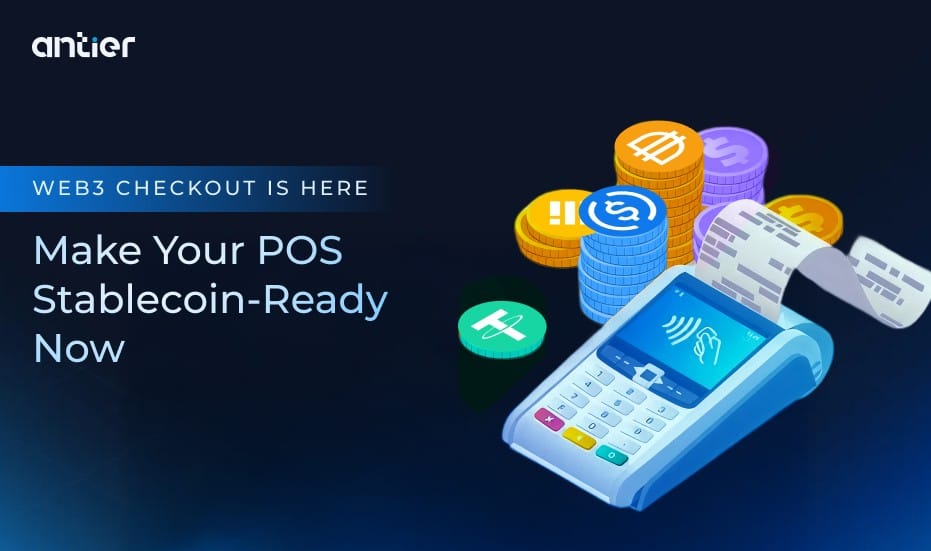
The most cost-effective and scalable option is adding stablecoin support via SDKs or APIs, which link existing POS systems to blockchain networks through software updates.
Merchants keep their familiar POS interface while the backend handles on-chain settlements, fiat conversion, and compliance automatically. For startups and payment providers, SDK-based development of a stablecoin payment platform enables rapid scaling, minimal disruption, and greater control over transaction data.
- Mobile POS Solutions
Mobile-based systems connect digital wallets to smartphones or tablets, turning them into portable POS terminals. Customers can pay using QR codes or NFC, while merchants receive funds in USDC, USDT, or other stablecoins.
This setup is perfect for small retailers and field businesses, offering quick, low-cost blockchain payments without major hardware changes.
For fintech startups or merchant networks, SDK-based integration strikes the best balance between speed, flexibility, and control. It enables multi-chain compatibility, real-time analytics, and instant on/off-ramp conversions, preparing businesses for the next phase of digital commerce. By integrating stablecoins into POS terminals, merchants bridge the gap between traditional finance and decentralized payments, unlocking faster, borderless, and more inclusive retail transactions.
Start developing your platform now.
Key Tech Factors in Building a Stablecoin Payment Platform for POS Terminals
When developing a stablecoin payment platform, technical precision defines both scalability and compliance readiness. Every integration layer determines how efficiently your POS system performs in real-world retail environments.
- Blockchain Selection: Opt for high-throughput, low-fee networks such as Solana, Polygon, or Tron to ensure smooth and cost-effective transaction processing.
- Stablecoin Compatibility: Focus on top assets like USDC, USDT, and PYUSD to maintain liquidity and interoperability across markets.
- Transaction Speed: Aim for under 2-second confirmation times to match retail-level expectations and deliver instant checkout experiences.
- Security: Implement multi-signature wallets, hardware wallet integration, and end-to-end encryption to protect both merchants and customers.
- Regulatory Compliance: Integrate with KYC/AML systems and travel rule–compliant APIs to align with global payment regulations.
A well-planned stablecoin payment system development approach ensures not just scalability but also long-term institutional trust. Balancing speed, compliance, and interoperability from day one positions your system for global merchant adoption.
The Role of a Stablecoin Payment System Development Company in POS Innovation
- Integrates stablecoin wallets into existing POS infrastructure for faster, cheaper, and more secure payments.
- Embeds compliance mechanisms such as KYC and AML into transaction workflows to meet regulatory standards.
- Deploys smart contracts to automate settlements, merchant payouts, and loyalty rewards.
- Manages liquidity across fiat and stablecoin reserves to ensure smooth real-time conversion.
- Enables cross-border transactions with minimal currency loss and instant settlement capabilities.
- Delivers white label POS solutions that help fintechs and aggregators launch customized, ready-to-use systems.
Final Words
As AI-driven commerce and IoT payments continue to advance, stablecoins are emerging as the digital cash of the connected economy. Integrating them into POS systems is not just a passing trend but a major step toward improving financial accessibility and empowering merchants with greater control.
If you want to lead the next wave of retail innovation, now is the time to build your stablecoin payment platform for POS integration and secure your place in the blockchain-powered economy. Partner with Antier, a trusted stablecoin development company helping businesses create compliant, scalable, and future-ready payment ecosystems.