
AI Summary
- In 2026, cryptocurrency development is at a pivotal stage, with businesses seeking to understand the costs and strategic requirements for successful projects.
- Factors influencing development costs include project complexity, blockchain selection, security audits, UI/UX design, integration, and maintenance.
- To save costs, businesses can focus on smart planning, leveraging existing resources, and making strategic choices.
- Future trends impacting crypto development costs include AI-powered smart contracts, multi-chain token development, enhanced cybersecurity requirements, and regulatory changes.
- Partnering with a forward-looking crypto development company can optimize costs, ensure regulatory compliance, and set the stage for growth.
2026 is a pivotal year for cryptocurrency development. The market is expanding, technologies are advancing, and businesses that understand the cost drivers and strategic requirements gain a clear advantage. Many companies are asking the same question: how much does crypto development cost, and what does it take to launch a successful project? Understanding these details is essential, not optional. Whether you are a fintech innovator, a blockchain entrepreneur, or an enterprise client, knowing the key factors that influence development helps you plan strategically, minimize risks, and maximize returns.
Crypto development is a strategic investment, and the right partner can turn it into a game-changing advantage. In this guide, we’ll break down the factors, expert tips, and future trends to help you plan effectively.
Key Factors That Influence Crypto Development Cost in 2026
Not all crypto development projects are created equal. Several factors determine the final cost, and understanding these is essential for effective planning and budgeting.
Businesses can make informed decisions and avoid unexpected financial surprises by being aware of what drives expenses:
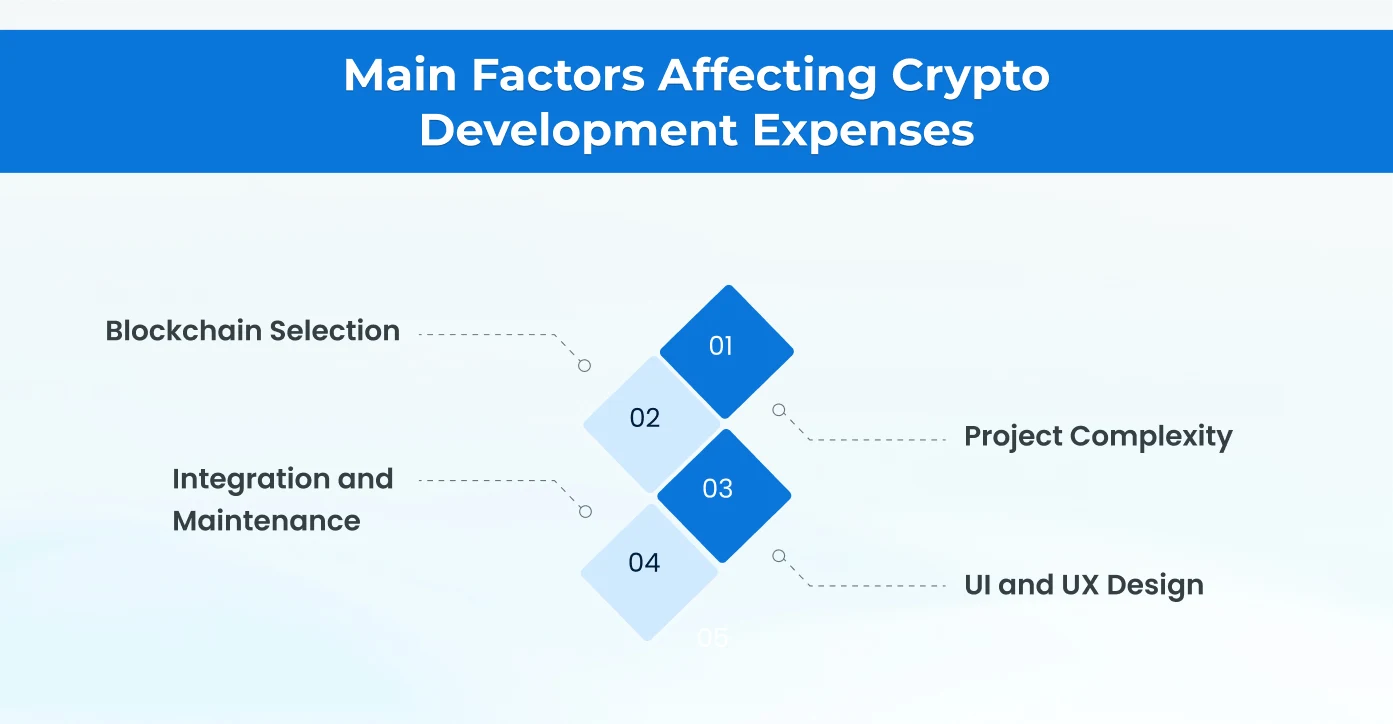
- Project Complexity: The complexity of a project directly affects its cost. A simple token with basic functionality will cost significantly less than a full-featured DeFi platform.
Advanced features such as staking, governance mechanisms, multi-chain compatibility, or NFT integration require additional development time, specialized expertise, and thorough testing. Each added feature increases both the time and resources needed to complete the project.
- Blockchain Selection: The choice of blockchain has a major impact on cryptocurrency development costs. Popular networks like ETH, SOL, or BSC vary in terms of transaction fees, scalability, and deployment requirements.
Some networks have higher costs for smart contract deployment but offer greater security, while others are faster and more cost-effective but may require additional optimization to meet performance standards. Custom blockchains can be tailored to specific project needs, but often require more investment upfront.
- Security and Smart Contract Audits: Security is one of the most important considerations in crypto development. Comprehensive smart contract audits and vulnerability testing help prevent hacks and financial losses.
Projects without proper security measures are exposed to significant risks, which can result in costly fixes and reputational damage. Investing in security from the start may increase initial costs, but it ensures long-term protection and trust for your users.
- UI and UX Design: User experience plays a critical role in adoption and engagement. Wallets, dashboards, and decentralized applications need to be intuitive, visually appealing, and easy to navigate.
Designing and developing high-quality interfaces requires skilled designers and additional development time, which contributes to the overall cost of the project. A seamless user experience is essential for attracting and retaining users, particularly for high-value clients and enterprise solutions.
- Integration and Maintenance: Integration with third-party systems, APIs, or cryptocurrency exchanges can influence development expenses. Ongoing maintenance, regulatory compliance updates, and technical support are additional factors to consider.
These costs may be part of both the upfront development phase and recurring operational expenses. Partnering with a professional crypto development company ensures that integration and maintenance are managed efficiently, providing a smooth and secure experience for end users.
Get a FREE detailed cost breakdown for your specific project.
Top Cost-Saving Cryptocurrency Development Tips
Investing in cryptocurrency development is a significant decision for businesses aiming for high-quality solutions without overspending. High-paying clients often seek ways to optimize costs while ensuring their project remains secure, scalable, and competitive. The key is to focus on smart planning, leveraging existing resources, and making strategic choices that reduce unnecessary expenses. You can achieve a professional-grade outcome and maximize the ROI by approaching the project methodically.
- Select a blockchain network that balances cost, speed, and security.
- Leverage white-label solutions for wallets, exchanges, or staking platforms.
- Prioritize essential features first and plan advanced ones later.
- Reuse existing smart contract templates where possible to save development time.
- Automate repetitive processes like token distribution or reporting.
- Outsource specialized tasks to experts instead of building in-house.
- Plan for scalability to avoid costly overhauls later.
- Monitor emerging trends like multi-chain token development to choose cost-effective solutions.
By following these strategies, businesses can achieve professional development outcomes while controlling costs. Partnering with a reliable crypto development company or exploring white-label crypto development services ensures your project is secure, scalable, and ready for future growth.
Top 4 Future Trends Impacting Crypto Development Costs
1. AI-Powered Smart Contracts
AI-enabled smart contracts automate workflows, improve transaction efficiency, and reduce manual errors. While they require higher initial investment, the long-term benefits include faster execution, lower operational costs, and enhanced reliability.
2. Multi-Chain Token Development
Supporting multiple blockchains increases your platform’s flexibility and market reach. Multi-chain crypto token development ensures compatibility with different networks, enhances adoption, and future-proofs your project against emerging blockchain technologies.
3. Enhanced Cybersecurity Requirements
Stronger security protocols are essential to protect digital assets, user data, and platform integrity. Investing in cybersecurity upfront reduces the risk of costly hacks, builds trust with users, and safeguards your brand reputation.
4. Regulatory Changes in 2026
Adapting early to evolving global crypto regulations, such as the US Securities and Exchange Commission (SEC) crypto guidelines, the EU’s Markets in Crypto-Assets (MiCA) regulation, and FATF Travel Rule compliance, prevents fines, delays, and legal complications. Incorporating these regulatory measures during cryptocurrency development saves future costs and ensures smooth operations across multiple jurisdictions.
Join 1,200+ successful projects that saved $2.3M+ through strategic planning.
Why Forward-Looking Partnerships Matter?
An experienced crypto token development company can guide your project through AI integration, multi-chain compatibility, and regulatory compliance. Such partnerships protect your investment, optimize costs, and set the stage for long-term growth and success.
Wrapping Up
Understanding crypto token development in 2026 gives businesses the insight they need to plan strategically and make confident investment decisions. Whether you are launching a simple token or building an enterprise-grade DeFi platform, the key to success lies in smart planning, choosing the right technology, and partnering with experts who can guide you through the process.
For fintech innovators, blockchain entrepreneurs, and enterprise clients, making informed decisions about project scope, security, and scalability ensures your platform is future-ready and positioned for growth. Take the first step toward your next blockchain breakthrough. Connect with the expert team at Antier, the best crypto development firm, today for a personalized consultation and take the first step toward launching a secure, innovative, and high-impact blockchain project.
Frequently Asked Questions
01. What is cryptocurrency development?
Crypto development involves creating digital assets, smart contracts, wallets, and dApps. It includes designing secure, scalable, and user-friendly platforms that meet both business and regulatory requirements.
02. How do crypto development companies determine project scope?
Project scope is influenced by factors such as complexity, blockchain selection, required features, security measures, UI/UX design, and integration with third-party systems. Experienced crypto token development companies assess these elements to deliver tailored solutions.
03. Can cryptocurrency development be optimized without compromising quality?
Yes. Strategic planning, leveraging white-label solutions, and implementing essential features first while planning advanced ones for later phases help ensure efficiency and high-quality outcomes without sacrificing security or performance.