





✨ AI Summary
- In 2026, stablecoin payments are emerging as a vital part of modern payment infrastructure, offering businesses faster settlements and greater flexibility in global commerce.
- Stablecoin payment gateways help businesses accept digital payments without relying solely on traditional card networks or slow bank transfers.
- These gateways act as a bridge between digital assets and business operations, supporting checkout and payment collection, wallet connectivity, and fraud and compliance checks.
- The total stablecoin market capitalization currently stands at around $309.9 billion, indicating a large, highly liquid market in its early commercial payment phase.
- Businesses are increasingly adopting stablecoin gateways for operational efficiency, as they offer faster movement of value and more flexible payout options compared to traditional international payments.
Stablecoin payments are no longer a niche experiment. In 2026, they are becoming a practical part of modern payment infrastructure for businesses that need faster settlement, lower cross-border friction, and greater flexibility in global commerce.
A stablecoin payment gateway helps businesses accept digital payments without relying only on traditional card networks or slow bank transfers. Instead of moving money through long, expensive payment chains, stablecoins allow value to move more directly across borders while keeping price volatility low. That is a major reason enterprises, fintechs, marketplaces, gaming platforms, and global service providers are increasingly looking at stablecoin rails as part of their payment stack.
But choosing the right crypto payment gateway development solution is not just about accepting crypto. It is about compliance, settlement speed, user experience, integrations, treasury control, and whether the provider can support business growth across markets. This guide explains what stablecoin payment gateways do, why they matter in 2026, and what enterprises should evaluate before making a decision.
What Is a Stablecoin Payment Gateway?
A stablecoin payment gateway is a payment infrastructure layer that lets businesses accept, process, and sometimes settle payments in stablecoins such as USDC or USDT.
In simple terms, it works like a bridge between digital assets and business operations. Customers pay using stablecoins, and the merchant may receive settlement in stablecoins, fiat currency, or both, depending on the provider’s setup.
A strong crypto to fiat payment gateway typically handles:
- checkout and payment collection
- wallet connectivity
- blockchain network support
- fraud and compliance checks
- conversion between stablecoins and fiat
- merchant settlement and reporting
This makes stablecoin payments more usable for day-to-day business than a manual wallet-to-wallet transfer.
Market Size and Growth Potential of Stablecoin Payments in 2026
Stablecoin payments are scaling fast, but the market should be read carefully. CoinGecko’s 2026 Q1 report puts total stablecoin market capitalization at about $309.9 billion, while Visa says stablecoin transaction volume has exceeded $51 trillion over the last 12 months. At the same time, Chainalysis estimates $28 trillion in real economic volume in 2025, and McKinsey notes that a lot of on-chain activity is not merchant payment flow. Together, these signals point to a market that is already large, highly liquid, and still early in its commercial payment phase. For investors, the real upside is not speculation; it is infrastructure. The biggest opportunity lies in cryptocurrency payment gateway development that can power cross-border settlement, treasury movement, and merchant payouts at scale.
Why Stablecoin Payments Matter in 2026?
“In many emerging economies, people have adopted stablecoins out of necessity. What’s changing now is that people in developed markets are starting to feel the same frustrations with money movement.”
The biggest reason businesses are adopting stablecoin gateways is operational efficiency. Traditional international payments often come with delays, high fees, currency conversion friction, and banking limitations in some regions. Stablecoin infrastructure addresses many of those issues by offering faster movement of value and more flexible payout options.
Stablecoins are no longer just a crypto-native asset class; they are becoming a foundational layer for modern finance. Stablecoin Insider’s ongoing market analysis highlights just how quickly this transition is accelerating. In 2025, stablecoins handled $28 trillion in real economic volume, and projections suggest that number could reach $1.5 quadrillion by 2035, a scale that would exceed today’s cross-border payments market.
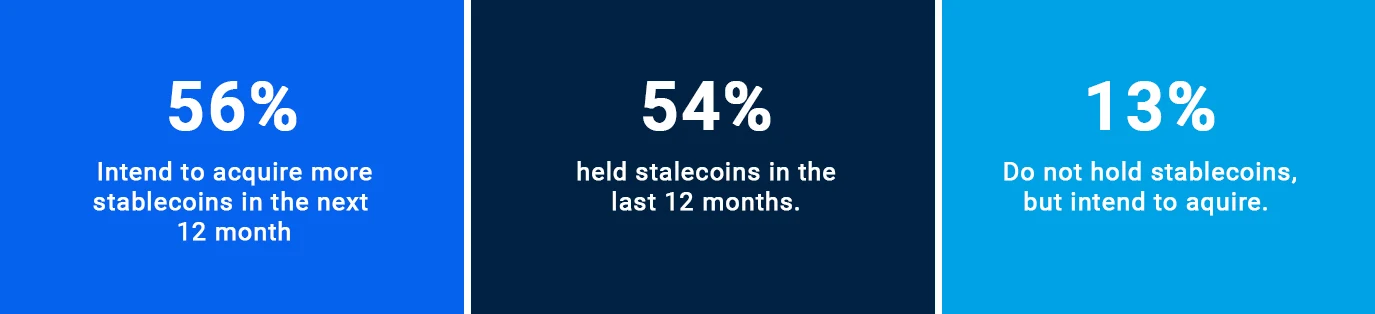
The appeal is not just speed. It is also controlled. Businesses can choose how they want to settle, which currencies they want to support, and how tightly they want to manage treasury exposure.
How a Stablecoin Payment Gateway Works?
Although implementations differ, the basic flow is usually straightforward.
First, the customer selects stablecoin as the payment method at checkout. The gateway generates payment instructions, often through a wallet address, QR code, payment link, or embedded checkout page. The customer sends the required amount from their crypto wallet app. The gateway detects the transaction on the blockchain, confirms it, and then notifies the merchant.
After confirmation, the provider may either:
- hold the stablecoin balance in the merchant account,
- convert it automatically into fiat,
- or let the merchant choose when and how to convert.
More advanced gateways also support refund workflows, invoice generation, multi-chain acceptance, and business reporting tools.
What Businesses Should Look For in a Stablecoin Payment Gateway?
Not every white label payment gateway provider is built for enterprise use. Some are suited only for basic crypto acceptance, while others are designed for scale, compliance, and multi-market operations. The right choice depends on what the business actually needs.
1. Regulatory coverage
For international businesses, licensing is one of the most important factors. A crypto payment gateway may look strong on the surface, but if it does not support the markets you operate in, it can create legal and operational problems.
Enterprises should look for:
- multi-jurisdiction licensing
- strong AML and KYC controls
- clear compliance documentation
- support for target markets
If a business operates across several countries, compliance coverage should be treated as a core requirement, not an optional extra.
2. Fiat settlement options
Many businesses want to accept stablecoins without holding crypto on their balance sheet. In that case, the gateway should support automatic or near-instant fiat conversion. Look for support for currencies such as USD, EUR, or GBP, along with clear settlement timelines and treasury controls. This reduces accounting complexity and helps teams manage cash flow more predictably.
3. Multi-chain and multi-asset support
Stablecoin ecosystems are not limited to one network. Businesses may need support for multiple chains and multiple stablecoins depending on where their users are active. A strong crypto to fiat payment gateway should support more than a single token or network so that customers can pay in the format that is most convenient for them.
Deploy Your Own Stablecoin Payment Gateway Software Today!
4. Checkout experience
A weak checkout flow can kill conversion. If users need too many steps, copy the wrong address, or struggle with wallet compatibility, payment completion drops fast.
Look for features such as:
- wallet connection
- clear payment instructions
- responsive checkout pages
- accurate amount display
- network error handling
- simple mobile flow
The easier the checkout, the better the completion rate.
5. Integration with business systems
A stablecoin payment gateway should fit into the merchant’s existing operations. That means API support, webhooks, dashboards, and compatibility with internal finance or treasury workflows.
Businesses should ask whether the provider supports:
- APIs and SDKs
- invoicing tools
- reconciliation exports
- ERP or accounting integration
- developer documentation
- dedicated onboarding support
6. Security and operational reliability
Because payments are involved, security matters at every layer. The gateway should have controls for wallet safety, transaction monitoring, access management, and internal approvals. For larger businesses, reliability is equally important. A gateway that works well for low-volume usage may not be dependable at scale.
Who Benefits From Stablecoin Payment Gateways?
Stablecoin payment gateway software is useful across a wide range of industries. They are especially relevant for:
- fintech platforms
- cross-border marketplaces
- global payroll providers
- gaming businesses
- digital asset companies
- international service businesses
- SaaS companies with global customers
These businesses often share the same challenge: they need faster, more flexible payment movement without the limitations of traditional payment rails.
How to Choose the Right Stablecoin Payment Gateway?
A practical evaluation should go beyond marketing language. Start by asking whether the customized payment gateway solution is built for your business model. A startup selling digital products has very different needs from a global enterprise moving large payment volumes.
Then evaluate the provider on:
- market coverage
- settlement speed
- fiat support
- stablecoin support
- checkout quality
- compliance maturity
- integration depth
- support quality
The best provider is not always the one with the most features. It is the one that aligns most closely with your operational needs and growth plans.
What Investors Should Evaluate Before Backing a Payment Gateway Provider?
- Regulatory coverage: Does the provider have the right licenses for the markets it serves?
- Settlement speed: Can merchants convert to fiat quickly, or are funds delayed?
- Real use case fit: Is the platform built for merchant payments, payouts, treasury, or just crypto trading?
- Scale and traction: Is there proof of meaningful transaction volume, not just product demos?
- Revenue model: Are fees, FX spreads, and enterprise contracts clearly defined and repeatable?
- Integration quality: Does it offer APIs, reporting, reconciliation, and checkout tools that reduce friction?
- Risk controls: Are compliance, fraud monitoring, wallet security, and operational controls strong enough for enterprise use?
- Competitive moat: Does the company have licensing, network depth, liquidity access, or a better checkout experience?
Why Stablecoin Payment Gateways Will Keep Growing?
Stablecoin infrastructure is moving from early adoption into real business utility. That shift is happening because companies want payment systems that are faster, more programmable, and more global than legacy rails.
As more enterprises build across borders, stablecoin payment gateways will likely become a standard part of the payments conversation. The winners in this space will be the providers that combine compliance, ease of use, and strong settlement infrastructure with business-friendly integrations.
Build Payment Gateway Solutions With Confidence!
A stablecoin payment gateway is more than a crypto checkout tool. In 2026, it is becoming a serious payments layer for businesses that need global reach, faster settlement, and better control over how money moves. The best payment gateway for your business will depend on your markets, compliance requirements, settlement preferences, and operational needs. But one thing is clear: businesses that understand stablecoin infrastructure now will be better prepared for the next phase of digital payments.
Antier empowers businesses to build secure, scalable, and future-ready payment gateway solutions with advanced SDKs, seamless API integrations, multi-currency support, and enterprise-grade infrastructure. Backed by a skilled team of blockchain and fintech experts, Antier has strong expertise in developing all kinds of white label payment gateway software tailored to modern business needs. From stablecoin payments to cross-border transaction systems, Antier helps businesses launch high-performance payment platforms in as little as 7–10 days while ensuring security, flexibility, and seamless user experience at every stage.
Frequently Asked Questions
01. What is a stablecoin payment gateway?
A stablecoin payment gateway is a payment infrastructure that allows businesses to accept, process, and settle payments in stablecoins, acting as a bridge between digital assets and business operations.
02. Why are stablecoin payments important for businesses in 2026?
Stablecoin payments are important for businesses in 2026 because they offer faster settlement, lower cross-border friction, and greater flexibility in global commerce, making them a practical part of modern payment infrastructure.
03. What should enterprises consider when choosing a stablecoin payment gateway?
Enterprises should consider compliance, settlement speed, user experience, integrations, treasury control, and the provider's ability to support business growth across markets when choosing a stablecoin payment gateway.