




AI Summary
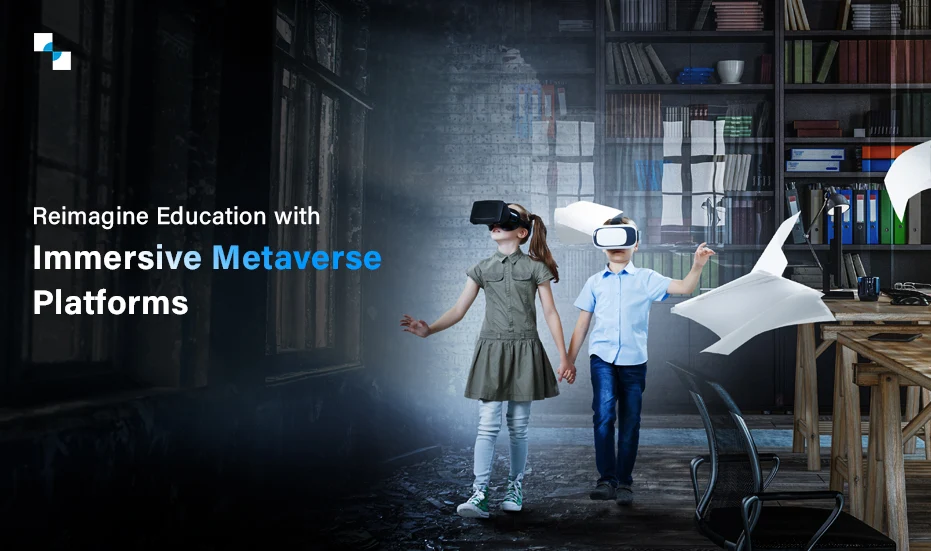
- Education is evolving, and the metaverse is revolutionizing learning by providing immersive, interactive experiences.
- Metaverse education platforms offer 3D environments, real-time collaboration, and hands-on learning, transforming students into active participants.
- This shift addresses limitations of traditional methods by enhancing engagement, scalability, global access, and continuous learning.
- Use cases include virtual classrooms, simulation-based learning, corporate training, and skill-based education.
- Key features of metaverse platforms include immersive environments, avatar-based identity, real-time collaboration, simulation engines, and analytics systems.
Education is undergoing a major transformation. Traditional learning methods, whether physical classrooms or digital platforms, are increasingly struggling to keep students engaged in a world driven by interactivity and experience.
This is where the metaverse in education is emerging as a powerful solution.
Instead of passive learning through videos or text, the metaverse enables:
- Immersive, 3D learning environments
- Real-time interaction and collaboration
- Experiential, hands-on education
Students are no longer just learners, they become active participants in their learning journey.
As a result, institutions, enterprises, and training providers are investing in metaverse education platform development to create scalable, engaging, and future-ready learning ecosystems.
What Is Metaverse in Education?
At a surface level, metaverse in education refers to virtual learning environments. However, in practice, it is a persistent digital learning infrastructure.
How It Actually Works
A metaverse platform for education combines:
- 3D virtual environments → classrooms, labs, campuses
- Avatars → digital identities of students and teachers
- Real-time systems → voice, chat, and interaction
- Simulation engines → practical learning scenarios
For Example
Instead of:
- Reading about a chemical reaction
Students can:
- Enter a virtual lab
- Mix elements
- Observe outcomes
This, in turn, helps convert theoretical knowledge into experiential understanding.
Why Metaverse Is Transforming Education
This shift is not happening because it’s “innovative.” It’s happening because it solves real limitations of existing systems.
1. Engagement Is No Longer Passive
Traditional platforms rely on attention. Metaverse platforms rely on participation. Here students move, interact, and make decisions. This activates multiple cognitive processes, leading to:
- Higher retention
- Deeper understanding
2. Practical Learning Becomes Scalable
In physical environments:
- Labs are expensive
- Simulations are limited
- Training is resource-heavy
A metaverse platform for education removes these constraints. Therefore, institutions can:
- Replicate complex environments
- Run simulations repeatedly
- Scale access to thousands of students
This is especially powerful for:
- Medical training
- Engineering
- Technical education
3. Global Access Without Compromise
Online learning solved accessibility, but not quality. Metaverse platforms enable:
- Real-time interaction
- Immersive environments
- Collaborative learning
Students from different regions can:
- Attend the same virtual class
- Interact with instructors
- Work in shared environments
This creates global classrooms with real engagement.
4. Learning Becomes Continuous, Not Session-Based
Traditional systems are usually session-based:
- log in → consume → log out
On the other hand, metaverse platforms are persistent:
- Environments continue evolving
- Students return regularly
- Engagement compounds over time
Key Use Cases of Metaverse in Education
1. Virtual Classrooms
Virtual classrooms are not just video calls but:
- Spatial environments
- Interactive boards
- Group collaboration zones
Students feel “present,” not just connected.
2. Simulation-Based Learning
This type of learning is typical used for:
- Medical procedures
- Engineering models
- Technical training
With the metaverse, students can:
- Practice repeatedly
- Learn from mistakes safely
3. Corporate Training Platforms
Enterprises use metaverse platforms for:
- Onboarding
- Skill training
- Leadership simulations
This helps reduce:
- Training costs
- Time-to-productivity
4. Skill-Based Education
A number of fields like design, architecture, and manufacturing readily benefit from hands-on virtual practice
Want to Build Your Customized Metaverse Education Platform?
Core Features of a Metaverse Education Platform
1. Immersive 3D Environments
These environments replicate real-world or imagined scenarios, allowing students to:
- Explore
- Interact
- Experiment
2. Avatar-Based Identity
Avatars are not just visual, they enable:
- Presence
- Personalization
- Social interaction
This builds emotional connection with the platform.
3. Real-Time Collaboration Systems
This includes:
- Voice communication
- Shared workspaces
- Group activities
This transforms learning into a collective experience.
4. Simulation Engines
The core of experiential learning is simulation engines and are used to:
- Replicate real-world scenarios
- Test decision-making
- Enable skill application
5. Analytics and Feedback Systems
These are used for tracking engagement, performance, and behavior, which helps institutions to:
- Improve content
- Personalize learning paths
Metaverse Education Platform Development
Metaverse education platform development involves a structured process.
Step 1: Define Learning Objectives
Before building anything, institutions must define:
- What learners should achieve
- What experiences are required
Step 2: Design Learning Environments
This includes:
- Classroom layouts
- Interaction flows
- Simulation scenarios
Step 3: Build Interaction Systems
In this step, the following are developed.
- Communication tools
- Navigation systems
- User interfaces
Step 4: Integrate Simulation Logic
This is the most complex layer where the following are carried out.
- Defining rules
- Creating scenarios
- Enabling dynamic outcomes
Step 5: Deploy and Scale
Once launched:
- Platforms are continuously updated
- New modules are added
- Engagement is optimized
Cost Considerations
Instead of just numbers, here’s the reality behind metaverse education platform development.
What Drives Cost
- Depth of simulations
- Level of interactivity
- Number of users
- Visual complexity
Strategic Insight
Most institutions don’t build everything at once. Instead they:
- Start with a pilot module
- Test engagement
- Scale gradually
Why Institutions Partner with Development Companies
Building this internally is difficult because it requires:
- 3D development expertise
- Real-time systems
- UX design for immersive environments
- Scalability planning
On the other hand, a professional metaverse development company like Antier provides:
- Structured execution
- Faster development
- Reduced risk
This is critical for long-term platform success.
Conclusion: Education Is Moving from Content to Experience
Education is no longer about delivering content. It is about creating experiences A metaverse platform for education enables:
- Deeper engagement
- Practical learning
- Scalable education models
Institutions that adopt metaverse in education early will:
- Improve outcomes
- Attract modern learners
- Stay ahead in a competitive landscape
Opt for customized metaverse education platform development by partnering with experts of Antier to create immersive, scalable learning environments tailored to your institution.
Frequently Asked Questions
01. What is the metaverse in education?
The metaverse in education refers to virtual learning environments that provide a persistent digital infrastructure for immersive, interactive, and experiential learning.
02. How does the metaverse enhance student engagement?
The metaverse enhances student engagement by shifting from passive learning to active participation, allowing students to interact, collaborate, and make decisions, which leads to higher retention and deeper understanding.
03. What are the benefits of using metaverse platforms for practical learning?
Metaverse platforms allow for scalable practical learning by replicating complex environments, running simulations repeatedly, and providing access to thousands of students, making it especially beneficial for fields like medical training and engineering.