




✨ AI Summary
- Tokenization is revolutionizing the finance industry globally, offering benefits like fractional ownership and increased liquidity.
- However, regulatory alignment is crucial for scaling solutions across regions.
- Organizations must integrate regulatory compliance into every level of RWA tokenization architecture to ensure scalability and security.
- Understanding regulatory building blocks, such as authorities, licensing, and compliance protocols, is essential for successful tokenization.
- Major jurisdictions like the US, EU, Singapore, UAE, and Australia have varying regulatory landscapes.
Tokenization is significantly changing the finance industry across the globe, with its benefits of fractional ownership, improved liquidity, and increased investor accessibility. However, for any RWA tokenization development company, regulatory alignment is the most important factor when it comes to scaling solutions across different regions. Each region has its own regulatory environment when it comes to trading, issuing, and holding tokens.
To achieve this, it is imperative for organizations across the globe to develop an RWA tokenization architecture that integrates regulatory compliance at every level of the components of the tokenization ecosystem. This ensures the scalability, security, and regulatory tokenization compliance of the digital asset tokenization infrastructure. With the growth of institutional adoption, regulatory RWA Tokenization Development Services are becoming a strategic imperative rather than a business choice.
Understanding the Core Regulatory Building Blocks in Tokenization Infrastructure
A robust tokenization infrastructure is not only a technology infrastructure; rather, it is a system that is heavily focused on the aspect of compliance. Every jurisdiction has its own set of regulatory building blocks, which play a significant role in determining the overall infrastructure for the tokenization of digital assets.
A RWA tokenization development agency requires the regulatory layers to be part of the overall RWA tokenization architecture. Instead of considering the aspect of compliance-first tokenization as a separate entity, the modern tokenization infrastructure is required to incorporate the regulatory layers directly into the components of the tokenization ecosystem. Not only does this minimize the regulatory risks, but it also enhances the trust among the institutional investors who are using the RWA tokenization development solutions.
Key Regulatory Components:
- Regulatory Authorities: Governing bodies defining token laws and enforcement mechanisms
- Licensing Frameworks: Requirements for issuers, exchanges, and custodians
- Token Classification Models: Security, utility, or asset-backed categorization
- Compliance Protocols: KYC, AML, investor accreditation
- Market Infrastructure Rules: Trading permissions and restrictions
- Custody & Asset Protection: Safeguarding investor assets
- Taxation Policies: Impact on token issuance and trading
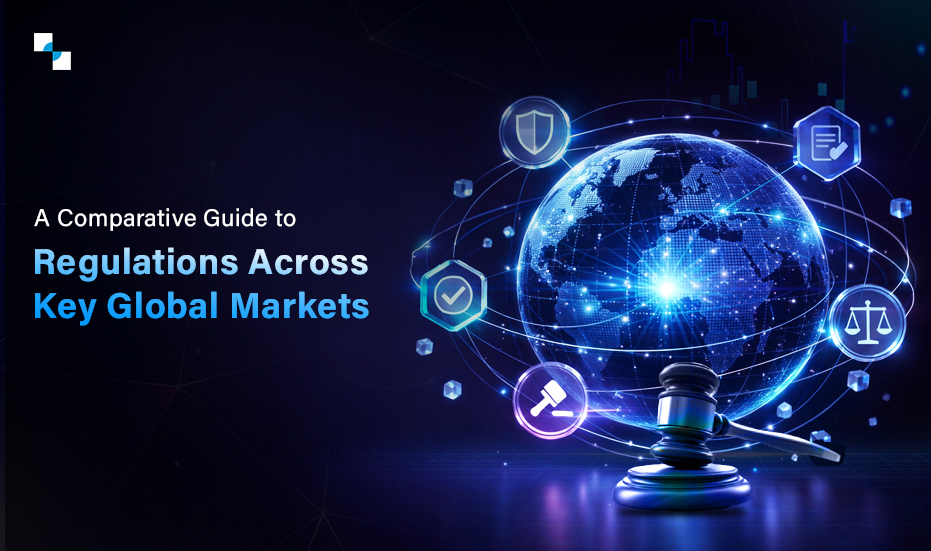
Global Tokenization Regulatory Comparison
The following table provides a consolidated view of how major jurisdictions differ across critical regulatory parameters. This comparison helps enterprises evaluate where to deploy their tokenization infrastructure and how to align their RWA tokenization architecture with regional compliance requirements.
| Parameter | US | EU | Singapore | UAE | Australia |
|---|---|---|---|---|---|
| Regulatory Clarity | Moderate (fragmented) | High (MiCA) | High | High | Moderate |
| Primary Regulators | SEC, CFTC | ESMA | MAS | VARA, ADGM | ASIC |
| Token Classification | Security-heavy | Defined categories | Functional | Virtual asset framework | Case-based |
| Licensing Complexity | Very High | Moderate | High | Moderate | Moderate |
| STO Framework | Mature but complex | Strong & evolving | Well-defined | Rapidly growing | Limited |
| Retail Participation | Restricted | Expanding | Controlled | Moderate | Limited |
| Secondary Trading | Restricted | Growing | Allowed | Strong | Limited |
| KYC/AML Requirements | Very High | High | Very High | High | High |
| Custody Framework | Strict | Defined | Strong | Emerging Strong | Moderate |
| Innovation Support | Moderate | High | High | Very High | Moderate |
United States: Compliance-Driven RWA Tokenization Architecture
The United States demands a highly structured approach to tokenization infrastructure. In this case, there is a need to ensure that regulatory enforcement impacts the RWA tokenization architecture. A RWA tokenization development company must ensure that there is integration of all components of the tokenization ecosystem. The investor protection aspect ensures that the digital asset tokenization infrastructure is highly secure. However, it is complex. This ensures that the United States is a robust yet complex market for RWA Tokenization Development Services.
Regulatory Landscape and Authorities
The United States has a multi-agency system. This demands that there is a need to ensure that there is alignment with the regulatory mandates. This drives a need for modular RWA tokenization architecture. A RWA tokenization development company must ensure that there is monitoring and reporting within the components of the tokenization ecosystem. This ensures that there is a robust approach to digital asset tokenization infrastructure.
Token Classification and Legal Treatment
Token classification is generally based on the Howey Test, with most tokens classified as securities. This has a significant influence on how solutions provided under RWA Tokenization Development Services are implemented.
Issuance Framework and STO Regulations
The US has a supportive regulatory framework for structured issuance under exemptions such as Regulation D and Regulation A+. A robust digital asset tokenization ecosystem is required for compliance-first tokenization processes. Although complex, this builds credibility and trust within financial institutions.
Secondary Trading and Liquidity Constraints
Secondary trading is restricted to compliant platforms, with strict resale restrictions. Compliance filters are required within key tokenization ecosystem components for compliant trading. This reduces liquidity but enhances investor protection.
European Union: Harmonized Digital Asset Tokenization Infrastructure
The EU is characterized by the provision of uniform regulations that enhance the ease of conducting cross-border transactions. With the creation of an RWA tokenization development company, it becomes easy to deploy standardized solutions to various jurisdictions. This results in scalability through consistency in implementing a tokenization infrastructure.
- Regulatory Structure and MiCA
The MiCA regulation brings about consistency in the regulatory landscape. This will facilitate a structured environment for the provision of services in RWA tokenization development. Efficiency in deploying the platform becomes possible under the new regulation.
- Classification of Tokens and Legal Certainty
Classification of tokens enhances clarity and simplifies implementation. This makes it easy to create standardized architectures for RWA tokenization across various applications. Interoperability in the tokenization infrastructure becomes easy when standardized.
- Issuance and Fundraising Possibilities
The EU facilitates structured issuance systems. This creates a platform for cross-border fundraising. The creation of a digital asset tokenization infrastructure will make it easier for companies to raise capital.
- Secondary Markets and Liquidity Enhancement
There is an emerging ecosystem of regulated trading platforms. This has brought about improved liquidity. Interoperability between various components of the tokenization ecosystem creates a scalable environment.
Get a Custom Regulatory Strategy for Your Tokenization Project
Singapore: Balanced Tokenization Infrastructure with Strong Oversight
Singapore is one of the jurisdictions with a perfect regulatory approach towards innovation and compliance. It is closely in line with the latest global tokenization regulations, providing a solid base for growth. Thus, the jurisdiction offers a highly supportive platform for RWA Tokenization Development Services.
- Regulatory Body and Framework
The guidelines established by the Monetary Authority of Singapore (MAS) are clear and detailed. It allows companies to establish compliant tokenization infrastructure without unnecessary concerns. The regulation boosts confidence in the market and contributes to its sustainable development.
- Classification Approach for Tokens
Singapore uses a functional classification method. It gives more flexibility in use cases and helps to optimize the process of building an infrastructure. Moreover, it ensures compliance and allows for innovation within regulation.
- Requirements for Token Issuance
To issue tokens, it is required to follow rigorous compliance procedures. Digital asset tokenization infrastructure guarantees transparency and compliance with regulations. In addition, it improves trust and efficiency in operations.
- Secondary Trading and Infrastructures
Singapore provides regulated trading ecosystems for better liquidity. Integration in a tokenization ecosystem infrastructure ensures compliance in all processes. As a result, the jurisdiction creates a growth environment following global compliance for asset tokenization platforms.
UAE: High-Growth Hub for Tokenization Ecosystem Components
The UAE is fast establishing itself as a global leader thanks to forward-thinking regulatory policies and supportive government backing. In connection to its regulatory playbook for tokenization, this region presents an ideal opportunity for scaling up.
- Regulatory Ecosystem
With agencies like VARA and ADGM offering clear and adaptable regulatory ecosystems, it makes tokenization easier to implement and helps companies enter the market faster. Businesses are able to take advantage of streamlined licensing policies.
- Classification of Tokens and Legal Structures
Having defined classification structures is essential in ensuring compliance and designing systems in connection with growing real-world asset tokenization: legal frameworks and developing a scalable RWA tokenization ecosystem across different asset classes while minimizing legal complications.
- Token Issuance and Market Entry
In the UAE, there are simplified procedures for entering into token markets making it easy to deploy digital asset tokenization. The use of tokenization infrastructures reduces time to market for businesses seeking to scale up.
- Secondary Trading and Liquidity Benefits
The UAE is building a strong trading ecosystem that supports liquidity and cross-border participation. Efficient integration of tokenization ecosystem components ensures scalability. This positions the region as a high-growth hub for compliant token markets.
Australia: Emerging Tokenization Infrastructure with Gradual Evolution
Australia’s regulatory framework is developing cautiously. Though under development, there are possibilities to experiment with controlled innovation. For those offering end-to-end tokenization solutions, the market holds promise due to its future-oriented nature.
- Regulatory Body and Regulatory Approach
The involvement of the ASIC is highly important when it comes to establishing the environment. There should be an opportunity for the development of tokenization solutions that would be able to adjust to new guidelines gradually.
- Tokenization Classification and Compliance
Tokens are classified on a case-to-case basis and require a custom strategy from issuers. It has an influence on the tokenization architecture. It is critical for legal alignment.
- Issuance and Participating in the Market
Issuance is at an initial stage of development and requires proper strategy development. Digital assets tokenization infrastructure should be flexible to meet regulations easily.
- Secondary Markets and Liquidity Provision
Trading secondary tokens in the market has not been fully developed yet. However, there is an improvement in the ecosystem parts.
Designing Future-Ready Digital Asset Tokenization Infrastructure
With increasing adoption of tokenization around the world, regulation strategy can no longer be seen as supplementary but as a key component of the business. The emerging world of regulations under the category of global tokenization regulations will define how platforms are built, launched, and scaled in different parts of the world.
At Antier, we offer companies the ability to overcome this challenge by providing compliant solutions for tokenization. Having vast experience of creating compliant platforms for tokenization, Antier helps companies to streamline their processes.