




✨ AI Summary
Tokenized commodities are transforming crypto exchanges into multi-asset financial platforms by enabling 24/7 trading, fractional ownership, and real-world asset (RWA) integration. By combining tokenization with DeFi, exchanges unlock new liquidity, yield opportunities, and institutional adoption. Future-ready exchanges must integrate RWA layers, compliance, and cross-chain capabilities to capture global capital and remain competitive.
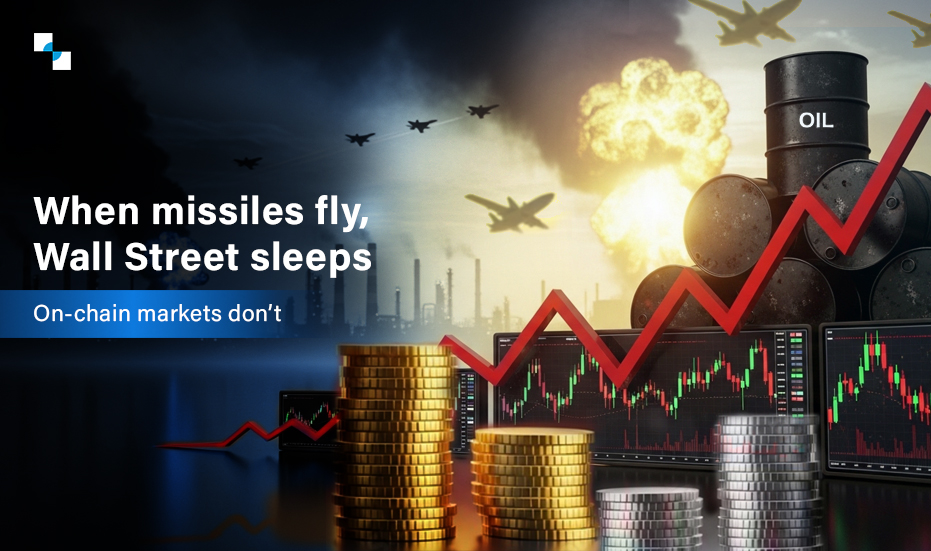
On February 28, 2026, U.S and Israeli strikes hit Iran. Within hours, the global risk sentiment shifted, safe-haven assets spiked and oil prices surged. It exposed a question that markets weren’t expecting any sooner: what happens when geopolitical reality moves faster than the trading infrastructures?
Traditional commodity markets for oil, silver, and gold are locked into rigid trading schedules. CME and NYMEX crude oil and gold futures run between Sunday 5:00pm CT and Friday 4:00pm CT, with daily maintenance breaks and a complete 49-hour blackout every weekend. Since it was a Saturday when the strikes hit Iran, tradFi traders all over the world had no venue to act. So, they watched, speculated, and waited.
On the other hand, on-chain markets on a leading decentralized crypto exchange software grabbed the spotlight. Hyperliquid’s perpetuals for oil, gold, and silver repriced in real time, with:
- Oil is expected to 5% to $70.6 per barrel.
- Gold rising by 1.3%, reaching $5,323/oz.
- Silver gaining 2% with $227M+ in 24 hour volume
- Gold’s 24-hour trading volume
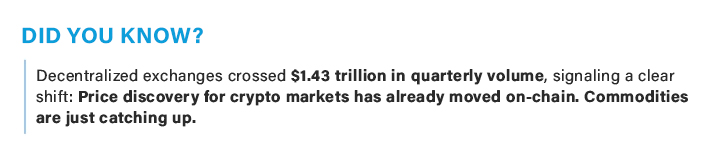
Bloomberg cited Hyperliquid’s on-chain oil prices as the live reference for risk coverage that night. This makes it clear that price discovery didn’t stop but moved to infrastructure that doesn’t sleep.
Bloomberg just used on-chain oil prices as the reference for their iran risk coverage.
Not CME. Not NYMEX. But Hyperliquid.
Price discovery doesn’t wait for Monday open anymore. https://t.co/r7x2ZLncQC
— Magnus.hype (@0xmagnus) March 2, 2026
The Structural Gap In Commodity Markets
The Geoeconomic Iran event was dramatic, but it just exposed the most visible infrastructure failure that’s been overlooked for years. Traditional commodity markets are actually structurally misaligned with the reality of global risk.
The following three limitations actually became the reason why traditional commodity markets struggled to compete with on-chain markets on crypto trading platforms.
- Since traditional markets form the backbone for global commodity price discovery, a complete 49-hour blackout every weekend in the 24/7 world becomes a massive vulnerability.
- Weekend crises force traders to absorb risk without the ability to hedge. By the time markets opened on Sunday evening, prices had already gapped, and retail traders were left holding positions priced before the news broke.
- Different exchanges operate on overlapping but incomplete schedules. During off-hours, bid-ask spreads widen, slippage increases and true price discovery stalls. It also results in liquidity fragmentation across regions and time zones.
| Constraint | Traditional Commodity Markets | On-Chain Markets |
|---|---|---|
| Trading Hours | Fixed (CME/NYMEX schedules) | 24/7 continuous |
| Reaction to Events | Delayed (weekend gaps) | Real-time repricing |
| Liquidity | Fragmented across regions | Global liquidity pools |
| Accessibility | Restricted by geography/KYC | Borderless participation |
| Price Discovery | Pauses during closures | Continuous |
The structural gap in traditional markets is pushing commodity markets to move on-chain.
Tokenized Commodities on Crypto Exchange Software: Facilitating Always-On Price Discovery
Tokenized commodities aren’t just a digital wrapper around the same traditional structures, but a fundamental rearchitecture of how commodity markets work. Tokenization introduces fractional ownership, immutable records, on-chain provenance, programmable settlement, real-time liquidity, and global accessibility to commodities.
Built for volatile digital assets, cryptocurrency exchange software can power on-chain commodity trading in ways legacy exchanges cannot simply match.
- 24/7 trading with sub-second finality and zero-gas execution
- Real-time stablecoin-based settlement, no T+2 clearing or counterparty delay
- Borderless participation with global liquidity pools accessible without KYC gates or regional restrictions
- Protocol-driven continuity since markets stay live due to the code, and not exchange schedules
Hyperliquid’s fully-onchain order book and oracle feeds are the clearest proof of concept. Its commodity perpetuals get repriced in real-time and the market doesn’t close or wait for opening bells to start.
Real Case Studies: Traditional Market Infrastructures Are Embracing Blockchain and Tokenization
| Institution Type | Entity | Key Initiatives & Strategic Actions | Primary Objective | Time of Action |
| Traditional Exchange | NYSE (Intercontinental Exchange – ICE) | Partnered with Securitize to launch a tokenized securities platform; Invested in OKX to distribute NYSE tokenized equities globally. | Enable 24/7 trading and on-chain settlement for traditional assets and commodities. | March 2026 |
| Derivatives Giant | CME Group | Launch of Tokenized Cash & Collateral platform with Bank of Montreal and Google Cloud. Official announcement that all bitcoin and ether futures/options will trade 24/7; has plans to onboard other asset classes (commodities & FX) | Facilitates instant liquidity: Solves the “banking hours” problem. Traders can now move collateral for margin 24/7, matching the real-time speed of on-chain perps. | March 2026 |
| Commodities Exchange | London Metal Exchange (LME) | Modernization Strategy Phase 1: Massive fee hikes for phone trades vs. discounts for LMEselect v10 (electronic) trading. | Order Book Transparency and Enhanced Price Discovery: Forces “Block Trades” onto a visible, electronic order book to mimic the real-time transparency of on-chain protocols. | March 2026 |
| Global Clearing House | Euroclear & Clearstream | Released interoperability whitepapers with DTCC/BCG Deployment of a Wholesale CBDC settlement layer under Project Pontes for tokenized bonds and commodity-backed assets. | Interoperability: Creates a high-speed bridge for banks to settle tokenized trades without relying on legacy, slow-moving wire transfers | March 2026 |
| Market Infrastructure | DTCC | Acquiring and building SEC-approved digital infrastructure to standardize tokenized asset lifecycle management and post-trade processing. | Reducing Counterparty Risk: Eliminates the “T+2” waiting period, bringing traditional clearing speeds closer to the instant finality of blockchain. | Late 2025-Jan 2026 |
| Traditional Exchange | Nasdaq | Partnered with kraken (Payward) to build equities transformation gateway Integrated Kraken’s xStocks platform into Nasdaq infrastructure | Created a bridge for tokenized equities to move between regulated markets and public blockchains with T+0 settlement. | March 2026 |
| Regional/Niche Exchange | Gulf Energy Exchange (GEX) | Launched OIL1, a tokenized crude oil instrument collateralized 1:1 by verified reserves on a public-permissioned ledger. | Commodity On-Chaining: Bridges the $2.4T oil market with digital rails, allowing for “Atomic Swaps” between energy assets and stablecoins. | Jan 2026 |
| Custody & Settlement | BNY Mellon & Citi | Tokenized Deposit Launch by BNY Mellon: Enabled the “mirrored representation” of bank balances on their Digital Assets platform. Digital Custody & Settlement: Citi partnered with ICE/NYSE to integrate tokenized deposits directly into clearing workflows. | 24/7 Margin Funding: Transforms “idle” bank cash into programmable tokens that can be sent to clearinghouses instantly, even on Sundays. Eliminating “Friction”: Provides the “digital rails” so that institutional money moves at the speed of the trade, not the speed of the wire transfer. | Jan 2026 March 2026 |
Commodities Getting Tokenized Is Bigger Than Crypto
Exchanges, trading platforms, and clearing houses are embracing blockchain and tokenization to boost transaction speed and globalize access.
“Wall Street isn’t just exploring blockchain anymore. It’s migrating to it.”
Jason Rosenthal, Operating Partner at A16z Crypto
The transformation is really happening.
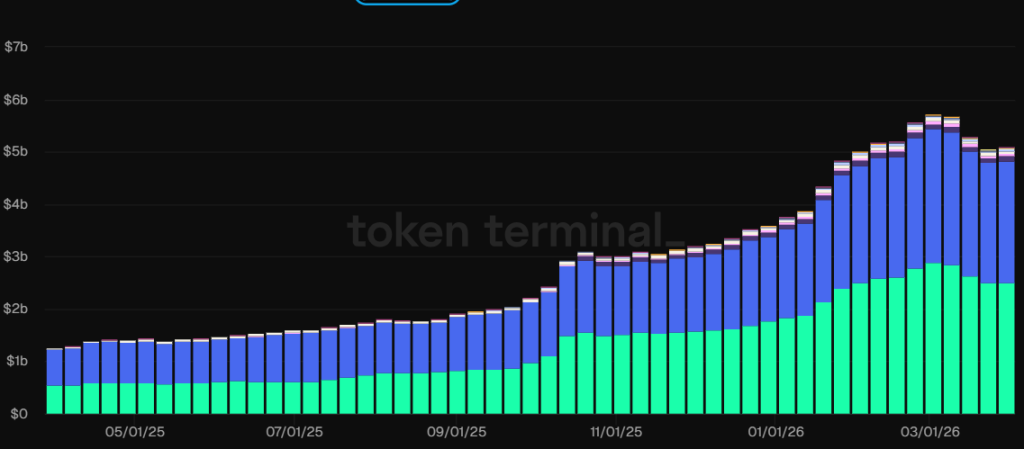
Tokenized commodity markets grew from $1.9 billion in early 2025 to $7.13 billion by February 2026, more than 4X in under a year. Hyperliquid RWA Perpetuals have recorded more than $1B in weekend volume on peak days, with oil, silver, and contracts surpassing even Ethereum volumes.
Before this migration, a similar shift occurred thirty years ago, when capital markets moved to electronic trading. It seems that the narrative around crypto was never about crypto-native speculative tokens. It just served as a foundational innovation, and the real application is only in the real economy. The trading infrastructures leveraged to trade crypto are now expected to extend to Oil, Gold, Silver, Agriculture, and Energy Derivatives.
Whether you’re a DeFi native platform, a centralized cryptocurrency exchange software, or a traditional clearing house or exchange, it is your wake-up call to start building tokenization and trading platforms for commodities.
How Does Commodity Tokenization Transform Crypto Exchange Development?
If the next wave of trading infrastructures will be centered around commodities, cryptocurrency exchange software faces a choice: evolve into multi-asset, always-on liquidity engines or become legacy systems.
Building for this future requires capabilities that most exchanges haven’t prioritized:
- A full RWA layer that can handle commodity perpetuals, synthetic exposure, and tokenized spot instruments
- Infrastructure capable of handling 100,000 orders per second with on-chain settlement without sacrificing speed or security
- Market-making frameworks and oracle integrations that function across weekends, holidays, and off-hours
- Systems that bridge traditional oracle data feeds with DeFi rails, allowing price discovery to remain accurate and manipulation-resistant across 24/7 sessions
Hyperliquid and Trade.xyz have demonstrated that all of the above is achievable. More players are emerging that accommodate crypto and tokenized commodity trading under one decentralized crypto exchange software platform.
Where Most Exchanges Are Falling Short
Despite the momentum in tokenized commodities, most centralized and decentralized exchanges (DEX) remain structurally behind. They are still optimized for crypto-native markets and not for RWAs. The architectural gaps for RWA exchange development include:
- Spot-Centric Design
Most exchanges still rely heavily on BTC, ETH, and altcoin spot volumes, with little to no infrastructure for tokenized commodities or RWAs. - Crypto-Native Derivatives Only
Perpetuals and options remain confined to crypto assets, ignoring demand for commodity-linked derivatives like oil and gold. - Missing Oracle Infrastructure
Without reliable, real-time price feeds for commodities, crypto exchange software platforms cannot support accurate or competitive RWA markets, especially during geopolitical volatility. - Siloed Liquidity Architecture
Crypto and commodities are treated as separate systems, preventing cross-margining, unified liquidity, and institutional-grade hedging strategies.
When tokenized commodity markets surged during the Iran events, most cryptocurrency exchange software platforms had no exposure, no liquidity or product to offer. They were just watching from the sidelines when they should have stood in the competition.
Case Study: Building a Regulation-Ready Multi-Asset Trading Ecosystem with Integrated RWA Tokenization
When a leading financial services group operating across the UAE and Bahrain decided to launch a next-generation trading platform, they approached Antier. They aimed to build a centralized crypto exchange software where users could seamlessly trade crypto and tokenized stocks, commodities, and other credible real-world assets, all under one roof, with an integrated RWA tokenization layer.
The challenge was significant. These are regulated, high-scrutiny markets where compliance, custody security, and institutional-grade performance are non-negotiable. The RWA and crypto exchange software development required an architecture capable of supporting both traditional financial instruments and on-chain trading efficiency, without compromise.
What Antier Built
- Unified Multi-Asset Exchange
A UAE and Bahrain-compliant centralized crypto exchange software enabling seamless trading across crypto, equities, commodities, and other regulated assets. - Separate RWA Tokenization Platform
A dedicated infrastructure for token issuance, lifecycle management, and asset representation, integrated with the exchange while maintaining operational and regulatory separation - Institutional-Grade Custody Infrastructure
Secure custody frameworks aligned with fiduciary and regulatory requirements across jurisdictions - Compliance-First Architecture
Built-in, not bolted-on KYC/AML, reporting systems, and regulatory hooks. - High-Performance Matching Engine
Low-latency order book infrastructure capable of handling real-time, cross-asset trading volumes
The Outcome
The client launched with a platform that no single off-the-shelf solution could have delivered: a compliant, multi-asset centralized crypto exchange software with a purpose-built RWA tokenization layer. This positions them to capture both the existing crypto trading market and the rapidly growing demand for tokenized commodities and other real-world asset exposure across Gulf markets.
It is precisely the kind of infrastructure this blog has been describing. It is not the one with more tokens, but a market structure built to handle the assets that actually move the real economy.
This is what it looks like to build for tomorrow’s markets, not yesterday’s.
Get Ready With The Tokenized Commodity Trading Infrastructure Before It’s Too Late
As said above, the tokenized commodity market capitalization has skyrocketed by 400% in less than a year and Wall Street has already pulled up its socks. Tokenized commodities are a functioning, growing market segment that is already capturing volumes, institutional attention, and infrastructure investment.
For crypto exchange developers, the mandate is clear that platforms in the next phase of market evolution won’t be those with more tokens but the ones that keep RWA markets open and alive. So, go beyond spot crypto trading and build infrastructures to tokenize real world assets and facilitate compliant custody and trading for those assets. The cryptocurrency exchanges that act now will set the architecture that the rest follow.
At Antier, the shift is already being implemented across regulated markets, where multi-asset trading, RWA tokenization, and compliance-first architectures are becoming the new baseline. Connect with Antier’s experts to build a future-ready trading platform that goes beyond crypto and supports commodities and other real world asset markets at scale.
Frequently Asked Questions
01. What event triggered the shift in global risk sentiment on February 28, 2026?
U.S and Israeli strikes hit Iran, leading to a spike in safe-haven assets and a surge in oil prices.
02. How did traditional commodity markets react to the strikes in Iran?
Traditional commodity markets were unable to respond immediately due to rigid trading schedules, resulting in a 49-hour blackout over the weekend when the strikes occurred.
03. What advantage did on-chain markets have over traditional markets during the crisis?
On-chain markets, like Hyperliquid, provided real-time price discovery and trading for commodities, allowing traders to react instantly to market changes, unlike traditional markets that were closed.