




✨ AI Summary
- Discover how augmented reality (AR) is revolutionizing gaming by blending digital elements with the real world.
- Dive into the world of AR game development, exploring the technologies, processes, and market insights driving this innovative industry.
- From location-based to multiplayer AR games, learn about the diverse gameplay options available.
- Uncover the potential of AR gaming, with its immersive experiences and interactive gameplay, as it becomes a significant segment of the global gaming market.
- Get insights on the future of AR gaming, including spatial computing, AI integration, and web-based AR experiences.
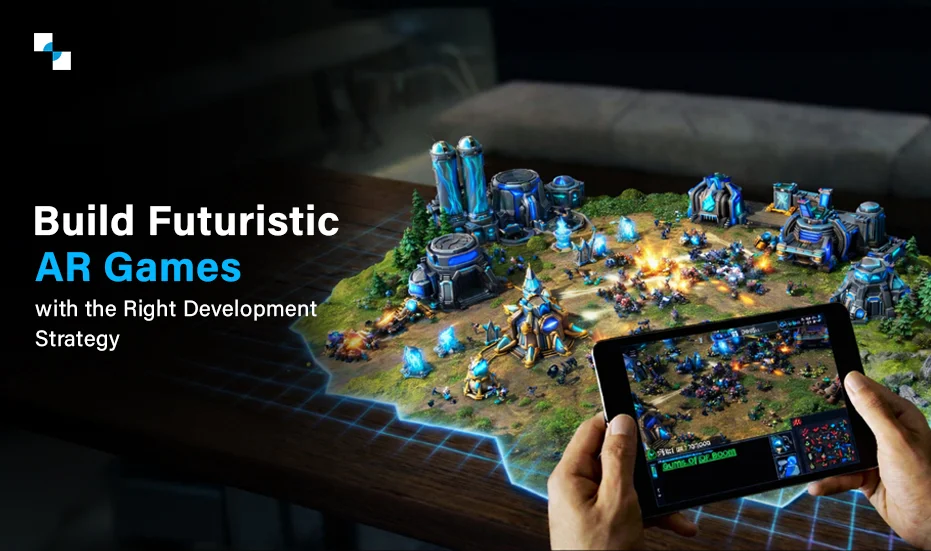
Augmented reality, more popularly referred to as AR, is redefining how players interact with digital environments. Unlike traditional games that exist entirely within screens, AR games blend digital elements with the physical world, creating immersive experiences where players interact with virtual objects in real-world environments.
The success of titles like Pokémon GO demonstrated the massive potential of augmented reality gaming. Today, advances in spatial computing, AR frameworks, and mobile hardware are accelerating the adoption of AR across the gaming industry.
In 2026, AR gaming is no longer limited to experimental projects. Studios, startups, and enterprises are increasingly investing in custom AR game development to create interactive experiences that combine real-world environments with digital gameplay.
This guide explores how AR game development works, the technologies used to build AR games, development costs, and why businesses are partnering with professional AR game development companies to build immersive gaming platforms.
What Is AR Game Development?
AR game development involves creating games that overlay digital elements onto the real world using camera-enabled devices such as smartphones, tablets, or AR headsets.
Instead of exploring virtual environments on a screen, players interact with digital objects that appear integrated into their physical surroundings. Typical components of an AR game include:
- Real-time environment tracking
- Object detection and surface mapping
- Interactive 3D game elements
- Spatial audio and visual effects
- Real-world location integration
These technologies enable developers to create games where players interact with virtual characters, objects, and environments in real-world settings.
Why AR Gaming Is Growing Rapidly
Several technological and industry trends are driving the growth of AR gaming.
First, smartphone hardware has improved significantly, enabling devices to process AR graphics and environmental data more efficiently. Modern smartphones now include advanced sensors, cameras, and processors capable of supporting complex AR applications.
Second, spatial computing platforms such as Apple Vision Pro and mixed-reality headsets are expanding the possibilities of immersive gaming experiences.
Third, new development frameworks such as ARKit, ARCore, and WebAR have made it easier for developers to create augmented reality experiences without building complex tracking systems from scratch.
These advancements allow gaming studios to build experiences that combine digital gameplay with real-world exploration, creating more engaging and interactive games.
Types of AR Games
AR games can take several forms depending on gameplay mechanics and platform capabilities.
1. Location-Based AR Games
Location-based AR games use GPS and real-world mapping to create gameplay experiences tied to physical locations. Players move through real-world environments to interact with digital elements. Examples include treasure-hunt style games and location-based quests.
2. Marker-Based AR Games
These games use specific visual markers or QR codes to trigger AR content. When the device camera detects a marker, the game displays virtual objects anchored to that location. Marker-based AR is commonly used for promotional games and educational experiences.
3. Markerless AR Games
Markerless AR games use environmental tracking instead of visual markers. These systems detect surfaces and objects in the environment to place digital elements naturally within the real world. This approach enables more immersive and flexible gameplay experiences.
4. Multiplayer AR Games
Multiplayer AR games allow multiple players to interact with the same augmented environment simultaneously. These games require real-time synchronization and cloud infrastructure to ensure smooth gameplay.
Want to Launch Your AR Gaming Project with Confidence?
AR Game Development Process
Developing an augmented reality game requires a structured workflow that combines game design, AR technologies, and software development.
1. Concept and Game Design
The first stage focuses on defining the gameplay concept and identifying how augmented reality enhances the gaming experience. AR game developers determine:
- Game mechanics
- Environment interaction models
- Player engagement strategies
- Monetization approaches
This stage ensures that AR elements enhance gameplay rather than acting as superficial features.
2. AR Environment Design
Developers design how digital objects interact with real-world environments. This includes defining object placement, movement, and interaction systems.
Environmental design also determines how players explore the game world and interact with virtual elements.
3. Development and Integration
During this phase, developers integrate AR frameworks, game engines, and backend systems to create the core gameplay experience. This includes:
- Implementing object tracking systems
- Integrating AR frameworks such as ARKit or ARCore
- Developing gameplay mechanics and user interfaces
4. Testing and Optimization
Testing AR games requires evaluating gameplay across different environments and lighting conditions. Developers optimize performance to ensure smooth interaction with real-world objects.
5. Launch and Scaling
Once development is complete, the game is deployed across supported platforms. Developers may continue updating the game with new features, events, and gameplay mechanics.
AR Gaming Market Insights: Industry Statistics
The rapid growth of augmented reality technologies is accelerating the development of immersive gaming experiences. Several industry reports highlight how AR is becoming a significant segment of the gaming industry.
According to Fortune Business Insights, the global augmented reality market is expected to grow from 210.96 billion USD in 2026 to 2,344.90 USD billion by 2034 with a compound annual growth rate of 35.10% during the period.
Technologies Used in AR Game Development
Developing augmented reality games requires a combination of game engines, AR frameworks, and cloud infrastructure. Common technologies include:
1. Game Engines
- Unity
- Unreal Engine
These engines provide tools for rendering graphics, physics simulations, and gameplay mechanics.
2. AR Development Frameworks
- Apple ARKit
- Google ARCore
- WebAR frameworks
These frameworks enable real-time environment tracking and object placement.
3. Backend Infrastructure
Cloud infrastructure supports multiplayer gameplay, player data management, and analytics systems.
Cost to Develop an AR Game
The cost of AR game development varies depending on the complexity of the project, platform requirements, and feature set. Factors influencing AR game development cost include:
- Game complexity and mechanics
- Multiplayer functionality
- AR framework integration
- 3D asset development
- Backend infrastructure requirements
Simple AR games may require smaller development teams, while complex multiplayer AR platforms require larger teams and advanced infrastructure.
Why Businesses Invest in AR Game Development
For studios and enterprises, AR gaming offers several strategic advantages.
- Immersive Player Experiences
AR technology allows players to interact with game elements within real-world environments, creating more engaging gameplay experiences. - Innovative Marketing Opportunities
Brands can use AR games as interactive marketing tools that engage users through immersive experiences. - New Revenue Models
AR games enable monetization through in-game purchases, virtual items, and premium gameplay experiences.
The Future of AR Gaming
The next phase of gaming innovation will likely be driven by advancements in augmented reality, spatial computing, and artificial intelligence. As hardware capabilities improve and development frameworks mature, AR games are expected to become significantly more immersive and interactive. Several trends are shaping the future of AR game development.
- Spatial Computing Platforms
Devices such as Apple Vision Pro and next-generation mixed-reality headsets are expanding the possibilities of AR gaming. These platforms enable developers to create immersive environments where digital objects coexist naturally within real-world spaces. Spatial computing will allow games to extend beyond mobile screens into fully interactive environments. - AI-Powered AR Gameplay
Artificial intelligence is expected to play an important role in AR gaming by enabling smarter NPCs, adaptive gameplay mechanics, and personalized player experiences. AI-driven systems can analyze player behavior and dynamically adjust game environments to maintain engagement. - Web-Based AR Gaming
WebAR technologies are reducing the need for app downloads by enabling AR experiences directly within web browsers. This approach allows developers to reach wider audiences and deploy games more quickly. WebAR gaming is particularly attractive for marketing campaigns and casual gaming experiences. - Persistent Virtual Worlds
Future AR games may combine augmented reality with persistent virtual worlds where players interact with shared environments that evolve over time. These experiences blur the line between gaming platforms and digital ecosystems. - Cross-Platform Mixed Reality Gaming
The integration of AR with VR and traditional gaming platforms will lead to hybrid gaming experiences where players can interact across multiple devices. This convergence of technologies will create new opportunities for studios to build expansive gaming ecosystems. - As spatial computing and AR hardware continue to evolve, augmented reality gaming is expected to become a major segment of the global gaming industry. Studios that invest early in custom AR game development will be better positioned to capitalize on this emerging market.
Why Hire a Professional AR Game Development Company
Building a successful AR game requires expertise across multiple technical disciplines including AR frameworks, game engines, and multiplayer infrastructure.
Organizations often choose to hire AR developers for games to ensure that their projects are built with scalable architecture and optimized performance.
An experienced AR game development company like Antier can help studios design immersive gameplay mechanics, implement advanced AR technologies, and deliver high-quality gaming experiences.
Frequently Asked Questions
01. What is augmented reality (AR) game development?
AR game development involves creating games that overlay digital elements onto the real world using camera-enabled devices, allowing players to interact with virtual objects integrated into their physical surroundings.
02. What technologies are used in AR game development?
Key technologies in AR game development include real-time environment tracking, object detection, surface mapping, interactive 3D elements, and spatial audio and visual effects.
03. Why is AR gaming experiencing rapid growth?
AR gaming is growing due to advancements in smartphone hardware, the emergence of spatial computing platforms, and new development frameworks that simplify the creation of augmented reality experiences.