




AI Summary
- Enterprises are pivoting towards large-scale AI deployment, with a focus on robust infrastructure to support advanced AI workloads.
- As global AI spending is set to reach $2.52 trillion by 2026, organizations are investing heavily in AI foundations.
- AI Infrastructure-as-a-Service (AIaaS) emerges as a pivotal model, offering on-demand access to essential resources for building AI systems without the burden of managing complex hardware.
- AI cloud infrastructure is becoming the cornerstone of enterprise AI, providing scalable environments optimized for high-performance computing and large-scale model training.
- Key architectural components of modern AI infrastructure include high-performance compute layers, data engineering, storage layers, machine learning development environments, and MLOps frameworks.
Artificial intelligence has entered a phase where infrastructure, not algorithms, is becoming the defining factor for enterprise success. Organizations are rapidly shifting their focus from experimentation to large-scale deployment of AI solutions. However, running modern AI workloads requires massive computing power, distributed storage systems, and specialized AI development infrastructure.
Industry research shows that enterprises are dramatically increasing their investments in AI foundations. According to research from Gartner, global AI spending is projected to reach $2.52 trillion by 2026, representing a 44% increase compared to previous years. A significant portion of this spending is directed toward AI infrastructure and enterprise AI platforms.
Infrastructure is now the backbone of enterprise AI adoption. Large organizations are investing heavily in high-performance computing clusters, AI cloud infrastructure, and scalable data pipelines to support generative AI and machine learning applications.
As John-David Lovelock, Distinguished VP Analyst at Gartner, explains:
“AI adoption is fundamentally shaped by the readiness of human capital and organizational processes.”
This shift toward infrastructure-led AI adoption has accelerated the rise of AI Infrastructure as a Service (AIaaS), enabling enterprises to build intelligent systems without managing complex underlying hardware.
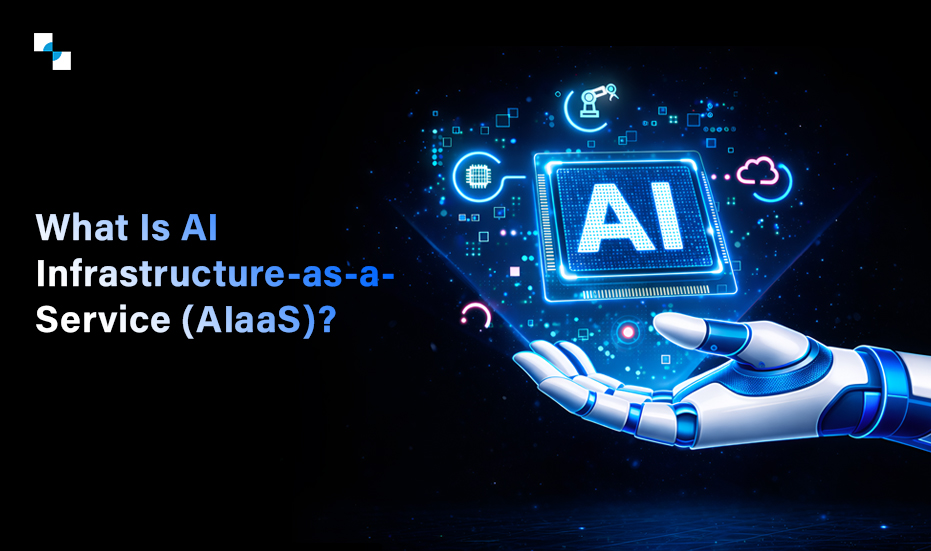
What Is AI Infrastructure-as-a-Service (AIaaS)? A New Operating Model for Enterprise AI
AI Infrastructure-as-a-Service is a cloud-based delivery model that provides enterprises with on-demand access to computing resources, machine learning environments, and deployment platforms required to build and scale artificial intelligence systems.
Instead of investing in expensive hardware or building AI platforms internally, organizations can leverage managed AI infrastructure services delivered through cloud-based platforms.
An enterprise-grade AI infrastructure platform typically provides:
- GPU and AI accelerator clusters for large-scale computation
- Distributed storage for large datasets
- AI development infrastructure for model training
- MLOps pipelines for lifecycle management
- AI deployment and inference environments
This service-based model enables organizations to build advanced AI applications while focusing on innovation rather than infrastructure management.
Industry analysts highlight that AI-optimized infrastructure services are becoming one of the fastest-growing segments of enterprise technology.
According to Gartner research, spending on AI-optimized Infrastructure-as-a-Service is expected to reach $37.5 billion by 2026, driven by the increasing demand for specialized computing hardware such as GPUs and AI accelerators.
The Rise of AI Cloud Infrastructure: Powering the Next Generation of AI Applications
Modern AI systems rely heavily on scalable cloud environments capable of handling massive datasets and complex machine learning workloads. As a result, AI cloud infrastructure has become the foundation of enterprise AI deployment.
Unlike traditional cloud environments, AI cloud infrastructure is optimized for high-performance computing and large-scale model training. It integrates advanced hardware components such as GPUs, tensor processing units, and AI accelerators with distributed storage and networking systems.
Key capabilities of AI cloud infrastructure include:
- Scalable GPU clusters
- Distributed computing frameworks
- High-speed networking for parallel processing
- Automated model deployment environments
These capabilities allow enterprises to train complex machine learning models, process massive datasets, and deploy AI-driven applications across global markets.
According to reports from Deloitte and Gartner, enterprise spending on AI infrastructure is accelerating as organizations scale generative AI and machine learning deployments. Major technology companies are investing hundreds of billions of dollars into data centers designed specifically for AI workloads.
This growing infrastructure ecosystem is enabling enterprises to build AI systems that can process vast amounts of data in real time.
Building Enterprise AI Infrastructure: Key Architectural Components
A modern enterprise AI infrastructure consists of multiple interconnected layers designed to support the complete lifecycle of AI development.
These layers form the foundation of AI development infrastructure used by data scientists, machine learning engineers, and enterprise technology teams.
High-Performance Compute Layer
AI workloads require specialized hardware capable of handling parallel computations. GPU clusters and AI accelerators enable organizations to train deep learning models and generative AI systems efficiently.
These compute environments are particularly critical for large language models and advanced neural networks that require thousands of parallel operations.
Data Engineering and Storage Layer
AI systems rely on vast volumes of data. Enterprise AI platforms include advanced data pipelines that support data ingestion, storage, transformation, and governance.
These systems allow organizations to process structured and unstructured data at scale while maintaining security and compliance.
Machine Learning Development Environment
AI engineers require sophisticated development environments that allow them to experiment with models, test algorithms, and collaborate across teams.
These environments are an essential component of modern AI development infrastructure.
They typically include:
- model training frameworks
- experiment tracking tools
- collaborative development environments
These capabilities accelerate innovation while ensuring consistency across AI projects.
MLOps and Model Lifecycle Management
As AI systems move into production environments, organizations must manage the entire lifecycle of machine learning models.
MLOps frameworks provide automation for:
- model deployment
- monitoring and performance tracking
- continuous model retraining
These systems ensure that AI applications remain reliable and effective over time.
The Role of AI Development Companies in Accelerating Enterprise AI
For many organizations, building AI infrastructure internally can be both technically complex and financially demanding. As a result, enterprises increasingly collaborate with specialized AI development company partners that provide expertise in building scalable AI ecosystems.
An experienced AI development company can help enterprises:
- Design scalable AI infrastructure platforms
- Implement AI cloud infrastructure environments
- Build custom AI models and data pipelines
- Deploy AI applications across enterprise systems
By combining infrastructure expertise with advanced AI engineering capabilities, these companies enable organizations to accelerate AI adoption while minimizing operational risks.
Business Advantages of AI Infrastructure-as-a-Service
Adopting AI infrastructure as a service provides multiple strategic benefits for enterprises looking to scale AI initiatives
- Faster AI Innovation
AIaaS eliminates infrastructure bottlenecks, allowing organizations to focus on building intelligent applications rather than managing hardware.
- Scalable Computing Resources
Enterprises can dynamically scale computing resources based on demand, enabling them to handle large AI workloads efficiently.
- Reduced Capital Investment
Organizations avoid large upfront investments in specialized hardware such as GPU clusters and AI accelerators.
- Improved Operational Efficiency
Managed AI infrastructure services reduce operational complexity and simplify the management of AI environments.
- Faster Deployment of AI Applications
AIaaS platforms accelerate the development and deployment of AI solutions across enterprise systems.
Transform your Enterprise with Scalable AI Infrastructure
Emerging AI Infrastructure Trends Shaping 2025-2026
The evolution of enterprise AI infrastructure is being shaped by several transformative trends.
- Generative AI Infrastructure
The rise of generative AI has significantly increased demand for computing power and data processing capabilities. Enterprises are building infrastructure specifically designed to support large language models and multimodal AI systems.
- AI Supercomputing Clusters
Large-scale AI clusters capable of connecting thousands of GPUs are becoming the backbone of enterprise AI platforms.
- Edge AI Infrastructure
Organizations are increasingly deploying AI models closer to data sources to enable real-time processing for applications such as smart manufacturing and autonomous systems.
- AI Governance and FinOps
As AI adoption grows, enterprises are implementing governance frameworks and financial operations strategies to manage the cost and performance of AI workloads.
Experts highlight that infrastructure readiness is becoming a critical factor for successful AI implementation.
Challenges Enterprises Must Address When Building AI Infrastructure
- Data Security and Compliance
Enterprises must ensure that sensitive data remains protected when deploying AI workloads in cloud environments.
- Infrastructure Costs
Training large AI models can require significant computing resources, increasing operational expenses.
- Talent Shortages
Many organizations struggle to find professionals with expertise in AI infrastructure engineering.
- Vendor Lock-In Risks
Relying heavily on a single AI cloud provider can create long-term operational dependencies. Addressing these challenges requires careful planning and a well-defined enterprise AI strategy.
The Future of AI Infrastructure Platforms
AI infrastructure is rapidly evolving as enterprises push the boundaries of machine learning and generative AI technologies.
Future enterprise AI platforms are expected to incorporate:
- autonomous AI operations
- distributed AI networks
- edge computing infrastructure
- AI-native cloud environments
Researchers predict that the number of AI agents and intelligent systems could increase dramatically over the next decade, placing even greater demands on global computing infrastructure.
This means that scalable AI infrastructure platforms will become essential digital foundations for the next generation of intelligent systems.
Why AIaaS is Becoming the Backbone of Enterprise AI
Artificial intelligence is transforming how organizations operate, compete, and innovate. However, the ability to scale AI initiatives depends heavily on the availability of reliable and high-performance infrastructure. AI Infrastructure-as-a-Service provides enterprises with a powerful solution for building and deploying intelligent systems without the complexity of managing hardware environments. By leveraging scalable computing environments and modern AI platforms, organizations can accelerate innovation, reduce operational complexity, and unlock new opportunities in the AI-driven economy. As AI adoption continues to expand, AIaaS will play a critical role in enabling enterprises to build the intelligent digital ecosystems of the future.
As a trusted AI Development company, Antier helps enterprises design and implement scalable AI environments that support modern AI workloads and intelligent applications. With deep expertise in enterprise AI deployment, Antier empowers organizations to transform ideas into production-ready AI solutions.