




AI Summary
- The blog post discusses the shift in the gaming industry towards metaverse gaming platforms, which offer persistent virtual ecosystems where players interact, trade assets, and participate in shared economies.
- Unlike traditional games, metaverse platforms operate as continuous worlds that evolve even when players are offline.
- The post details the key characteristics and components of metaverse gaming platforms, including the necessary technology stack for development.
- It emphasizes the importance of NFT integration, infrastructure requirements, monetization strategies, and enterprise use cases for metaverse platforms.
- The post also explores emerging trends in metaverse gaming platform development, such as interconnected ecosystems, AI-driven environments, creator economies, cross-platform accessibility, and tokenized digital ownership.
The gaming industry is moving beyond standalone titles toward persistent virtual ecosystems. Modern players expect digital ownership, interconnected worlds, and evolving economies that extend far beyond a single gameplay session. This shift is driving demand for metaverse gaming platform development.
Unlike traditional games, metaverse gaming platforms operate as persistent digital environments where users interact, trade assets, build communities, and participate in shared economies. These platforms require robust infrastructure, carefully designed architecture, and secure systems for asset ownership.
For enterprises and gaming studios entering this space, building a metaverse gaming platform is not simply about creating a game. It involves designing scalable ecosystems that support thousands or even millions of users interacting in real time.
Understanding the architecture and NFT integration behind these platforms is essential for building sustainable metaverse ecosystems.
Why Metaverse Gaming Platforms Are Different from Traditional Games
Traditional games are typically session-based experiences. Players log in, complete objectives, and exit the game environment. Metaverse gaming platforms, however, function as persistent worlds that continue evolving even when individual players are offline.
This difference introduces new technical requirements.
Metaverse platforms must support continuous interactions between users, assets, and virtual environments. They also enable economic activities such as asset trading, virtual land ownership, and NFT-based collectibles.
As a result, the development approach shifts from building isolated game mechanics to designing interconnected digital ecosystems. Key characteristics of metaverse gaming platforms include:
- Persistent virtual environments
- Player-driven economies
- Digital asset ownership
- Social interaction layers
- Interoperable game assets
- Continuous platform evolution
These features require specialized metaverse gaming platform architecture capable of supporting complex interactions at scale.
Core Components of a Metaverse Gaming Platform
A successful metaverse gaming platform is built on multiple interconnected systems working together to support gameplay, economy, and infrastructure. Important components include:
1. Virtual World Engine
This is the environment where players interact. It includes world-building tools, physics engines, and rendering systems that create immersive digital spaces.
2. Multiplayer Interaction Systems
Metaverse platforms must support thousands of concurrent users interacting within the same environment. Real-time networking infrastructure ensures smooth communication between players and servers.
3. Asset Management Systems
Digital items such as avatars, skins, equipment, and virtual land must be securely stored and transferable between players.
4. Economy and Marketplace Infrastructure
Virtual marketplaces enable players to trade assets, purchase upgrades, and participate in digital economies.
5. Identity and Authentication Systems
User identity management is critical for secure ownership of assets and personalized gameplay experiences.
Each of these components contributes to the stability and scalability of a metaverse gaming platform.
Metaverse Gaming Platform Architecture
Building a scalable metaverse platform requires layered architecture designed to manage both gameplay and blockchain interactions. A typical metaverse gaming platform architecture includes the following layers:
1. Experience Layer
This is the player-facing interface that includes:
- Game clients (mobile, PC, web)
- User interface systems
- Avatar customization
- Social interaction features
It is responsible for delivering immersive gameplay and seamless user interaction.
2. Game Logic Layer
The game logic layer controls gameplay mechanics, rule enforcement, and interaction logic. This includes:
- Quest systems
- Progression mechanics
- Player interactions
- Game physics
- Event triggers
Efficient game logic design ensures fair gameplay and consistent performance.
3. Blockchain Integration Layer
Blockchain infrastructure enables secure digital ownership within the metaverse ecosystem. Key components include:
- Smart contracts for asset ownership
- NFT minting systems
- Token-based reward mechanisms
- Wallet integration
This layer ensures that digital assets remain transparent, verifiable, and transferable.
4. Data and Infrastructure Layer
The infrastructure layer supports scalability and performance through systems such as:
- Distributed databases
- Cloud hosting environments
- Real-time communication servers
- Load balancing systems
Without reliable infrastructure, metaverse platforms cannot support large-scale user activity.
Planning to Build a Futuristic Metaverse Gaming Platform?
Technology Stack Used in Metaverse Gaming Platform Development
Metaverse gaming platform development requires a combination of game engines, blockchain infrastructure, cloud systems, and real-time networking technologies. The technology stack must support persistent virtual worlds, large-scale user interactions, and secure digital asset ownership. Choosing the right stack directly affects platform performance, scalability, and long-term sustainability. Below are the major technology layers commonly used in metaverse game development.
1. Game Engine and Rendering Layer
Game engines power the virtual environment, physics systems, and real-time graphics rendering of the metaverse platform. Common engines used include:
- Unity – widely used for cross-platform metaverse environments
- Unreal Engine – ideal for high-fidelity immersive worlds
- WebGL-based engines – used for browser-accessible metaverse platforms
These engines enable the creation of interactive environments, avatar systems, and multiplayer experiences across multiple devices.
2. Blockchain Infrastructure Layer
Blockchain technology enables decentralized ownership and secure asset management within metaverse ecosystems. Some of the commonly used blockchain networks include:
- Ethereum – widely adopted for NFT ecosystems
- Polygon – lower transaction costs for gaming platforms
- BNB Chain – scalable infrastructure for Web3 gaming
- Avalanche – high-performance blockchain for gaming ecosystems
These networks support smart contracts, NFT minting systems, and tokenized digital economies.
3. NFT and Digital Asset Layer
NFT standards define how digital assets are created, stored, and traded within the metaverse platform. Typical implementations include:
- ERC-721 for unique NFT assets
- ERC-1155 for semi-fungible game items
- NFT metadata storage systems for asset attributes
- Decentralized storage solutions such as IPFS
This layer enables players to own and trade digital assets securely.
4. Backend Infrastructure Layer
Metaverse platforms rely on robust backend systems that support real-time player interactions and persistent environments. Important infrastructure components include:
- Cloud computing platforms (AWS, Azure, Google Cloud)
- Real-time multiplayer servers
- Distributed databases
- Content delivery networks (CDNs)
- Microservices architecture
These systems ensure stable performance even when thousands of users interact simultaneously.
5. Wallet and Identity Integration
Wallet systems allow players to authenticate, store assets, and perform transactions within the metaverse ecosystem. Typical integrations include:
- MetaMask
- WalletConnect
- Phantom
- Custodial wallet systems for simplified onboarding
Wallet integration must be designed carefully to ensure secure and frictionless user experiences.
6. Analytics and Economy Monitoring
Metaverse gaming platforms generate large volumes of behavioral and economic data. Analytics systems help developers monitor platform performance and maintain balanced digital economies. Analytics tools are used to track:
- Player behavior patterns
- Asset trading activity
- Token circulation
- Gameplay engagement metrics
- Economic inflation within virtual marketplaces
These insights help developers continuously optimize gameplay mechanics and platform stability.
Why Technology Stack Decisions Matter
A poorly designed technology stack can lead to performance issues, security vulnerabilities, and limited scalability. Metaverse platforms must support persistent environments and complex interactions, making architecture decisions critical from the earliest development stages.
Experienced teams specializing in metaverse gaming platform development carefully evaluate technology choices based on platform requirements, scalability goals, and user experience considerations.
Selecting the right combination of game engines, blockchain networks, and backend infrastructure ensures that metaverse platforms remain stable as user communities grow.
NFT Integration in Metaverse Games
NFT integration in metaverse games plays a central role in modern platform development. NFTs allow players to own, trade, and transfer digital assets independently of centralized control. NFTs can represent various in-game elements such as:
- Character skins
- Weapons and equipment
- Virtual land parcels
- Unique collectibles
- Avatar identities
These assets can be bought, sold, or traded in decentralized marketplaces, creating real economic value within the game ecosystem.
From a development perspective, NFT integration requires careful planning to ensure that assets remain secure, scalable, and user-friendly. Smart contracts must be designed to prevent exploits, while wallet integration must be seamless for players unfamiliar with blockchain technology.
When implemented correctly, NFT systems enable sustainable digital economies within metaverse platforms.
Infrastructure Requirements for Persistent Virtual Worlds
One of the biggest challenges in metaverse gaming platform development is supporting persistent environments that remain active at all times. Infrastructure requirements typically include:
- High-performance cloud hosting
- Real-time communication servers
- Distributed storage systems
- Scalable database architecture
- Network latency optimization
These systems must handle large volumes of player interactions while maintaining stable performance. Metaverse platforms also require analytics pipelines to monitor user behavior, economic activity, and gameplay performance. This data helps developers optimize the platform and maintain balanced digital economies.
Want to Turn Your Game Idea Into a Metaverse Gaming Platform?
Monetization and Digital Asset Economy
Metaverse gaming platforms introduce new monetization opportunities that extend beyond traditional in-game purchases. Some of the common revenue models include:
- NFT asset sales
- Virtual land ownership
- Marketplace transaction fees
- Token-based reward systems
- Subscription or access models
Unlike conventional monetization models, metaverse economies are often partially controlled by the community, creating dynamic market behavior within the platform. Designing sustainable economic systems is one of the most complex aspects of metaverse platform development.
Enterprise Use Cases for Metaverse Gaming Platforms
While the term “metaverse gaming” often evokes images of entertainment-focused virtual worlds, enterprises are increasingly exploring metaverse platforms as interactive environments for engagement, branding, and digital commerce.
Metaverse gaming platforms combine immersive gameplay with persistent digital environments, making them valuable tools for organizations seeking new ways to interact with audiences. Common use cases include:
1. Virtual Brand Worlds
Brands are launching immersive environments where users can explore virtual spaces, interact with branded experiences, and purchase digital collectibles.
These environments often function as digital extensions of real-world brands and communities.
2. Community-Driven Gaming Platforms
Gaming studios and startups are using metaverse platforms to create persistent worlds where communities can participate in events, competitions, and social activities. Players become long-term participants rather than temporary users.
3. NFT Asset Ecosystems
NFT-enabled metaverse platforms allow players to own unique digital items such as:
- Character skins
- Equipment
- Vehicles
- Virtual land
- Event access passes
These assets often have real-world trading value and can be transferred across marketplaces.
4. Virtual Economies and Creator Ecosystems
Some metaverse gaming platforms enable users to create and sell content within the virtual world. Players can design custom assets, build environments, and monetize their creations, creating self-sustaining digital economies.
For enterprises and studios, these models unlock new revenue streams and deeper engagement with user communities.
5. Security and Asset Protection
Security becomes a critical priority because players own digital assets with real value. Hence, metaverse gaming platforms must implement:
- Smart contract auditing
- Anti-cheat systems
- Fraud detection mechanisms
- Secure wallet integrations
- Data encryption protocols
A single vulnerability in smart contracts or infrastructure can compromise the entire digital economy of the platform. Professional metaverse game development teams incorporate security practices throughout the development lifecycle.
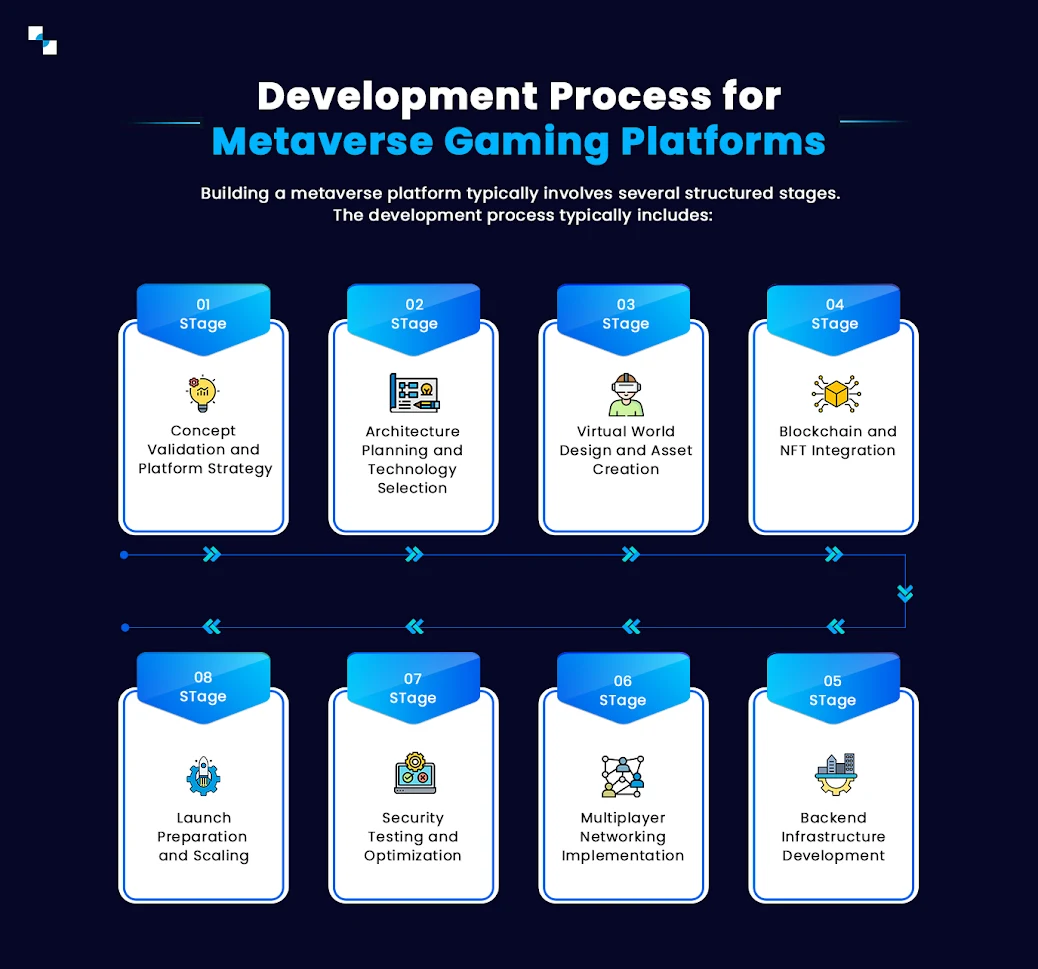
The Future of Metaverse Gaming Platform Development
Metaverse game development is still evolving. However, several emerging trends are shaping the next generation of virtual worlds.
1. Interconnected Metaverse Ecosystems
Future platforms are likely to enable interoperability between different metaverse environments, allowing assets and avatars to move across virtual worlds. This will create larger, interconnected digital ecosystems.
2. AI-Driven Virtual Environments
Artificial intelligence is increasingly being used to enhance player experiences through dynamic NPCs, personalized gameplay environments, and adaptive virtual worlds. AI systems can help maintain engagement within persistent digital spaces.
3. Creator Economy Expansion
User-generated content is expected to become a major component of metaverse gaming platforms. Players will be able to create, sell, and monetize digital assets within platform marketplaces.
4. Cross-Platform Accessibility
Metaverse platforms will continue expanding across devices including:
- Mobile devices
- Desktop systems
- VR headsets
- XR environments
Cross-platform accessibility will help metaverse platforms reach broader audiences.
5. Tokenized Digital Ownership
NFTs and blockchain-based identity systems will continue to shape how players own and manage digital assets. These systems allow players to maintain control over their virtual identities and possessions across platforms.
As technology continues evolving, metaverse gaming platforms are expected to become more immersive, interoperable, and economically sophisticated. Organizations investing in metaverse gaming platform development today are positioning themselves at the forefront of this transformation.
Partnering with a top-rated metaverse gaming platform development company like Antier brings several years of experience and technological expertise to the table, ensuring successful results.
Why Businesses Partner with a Professional Metaverse Game Development Company
Metaverse gaming platform development involves multiple technical disciplines, starting from real-time networking to blockchain infrastructure. Most enterprises lack the internal teams required to manage these complexities.
Antier, an experienced metaverse game development company, allows businesses to access specialized expertise in architecture design, blockchain integration, and large-scale platform deployment. Antier’s professional development team helps organizations reduce technical risk while accelerating time-to-market.
For enterprises exploring the metaverse opportunity, partnering with experienced developers can make the difference between launching a basic virtual environment and building a fully functional digital economy.
Frequently Asked Questions
01. What distinguishes metaverse gaming platforms from traditional games?
Metaverse gaming platforms are persistent virtual environments that evolve continuously, allowing users to interact, trade assets, and participate in shared economies, unlike traditional games which are session-based and end when players log off.
02. What are the key characteristics of metaverse gaming platforms?
Key characteristics include persistent virtual environments, player-driven economies, digital asset ownership, social interaction layers, interoperable game assets, and continuous platform evolution.
03. What are the core components necessary for a successful metaverse gaming platform?
Core components include a virtual world engine, which encompasses world-building tools, physics engines, and rendering systems to create immersive digital experiences, along with interconnected systems that support gameplay, economy, and infrastructure.