




✨ AI Summary
- In the rapidly evolving landscape of DAOs and stablecoin regulation, a new blog post delves into how compliance is reshaping governance models and treasury operations.
- As governments worldwide implement rules for stablecoin issuance, advanced DAO development frameworks are in high demand to meet regulatory standards.
- Token-based governance is facing challenges due to capital concentration and regulatory scrutiny, while treasury operations are increasingly vulnerable to compliance risks.
- The blog highlights the shift towards compliance-ready DAO operating models, emphasizing the need for professional development services to ensure long-term success.
- Investors are now favoring regulated DAOs with structured governance and financial transparency, signaling a fundamental shift in capital allocation.
Over the past five years, DAOs promised borderless governance, permissionless finance, and community-driven growth. Today, a new reality is reshaping this vision. Regulation is no longer operating in the background. It is now directly influencing how DAOs design their governance, manage treasuries, and build trust with investors and institutions. At the same time, stablecoins have become the primary settlement layer for Web3 economies. For founders, investors, and governance leaders, this shift raises critical questions. How do you remain decentralized while meeting compliance expectations? How do you protect treasury assets from regulatory risk? How do you design governance systems that institutions can trust? This blog answers those questions.
Inside, you will learn how regulation is transforming DAO architecture, why traditional governance models are losing credibility, and how modern DAO development is evolving into a scalable, institution-ready framework. If you are building, investing in, or advising a DAO, this guide will help you make informed decisions for long-term growth in regulated stablecoin ecosystems.
How Stablecoin Regulation Is Reshaping DAO Architecture
Governments worldwide are implementing formal rules for stablecoin issuance, custody, and settlement, fundamentally reshaping how DAOs operate in regulated financial environments and accelerating the demand for advanced DAO development frameworks. In the United States, authorities are enforcing reserve audits and issuer licensing, while the European Union is advancing MiCA compliance frameworks. Across Asia, regulators are strengthening payment-token supervision models, and Middle Eastern jurisdictions are establishing dedicated digital asset oversight authorities.
As regulated stablecoins become the dominant settlement layer, DAOs integrating them are now expected to meet higher operational standards, including full treasury transparency, automated KYC and AML compliance layers, real-time transaction monitoring systems, and clearly defined governance accountability norms. As a result, traditional anonymous treasury and token-based voting models are becoming structurally weak and increasingly incompatible with institutional and regulatory expectations.
What Changes Inside a DAO?
Modern DAO architecture is shifting toward:
- Segmented treasury wallets
- Role-based governance permissions
- Regulated payment rails
- Smart-contract compliance logic
- Hybrid on-chain/off-chain reporting
This transformation is being led by specialized DAO development company providers that understand both blockchain engineering and regulatory frameworks.
Prepare your DAO for regulation-driven stablecoin ecosystems today
Why Traditional DAO Governance Models Are Breaking
As regulatory expectations reshape DAO infrastructure and treasury operations, governance frameworks are now being examined more closely, pushing projects to rely on advanced DAO development services for compliance-ready design. Structures that once worked in loosely regulated environments are increasingly proving inadequate in a modern, compliance-driven ecosystem.
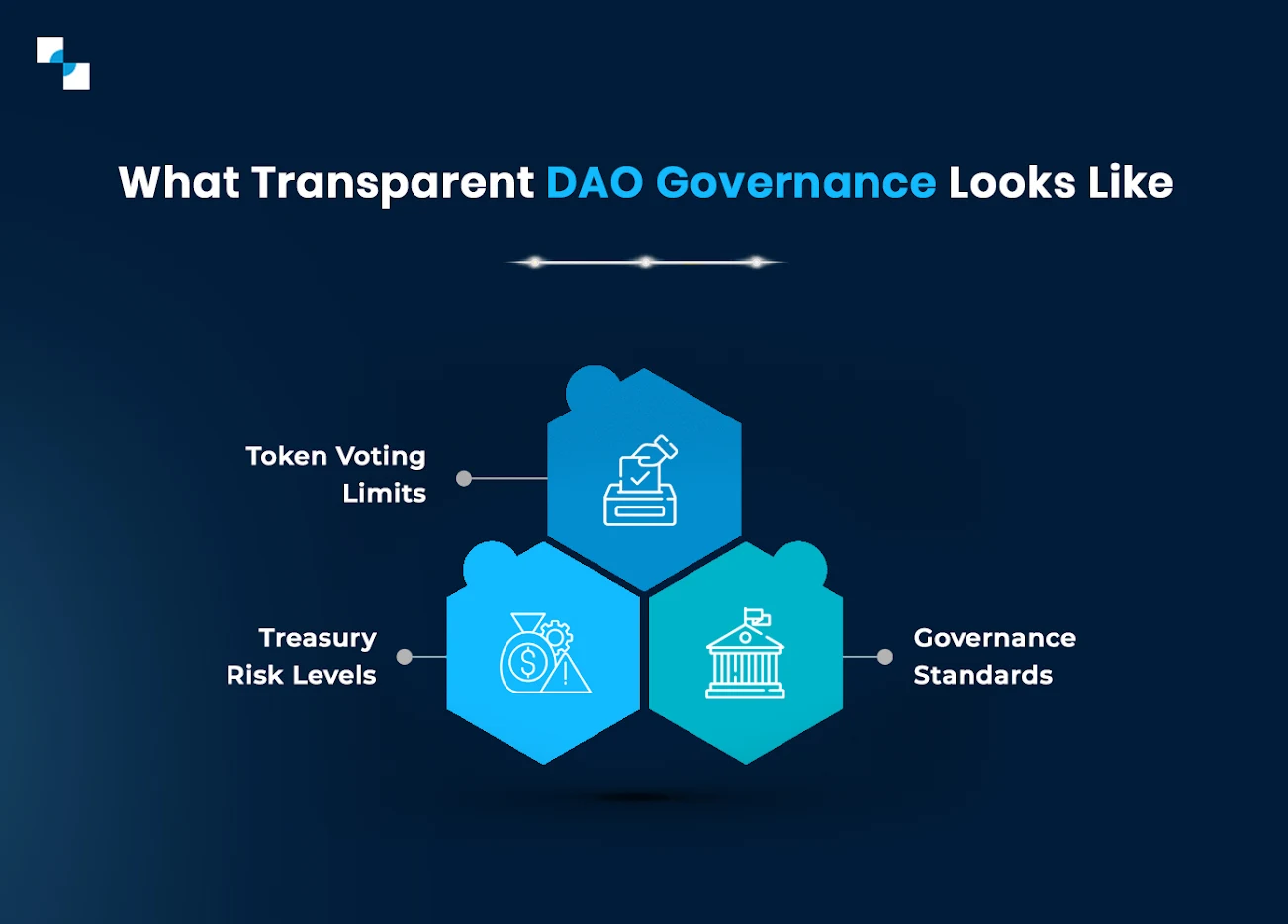
1. Token Voting Limits
Token-based governance is facing growing structural limitations as DAOs scale and attract regulatory attention. Three major challenges now define voting systems: capital concentration, low participation rates, and regulatory scrutiny.
In many DAOs, less than five percent of token holders control more than eighty percent of voting power. Regulators increasingly view this imbalance as centralized influence presented as decentralization, weakening institutional trust.
2. Treasury Risk Levels
As DAOs accumulate large reserves in regulated stablecoins, treasury operations are becoming more vulnerable to compliance and jurisdictional risks.
Key exposure points include account freezes, regulatory investigations, jurisdictional conflicts, and dependency on traditional banking relationships. These risks remain fragmented and largely unmanaged without professional DAO platform development.
3. Governance Standards
Modern governance systems are expected to function with the same transparency and accountability as financial institutions.
Future-ready DAOs must demonstrate clear decision traceability, financial accountability, conflict resolution mechanisms, and legal clarity across jurisdictions. Governance is no longer defined by voting alone. It is now measured by institutional credibility and operational discipline.
The New Compliance-Ready Stablecoin-Based DAO Operating Model
The Rise of “Regulated-Native” Stablecoin DAOs
As regulated stablecoins become the foundation of on-chain payments and treasury management, next-generation DAOs are being designed from day one to operate within compliant financial ecosystems.
These modern governance frameworks are built to support:
- Stablecoin licensing alignment
- Multisig compliance approval flows
- Automated reporting dashboards
- Smart-contract risk monitoring
- Legal wrapper integration
Implementing these systems at scale requires professional DAO development services rather than fragmented, do-it-yourself governance frameworks.
Core Layers of a Future-Ready DAO
| Layer | Function |
|---|---|
| Governance | Role-based voting and accountability |
| Treasury | Segmented regulated wallets |
| Compliance | Automated AML and KYC systems |
| Reporting | Real-time audit dashboards |
| Operations | Smart workflow management |
This modular architecture allows stablecoin-powered DAOs to scale across jurisdictions while minimizing regulatory friction and operational risk.
Why Investors Are Repositioning Around Regulated DAOs
As governance models mature and compliance becomes a defining success factor, the way capital evaluates decentralized organizations is undergoing a fundamental shift. What once attracted speculative funding now demands structural credibility, financial transparency, and regulatory preparedness.
Capital Is Moving Toward Compliance-Ready Projects
Institutional and venture capital are no longer chasing hype-driven DAO experiments. Instead, serious investors are reallocating funds toward projects that demonstrate regulatory awareness, financial discipline, and long-term governance stability, often backed by professional DAO development services that ensure regulatory and technical alignment from day one.
Today, capital is increasingly flowing into DAOs that operate within structured ecosystems, including:
- RWA-backed governance networks
- Stablecoin-powered payment infrastructures
- Regulation-aligned DeFi protocols
- Institutional-grade treasury platforms
These projects signal operational maturity, a key factor in modern investment decisions.
How Investors Evaluate DAOs in 2026?
Investor due diligence has evolved beyond token metrics and community size. Leading funds now assess DAOs using governance, compliance, and sustainability indicators such as:
- Legal survivability across jurisdictions
- Governance resilience under regulatory pressure
- Exposure to stablecoin issuer risk
- Ability to adapt to changing compliance frameworks
These factors determine whether a DAO can scale responsibly in global markets.
The New Institutional Due Diligence Checklist
Before allocating capital, most professional investors now require evidence of:
- Verified treasury compliance
- Assessed stablecoin counterparty risk
- Documented governance audit trails
- Mapped jurisdictional exposure
- Automated financial reporting systems
DAOs that fail to meet these benchmarks are increasingly excluded from institutional portfolios, regardless of their technical innovation.
Build compliant DAO platforms without sacrificing decentralization.
How Founders Should Rebuild DAO Strategy in 2026
Step 1: Redesign Governance Architecture
Founders must move beyond token-only voting toward:
- Weighted governance systems
- Committee-based approvals
- Regulatory oversight nodes
- Emergency intervention layers
Step 2: Professionalize Treasury Operations
Treasury must function like a fintech institution:
- Regulated custody
- Multi-jurisdiction banking
- Stablecoin diversification
- Risk hedging
Step 3: Implement Compliance Automation
Manual compliance does not scale.
Modern DAOs use:
- On-chain identity modules
- Smart AML triggers
- Reporting oracles
- Audit automation
Step 4: Choose the Right DAO Development Partner
Not every blockchain agency understands regulatory engineering.
Working with experienced providers in DAO infrastructure ensures:
- Long-term scalability
- Legal adaptability
- Institutional readiness
Conclusion: The Next Decade Belongs to Compliance-Native DAOs
The future of DAOs belongs to projects that combine decentralization with regulatory readiness. As stablecoins become the backbone of Web3 finance, governance models, treasury systems, and reporting structures must evolve to meet institutional and legal expectations. For founders, investors, and compliance leaders, this is no longer a theoretical shift. It is a strategic decision point.
Working with A professional DAO development company ensures your DAO is built for scalability, transparency, and long-term resilience in regulated ecosystems. This is where Antier plays a critical role. With deep expertise in governance engineering and compliance-focused infrastructure, we help DAOs transition from experimental frameworks to enterprise-ready platforms.
Frequently Asked Questions
01. How is regulation impacting the governance of DAOs?
Regulation is directly influencing how DAOs design their governance, manage treasuries, and build trust with investors and institutions, leading to higher operational standards and transparency requirements.
02. What are the key changes in modern DAO architecture?
Modern DAO architecture is evolving to include segmented treasury wallets, role-based governance permissions, regulated payment rails, and smart-contract compliance to meet regulatory expectations.
03. Why are traditional governance models losing credibility in the context of DAOs?
Traditional anonymous treasury and token-based voting models are becoming structurally weak and increasingly incompatible with institutional and regulatory expectations, prompting a shift toward more transparent and accountable governance systems.