




AI Summary
- In the blog post titled "How Tokenized Equity Is Reshaping Ownership Access in Modern Markets," the author explores how blockchain technology is revolutionizing equity ownership by enabling companies to tokenize ownership interests, creating digital tokens on a blockchain.
- This innovation streamlines equity issuance, management, and governance, offering investors and businesses a more efficient and transparent way to engage with ownership.
- Tokenized equity lowers barriers to private market participation, provides faster and transparent ownership allocation, and ensures clear, real-time ownership records.
- Through fractional liquidity, programmable transfer restrictions, and reduced reliance on intermediaries, tokenized equity markets offer increased flexibility and efficiency.
- However, investors should be aware of regulatory uncertainties, technology risks, and market liquidity maturity.
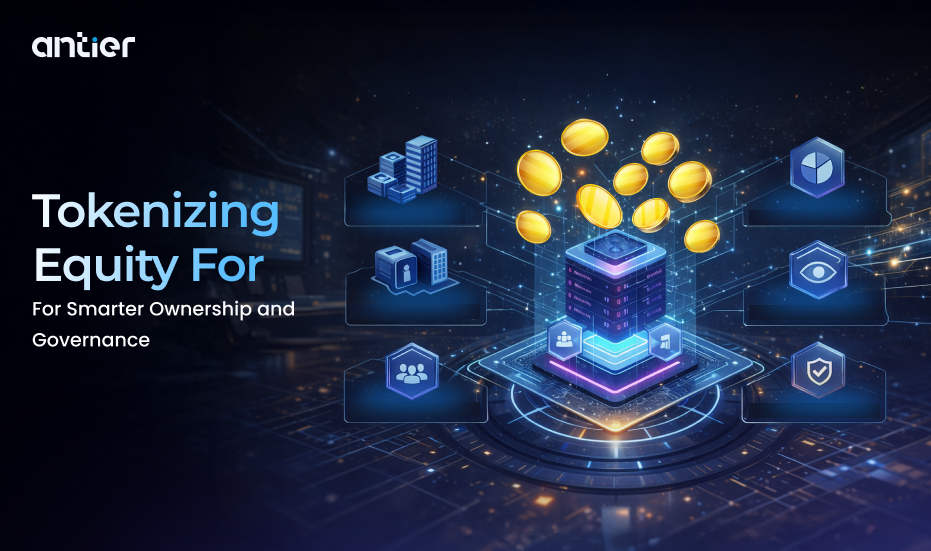
Equity ownership has long been shaped by manual processes, fragmented records, limited liquidity, and governance structures that are slow to execute and difficult to audit—especially in private markets. As capital markets modernize, blockchain is emerging as a foundational layer to redesign how equity is issued, managed, and governed. Equity tokenization enables companies to represent ownership interests as digital tokens on a blockchain, combining traditional shareholder rights with programmable, transparent infrastructure.
For investors and business leaders, the rise of tokenized equities is not merely a technological upgrade—it represents a structural shift in how ownership, liquidity, and governance are engineered. This investor-first guide explains how tokenized equity works in practice, what rights and risks investors should consider, and why private and institutional markets are increasingly exploring this model.
How Tokenized Equity Is Reshaping Ownership Access in Modern Markets?
By providing a last-mile solution for companies looking to issue, distribute, and track ownership of equity, tokenized equity is fundamentally shaping how we access ownership by eliminating the traditional inefficiencies that have prevented millions from investing in start-ups and growth companies.
From an investor standpoint, this model expands access while maintaining compliance and control. Organizations leveraging mature equity tokenization platform development frameworks are able to onboard investors more efficiently and manage ownership with greater precision.
The following highlights illustrate how ownership access is changing:
Lower barriers to private market participation
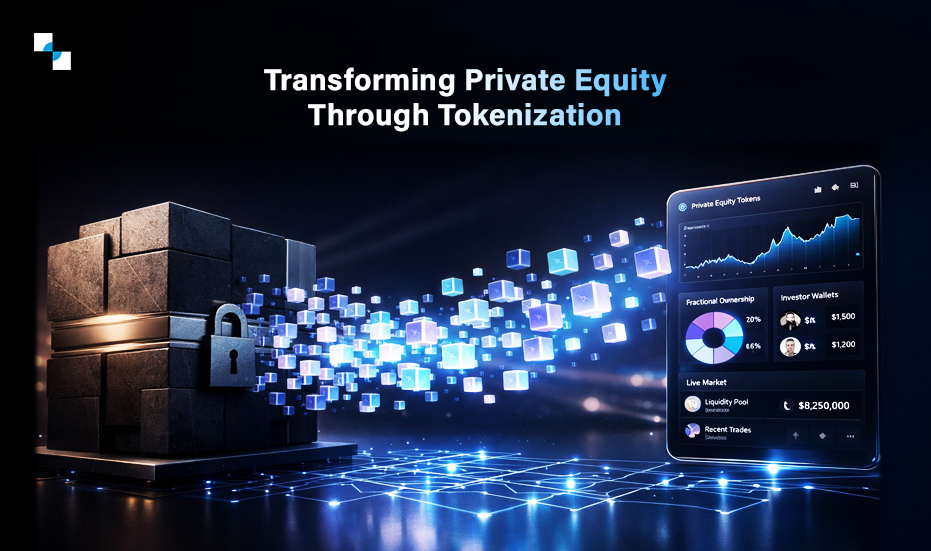
Through private equity tokenization, companies can fractionalize equity into smaller, digitally represented units. This enables qualified investors to participate with lower minimum investments, improving diversification while preserving asset quality and governance standards.
Faster and more transparent ownership allocation
Traditionally, issuing equity requires a lot of paperwork, uses intermediaries to verify the issuance, and requires time to confirm the transfer of ownership. Equity tokenization creates the opportunity for a company to allocate ownership directly onto a blockchain without intermediaries. The result is that ownership allocated to investors through an automated verification process greatly reduces the resources required to allocate an asset.
Clear, real-time ownership records
The creation of a tokenized register based on blockchain technology fundamentally changes the way ownership is documented and tracked. Tokenized registers will create one, complete, immutable record of ownership that will be available to both the investor and issuer of capital in real-time and continuously updated.
Explore a Compliant Equity Tokenization Framework With the Experts
How Liquidity Works in Tokenized Equity Markets?
Liquidity has traditionally been one of the biggest challenges in private equity and closely held companies. Long lock-in periods limited secondary markets, and complex transfer approvals often restrict investors’ ability to exit positions efficiently. Equity tokenization introduces a more flexible yet compliant liquidity framework by digitizing equity ownership and embedding transfer logic directly into blockchain infrastructure.
Through advanced equity tokenization platform development, Issuers can now provide structured liquidity solutions that allow Investors more flexibility than typical public markets while still providing Issuers with Corporate Control and Regulatory Compliance.
Permissioned secondary trading environments
Tokenized equities allow for the creation of and the use of Secondary Marketplaces, which allow for the purchase of Tokenized Equity only by verified and compliant Investors within the Tokenized Equity Environment. To ensure Regulatory Compliance and to verify KYC, AML, and Jurisdictional eligibility, Smart Contracts will enforce these requirements before a purchase is executed. Therefore, in addition to providing a secondary trading marketplace, Tokenized Equity solutions will enable investors to remain compliant with Securities Regulations, making Tokenized Equity a viable solution for the use of private equity tokenization models.
Fractional Liquidity through Divisible Ownership
The Tokenization of Equity allows shares to be broken down into smaller digital units, without any changes being made to the Ownership structure. Therefore, this fractionalization allows for greater flexibility in the use of Capital and provides a means for Investors to invest in a Tokenized Equity environment, while providing for greater liquidity through Partial Exits for Investors to allow for incremental adjustment of their exposure. It will also provide Issuers with a larger pool of Potential Buyers in the Secondary Market.
Quick transaction and final approval of ownership
Due to mediation and manual data correction, it could take days or weeks for conventional equity transactions to complete. Instead, when a transaction occurs using equity tokens, it is verified on a blockchain and all ownership updates are processed immediately, resulting in fewer counterparty dangers and greater capital fluidity for both the investor as well as person issuing the tokens.
Programmable transfer restrictions
The equity tokenization systems let the issuer establish smart contract clauses that specify the rules for how the tokens can be traded. Thus, issuers can set restrictions on the amount of time a token may remain in custody, the amount of wealth it represents or an individual’s ability to buy these tokens, etc., using automated smart contracts. These rules can be applied to allow liquidity in a manner that corresponds with long-term business objective or the regulations governing the issuer.
Configurable liquidity windows and exit events
Equity tokenization platforms allow the issuers establish in advance when and how liquidity can be introduced—monthly trading windows, exit events based on milestones and approved secondary issuance. Such arrangements give investors time to determine when it is sound for them to dispose of their tokens, while giving the issuer the ability to control the company’s total market value and provide assurance of stability in the marketplace.
Reduced reliance on intermediaries
Equity tokenization enables peer-to-peer trading within a compliant framework to provide investors with a greater opportunity to participate in the marketplace through their own networks. This reduces costs associated with having multiple intermediaries, such as brokers, transfer agents and manual permissioning, while providing increased speed and efficiency in the transaction process and subsequent transparency throughout the liquidity life cycle.
What Risks Should Investors Be Aware Of?
While tokenized equities offer meaningful advantages, they introduce new considerations that investors must evaluate carefully. These risks are manageable when addressed through robust infrastructure and regulatory alignment.
Investors should assess not only the asset, but also the underlying equity tokenization platform development strategy supporting it.
Key risk factors include:
- Regulatory uncertainty and jurisdictional variation
Securities regulations differ across regions. Tokenized equity must be structured with jurisdiction-specific compliance controls to ensure legality and investor protection. - Technology and smart contract risks
Poorly designed or unaudited smart contracts can introduce vulnerabilities. Institutional-grade platforms mitigate this through rigorous testing, audits, and secure custody frameworks. - Market liquidity maturity
Secondary markets for tokenized equity are still developing. Liquidity depth may vary depending on asset type, platform adoption, and investor demand.
Is Tokenized Equity a Long-Term Shift or a Passing Trend?
The momentum behind equity tokenization indicates a structural transformation rather than a temporary innovation. Institutional interest, regulatory experimentation, and private market demand are converging rapidly.
As private equity tokenization gains traction, blockchain-based ownership models are becoming foundational to modern capital markets.
Why tokenized equity is here to stay:
- Institutional-grade infrastructure is emerging
Custody, compliance, and governance tooling are reaching enterprise readiness, enabling scalable adoption. - Private markets are driving real demand
Companies are increasingly exploring tokenization as an alternative to IPOs while still offering liquidity and transparency. - Alignment with the future of digital finance
Tokenized equity fits naturally into the broader evolution of programmable and compliant financial systems.
Final Verdict
For US investors, VPs, and entrepreneurs, equity tokenization represents a smarter and more controlled approach to ownership and governance. When supported by robust equity tokenization platform development, tokenized equities deliver transparency, efficiency, and trust—without compromising regulatory integrity. As adoption accelerates, understanding these models will be essential for navigating the next phase of digital capital markets with confidence.
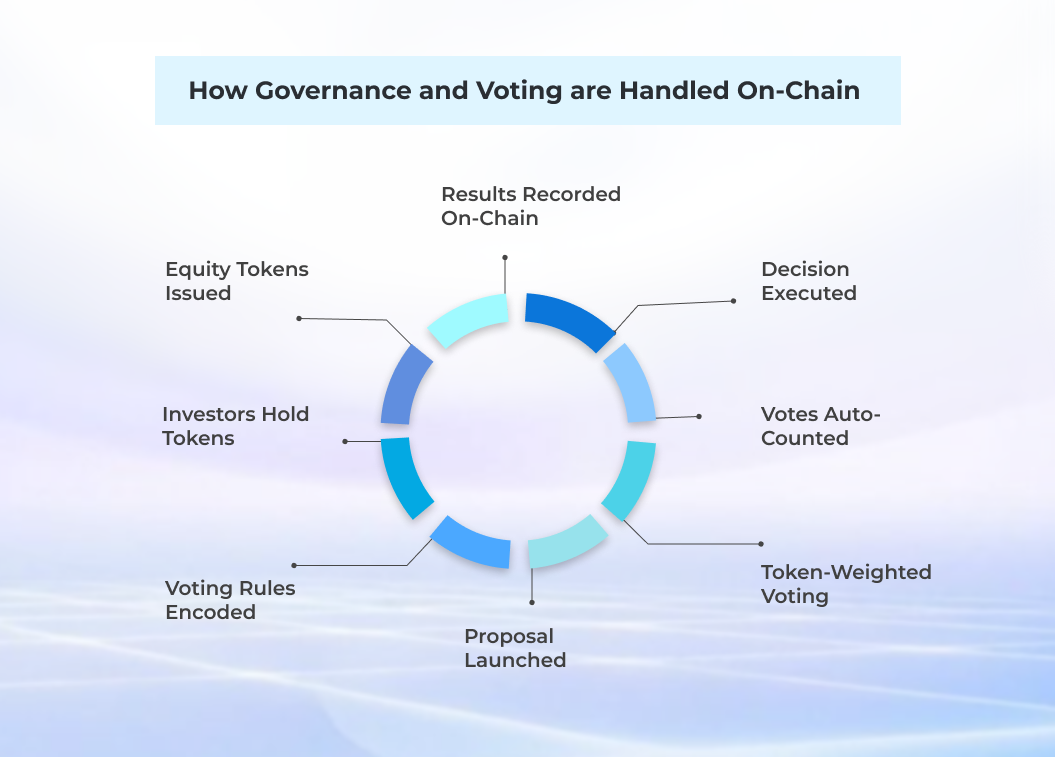
Antier enables compliant, scalable equity tokenization and on-chain governance through institution-grade blockchain infrastructure. As a leading equity tokenization platform development company, Antier helps organizations automate ownership, voting, and shareholder management while maintaining regulatory alignment and operational control.
Frequently Asked Questions
01. What is equity tokenization?
Equity tokenization is the process of representing ownership interests as digital tokens on a blockchain, allowing for more efficient management, governance, and liquidity in equity ownership.
02. How does tokenized equity improve access for investors?
Tokenized equity lowers barriers to private market participation by allowing companies to fractionalize equity into smaller units, enabling qualified investors to invest with lower minimum amounts and enhancing diversification.
03. What are the benefits of using blockchain for equity ownership?
Using blockchain for equity ownership streamlines the allocation process by eliminating intermediaries, automating verification, and providing faster, more transparent ownership transfers, which reduces resource requirements.