




AI Summary
- In a world where oilfields were once symbols of human struggle, the narrative is shifting to one of intelligent automation in the oil and gas industry.
- Enter Agentic AI – a new era where AI agents make decisions, analyze data, and act independently across various operations.
- These intelligent systems not only optimize efficiency but also anticipate and adapt to changing conditions.
- The integration of AI agents in energy operations is revolutionizing the industry, leading to faster response times, enhanced safety, and sustainable productivity.
- The collaboration between ADNOC, Microsoft, and Masdar exemplifies this shift towards industrial intelligence.
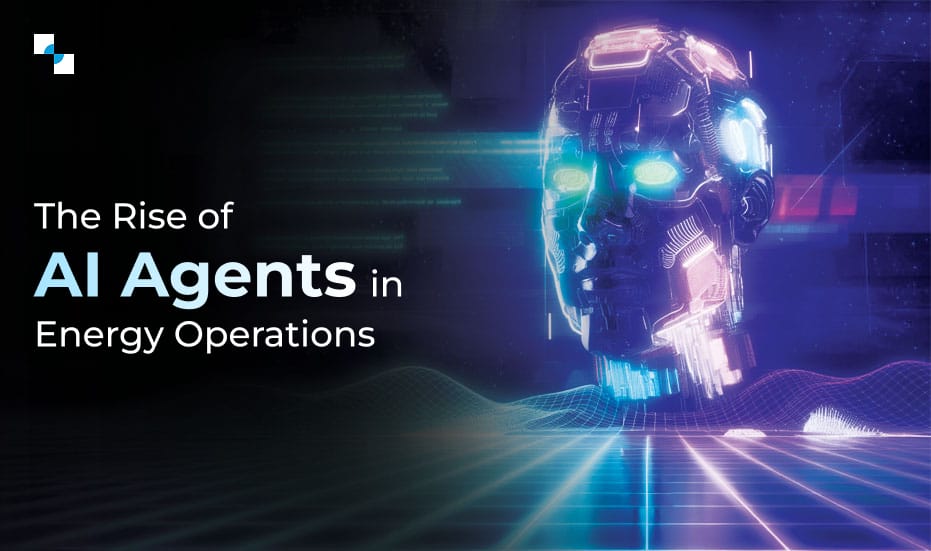
There was a time when oilfields were symbols of human endurance, men and machines battling the earth to bring energy to the surface. But that image is being rewritten. The oil rig of the future doesn’t just dig – it thinks. The pumps don’t just move; they reason. And the decisions that once came from control rooms are now made by intelligent digital minds – AI agents in oil and gas operations that act with precision, foresight, and adaptability.
The world’s energy sector, once driven by horsepower and hardware, is now becoming the testbed for Agentic AI in the oil and gas industry. Across exploration, drilling, logistics, and environmental monitoring, this evolution is being enabled by custom AI agent development, creating autonomous reasoning systems that can sense, analyze, and act independently
The Machines are Waking up – Inside the Dawn of AI Agents in Oil and Gas
Automation was built on repetition. Agentic AI in the oil and gas industry thrives on complexity. It’s engineered to make sense of the unpredictable, from fluctuating global oil prices to shifting geological formations.
An oilfield equipped with intelligent systems can now monitor global carbon markets, analyze weather systems, assess demand cycles, and adjust extraction or storage strategies in real time. This isn’t a glimpse of a distant future; it’s the practical evolution of industrial intelligence.
Agentic systems act as digital operators, capable of learning from every data point, every error, and every success. And because these AI agents in energy operations continuously improve, they provide something no static algorithm or human workforce ever could: compounding intelligence. The longer they operate, the smarter and more profitable the network becomes.
From Automation to Cognition: Redefining Industrial DNA
Traditional automation in oil and gas followed a simple model: humans instruct, machines execute. But the rise of AI agent development companies is changing that paradigm. Today’s advanced frameworks enable autonomous reasoning, where AI agents make decisions aligned with defined safety, compliance, and sustainability goals.
These custom AI agent development systems integrate diverse data sources seismic readings, predictive maintenance reports, market patterns, and even geopolitical signals, into a single cognitive mesh. Instead of reacting to conditions, they anticipate them.
In this new model, the oil and gas enterprise transforms into a thinking organism. Operations aren’t dictated by set protocols but by dynamic logic that evolves with every new dataset. The result is faster response times, lower downtime, higher safety margins, and sustainable productivity – all driven by machine cognition.
The Birth of Industrial Intelligence: When Energy Meets Cognitive Compute
Every major leap in civilization has come from merging two forces: energy and intelligence. Fire and tools. Electricity and communication. Today, we’re witnessing the next fusion: energy and compute.
The modern energy grid isn’t just about producing power; it’s about orchestrating it. Refineries, pipelines, and turbines are becoming nodes in a massive distributed brain. This is where custom AI agent development plays a crucial role in building agents that understand industrial contexts, safety constraints, and environmental impact models.
A custom AI agent might oversee drilling efficiency, balancing yield and equipment wear in real time. Another might analyze emissions data, optimizing carbon capture and sustainability metrics. Over time, these agents form a web of industrial cognition – a new layer of intelligence that powers not just operations, but strategy itself.
Proof in the Field: ADNOC’s Leap Into the Future
In a move that has caught the attention of global energy and tech leaders, ADNOC partnered with Microsoft and Masdar in November 2025 to deploy AI agents across its operations from field management to sustainability initiatives.
(Source: The National)
The initiative aims to co-develop agentic systems that autonomously manage performance, reduce downtime, and enhance resource utilization across ADNOC’s facilities. Backed by Microsoft’s Azure AI and Masdar’s sustainability expertise, the collaboration represents the fusion of three powerful domains: data, energy, and green innovation.
ADNOC had already rolled out generative AI internally in 2023, training over 40,000 employees and saving tens of thousands of productive hours each month. This new phase – integrating AI agents in energy operations thus transforms the company’s infrastructure into a living system that learns, adapts, and improves continuously.
It’s a bold experiment, and it could redefine how national energy giants operate worldwide.
The New Industrial Stack: How Custom AI Agent Development is Powering Energy Intelligence
Behind this transformation lies a new architecture – a digital stack that integrates industrial control systems with intelligent agents. Traditional automation runs on predefined logic; the new stack runs on inference.
At its foundation are specialized AI agent development services, provided by emerging tech firms and R&D labs focused on industrial intelligence. These agents are trained not on random internet data, but on decades of operational records, geospatial mappings, and safety logs.
An AI agent development company builds the connective tissue that allows these agents to communicate with edge devices in the field, send sensor data to cloud models that reason about anomalies, while decision layers trigger actions autonomously.
This isn’t just technology integration; it’s neural industrialization. The oilfield is evolving into a thinking organism – one that perceives, plans, and performs at a scale no centralized system ever could.
The Rise of Intelligent Industry: From Energy to Every Enterprise
The impact of AI agents in oil and gas won’t stop at the energy frontier. Once perfected, these frameworks will reshape logistics, construction, and even national infrastructure management. Ports will negotiate cargo flow autonomously; grids will balance supply and demand without human oversight; factories will coordinate across continents in real time.
Businesses that embrace agentic AI early, especially through custom AI agent development, will own the competitive edge. The industrial landscape is evolving toward machine-to-machine capitalism, where agents can analyze costs, execute trades, and self-correct inefficiencies across entire ecosystems.
This is not about replacing humans; it’s about redefining intelligence as infrastructure. In the same way electricity became a public utility in the last century, AI agents in energy operations will soon power every intelligent enterprise.
Build the Next Generation of AI Agents in Energy
The Future Doesn’t Roar – It Thinks
The next industrial revolution won’t roar with engines or smoke. It will unfold quietly – through millions of connected AI agents in energy operations that reason, adapt, and make decisions faster than any human workforce could. Pipelines will predict leaks before they happen. Power grids will optimize themselves. Refineries will evolve into ecosystems of cognition.
This marks a shift from energy extraction to intelligence distribution – a transformation redefining the core of industrial progress. At the forefront of this movement, Antier – a pioneering AI agent development company is helping enterprises build autonomous systems that think, evolve, and deliver measurable operational intelligence. The age of intelligent energy has begun, not powered by machinery, but by distributed digital minds.