



AI Summary
- Discover how the Metaverse is reshaping education, offering students immersive learning experiences and empowering educators to break free from traditional constraints.
- From virtual classrooms that feel real to ultra-realistic avatars for real-time interactions, the Metaverse is revolutionizing distance learning.
- By incorporating gamification and diverse communication technologies, institutions are enhancing student engagement and collaboration.
- Benefits include enhanced accessibility, immersion-based programs, improved collaboration, risk-free skill development, accelerated training experiences, and realistic learning environments.
- The Metaverse also presents opportunities for diversity, equity, and inclusion in education, catering to digital natives and leveraging mirror worlds for immersive learning.
Since its announcement in late 2021, the Metaverse has influenced digital and physical workspaces. It offers a unique platform for interaction that extends across global networks. But how does education fit into the Metaverse world?
The Virtual learning platform development services provide an innovative framework for education by offering students greater ownership of their learning experiences. It enables students to attend classes from anywhere, connect with their mentors, and study educational setups as if they were present in person.
With its immersive environments and interactive features, the Metaverse aligns closely with the evolving needs of contemporary learners.
The blog will provide valuable insights into how Metaverse for education can enhance distance learning experiences.
Teaching Experiences in the Metaverse
Integrating teaching within the Metaverse provides exceptional versatility, empowering educators to break free from conventional limitations and significantly enhance the learning experience.
In immersive virtual classrooms, instructors can illustrate complex concepts and facilitate skill practice in ways that might be impractical or unsafe in traditional environments. This method not only prioritizes student safety but also expands their learning horizons.
The Metaverse revamps pedagogical strategies by transforming the lessons into captivating explorations for better engagement and comprehension.
Educators have the flexibility to design interactive journeys that deeply engage students with subjects, something often unattainable in standard classrooms.
Recent research reveals a growing enthusiasm for VR in education, with approximately 54% of teachers and 41% of parents acknowledging its potential to enrich learning experiences.
Learning Experiences in the Metaverse
Metaverse for education is now changing traditional learning paradigms, particularly in hands-on disciplines.
For example: Metaverse offers a sophisticated simulation platform for Aviation training using which students can master flying techniques in a safe, controlled environment.
Incorporating gamification within the Metaverse makes educational content more engaging, mirroring the immersive and interactive nature of games.
This fusion significantly boosts student participation and interest, transforming learning into a more enjoyable experience. It equips students with essential digital literacy skills, preparing them for a tech-centric job market.
Trending Metaverse Applications For Distance Learning in Higher Education
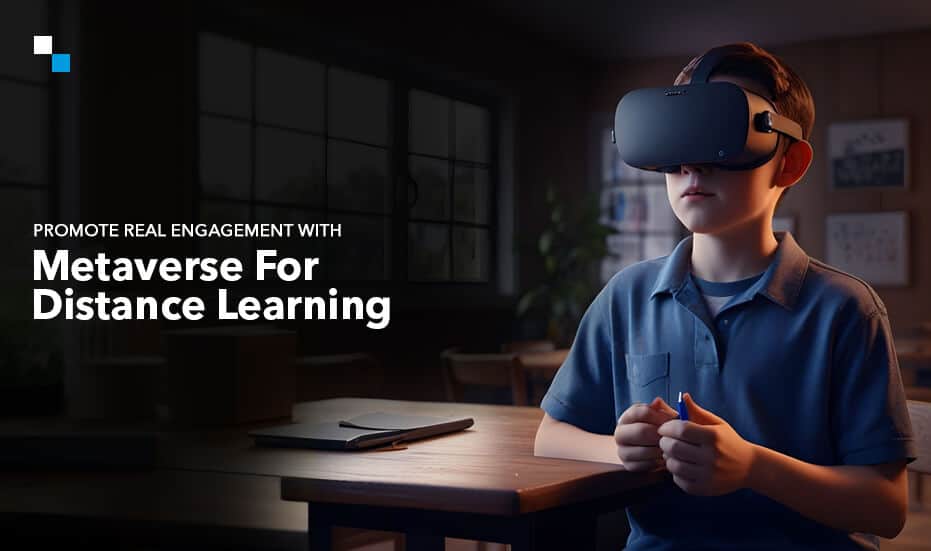
Many distance learning institutions have begun to incorporate elements of the foundational digital tools that form the Metaverse, such as virtual reality, gamification, and diverse communication technologies. Here is how Metaverse is making distance learning experiences immersive:
- Online Classrooms That Feel Real
Online teaching often leaves students and instructors feeling disconnected from distance learning. Metaverse contributes to create online classrooms that simulate real-life interactions. Instructors can design virtual rooms filled with lifelike objects, allowing students to walk around, raise their hands, and engage as they would in a physical classroom.
- Ultra Realistic Avatars For Realtime Interactions
Distance learning providers can create ultra-realistic avatars to promote real-time interactions between students and teachers. This will bring a sense of identity among students in the virtual environment.
These avatars are not merely cartoonish figures but closely resemble their real-world counterparts, adding to the overall realism of the online classroom.
- Facilitate Student Collaboration
Students can create study rooms just as instructors design classrooms. This allows for collaborative spaces where classmates can share information and connect.
Faculty can also hold departmental meetings in realistic virtual environments for collaboration and communication.
Interactions in lifelike settings enhance engagement and promote genuine interactions, merely online setup.
Through gamified learning experiences, Students can collaborate, socialize, and engage, all while receiving real-time feedback from instructors.

Benefits of Creating Metaverse Platform For Education For Distance Learning
- Enhanced Accessibility
Students with disabilities or those who live in remote places can benefit greatly from Metaverse for education. With VR headsets or smartphones, students can easily access high-quality learning experiences.
This could be extremely helpful for students who might not have local access to excellent educational resources.
- Immersion-Based Educational Programs
Distance learning institutes can offer dynamic and interesting learning experiences through virtual simulations whether it is an architectural student wanting to explore historical places or a medical student wishing to practice surgery in secure settings, the metaverse benefits all.
- Improved Collaboration
Educational institutes can promote real-time collaboration among students for insightful and diverse discussions through Virtual learning platform development.
Students can interact with virtual objects and collaborate with peers and instructors, regardless of their geographical locations.
- Risk-Free Skill Development
Distance learning institutes often lack providing safe settings for students to practice new skills.
The Metaverse makes it possible to learn new skills without the risks associated with real-life experiences.
- Accelerated Training Experiences
Employees trained using VR in the Metaverse can learn up to four times faster than through traditional methods.
The combination of engaging experiences, gamification, and practical application makes learning enjoyable for students and enables teachers to quickly master new skills.
- Realistic Learning Environments
Unlike conventional educational settings that may stifle student interaction, Metaverse platforms create dynamic environments that encourage lively discussions.
This immersive approach boosts student motivation and performance, encouraging active participation in the learning process.
Opportunities for Advancement in Metaverse Education
The learning institutes can rip all the benefits of Metaverse for education by understanding the oppurtunties for advancement.
- Diversity, Equity, and Inclusion
The Metaverse holds tremendous potential for enhancing diversity, equity, and inclusion in education.
Virtual learning has long been viewed as a solution for accessibility, but the immersive nature of the Metaverse ensures all students feel included in their learning experiences.
This technology can help level the playing field for many students, especially those who may struggle in traditional settings.
- Digital Natives
Today’s learners, often referred to as digital natives, are highly familiar with technology. Many have grown up in a world saturated with digital devices, making them more receptive to learning experiences that incorporate gamification and immersive elements.
Metaverse education solutions can effectively engage these students by aligning educational content with their preferences for interactive and visually stimulating materials.
- Mirror Worlds for Immersive Learning
The concept of mirror worlds—digital replicas of the real world—provides an exciting avenue for immersive learning in the Metaverse.
As these environments become increasingly sophisticated, they can serve as powerful tools for education.

Considerations for Implementing the Metaverse in Education
For Virtual Learning Platform Development several key factors must be considered to ensure successful adoption:
- Technological Infrastructure
Robust technological infrastructure is essential for effective Metaverse education. Access to high-speed internet and compatible devices is crucial for educators and learners alike.
- Curriculum Integration
Incorporating the Metaverse into existing curricula presents challenges. Educators need to design lessons that leverage the Metaverse’s unique features to enhance traditional teaching methods.
- User Training
It is vital to provide comprehensive training for both teachers and students. A clear understanding of Metaverse tools will maximize the educational benefits of this innovative platform.
- Equity and Accessibility
The digital divide poses a significant challenge in implementing Metaverse education. Strategies must be in place to ensure equitable access for all students, particularly those from diverse socioeconomic backgrounds.
- Privacy and Security
As the Metaverse raises privacy and security concerns, it is imperative to protect students’ personal information and create a safe learning environment. Establishing robust security protocols will be essential for building trust in Metaverse education platforms.
- Ethical and Social Considerations
The immersive nature of the Metaverse raises questions about its impact on students’ social skills and mental health. It’s crucial to establish guidelines that promote healthy usage and encourage meaningful social interactions within these virtual environments.
Create Your Metaverse Platform For Education with Antier
At Antier, we revolutionize education by empowering educators and learners with customized Metaverse platforms for education that inspire and engage.
Our experts can help you build immersive virtual environments to engage students in ways traditional classrooms cannot.
With features like interactive whiteboards, 3D Avatars, and real-time collaboration tools, we ensure personalized learning experiences for everyone.
Don’t just adapt to the future—lead it!
Partner with Antier today and transform your educational approach in the Metaverse. Let’s build a brighter future together!