




AI Summary
- In the fast-evolving world of tokenized real-world assets (RWAs), serious investors need to embrace Web3 wallets for instant, secure, and compliant transactions.
- As the market for tokenized RWAs skyrockets, surpassing billions and projected to hit $50 billion, the role of Web3 wallets becomes paramount.
- These wallets are not just digital vaults but compliance layers, access keys, and gateways to programmable finance.
- By integrating Web3 wallet development solutions, investors gain control, enforce compliance, access DeFi opportunities, automate distributions, and participate in governance seamlessly.
- This blog post addresses the rise of tokenized RWAs, the importance of Web3 wallets, pain points faced by investors without them, and key FAQs for those considering crypto wallet development for RWAs.
This one is for all the serious and visionary RWA investors! If you manage property portfolios, private credit, or tokenized treasuries, this is for you. Paper deeds and legacy ledgers are giving way to tokens you can move, verify, and monetize instantly. In that world, a wallet is not a hobbyist tool; it’s the record of who owns what, who gets paid, and who gets to vote. The current competitive Web3 market demands you to be fast, be ready, and be on-chain. This article will guide you on what to insist on when building or selecting cryptocurrency wallet development infrastructure so your deals stay secure, auditable, and competitively executable.
Why Every Serious Tokenized RWA Investor Needs a Web3 Wallet Today?
As RWAs move on-chain, tokenization is no longer theoretical. Institutional capital is already flowing into tokenized T-bills, real estate, commodities, and carbon credits. According to industry sources, the total value locked (TVL) in tokenized RWAs surpassed billions in 2025, with projections indicating it may exceed $50 billion by year-end. But while RWA protocols and issuance platforms take center stage, a critical component often gets overlooked: the Web3 wallet.
In this new paradigm, your Web3 wallet isn’t just a digital vault; it’s your compliance layer, access key, and gateway to programmable finance. For institutional and high-net-worth investors, it’s the single most important interface to own, manage, and transact real-world assets on-chain. This article outlines why a Web3 wallet is non-negotiable for serious RWA investors and how the right crypto wallet development solution drives performance, security, and strategic advantage.
Market Segments of RWAs and the Rise of Wallet Infrastructure
The tokenization of RWAs isn’t just an experiment anymore; it’s in full growth mode. By June 2025, RWA tokenization had exploded to over $24 billion, up from just $5 billion in 2022, a 380% surge that’s made RWAs the second-fastest-growing on-chain sector after stablecoins. This growth isn’t just about putting assets on-chain; it’s about making them usable, tradable, and accessible in real time.

Source link: : RWA.xyz
Web3 crypto wallet infrastructure is at the heart of this shift, quietly establishing itself as the default gateway for compliant custody, instant settlement, and DeFi access. As more funds, fintechs, and private investors embrace tokenized assets, next-gen Web3 wallets are moving from “nice-to-have” to the very rails that power the market’s momentum, reshaping how wealth is stored, managed, and grown.
Pain Points Faced by RWA Investors With No Web3 Wallet
The global market for tokenized real-world assets is accelerating, and with it, the way investors connect to opportunities is changing. Deals are faster, settlement is smarter, and access is no longer confined to local networks. Yet, in this environment, relying on outdated tools can quietly erode your edge. Cryptocurrency wallet development is no longer about holding digital assets; it is about securing your position in a market that rewards speed, transparency, and precision. The absence of this gateway often means missing the most defining moments in asset ownership and exchange.
- Relying on centralized custodians creates vulnerability to asset freezes or third-party intervention.
- Limited access to on-chain liquidity results in capital inefficiencies.
- Manual compliance processes increase operational costs and delay asset transfers.
- Settlement timelines remain in traditional T+2 models, creating counterparty exposure.
- Investors lack real-time visibility and transparency into tokenized asset ownership.
- Missed income from idle assets due to no access to DeFi composability.
- High onboarding friction for new investors due to legacy KYC/AML systems.
- Distribution of yield, interest, or rent becomes delayed or fragmented.
- Governance participation in tokenized protocols remains out of reach or highly complex.
- Cross-chain investments are limited due to incompatible wallet infrastructure.
Why Integrate Web3 Wallet Development Solutions With Tokenized RWA Platforms?
Tokenized RWAs require more than token issuance; they require infrastructure that can unlock liquidity, enforce compliance, and empower on-chain financial strategies. Here’s why visionary RWA investors should prioritize Web3 crypto wallet development solutions:
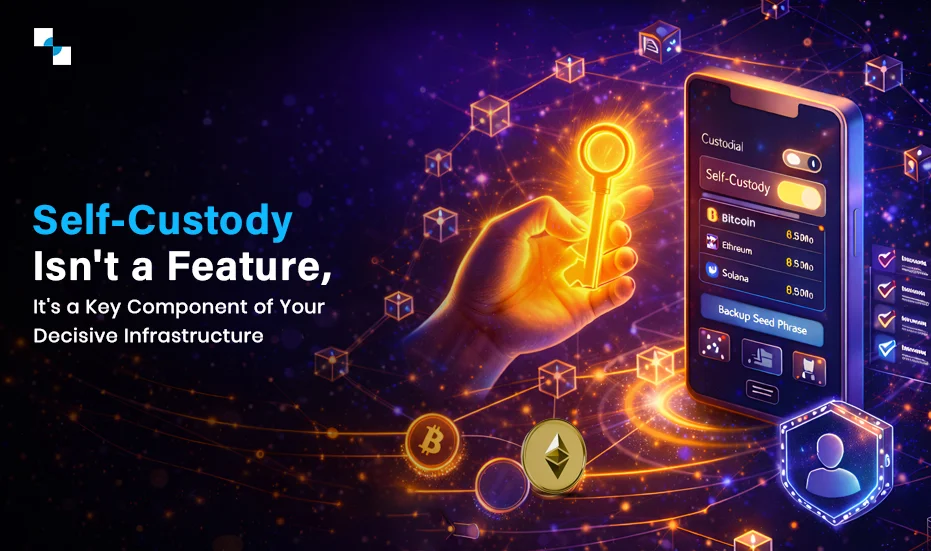
- Control Through Self-Custody – Build a crypto wallet development solution that provides investors with direct ownership of tokenized assets through private keys and MPC-based security. This reduces custodial risk and enhances operational autonomy.
- Built-in Compliance Enforcement – Custom Web3 crypto wallets can embed smart contract compliance with KYC, AML, accreditation, and jurisdictional requirements using token standards like ERC-1400 and ERC-3643. This ensures frictionless onboarding and transferability.
- Faster, Cheaper Settlement – Eliminate legacy T+2 friction by leveraging Web3 wallets with atomic settlement support. Trades and redemptions execute instantly, with programmable rules for settlement conditions and counterparty validation.
- On-Chain Yield Opportunities – Enable investors to access DeFi-native yield tools—collateralized lending, liquidity mining, and structured token vaults. Wallet development can prioritize composability and multi-protocol access.
- Programmable Distributions – Web3 wallets allow issuers to automate income streams—like interest, rents, and dividends—through direct smart contract payouts to wallet addresses, improving transparency and reducing admin costs.
- Cross-Chain Flexibility – As tokenized RWAs proliferate across Ethereum, Polkadot, Cosmos, and private permissioned chains, having a wallet that supports multi-chain interaction becomes a strategic advantage.
- Governance-Ready Interfaces – Allow investors to actively vote on token contract upgrades, asset lifecycle events, or protocol rules via built-in governance tools, without relying on external interfaces.
- White-Labeled & Enterprise Integrated – Custom Web3 wallet development supports white-labeling for asset managers, integration with portfolio tracking, and compliance dashboards.
- Gasless Transactions & Fiat UX – Support for gas abstraction and fiat on-ramp enables wallet flows that feel intuitive for TradFi users and institutions—not just crypto natives.
- Competitive Edge for Investment Platforms – Offering a tailored wallet solution allows RWA investment platforms to own the full customer journey, from onboarding and KYC to asset management and secondary liquidity access.

How To Integrate a Web3 Crypto Wallet In Tokenized RWA Platforms?
Integrating a Web3 crypto wallet into a tokenized RWA platform isn’t just technical work—it’s strategic infrastructure. Investors and enterprises who understand the development lifecycle gain control over custody, on-chain compliance, and liquidity engineering, enabling faster settlements, programmable payouts, and secure governance. Knowing the process lets stakeholders de-risk integrations, negotiate product requirements, and accelerate time-to-market with predictable compliance and auditability. Let’s walk through the process.
Step 1: Token Issuance and Wallet Whitelisting
Asset originators tokenize RWAs—real estate, credit, and treasuries—on permissioned protocols (e.g., Polymesh, Securitize, and Tokeny). Investors complete KYC and link their Web3 wallet to the platform’s on-chain identity layer.
Step 2: Asset Transfer and Ownership Recording
Post-investment, tokens are transferred to the investor’s wallet. Ownership is recorded on-chain. Wallets interface with subgraphs and zk-proofs to verify asset backing and ownership provenance.
Step 3: Cash Flow Distribution & Composability
Using wallet logic, smart contracts deliver programmable cash flows to token holders. Wallets also allow for deployment into DeFi strategies—staking, liquidity provision, or structured credit.
Step 4: Governance Participation
With wallet-based token governance, users can vote on protocol decisions: asset upgrades, fee models, and redemption terms. Wallets support batch transactions, off-chain signing, and gas-optimized voting.
Now let us next move to the section that addresses all the questions that serious RWA investors usually ask and have queries on.
Top 7 FAQs: Addressing Investor Queries on Crypto Wallet Development for RWA
Below are the high-priority questions RWA investors frequently raise about Web3 wallets, covering security, regulatory fit, integration, recovery, and beyond. Every serious RWA investor must have these most common questions answered for smarter and faster decision-making for Web3 wallet development.
Q1: How secure are Web3 wallets for high-value asset custody?
A: Enterprise-grade Web3 wallets use MPC, SOC 2-compliant cloud architecture, and threshold cryptography. Some offer insurance-backed custody or support Shamir’s Secret Sharing for key recovery.
Q2: Can a single wallet handle multiple token standards and chains?
A: Yes. Leading wallets support multi-chain compatibility across EVM, Solana, and Cosmos SDK and can interact with tokens such as ERC-1400, ERC-721 fractionalized NFTs, and CosmWasm’s CW-20s.
Q3: How do wallets adapt to new compliance regulations?
A: Smart contracts governing RWA tokens are often upgradeable via on-chain governance. Wallets act as the signing interface for compliance updates, allowing users to participate in regulatory upgrades without off-chain intermediaries.
Q4: How are distributions handled?
A: Tokenized RWAs often include built-in smart contract-based distribution logic. Cash flows, rent, interest, and dividends are sent directly to wallet addresses per a pre-coded schedule, requiring zero manual intervention.
Q5: What if we lose access to the wallet?
A: Crypto wallets today offer robust key recovery mechanisms—including social recovery protocols, guardian schemes, and biometric-anchored restoration flows—without centralizing risk.
Q6: Can Web3 wallets support team-based treasury operations?
A: Yes. Institutional-grade wallets offer multi-user access controls, approval workflows, and audit trails, enabling secure, compliant treasury management for family offices, DAOs, and asset managers.
Q7: How do wallets ensure transparency of RWA backing and compliance status?
A: Web3 wallets integrate with oracles, subgraphs, and zk-proof verifiers, enabling real-time validation of asset backing, token compliance, and audit-readiness on-chain.
Hire 100% Certified Crypto Wallet Development Experts At Antier!
A purpose-built wallet streamlines compliant onboarding and unlocks on-chain liquidity and programmable payouts, converting tokenization from a pilot into repeatable, revenue-generating operations. Moreover, to stay competitive and accelerate market entry, RWA investors and enterprises must prioritize white-label crypto wallets as core infrastructure. Well, everything must be in place, but selecting the right development partner is the last and most important aspect of the overall development process. Thus, to ensure that you choose a reliable company, connect with Antier, boasting a vast team of blockchain experts.
Why partner with us?
* Enterprise-grade wallet infra ready in few days
* 24/7 white-glove support and security advisory
* White label crypto wallet development as per business needs and faster market entry.
Connect with our team to help you unlock composable ownership in a trillion-dollar token economy.