



AI Summary
- In the blog post "Every Wallet Builder Should Know This," the importance of chain abstraction in Web3 crypto wallet development is highlighted.
- The post discusses the challenges faced by users, such as multi-chain complexity, dispersed experiences, and outdated wallet designs, which can lead to low user engagement and retention.
- Chain abstraction offers a solution by providing a seamless user experience across multiple blockchains, reducing operational complexity, and increasing opportunities for embedded wallet ecosystems.
- The post emphasizes the strategic business value of chain abstraction for 2026 Web3 wallet development projects, including enhancing user participation, serving institutional users, delivering interoperability, reducing operational complexity, and building opportunities for embedded wallet ecosystems.
- By incorporating chain abstraction in wallet development, developers can create intuitive, user-friendly wallets that attract and retain users in the competitive Web3 market.
“Every Wallet Builder Should Know This”
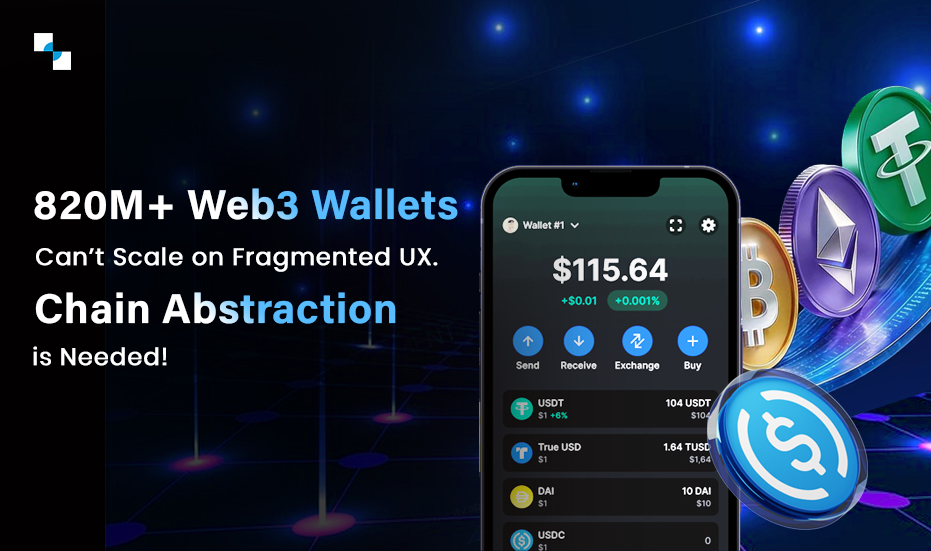
Mentalize that you launch a Web3 crypto wallet in 2026, while competing against an already existing ecosystem of over 820 million crypto wallets (with almost half of them being actively used to access dApps – not just store value).
Later on – you discover that
Despite this level of adoption, the ongoing retention and usage of wallets by mainstream consumers is still significantly fragmented. Users who participate in a DeFi environment typically drop off after the first transaction/interactions due to the complex nature of that experience very different from how they are accustomed to onboarding through Web2.
What happens? Your wallet product rises like a meteor but comes down like a stone.
Know that wallets have transitioned from being merely vaults for holding value to becoming the overall onramp for entire networks and ecosystems. As such, users don’t want to have a technical understanding of how they function in order to utilize them.
Thus, leveraging chain abstraction (i.e., the ability for a wallet to function smoothly across multiple blockchains) becomes not only a trend but also a major business differentiator. But before we get into the specifics of why your Web3 wallet development vision must include this feature, let’s see:
What Are the Major Issues Your Potential Users Are Facing Today?
To be honest, users currently do not have a curiosity problem with cryptocurrency wallets. Rather, they are struggling with using them.
1. Multi-Chain Complexity – Which Delays User Onboarding and Engagement
Today’s users often need to do the following:
- Manually Switch Between Networks
- Use Different Gas Tokens for Each Chain
- Bridge Their Assets to Interact with Any dApp
The high cognitive load required to learn how to use a Web3 wallet feels more like learning a coding toolkit – which no one expects from a modern wallet. This is what drives users away.
2. Dispersed Experiences – Causing Operational Irritation
Consumers have to manage multiple wallets across multiple chains.
Because most crypto wallet development initiatives do not unify assets or flows, this results in a lack of confidence for the next generation of users.
3. Outdated Wallet Designs– That Lead to Static Journeys
For the coming generation of users, wallets are much more than just custody for their assets. They are a digital doorway to access DeFi, NFTs, gaming, and payment systems. If you are planning wallet development in the Web3 space, you must realise this transition. Otherwise, be prepared for user discontent.
FACT CORNER
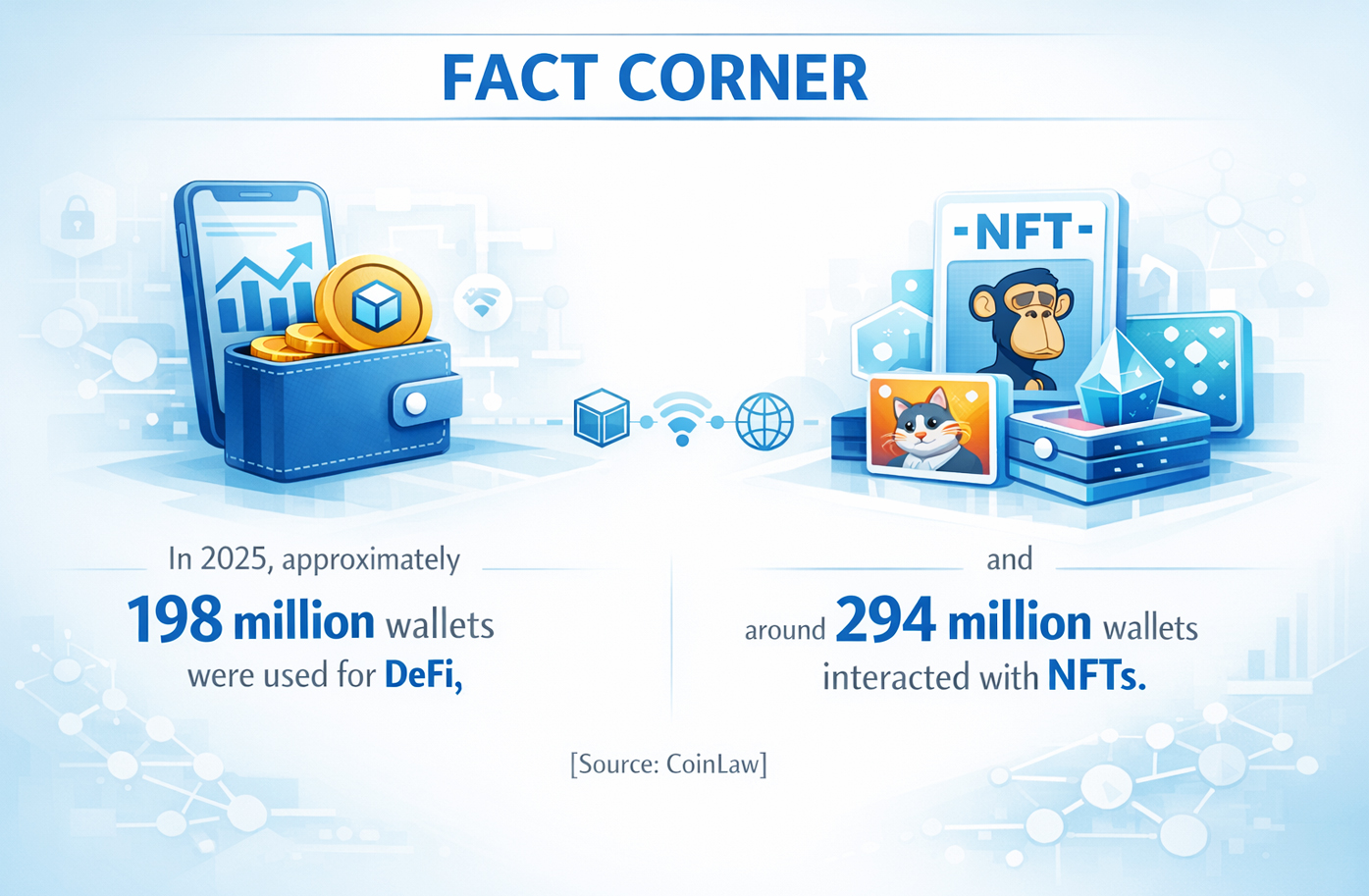
Onboarding Friction – It is Real and Easily Measurable
Retention data from 2025 indicates an extremely steep decline in the level of user engagement after the first transaction. This suggests that the present complicated onboarding processes have proven unsuccessful in converting initial curiosity to habitual use.
Start Your Web3 Wallet Development Journey With Chain Abstraction Today!
Why Is Chain Abstraction the Nail In The Coffin for The Above Problems?
Chain abstraction provides a solution for end-user problems (frustration) and also solves product staleness issues we discussed before.
- It makes crypto wallet use across blockchains intuitive and also eliminates the need for end-users to switch networks or manage multiple asset pools manually.
Instead, they receive a harmonized flow, such as that which is offered by Arcana, allowing them to look after multiple aggregated asset balances while the chain complexity is handled at the back end. - It reduces decision fatigue by facilitating effortless entry. With the help of crypto wallet development services with built-in chain abstraction, you ensure consumers no longer have to grapple with multiple types of bridges, gas/token, and connector flow for each of the chains that they are interacting with.
- This multi-chain link consistently opens up new use cases. End-users are able to connect to larger ecosystems (DeFi, NFT, GameFi, etc) without lifting a finger for the underlying processes. For instance, DeFi wallets process on average 5.4 tokens across approximately 2.3 different chains. Chain abstraction capability arms you for these market scenarios.
- Cross-chain orchestration enables wallets to be future-proofed. As inter-chain technologies and Layer 2 rollups become mainstream, a wallet offering that abstracts these systemic intricacies will always have a weighty advantage over a platform that is simply reacting to these changes.
Chain Abstraction’s Strategic Business Value for 2026 Web3 Wallet Development Projects
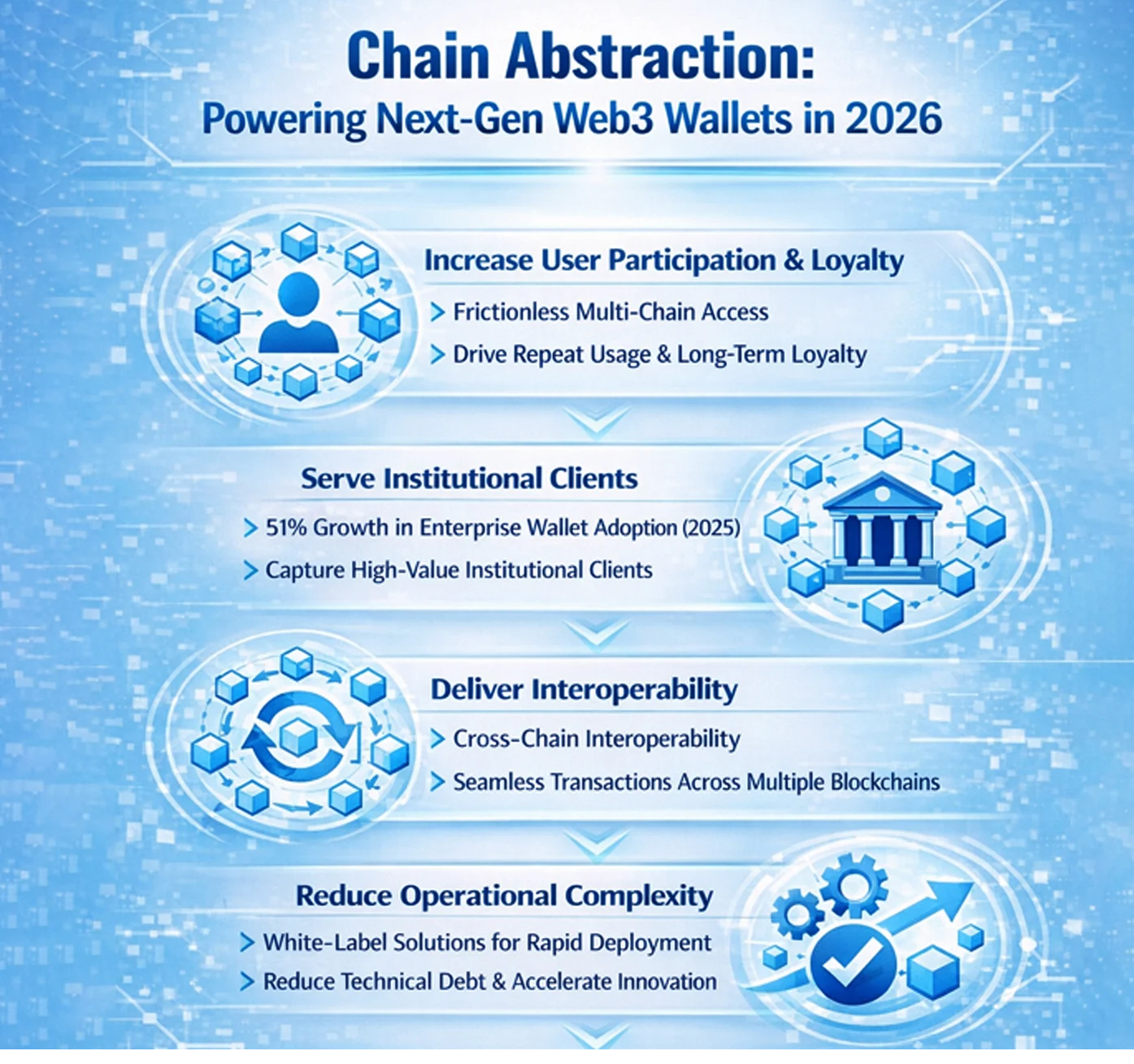
Here’s how it brings undeniable value in a highly competitive environment by giving you the ability to:
1. Increase user participation and loyalty
A frictionless user experience via fluid multi-chain connectivity encourages repeat visits to a crypto wallet platform. Thus, reducing the number of users who abandon after their first transaction.
2. Serve institutional users
Enterprise wallet ownership grew by ~51% in 2025. This statistic indicates that if you focus on usability and long-term scalability with blockchain-agnostic systems, you can prime yourself for success by attracting these high-stakes clients.
3. Deliver interoperability
Cross-chain and multi-chain user base will continue to grow in 2026. That’s where chain abstraction empowers you to offer universal blockchain access- a feature that will be critical for market win.
4. Reduce operational complexity
When you opt for white label crypto wallet solutions with built-in chain abstraction, you eliminate the need for custom code for each chain. Hence, you enjoy lower technical debt, plus faster delivery of new products.
5. Build opportunities for embedded wallet ecosystems
The number of swap transactions and total swap volume processed via embedded wallet service systems in 2025 reached millions and billions, respectively. By offering multi-chain Web3 crypto wallets in 2026, you can launch a financial service toolkit, not simply a destination to store funds.
Additional Advantages Of A Chain-Flexible Framework That You May Not Expect
Chain abstraction presents bonus perks not normally revealed through traditional planning.
- Improved Data Analysis – Unified interactions help you acquire more data on how users behave, providing the means to enhance product decisions and retention strategies.
- Resilient Developer Ecosystem Exposure – Wallet-as-a-Service (WaaS) adoption has opened many windows of possibility for crafting modular and interoperable wallets with the support of a recognised cryptocurrency wallet development company.
- Rock-Solid Security with Less Complexity– By abstracting chain interactions and decreasing the need for multiple manual steps (like bridging), you are able to incorporate a wide range of stronger security features without sacrificing the user experience – a balance top founders crave to achieve.
Web3 Wallets With Or Without Chain Abstraction: Let’s See Who Wins
| Challenge | Traditional Wallet | Wallet with Chain Abstraction |
|---|---|---|
| Network Switching | Manual & confusing | Automated & invisible |
| Asset Management | Single chain usage | Unified balances across chains |
| Onboarding | Complex, high bounce | Simplified, low-friction |
| Developer Complexity | High | Reduced via smart contracts |
| Retention | Low | Higher engagement |
| Interoperability | Fragmented | Multi-chain support |
In Conclusion – “Will You Afford To Ignore the Importance of Chain Abstraction?”
Web3 crypto wallet development in 2026 is about creating a wallet that users want to return to. It must be intuitive, ensure low cognitive load, and provide a simple flow for multi-chain use.
Antier designs experiences, not just code. We use our deep knowledge of Web3 technology to create solutions that consider human behaviour. When it’s time to craft a wallet offering, we do not ask “What is possible?” but instead, we ask “What is usable, sustainable, and tomorrowproof?”
Our team comprehends several key industry insights:
- Users are tired of fragmentation
- Enterprises require interoperability
- Successful wallet launches must feature scalable infrastructure
- Products and services must provide a familiar experience without losing power
With that understanding and implementation at the strategic level, your wallet will not simply get launched with Antier- it will resonate deeply with users, promote active engagement, and stand out from other wallet solutions in the market.
In 2026, only adoptable products (not merely deployable ones) will claim their share of the market in Web3 – and we are here to build yours.
Frequently Asked Questions
01. What is the main challenge users face when using Web3 crypto wallets?
Users struggle with the complexity of multi-chain interactions, which requires them to manually switch networks, use different gas tokens, and bridge assets, leading to a high cognitive load that discourages engagement.
02. How has the role of crypto wallets evolved in the Web3 ecosystem?
Crypto wallets have transitioned from being simple storage solutions to essential onramps for entire networks and ecosystems, requiring a user-friendly experience that doesn't necessitate technical knowledge.
03. Why is chain abstraction important for Web3 wallet development?
Chain abstraction allows wallets to function seamlessly across multiple blockchains, making it a crucial differentiator that enhances user onboarding and retention by simplifying the overall experience.