




AI Summary
- Blog Summary:
AI chatbots in healthcare are revolutionizing patient care by providing 24/7 engagement, streamlining administrative workflows, and enhancing patient support. - These virtual health assistants leverage advanced technologies to simulate human-like conversations, perform tasks efficiently, and integrate seamlessly with Electronic Health Records.
- By automating tasks like appointment scheduling, triage, and patient education, AI chatbots help reduce operational costs and improve access to care.
- Healthcare organizations benefit from measurable cost reduction, enhanced efficiency, and improved patient satisfaction through the deployment of AI chatbots.
- Partnering with a specialized AI Chatbot development Company is essential to ensure secure, compliant, and scalable solutions.
Key Takeaways:
- Virtual health assistants enable 24/7 patient engagement, improving accessibility and response times across healthcare services.
- AI chatbots in healthcare streamline administrative workflows, reducing staff workload and operational costs.
- AI chatbots for patient support enhance triage accuracy, appointment management, and follow-up care.
- AI-powered healthcare assistants help healthcare providers achieve measurable cost reduction while improving care quality.
- Partnering with a trusted AI Chatbot development Company ensures secure, compliant, and scalable deployments.
Investing in professional AI Chatbot Development Services positions healthcare organizations for long-term efficiency, patient satisfaction, and digital transformation.
In a healthcare environment that struggles with rising costs, stretched clinical resources, and demanding patient expectations, technology has never been more crucial. Among these, virtual health assistants powered by AI chatbots in healthcare are revolutionizing how care is delivered, experienced, and managed. Their rapid growth reflects a broader shift toward AI-powered healthcare assistants that enhance clinical workflows, improve patient engagement, and provide real-time support 24/7. As healthcare providers and administrators seek scalable, efficient solutions, AI Chatbot Development Services are emerging as strategic investments for modern health systems.
Understanding Virtual Health Assistants and Healthcare AI Chatbots
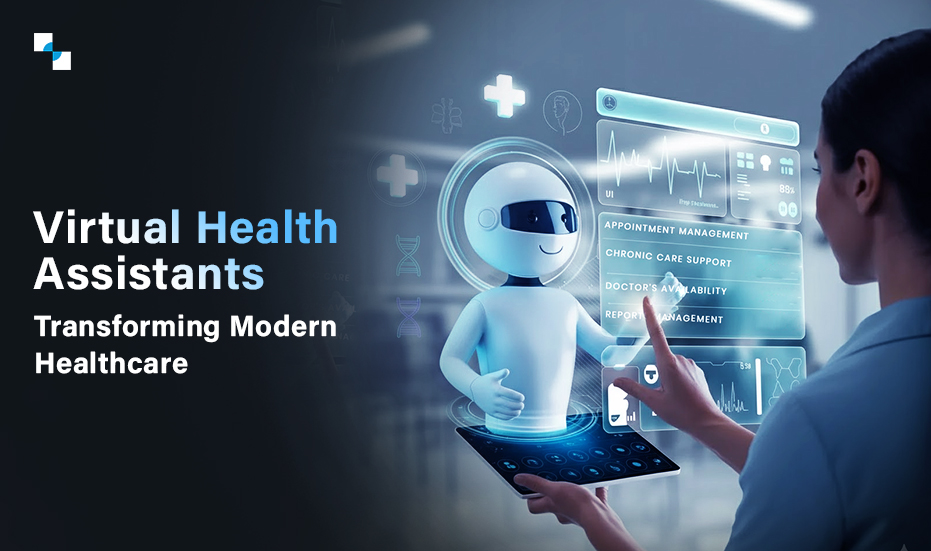
At their core, virtual health assistants are intelligent software applications designed to interact with users in natural language, typically through text or voice interfaces. These systems leverage advanced technologies such as natural language processing, machine learning, and cognitive computing to simulate human-like conversations and perform specific healthcare-related tasks with speed and precision.
In the healthcare domain, healthcare AI chatbots go far beyond simple FAQ responses. They are designed to support clinical workflows, enhance patient engagement, and automate routine processes.
Key capabilities include:
- Symptom evaluation and intelligent triage recommendations
- Appointment scheduling, confirmations, and automated reminders
- Personalized health guidance and medication follow-ups
- Patient education and chronic condition monitoring
- Seamless integration with Electronic Health Records (EHRs) for contextual interactions
As AI capabilities continue to evolve, these solutions increasingly function as AI healthcare assistants for cost reduction, enabling healthcare providers to scale patient interactions efficiently while maintaining quality, personalization, and compliance.
Why Healthcare Needs AI Chatbots
To understand the urgency behind this shift, it is essential to examine the structural challenges facing healthcare organizations today, beginning with the most pressing issue: rising operational and administrative costs.
2.1 Addressing Rising Healthcare Costs
Healthcare spending continues to escalate globally. Traditional models struggle to balance patient demand with resource constraints. AI chatbots for patient support help lower operating expenditures by automating repetitive tasks such as scheduling, triage, billing queries, and patient education. According to recent industry analyses, integrating AI automation can significantly reduce administrative costs while freeing staff to focus on high-value clinical work.
For example, administrative burdens such as appointment confirmations and registration can siphon significant clinical time. Automating these through AI contributes to both cost reduction and operational efficiency; a top priority for providers facing workforce shortages and burnout.
2.2 Enhancing Access and Patient Experience
One of the greatest advantages of AI chatbots in healthcare is accessibility. Unlike human staff who work limited hours, AI virtual assistants are available 24/7, delivering instant responses. This constant availability enhances patient experiences and fosters trust, particularly in underserved or remote populations where access to healthcare providers is limited.
Patients increasingly expect digital responsiveness and convenience; trends amplified by mobile health, telemedicine, and consumer preferences for self-service options. Virtual assistants deliver on this expectation, offering personalized interactions that adapt to each patient’s needs.
Build Your AI Healthcare Chatbot Today!
High-Impact Use Cases of AI Chatbots in Healthcare
While the strategic need for AI is clear, its true value becomes evident when examining how these intelligent systems function in real-world healthcare environments. From patient-facing interactions to backend clinical workflows, AI chatbots are delivering measurable outcomes across multiple touchpoints.
3.1 Patient Support and Self-Service Triage
One of the most direct applications of AI chatbots for patient support is symptom assessment and initial triage. Patients can enter symptoms in natural language, and virtual assistants provide guidance on urgency, suggested actions, or recommended care paths. Research shows that advanced AI systems can outperform traditional symptom checkers by significant margins, accurately suggesting specialist referrals and reducing unnecessary clinical visits.
Patient-facing bots also help:
- Reduce emergency room congestion for non-urgent cases
- Educate patients on symptom management
- Provide follow-up check-ins after discharge
These functions significantly elevate patient empowerment and reduce unnecessary clinical workload.
3.2 Appointment Management and Patient Engagement
AI bots revolutionize the traditionally clerical task of appointment scheduling. From booking to confirmation, cancellation, and reminders, chatbots reduce no-show rates and improve clinic flow. Connected with EHR systems, they can adjust schedules in real time, notify patients of delays, and handle changes seamlessly.
This automated scheduling capability improves clinic efficiency and patient satisfaction – leading to revenue improvements and smoother operations.
3.3 Remote Monitoring and Chronic Care Support
Virtual health assistants increasingly integrate with remote monitoring technologies and wearables. Patients with chronic conditions such as diabetes, hypertension, or heart disease benefit from continuous monitoring and timely follow-ups. AI bots can alert care teams when vital signs trend dangerously, ensuring timely intervention and reducing hospital readmissions.
This ongoing engagement supports improved adherence to care plans, medication compliance, and lifestyle modifications; all critical for long-term health outcomes.
3.4 Behavioral Health and Wellness Guidance
While regulated clinical diagnosis and treatment remain the purview of licensed practitioners, AI systems provide supplemental support for emotional wellness and mental health education. They offer stigma-free, immediate responses, mood tracking, and wellness tips. However, recent regulatory scrutiny in some regions warns against relying exclusively on AI for therapeutic care without licensed oversight.
This highlights the need for an AI Chatbot development Company to implement guardrails, ethical guidelines, and escalation pathways to human professionals when needed.
The Business Case for Healthcare AI Chatbots: ROI and Cost Reduction
While innovation and patient experience matter, healthcare leaders evaluate technology based on measurable ROI and operational efficiency. AI-driven automation is not just an upgrade; it is a strategic investment in financial sustainability.
4.1 Measurable Cost Savings
Experts estimate that AI-driven automation will save healthcare systems billions annually by 2025 through reductions in administrative overhead and improved operational efficiency. Automating frontline interactions reduces reliance on call centers and manual scheduling, minimizing labor costs and human error.
Real financial impacts include:
- Lower staffing requirements for routine inquiries
- Reduced emergency room congestion
- Fewer missed appointments
- Better resource utilization
These efficiencies directly support improved margins and the ability to reallocate investment toward patient-centric care.
4.2 Reducing Diagnostic and Clinical Delays
Through continuous engagement and data collection, AI tools augment early detection and proactive interventions. Some studies demonstrate that intelligent systems maintain high accuracy rates in symptom assessment thus improving triage accuracy and timely referrals.
By reducing diagnostic delays and unnecessary escalations, virtual assistants contribute to better patient outcomes, fewer complications, and lower long-term care costs.
How to Successfully Build and Deploy Healthcare AI Chatbots
Implementing AI chatbots in healthcare is not just a technology upgrade; it is a strategic transformation initiative. From regulatory compliance to clinical validation, healthcare organizations must ensure that their virtual health assistants are secure, accurate, and aligned with operational workflows. A structured, phased approach minimizes risk, ensures stakeholder buy-in, and maximizes return on investment.
5.1 Partnering with an AI Chatbot Development Company
Choosing the right AI Chatbot development Company is one of the most critical decisions in your AI journey. Healthcare is a highly regulated, data-sensitive industry; generic chatbot vendors often lack the compliance, interoperability, and domain expertise required for safe deployment.
An experienced partner offering specialized AI Chatbot Development Services should provide:
1. Healthcare Domain Expertise
Healthcare AI systems must understand:
- Clinical terminology and workflows
- Patient journey mapping
- Care coordination processes
- Regulatory constraints
A qualified partner ensures that healthcare AI chatbots are clinically contextual, not just conversational.
2. Seamless EHR & System Integration
A chatbot that cannot integrate with your existing systems becomes a silo.
Your development partner must support:
- Integration with legacy EHR platforms (Epic, Cerner, etc.)
- Secure API connectivity
- Interoperability standards like HL7 and FHIR
- Real-time data synchronization
This enables AI chatbots for patient support to access appointment schedules, patient histories, and care plans securely.
3. Compliance-First Architecture
Healthcare AI must meet strict regulatory standards such as:
- HIPAA (US)
- GDPR (EU)
- Local health data protection regulations
A trusted AI Chatbot development Company builds:
- End-to-end encryption
- Role-based access controls
- Audit logs and traceability
- Secure cloud or on-premises deployment models
Security is not an add-on; it must be foundational.
4. Customization for Clinical Workflows
Every healthcare organization operates differently. Your chatbot should support:
- Custom triage protocols
- Specialty-specific logic (cardiology, oncology, pediatrics, etc.)
- Automated escalation rules
- Multilingual patient engagement
This level of customization ensures your AI-powered healthcare assistants align with real-world operations.
5. Ongoing Optimization & Analytics
Deployment is just the beginning.
A strategic partner should provide:
- Usage analytics dashboards
- Performance monitoring
- Continuous model improvement
- Bias detection and accuracy validation
AI systems must evolve with patient behavior and regulatory changes.
5.2 Best Practices for Development and Deployment
Building effective AI chatbots in healthcare requires more than technical implementation; it demands clinical validation, operational alignment, and structured rollout strategies.
Here are proven best practices:
1. Conduct Clinical Validation and Pilot Testing
Before full-scale deployment:
- Run controlled pilot programs
- Validate triage accuracy with medical professionals
- Test escalation pathways
- Simulate edge-case scenarios
This ensures patient safety and builds clinician confidence in the system.
2. Involve Stakeholders Early
Successful adoption depends on collaboration between:
- Clinicians
- IT teams
- Compliance officers
- Administrative staff
- Patient representatives
Early involvement prevents resistance and ensures the chatbot supports real operational needs rather than theoretical workflows.
3. Implement Phased Rollouts
Instead of launching across the entire organization at once:
- Start with a single department
- Measure engagement and accuracy
- Collect clinician feedback
- Optimize before expansion
Phased deployment reduces risk and improves long-term adoption rates.
4. Design for Multi-Channel Accessibility
Modern patients interact across platforms. Your virtual health assistants should support:
- Mobile apps
- Web portals
- SMS integration
- Voice interfaces
- Patient portals
Multi-channel deployment improves accessibility and increases engagement.
5. Build Human-in-the-Loop Escalation
AI should augment, not replace clinical expertise.
Effective systems include:
- Clear escalation to live agents
- Emergency redirection protocols
- Transparent AI disclaimers
- Real-time clinician override options
This hybrid model ensures patient safety while maintaining automation efficiency.
6. Measure ROI and Patient Impact
To justify investment in AI healthcare assistants for cost reduction, organizations should track:
- Reduction in call center volume
- Decrease in appointment no-shows
- Patient satisfaction scores
- Average response time improvements
- Reduction in administrative workload
Quantifiable metrics strengthen the business case and support future AI expansion initiatives. Partnering with an experienced provider of AI Chatbot Development Services ensures your organization moves beyond experimentation and toward secure, compliant, and scalable digital transformation.
Start Your AI Chatbot Development Project!
The Future of Virtual Health Assistants and AI Chatbots
Looking ahead, the evolution of AI chatbots in healthcare is poised to bring even more sophisticated capabilities:
- Emotionally intelligent conversations with sentiment and affect interpretation
- Multilingual support to serve diverse populations
- Predictive analytics for preventative care planning
- Integration with advanced wearables and AI diagnostics tools
Industry forecasts anticipate accelerated adoption as healthcare systems seek smarter, scalable solutions to meet patient expectations and operational demands.
Shaping the Next Era of Patient-Centric Healthcare with AI
As healthcare transforms rapidly, virtual health assistants and AI healthcare chatbots are fundamental to modern care delivery. They drive cost reduction, improve patient access and satisfaction, support clinical staff, and build efficiencies that traditional systems struggle to achieve. Whether you’re a hospital system, clinic, insurer, or health tech provider, investing in AI Chatbot Development Services supported by a trusted AI Chatbot development Company can unlock substantial value and future-proof your patient engagement strategies.
Antier is a leading AI Chatbot development Company delivering secure, scalable, and compliance-ready services tailored for the healthcare ecosystem. We empower providers with intelligent virtual health assistants that enhance patient engagement, streamline operations, and drive measurable cost efficiency.