




AI Summary
- Discover how SaaS tokenization is revolutionizing the tech industry by linking SaaS with blockchain.
- This innovative approach digitizes access rights to SaaS applications, allowing for benefits like enhanced ownership, fractional ownership, and increased liquidity.
- The blog post explores how SaaS tokenization works, its benefits, and potential challenges, shedding light on the future prospects of this disruptive concept.
- With tokenization enabling unique payment structures and fostering community building, the possibilities for SaaS tokenization applications are vast, from cloud storage services to educational platforms.
- The post also delves into the future trends of SaaS tokenization, hinting at integration with DeFi platforms and a focus on user experience.
In recent years, blockchain technology has brought about a number of innovative approaches to different industries. One such very disruptive idea out there is SaaS tokenization—a concept linking SaaS with blockchain. The blog post will talk about how SaaS tokenization works, its benefits, and possible challenges, and what prospects it holds in the future.
What is SaaS?
Before delving deep into SaaS tokenization, let’s first see what SaaS is. Software as a Service is a model of cloud-based service that delivers software applications over the internet. Under the subscription model, users get access to the application without installation and updating. SaaS applications are much in vogue due to their flexibility, scalability, and cost-effectiveness.
What is Tokenization?
Tokenization means that rights in an asset are somehow transformed into some form of digital token on a blockchain. These tokens could represent everything, from physical assets like real estate or commodities to digital assets, which could be music or works of art, but even access rights to services. Such tokenization using blockchain technology has greatly improved security, transparency, and liquidity.
What is SaaS Tokenization?
SaaS tokenization digitizes tokens symbolizing access rights to or ownership of a SaaS application. Users can buy, sell, or trade their access to the software securely and transparently on a blockchain. The business can unlock several benefits by combining tokenization with the SaaS model: fractional ownership, enhanced liquidity, and new models for making payments.
How Does SaaS Tokenization Work?
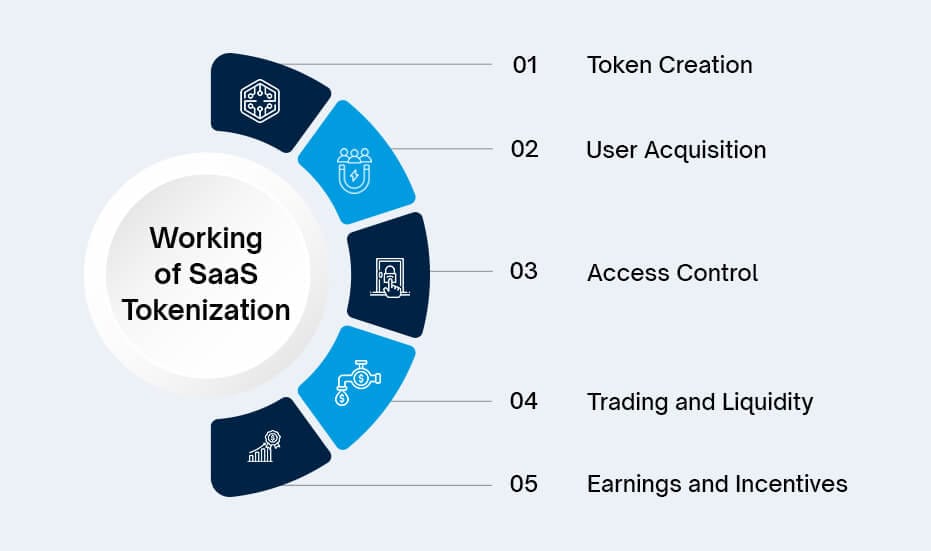
Token Creation
The initial process during tokenization solutions for SaaS platforms will be to create some type of digital token that represents a set of access rights to the SaaS application. This will typically be based on a blockchain platform, smart contracts being used.
User Acquisition
These tokens will be for the purpose of selling access to the software. Tokens can be sold as a result of various business models: subscriptions or one-off purchases.
Access Control
Smart contracts enable access according to the number of tokens a user is holding. For example, keeping some amount of tokens grants a user certain premium features of the application.
Trading and Liquidity
After forcing the users to hold tokens, these can be traded on secondary markets, guaranteeing liquidity and thus the possibility to exercise their right of access in an economically meaningful way.
Earnings and Incentives
Reward the holders of tokens, say through discounts or improved experience arising from staking options.

Benefits of SaaS Tokenization
Enhanced Ownership and Access Control
With tokenization SaaS, a user has verifiable proof of ownership to his or her access rights. It is easily transferable, making selling or trading tokens for the owner quite easy.
Fractional Ownership
Through tokenization, a SaaS application can be used by multiple users at the same time, bringing down the cost barrier for each user, thereby making premium software available to more people.
Higher Liquidity
With a market for tokenized access, it becomes easier for users to buy and sell their tokens, resulting in increased liquidity as compared to the traditional subscription model. This added flexibility may attract more users to the tokenization SaaS platform.
Innovative Models of Payment
Tokenization can enable the implementation of unique payment structures like usage-based pricing or pay-per-feature models, whereby a user never needs to pay for anything other than the service used. This then translates to increased satisfaction and retention among users.
Improvement in Security and Transparency
In blockchain, there are secure, tamper-proof records of transactions and ownerships. Like, the users are guaranteed their access rights and transparency and verifiability of the transactions.
Community building and Ecosystem Development
SaaS tokenization could create a community of users who are driven by common interests and purposes. There is an opportunity to build ecosystems around one’s applications by offering additional services or rewards just for token holders.
Applications of SaaS Tokenization
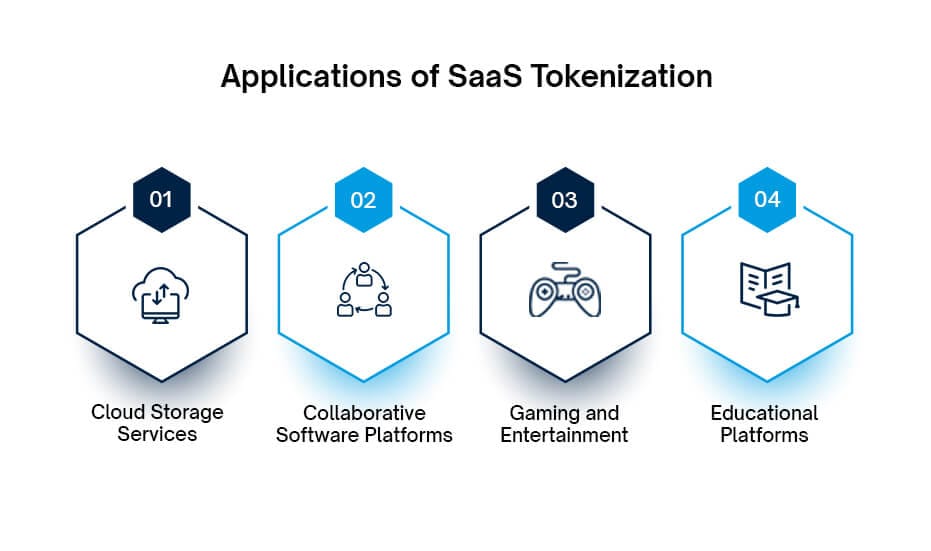
SaaS tokenization can be applied to a lot of industries and use cases, such as the following:
Cloud Storage Services
The tokenization of cloud storage will allow end-users to sell, buy, or even trade their storage. In this case, users would be able to stipulate how much storage is needed, and the tokenized model would promote resource efficiency.
Collaborative Software Platforms
Tokenization SaaS Solution can also be applied in collaboration work—supporting platforms, for example, project management tools or communication apps—by rewarding its users with tokens for contributing to them or usage. This incentivizes participation and engenders a more energetic community.
Gaming and Entertainment
SaaS tokenization will change the very nature of the concept of gaming. Notably, it gives players actual ownership of in-game items as tokens, enabling the trading or resale of such assets and creating real-world value for digital items and a dynamic marketplace.
Educational Platforms
It will allow educational software platforms to give fractional access to any course or learning material, thereby letting a user pay for a certain module or course, as needed, highly personalizing the learning experience.
Future of SaaS Tokenization
With the fast pace of development of blockchain technology, SaaS tokenization is surely going to experience manifold growth and innovation in times to come. A few trends which might set its course include:
Integration with DeFi
Closer integration with DeFi platforms could let users leverage their tokens for lending, borrowing, or staking. This synergy is capable of unlocking additional value and utility for the token holders.
Interoperability Between Platforms
The focus may then turn to setting up standards so that different tokenization SaaS platforms can interoperate. In such a case, users would be able to move tokens seamlessly across applications and have access to services in any one of them.
Focus on User Experience
As the technology matures, this will include a focus on user experience with intuitive interfaces, easier onboarding processes, and strong support to allow for wider diffusion.
Sustainability Initiatives
Considering the increasing emphasis put today on environmental sustainability, tokenization solutions could integrate environmentally friendly processes, such as using energy-efficient blockchains or implementing carbon offset mechanisms.
Conclusion
SaaS tokenization brings a change in how software services are accessed, owned, and utilized. Blockchain technology ensures ownership is returned to customers, enhances liquidity, and creates new models of payment—all providing a much more user-centered approach toward software consumption. There are still many challenges, but the possible applications brought by the tokenization of SaaS are enormous in terms of benefits. Embracing such a paradigm might turn out to be a key factor in unlocking a new level of software development and user engagement in this fast-changing digital landscape and becoming one of the most thrilling spaces to monitor over the next couple of years. Want to venture into this new-age technology? Get in touch with a Antier, reputed tokenization platform development company.