






AI Summary
- Real estate tokenization is revolutionizing property markets by dividing real assets into digital tokens, offering vast benefits.
- The location where you launch your Tokenized Real Estate Development platform is crucial for success.
- This blog post lists the top 10 countries to consider launching a tokenized property platform in 2025, emphasizing the importance of jurisdiction selection.
- Countries like the United States, Switzerland, and Singapore stand out for their clear regulations, real-world projects, and supportive ecosystems.
- The post highlights key trends for tokenized real estate platforms in 2025, such as global regulation clarity, focus on rental income, and liquidity tools.
Real estate tokenization is reshaping property markets by splitting real assets into fractional, digital tokens. While the benefits of launching the Tokenized Real Estate Development services are huge, where you launch your platform matters more than ever. This guide highlights the top 10 countries to launch a tokenized property platform in 2025.
Why Jurisdiction Selection Matters?
To launch a successful yield-generating platform, it is crucial to understand that not every market is tokenization-ready. Legal clarity, financial infrastructure, and tech advancements decide the success and growth of the platform. The following 10 countries stand out for:
- Defined or evolving crypto-asset regulations.
- Real-world tokenized real estate projects.
- Governmental and institutional support.
- Scalable blockchain and fintech ecosystems.

Top Countries for Tokenized Real Estate Platform Development in 2025
1. 🇺🇸 United States
The U.S. sets the benchmark for tokenized property platforms with SEC-authorized exemptions, extensive rental markets, and mature fintech infrastructure. It supports both high-yield and stable-location projects, making it a scalable, lawful launchpad for compliant rental income token platforms.
- Regulation: SEC governs tokens as securities; Reg D, Reg A+, and Reg S are available.
- Advancements: Platforms like RealT and Arrived Homes deploy SPV-based rental income token systems.
- Market Trends: High returns in cities like Detroit; stability in coastal property corridors.
- Why It Works: Broad regulatory paths, integrated financial tools, and large asset demand enable platform scalability.
Insights for Real-Estate firms: Model tokens per exemption, layer rent verification oracles, and enable secondary token exchanges.
2. 🇨🇭 Switzerland
Switzerland fosters global token innovation through transparent FINMA regulation, strong banking ties, and neutral jurisdiction status. Platforms developed here benefit from institutional trust, high compliance standards, and seamless cross-border capabilities for rental income offerings.
- Regulation: FINMA enables issuance via SPI/DLT licenses for compliant tokens.
- Advancements: Operators like Blockimmo and Fundament integrate custody-grade SPVs for live token issuance.
- Market Trends: Crypto Valley Zug attracts sophisticated investors seeking regulated digital assets.
- Why It Works: The country offers lawful token structures backed by robust financial systems and investor confidence.
Insights for Real-Estate Firms: Incorporate DLT licensing workflows, land registry metadata, and local custodial partnerships.
3. 🇩🇪 Germany
Germany blends legal precision (eWpG) with EU-aligned token regulation, enabling property tokens tied directly to land records. It offers reliable structures that appeal to funds, banks, and developers aiming for compliant rental token ecosystems.
- Regulation: eWpG and MiCA-compliant laws enforced by BaFin oversight.
- Advancements: Pilots like Black Manta issue rent-based tokens under local legal frameworks.
- Market Trends: German institutional demand increasing; real estate token projects gaining momentum.
- Why It Works: Strong legislative safeguards plus registry alignment provide legitimacy and scalability.
Insights for Real-Estate Firms: Sync tokens with Grundbuch logs, embed BaFin licensing logic, and integrate investor prospecting modules.
4. 🇬🇧 United Kingdom
The UK presents a sandbox-friendly ecosystem under FCA guidance, combined with PSD2-enabled rent token flows. It’s a fintech-rich launchbase for platforms serving both retail and institutional users, with legal clarity and innovation latitude.
- Regulation: FCA’s Digital Securities Sandbox enables compliant token pilots; PSD2 assists fiat-stablecoin integration.
- Advancements: Projects such as TokenEstate live under controlled testing frameworks.
- Market Trends: Strong collaboration between proptech firms and fintech investors accelerates market adoption.
- Why It Works: Regulatory oversight and fintech resources create a supportive environment for rental income platforms.
Insights for Real-Estate Firms: Use sandbox feedback processes, deploy real-time rent tracking, and embed HMRC-compliant yield calculation.
5. 🇦🇪 United Arab Emirates
The UAE supports Real Estate tokenization development services via DIFC/ADGM regulatory frameworks, real-time rental data APIs, and stablecoin integrations. It provides an innovation-led ecosystem with global investor access and zero-tax rental returns.
- Regulation: DIFC and ADGM permit token issuance under innovation-first legal models.
- Advancements: Token platforms integrate with Ejari/DLD for automated rent validation.
- Market Trends: Government-endorsed digitization and international capital inflow drive platform growth.
- Why It Works: Infrastructure-first jurisdiction, fast licensing, and predictable rent flows deliver developer certainty.
Insights for Real-Estate Firm: Combine API-based rent verification, AED-stablecoin flows, and DIFC-aligned SPV structures.
6. 🇸🇬 Singapore
Singapore enables tokenized real estate platform development via MAS-approved security token regulations and strong fintech infrastructure. With institutional projects like ADDX and Propine, it offers a compliant and scalable launchpad for Asia‑focused rental token platforms.
- Regulation: MAS oversees security token platforms through clear authorization routes.
- Advancements: Tokenization of rental assets by Propine, ADDX in compliance with local rules.
- Market Trends: Robust fintech ecosystem and investor reliability across Asia support growth.
- Why It Works: Regulatory trust and technical infrastructure facilitate rapid deployment of compliant token platforms.
Insights for Real-Estate Firms: Implement MAS-compliant onboarding, multilingual tax tools, and fiat-stablecoin rent distributions.
7. 🇭🇰 Hong Kong
Hong Kong’s updated SFC/MA reforms allow retail participation in tokenized assets, supported by licensed exchanges and custodians. Its strategic position near mainland markets makes it a high liquidity launch location for rental token initiatives.
- Regulation: Authorities now permit retail and institutional trading through regulated exchanges.
Advancements: Real estate token projects operate under newly updated legal frameworks. - Market Trends: Increased APAC demand and high-volume trading reinforce platform viability.
- Why It Works: Legal revamp and capital accessibility combine for developer-ready scalability.
Insights for Real-Estate Firms: Design bilingual (English/Cantonese) interfaces, connect to licensed exchanges, and emphasize liquidity mechanics.
8. 🇧🇷 Brazil
Brazil leads Latin America in real estate tokenization, supported by regulator-endorsed pilots and hundreds of tokenized properties. With strong rental yields and digitization trends, it’s an ideal jurisdiction for developers targeting emerging-market rental token platforms.
- Regulation: COFECI and CVM support pilot frameworks and token issuance pathways.
- Advancements: Entities like Kodo and Ribus issue thousands of property-backed digital tokens.
- Market Trends: Urban digitization and high-yield rental segments power adoption.
- Why It Works: Developing fintech infrastructure and regulator support enable scalable rental-platform models.
Insights for Real-Estate Firms: Provide localized UI, PIX payment integrations, and dual onboarding options (retail + institutional).
9. 🇮🇳 India
India, via GIFT City’s IFSCA rules and SEBI sandbox initiatives, enables tokenized rental platforms. Emerging pilots like Oryx and supportive regulatory sandboxes make India a high-growth venue for digital real estate token tools.
- Regulation: IFSCA’s GIFT City framework and SEBI pilots authorize digital asset issuance.
- Advancements: Platforms like Oryx tokenize commercial leases within regulatory environments.
- Market Trends: Expanding investor base and digitization momentum in urban property markets.
- Why It Works: Regulatory openness and scale potential in one of the largest property markets globally.
Insights for Real Estate Firms: Build hybrid fiat-stablecoin rent modules, partner with local sub-custodians, and support multilingual tax reporting per state.
10. 🇱🇺 Luxembourg
Luxembourg offers institutional-quality Real Estate tokenization development services with MiCA-aligned fund structures (SICAV, SIP), backed by CSSF oversight. Renowned in EU finance, it attracts cross-border investors seeking compliant, scalable rental income tokens via fund-based vehicles.
- Regulation: MiCA-compliant structures under CSSF regulation enable institutional issuance.
- Advancements: Platforms work with Blocksquare and Tokeny to launch real estate tokens.
- Market Trends: EU investors favor Luxembourg structures for security and liquidity.
- Why It Works: Proven legal structure and fund frameworks offer a dependable launch ground.
Insights for Real Estate Firms: Use fund-grade SPVs, multilingual compliance modules, and support European tax and redemption flows.
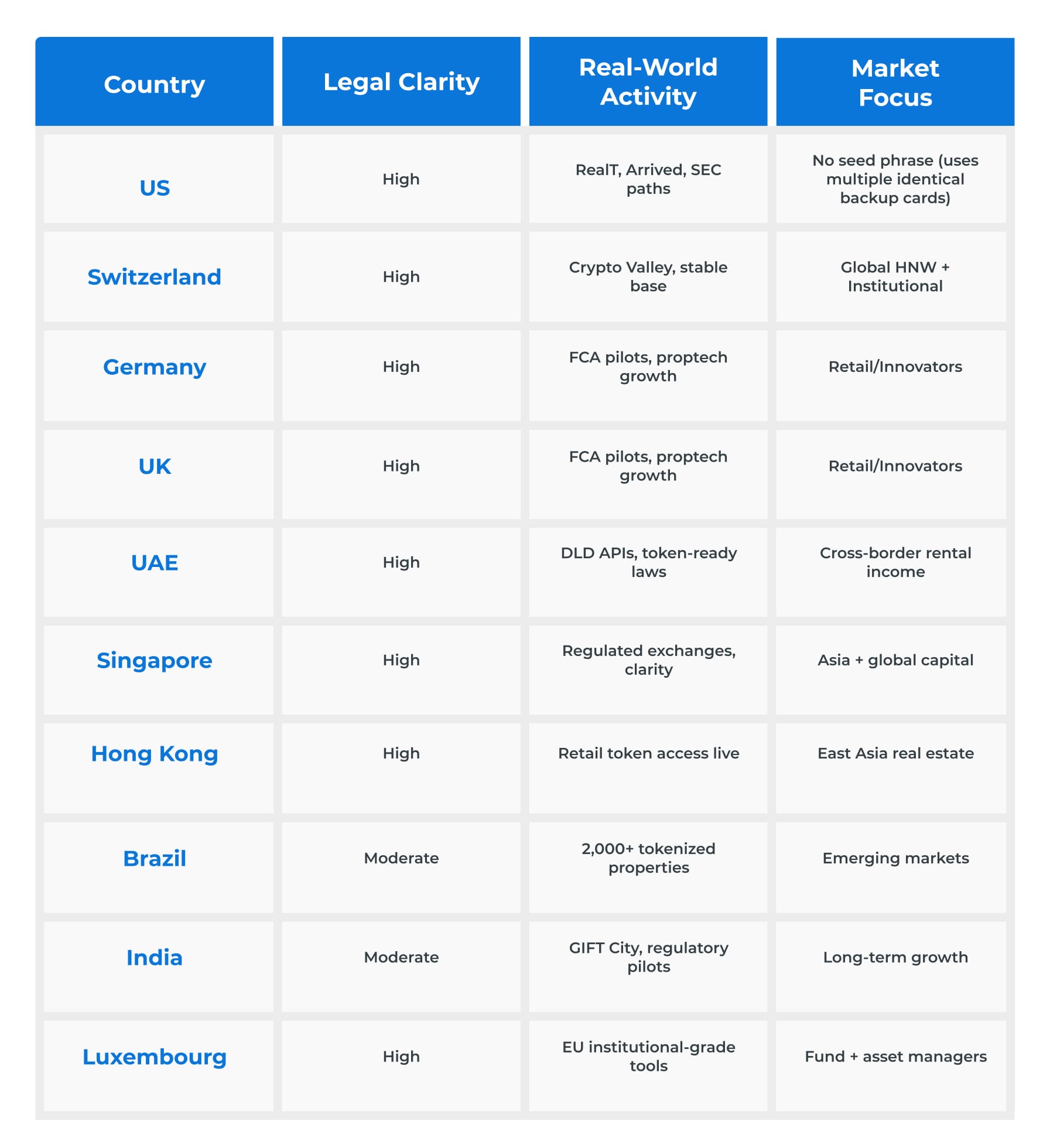
Why These Countries Lead in 2025
- Transparent legal frameworks = lower launch risk
- Strong tech ecosystems = faster product development
- Active regulators = fewer surprises during scaling
- Real asset volume = more users, transactions, and ROI
Key 2025 Trends for Tokenized Real Estate Platforms
- Clearer Global Regulation: From MiCA in Europe to MAS in Singapore, rules are catching up with tech.
- Focus on Rental Income: Platforms are prioritizing on-chain, automated rental flows over pure speculation.
- Liquidity Tools Matter: Internal secondary markets, token buybacks, and cross-chain compatibility are standard.
- Emerging Markets Are Catching Up: Brazil, India, and the UAE are onboarding fast—with government support behind them.
Pro-Tip to Launch Real Estate Tokenization Platform
If you’re building or launching in 2025, prioritize:
- US, Switzerland, Singapore — for regulatory clarity + capital inflow.
- UAE, Germany, UK — for business setup ease + growing tokenization demand.
- Brazil, India — for massive growth potential + real estate digitization.

Where You Launch Matters More Than What You Build
Launching a successful tokenized real estate platform demands legal foresight, compliance readiness, and market alignment. Success comes from building solutions that merge regulatory trust, investor usability, and scalable asset management. Whether targeting institutional capital or retail users, the platform must offer transparency, audited returns, and liquidity pathways. As adoption accelerates, tokenization will contribute to value creation, risk controls, and investor confidence.
Launch Your Tokenized Real Estate Platform in Any Country with Antier
Antier empowers real estate firms, startups, and institutional players to launch fully compliant tokenized real estate platforms in any of the top jurisdictions. With deep legal understanding of SEC exemptions, MiCA frameworks, DIFC guidelines, and MAS licensing, our Real Estate Tokenization Platform Development Company ensures every build is regulation ready. Our in-house legal team works hand-in-hand with blockchain engineers to deliver end-to-end platforms that meet both local and cross-border compliance requirements. Whether it’s structuring SPVs, integrating KYC/AML, or designing secure token economics, Antier delivers bulletproof, jurisdiction-specific solutions that are investor-ready from day one.