






AI Summary
- Enterprises venturing into dApp development seek practical answers, not just hype.
- They aim to understand how decentralized platforms integrate with existing systems, ensure security and compliance, and scale effectively.
- This blog post emphasizes the importance of addressing key concerns such as cost drivers, project failures, and risks control in enterprise dApp development.
- It highlights the critical factors influencing enterprise dApp costs, including architecture complexity, integration depth, security, compliance, performance, scalability, and post-launch operations.
- By outlining common cost traps and strategies for cost reduction in dApp development, the post stresses the significance of structured planning, security considerations, and operational ownership.
Enterprises considering dApp development are not looking for hype. They are looking for clear answers. They want to know whether a decentralized platform can integrate with existing systems, meet security and compliance standards, and scale without constant redesign. They want to understand what drives cost, where projects usually fail, and how risks can be controlled before development begins.
Most decision-makers are trying to avoid three things: unpredictable budgets, delayed launches, and dependency on external vendors. They want a delivery model that supports internal governance, protects data, and remains manageable after deployment. They are also looking for practical guidance on architecture, audits, integrations, and operational ownership. Not generic estimates, but structured frameworks that explain how technical choices affect stability, timelines, and resource planning. This guide addresses those concerns directly. It explains how enterprise dApp development projects are planned, executed, and maintained, and how disciplined teams achieve predictable outcomes without compromising security or control.
Why Enterprise dApp Development Costs Are Often Misjudged
Most enterprises approach dApp initiatives using traditional software assumptions. That is where the disconnect begins, especially when organizations rely on generic services without fully accounting for the structural differences between decentralized and centralized systems. dApp introduces new cost variables that do not exist in Web2 environments:
- Smart contract immutability
- External security audits
- Blockchain infrastructure dependencies
- Regulatory exposure
- Governance and upgrade mechanisms
When these factors are underestimated or addressed too late, costs rise sharply, not because vendors are inefficient, but because the system was never designed for enterprise scale and accountability. As projects progress, gaps in planning, security alignment, and integration strategy begin to affect execution quality. These challenges become more visible during advanced dApp development phases, where architectural limitations and compliance constraints restrict flexibility.
The true cost of enterprise dApp development is not a single figure. It is the cumulative outcome of architectural discipline, risk management practices, and operational maturity, reinforced through professional development services that emphasize transparency and sustainability.
Request a Custom Enterprise DApp Budget Analysis
The Six Core Factors That Determine Enterprise dApp Cost
Instead of asking for price quotes, enterprise leaders should evaluate the structural and operational cost drivers that shape every decentralized application initiative.
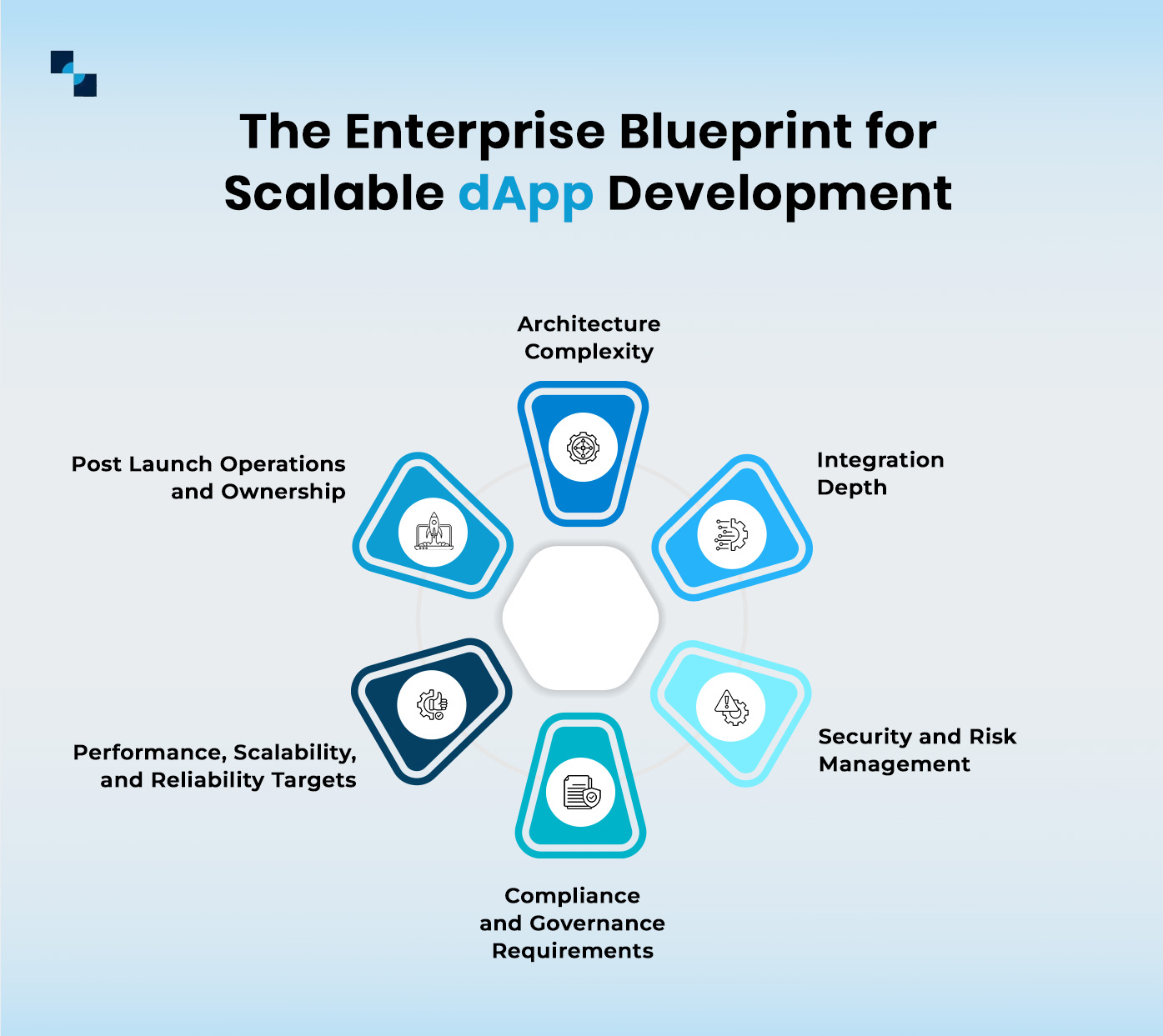
- Architecture Complexity
Architecture is the single largest determinant of cost predictability in enterprise blockchain initiatives. Key contributors include:
- Number of smart contracts
- Upgradeability requirements
- On-chain and off-chain logic distribution
- Cross-chain or multi-network support
Poor architectural decisions often lead to expensive rewrites, repeated audit failures, and performance bottlenecks. In contrast, well-designed systems built through structured dApp development practices reduce long-term cost by minimizing rework, simplifying governance, and enabling controlled scalability.
- Integration Depth
Enterprise dApps rarely operate in isolation within modern digital ecosystems. They must integrate with:
- Identity and access management systems
- Payment rails
- ERP, CRM, or legacy databases
- Compliance and reporting tools
Each integration layer increases testing requirements, security validation, and operational oversight. Organizations that fail to evaluate integration complexity during early planning stages often experience budget overruns during production rollout, especially when enterprise-grade dApp development services are not aligned with existing infrastructure.
- Security and Risk Management
Security is not an optional line item in enterprise dApp initiatives. It is foundational to long-term viability. Enterprise dApp security includes:
- Secure contract design
- Internal code reviews
- External audits
- Ongoing monitoring
- Incident response planning
The cost impact rarely comes from audits themselves. It comes from the rework required when vulnerabilities are discovered late. Mature teams embed security into their development lifecycle from day one, which significantly reduces financial exposure and reputational risk.
- Compliance and Governance Requirements
Regulatory expectations vary by geography and industry, but enterprises must account for:
- Data privacy considerations
- Transaction traceability
- Governance controls
- Upgrade and kill switch mechanisms
Compliance work does not simply add effort. It shapes system design and operational workflows. When governance frameworks are ignored early, enterprises are forced into costly architectural changes later, which remains one of the most common causes of project escalation.
- Performance, Scalability, and Reliability Targets
Enterprise dApps are expected to meet production-grade performance standards from the outset. These include:
- High availability
- Predictable latency
- Fault tolerance
- Disaster recovery capabilities
These requirements directly influence infrastructure design, node management strategies, and monitoring systems. Teams that postpone scalability planning often face rising operational costs and service disruptions once adoption increases.
- Post-Launch Operations and Ownership
Many enterprises allocate budgets for development but underestimate the financial impact of sustained ownership. Ongoing cost drivers include:
- Monitoring and analytics
- Upgrades and governance changes
- Support SLAs
- Security patching
Without a structured post-launch strategy, operational expenses gradually increase over time. Enterprises that fail to plan for maintenance and lifecycle management experience cost creep long after initial deployment, which undermines projected ROI.
Understand Your Enterprise DApp Investment Before Making Final Decisions
The Hidden Cost Traps Enterprises Fall Into
Across enterprise blockchain initiatives, the same financial and operational mistakes appear repeatedly, especially when organizations choose a dApp development company based only on speed or pricing rather than architectural and governance maturity.
Trap 1: Skipping Structured Discovery
Rushing into development without proper discovery creates unclear scope and unrealistic expectations.
Trap 2: Treating MVPs Like Prototypes
Enterprise MVPs must follow production standards. Disposable MVPs increase technical debt and force costly rebuilds.
Trap 3: Delaying Security Decisions
Late audits expose design flaws that require major rework. Early security planning within professional dApp development services helps control risk and budget.
Trap 4: Vendor Lock In
Poor documentation and limited knowledge transfer create dependency, increasing operational cost and reducing flexibility.
How Leading Enterprises Reduce dApp Development Cost
Enterprises that control costs do not rely on shortcuts. They apply repeatable operating principles and work with a capable dApp development company that aligns technology decisions with business accountability.
| Strategic Focus Area | What Leading Enterprises Do | Why It Reduces Cost |
|---|---|---|
| Architecture Planning | Define system boundaries, modular contracts, and upgrade paths before development begins | Prevents redesign cycles and architectural rework |
| Execution Model | Break initiatives into gated phases with clear validation points | Limit overinvestment before assumptions are proven |
| Security Strategy | Integrate reviews and testing during design and early builds | Reduces late-stage remediation and audit friction |
| Engineering Efficiency | Use proven frameworks, middleware, and standardized integrations | Lowers the custom development effort during dApp development |
| Ownership Readiness | Maintain documentation, access controls, and governance workflows | Reduces dependency and support overhead through professional dApp development services |
Why does this approach work?
This model shifts cost control upstream. Instead of reacting to overruns, enterprises design predictability into execution. Each decision reduces uncertainty, improves accountability, and supports stable delivery as systems move toward production.
Final Thoughts: Cost Control Is a Leadership Decision
For enterprises, dApp development is a strategic infrastructure decision, not an experiment. Success depends on architectural clarity, disciplined execution, and experienced guidance. Organizations that partner with a trusted dApp development company avoid uncertainty by focusing on governance, security, and operational readiness across the development lifecycle. This approach delivers predictability and confidence as systems move into production.
Antier brings proven expertise in building secure, scalable decentralized platforms for enterprise use cases. Our dApp development services are designed to help organizations reduce risk, maintain control, and move forward with clarity. Book an Enterprise dApp Assessment!
Frequently Asked Questions
01. What are the main concerns enterprises have when considering dApp development?
Enterprises are primarily concerned about integration with existing systems, meeting security and compliance standards, managing costs, avoiding project delays, and minimizing dependency on external vendors.
02. Why are costs often misjudged in enterprise dApp development?
Costs are often misjudged because enterprises apply traditional software assumptions to dApp initiatives, overlooking unique factors like smart contract immutability, external security audits, and blockchain infrastructure dependencies.
03. What factors contribute to the true cost of enterprise dApp development?
The true cost is influenced by architectural discipline, risk management practices, operational maturity, and the need for professional development services that ensure transparency and sustainability throughout the project.