






AI Summary
- In this comprehensive guide, founders seeking to create an ETH-backed stablecoin are provided with a decision-ready framework to ensure stability, compliance, and scalability.
- ETH-backed algorithmic stablecoins are gaining institutional attention due to liquidity, transparency, and infrastructure maturity.
- These stablecoins offer real-time collateral visibility, mature smart contract standards, and seamless integration with institutional systems.
- The blog post highlights the importance of factors such as collateral management, stability mechanisms, oracle infrastructure, liquidity frameworks, governance systems, and security/compliance layers in building a resilient stablecoin protocol.
- It also emphasizes revenue generation through stability fees, transaction fees, liquidity pool participation, institutional settlement services, and treasury yield optimization.
If you are reading this, you are not looking for another surface-level article on stablecoins. You are here because you are making an important business and technical decision. You want to know whether your ETH-backed stablecoin can survive volatility, attract institutional capital, meet compliance standards, and scale without failure.
This guide is written for founders who want clarity before committing capital, resources, and reputation. You want to know whether your:
- The collateral model can handle market shocks
- The peg mechanism will remain stable
- Architecture meets institutional standards
- The revenue model is sustainable
- The system can pass audits and compliance reviews
This guide provides a practical, decision-ready framework for building an ETH-backed algorithmic stablecoin, backed by proven stablecoin development services and real-world implementation insights.
Why ETH-Backed Algorithmic Stablecoins Are Gaining Institutional Attention
Institutional capital does not follow hype. It follows liquidity, transparency, risk management, and infrastructure maturity. ETH-backed algorithmic stablecoins align with all four, making them increasingly attractive to serious DeFi founders and financial institutions.
Ethereum-backed models are preferred because they combine deep market liquidity, real-time on-chain collateral visibility, mature smart contract standards, and seamless integration with institutional systems supported by leading stablecoin development solutions providers.
- Strong Liquidity and Market Confidence
Ethereum remains one of the most liquid digital assets globally. In 2026, ETH continued to record high spot and derivatives volumes across major exchanges, ensuring efficient collateral liquidation during market stress. Institutional-grade custody solutions and regulated trading platforms support ETH natively, reducing onboarding friction for enterprises working with a professional stablecoin development company. High liquidity enables stablecoin systems to absorb volatility without extreme slippage, protecting peg stability.
- Real-Time On-Chain Collateral Transparency
ETH-backed stablecoins allow institutions to verify solvency directly on-chain. Leading protocols maintain:
- Collateral ratios between 130% and 180%
- Automated liquidation triggers
- Public reserve dashboards
This transparency minimizes counterparty risk and strengthens institutional trust.
- Mature Smart Contract and Oracle Infrastructure
Ethereum has one of the most battle-tested smart contract ecosystems in the industry. Billions in DeFi value have passed through audited protocols using advanced security practices. Redundant oracle networks and formal verification standards reduce systemic risk, making Ethereum-based systems more reliable than experimental networks. Institutional risk teams consistently favor platforms built with mature stablecoin development frameworks.
- Seamless Institutional Integration
Most major custodians, compliance platforms, and analytics providers already support Ethereum-based assets. This includes custody, AML monitoring, transaction reporting, and regulatory tooling. As a result, ETH-backed stablecoins can be integrated into enterprise workflows faster, lowering operational and compliance costs.
- Consistent Growth in TVL and Capital Efficiency
Recent DeFi analytics show that ETH-collateralized stablecoin protocols continue to grow in total value locked and user participation.
Key trends include:
- Higher resilience than unbacked algorithmic models
- Stronger capital retention during volatility
- Rising institutional wallet activity
Overcollateralized hybrid designs have demonstrated superior peg stability and liquidity durability, reinforcing long-term confidence among investors and enterprises.
Stress-Test Your ETH-Backed Stablecoin Strategy With Experts
What Founders Are Actually Searching For?
When a DeFi founder searches for ETH-backed algorithmic stablecoin development, they are usually trying to answer one of these critical questions:
- How do I design peg stability under volatility?
- How do I prevent liquidation cascades?
- How do I build something investors trust?
- How do I avoid becoming the next failed case study?
- Should we build internally or partner with a specialized stablecoin development team?
These queries reflect high-stakes decision-making, not casual research. Founders at this stage are evaluating long-term architecture, risk exposure, capital efficiency, regulatory readiness, and governance sustainability, often in consultation with a professional stablecoin development company. They are also assessing timelines, development costs, audit requirements, and post-launch operational responsibilities. This search intent is both technical and strategic, signaling readiness to invest in serious infrastructure rather than experimental prototypes.
The Core Architecture of an ETH-Backed Algorithmic Stablecoin
A resilient stablecoin protocol is built on six foundational layers.
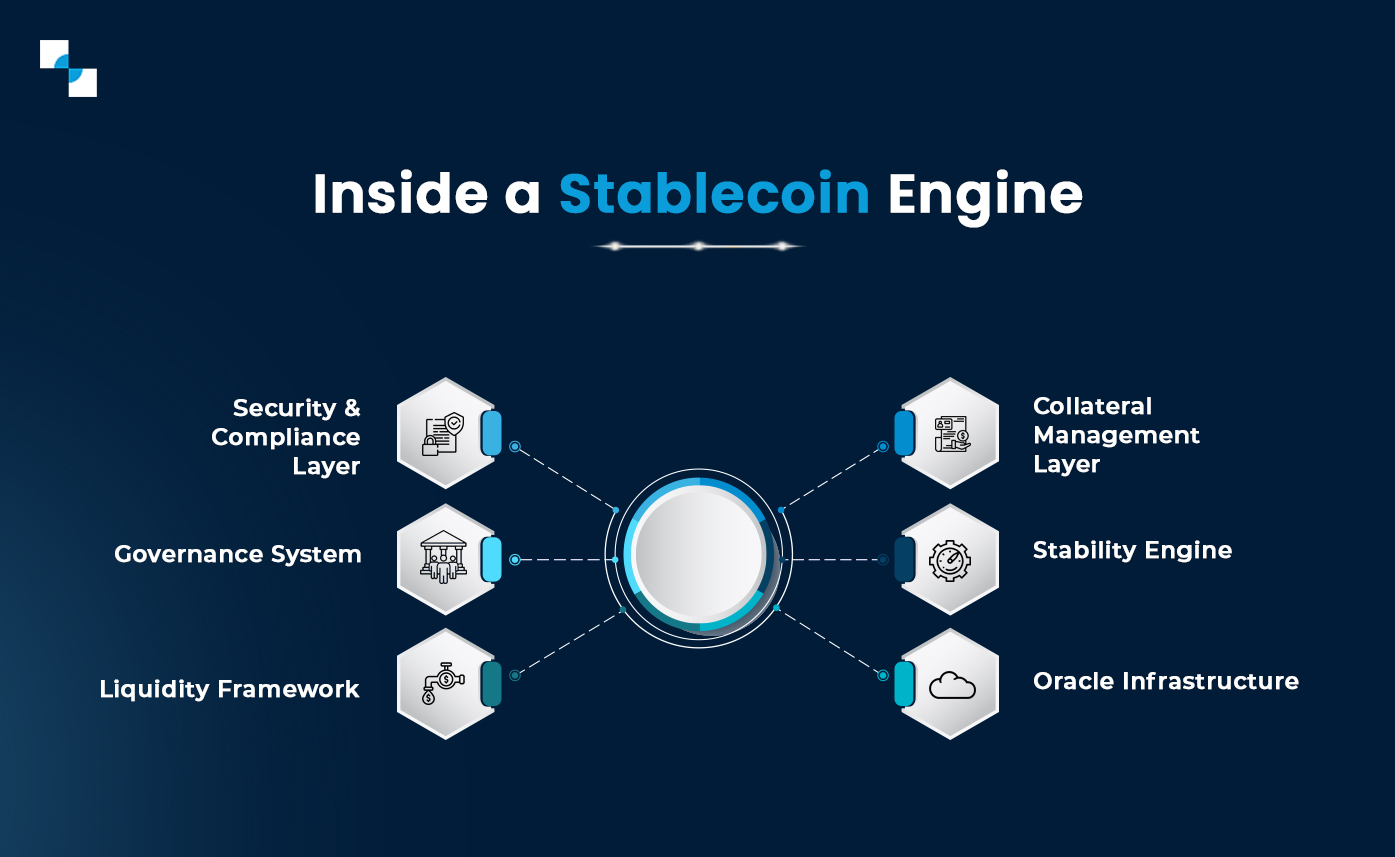
1. Collateral Management Layer
- Dynamic collateral ratios
- Multi-source price feeds
- Automated margin monitoring
2. Stability Engine
- Peg maintenance algorithms
- Rebalancing mechanisms
- Market intervention logic
3. Oracle Infrastructure
- Redundant data providers
- Failover systems
- Manipulation-resistant feeds
4. Liquidity Framework
- AMM integration
- Cross-chain bridges
- Institutional liquidity channels
5. Governance System
- Risk parameter voting
- Emergency controls
- Protocol upgrade management
6. Security & Compliance Layer
- Continuous auditing
- Incident response systems
- Regulatory reporting modules
A professional stablecoin development company designs these layers as modular components to support scalability, seamless upgrades, and long-term protocol stability.
Why Most Algorithmic Stablecoins Fail
Historical analysis shows recurring failure patterns.
- Over-optimistic collateral assumptions
- Weak oracle resilience
- Incentives designed for growth but not sustainability
- Insufficient liquidity depth
- Lack of structured cryptocurrency development lifecycle management
When market volatility spikes, these weaknesses compound. Liquidation cascades begin. Confidence drops. The peg weakens. Capital exists. Founders who understand these systemic risks design countermeasures from day one.
Get Your Stablecoin Model Reviewed by Experts
Business Case: Turning Stability into Sustainable Revenue
Unlike speculative tokens that rely on short-term hype, stablecoin protocols generate value through continuous network usage, capital circulation, and enterprise integration. When supported by professional stablecoin development services, these systems evolve into core settlement and liquidity layers within the digital economy. Primary revenue drivers include:
- Stability Fees from Borrowers: Collected from users who mint or leverage the stablecoin, these fees represent a consistent income stream tied directly to protocol demand.
- Protocol Transaction Fees: Every on-chain transaction, swap, or settlement generates micro-fees that compound as network activity grows.
- Liquidity Pool Participation: By allocating treasury assets to decentralized liquidity pools, protocols earn trading fees while strengthening market depth.
- Institutional Settlement Services: Enterprise clients pay for high-volume settlement, reporting access, and customized infrastructure, creating premium revenue channels.
- Treasury Yield Optimization: Surplus collateral can be deployed into low-risk DeFi strategies, generating passive returns without exposing the peg to instability.
This ensures that revenue mechanisms remain sustainable across market cycles and do not introduce hidden risks that could weaken collateral backing or destabilize the peg.
In practice, the most successful stablecoin platforms treat monetization as a risk-managed engineering function rather than a marketing strategy. This disciplined approach is what transforms stablecoins into durable, institution-ready financial infrastructure.
Final Conclusion: Build Stability That Lasts
ETH-backed algorithmic stablecoins have evolved into core financial infrastructure in 2026. Success in this space now depends on strong collateral design, transparent risk management, secure smart contract architecture, regulatory readiness, and sustainable revenue models. Founders who approach stablecoin development with a long-term, institution-focused mindset are the ones building platforms that attract capital, retain users, and survive market cycles.
This is where Antier stands out as a trusted stablecoin development company. We help founders design secure, scalable, and future-ready stablecoin ecosystems. From architecture to compliance and post-launch support, we work as a strategic partner, not just a development vendor. Ready to Build with Confidence? Partner with Antier to launch an institutional-grade stablecoin built for performance, stability, and growth.
Frequently Asked Questions
01. What are the key factors to consider when developing an ETH-backed stablecoin?
Key factors include the collateral model's ability to handle market shocks, the stability of the peg mechanism, compliance with institutional standards, sustainability of the revenue model, and the system's capacity to pass audits and compliance reviews.
02. Why are ETH-backed algorithmic stablecoins gaining attention from institutional investors?
They attract institutional capital due to their strong liquidity, transparency, effective risk management, and mature infrastructure, which align with the needs of serious DeFi founders and financial institutions.
03. How does real-time on-chain collateral transparency benefit ETH-backed stablecoins?
It allows institutions to verify solvency directly on-chain, reducing counterparty risk and enhancing trust through maintained collateral ratios, automated liquidation triggers, and public reserve dashboards.