




AI Summary
- In 2025, the concept of digital land ownership has evolved significantly, with virtual property becoming functional revenue-producing units in various metaverse ecosystems.
- Platforms like The Sandbox and Decentraland offer legitimate digital deeds secured by blockchain networks.
- The legal ecosystem surrounding metaverse development is complex, with issues such as ownership disputes and taxation of virtual revenue at the forefront.
- Financing virtual land now involves institutional players and decentralized financing options like DeFi.
- Success in metaverse real estate development lies in activating and monetizing the land, with opportunities for revenue generation ranging from virtual retail stores to digital galleries.
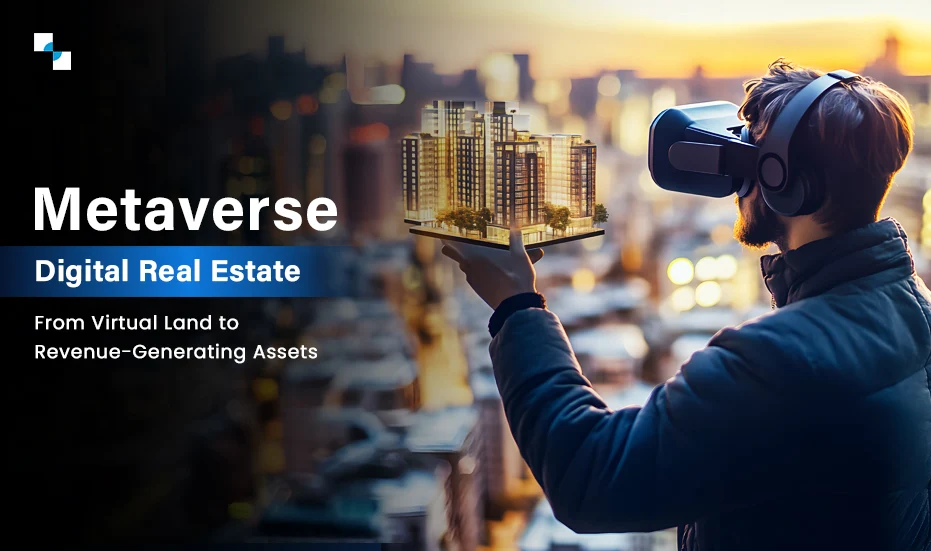
The concept of digital land ownership has rapidly matured, and 2025 marks a pivotal year in how individuals, enterprises, and institutions engage with virtual property. Digital parcels – represented digitally (often as NFTs) – are now being bought not as speculative prospects, but functional, revenue producing units in a range of metaverse ecosystems. Multiple platforms, including The Sandbox, Decentraland, and Otherside, have evolved their marketplaces to include transaction capabilities, providing legitimate digital deeds that are secured with a blockchain network.
The real estate development in the Metaverse is multi-faceted, now including clearly defined use-cases according to structured zones, commercial districts, entertainment venues, and social environments. Fortunately, buying virtual land today is not as simple as just connecting a wallet and then placing a bid. Buyers are now examining traffic statistics, previous and current owners of adjacent parcels, and how their purchase will coincide and communicate with the other virtual environments. Therefore, in this time of exploration and opportunity, working with a metaverse development company with specialization is now substantial. Not only does it provide advisory services, it also helps assess platform compatibility and plan site layout, development, and architectural planning after the sale has taken place.
Here’s a Comprehensive Guide to Metaverse in Real Estate
Understanding the Legal Ecosystem of Metaverse Development Space
As demand for virtual property grows, ambiguities regarding its legal status become more complex. By the end of 2025, while the metaverse platforms are mostly decentralized, governing rules are appearing but jurisdictional overlap and regulatory inconsistency persists.
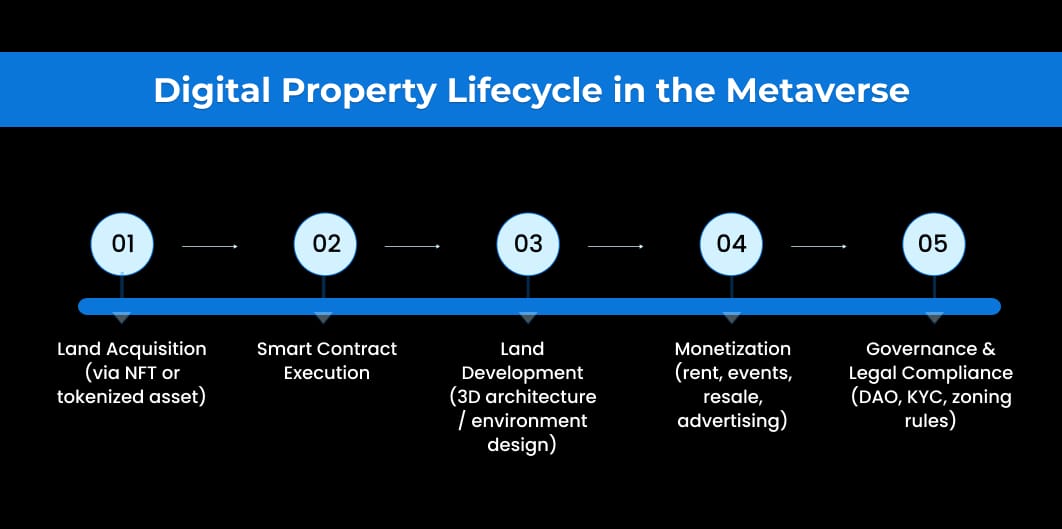
Property rights in the metaverse are generally managed through smart contracts, but they only stand behind the legality of the contract. The issues around ownership disputes, protecting consumers from digital trespassing, taxation of virtual revenue and intellectual property rights are forefront issues being debated in the policies related to the metaverse. Metaverse Development specialists are working with their digital law consultants to embed compliance frameworks within their development pipeline.
Some governments have begun to classify virtual land as a digital asset class, while others are still analyzing the implications under securities law. The disorganized regulatory scene means that real estate buyers must understand the technology, but also engage legal advisors which have an understanding of: 1) Web3 governance, and 2) recognized risks in these digital territory negotiations.
Financing Your Virtual Property
The financing of Metaverse real estate development has developed quite a bit since 2025. Initially, the Metaverse was populated by crypto-native communities and retail investors, and now it is seeing national, if not global, interest from institutional players, such as hedge funds, REITs, and venture capital.
The financing of virtual land today furthers a range of models from simple crypto purchase, to collateralized lending, fractional ownership in the form of a real estate token, and DAO-sponsored group investments. As Metaverse Development agencies leverage decentralized financing (DeFi) products to create lending, leasing, and mortgage functionality for real estate offerings in a fully digital universe.
The introduction of a crypto credit score has created a financing option for a broader, more inclusive demographic of buyers. These mechanisms can allow users to leverage previous activity on a blockchain and existing asset holdings to secure funding for land purchases—resulting in the first combinations of DeFi and real estate financing. Investors can also expect house-money as financial instruments continue to mature. As investors become more familiar with investors assess their personal risk parameters such as liquidity versus volatility versus yield functions at each step of the virtual asset purchasing process.
Building & Monetizing the Property
Success in the metaverse real estate space—an increasingly popular and lucrative area of development is no longer defined by ownership. Success in the metaverse real estate development space now comes down to how you activate and monetize the land that you own. By the year 2025, businesses and creators are building their immersive worlds based on experiences that attract audiences and lead to monetization opportunities. With opportunities ranging from virtual retail stores and concert venues to co-working experiences and digital galleries, it will all boil down to engagement.
With a metaverse development company led by professionals, you can create customized experiences with your unique brand, target audience, and monetization strategies at the forefront. Today, technologies; which include extended reality (XR), AI-assisted design, and NFT ticketing are all expected to be part of a developer’s workflow. There are many ways for these properties to generate revenue from virtual rent to ticketing fees, brand sponsorships, and the sale of digital goods and NFTs.
More sophisticated developers are beginning to utilize programmable environments that utilize smart contracts, allowing any number of ‘smart’ contracts to dictate the pricing, loyalty programs, and other tokenized rewards for the user. Monetizing real estate property in the metaverse is no longer just an isolated experience; it is requiring a multi-layered approach to think about experience design, game theory, and financial engineering – and this is why it is essential to have a solid understanding of metaverse development and collaborate with professionals.

Key Trends Shaping Metaverse Real Estate Development in 2025
There are a number of key trends that are going to shape how the Metaverse real estate ecosystem evolves over the next several years:
Interoperability and Standardization: Platforms are moving to standardize buildings on platforms to allow assets to be used across platforms, and avatars and users to traverse platform boundaries. This has created demand for flexible land developments that can be bound to cross-platform metaverses.
- AI-Driven Property Design: There is a growing use of generative AI to automate building designs, shortening development timelines and reducing manual input. Intelligent design suggestions that utilize user visit data are changing how properties are constructed.
- Tokenization, DAOs, Governance: Landowners are creating DAOs to govern districts, the zoning of district properties, and the control of district access—fusing real estate and governance models in a decentralized structure.
- Hybrid Experiences: Brands are leveraging metaverse properties to host hybrid events that connect both virtual and real-world audiences, while increasing engagement and recall for the brand.
- Security Protocols: Due to a rise in hacks and data thefts, property developers must prioritize wallet authentication, private access components, and decentralized ids to protect the value of their virtual holdings.
As these trends continue to grow, advanced firms will partner with experienced metaverse development companies to harness the value of virtual properties, and help them to survive and thrive in an uncertain environment.
The Verdict
The metaverse is no longer a place of speculation – it is an active economy where digital property has a real and conceptual value. It is 2025, and ownership and management of virtual land requires an amalgamation of legal knowledge, financial creativity, and technical ability.
It does not matter if you are a business creator, investor, or enterprise brand, working alongside an established metaverse development company can ensure your virtual real estate strategy is aligned with future trends and regulatory realities. From acquisition and legal due diligence to financing, and immersive architecture, the development of virtual land in the Metaverse is getting more sophisticated—and more lucrative for those who get it right.