





AI Summary
- In a fast-evolving crypto landscape, the integration of wallets into mainstream platforms like Telegram is reshaping the future of Web3.
- With the recent launch of a crypto wallet to 87 million U.S.
- users, Telegram is setting a new standard for crypto usability and accessibility.
- The TON blockchain behind the wallet is designed for scalability and speed, catering to real-world demands.
- This shift towards invisible yet essential wallets is prompting businesses to adapt quickly to stay relevant in the decentralized future.
Let’s be honest: the way users interact with crypto is changing fast. It is no longer just about DeFi dashboards or browser extensions. When Telegram, one of the world’s largest messaging apps, quietly rolled out its crypto wallet to 87 million users in the U.S., it didn’t just launch a feature—it made a statement. Web3 is going mainstream, and it’s happening inside the platforms people already use every day.
This shift should have every founder, business, investor, and enterprise leader asking a tough question: if wallets are becoming invisible yet essential, is your platform ready to keep up? In a U.S. market where speed, scalability, and user experience define adoption, the new playbook is simple: build crypto wallets that integrate natively, scale globally, and deliver like Telegram just did. As Web3 aims for mass usability, this launch signifies that crypto wallet development is no longer a niche need—it’s a strategic imperative for consumer-facing platforms.
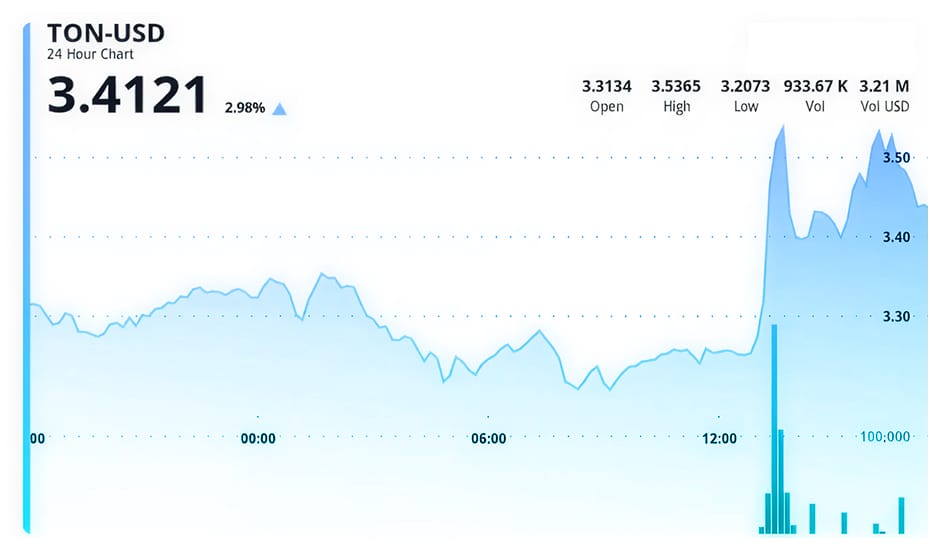
Source link : Toncoin Extends Rally as Telegram Launches TON Wallet for 87M U.S. Users
For U.S.-based enterprises, this isn’t just tech news; it’s a transformational shift. From fintech disruptors to social platforms, any business that wants to remain relevant in the decentralized future must now explore Telegram wallet development or similar integrations to capture this growing user base.
TON Blockchain Behind Telegram Crypto Wallet: Why Is It Built for Scale?
Telegram crypto wallet runs on the TON blockchain, a high-speed Layer-1 network built to handle real-world demands. Known for its fast processing, low fees, and support for smart contracts, TON is designed to scale effortlessly, even when millions of users are interacting at once.
Key TON capabilities:
- Dynamic sharding architecture for parallel transaction processing
- TON DNS for human-readable wallet addresses
- TON Payments enabling near-instant microtransactions
- TON Storage for decentralized file hosting
The power of TON ensures that Telegram wallet development can handle Web2-level user loads while preserving Web3 transparency and decentralization. It’s a wallet development blueprint that Web3 businesses and developers should watch closely.
Opportunities for US-Based Businesses With Telegram Crypto Wallet
Telegram’s U.S.-regulated crypto wallet development solution’s launch opens new doors for:
- Consumer-facing apps to offer built-in crypto wallets
- Retail & eCommerce brands to integrate token-based loyalty systems
- Fintech startups to embed Web3 payment flows
- Content platforms to adopt crypto tipping and NFT monetization
- Enterprises to build secure, brand-aligned Web3 wallets
By partnering with a cryptocurrency wallet development company, U.S. businesses can replicate Telegram’s strategy to deliver crypto-first experiences while staying compliant, scalable, and secure. Well, suppose you are looking for genuine reasons behind the development of Telegram’s crypto wallet. In that case, you must read this article to know the reasons and other aspects of Telegram wallets in detail.
Read more at>> Reasons To Develop Telegram Crypto Wallet
Telegram’s Crypto Wallet: Features That Redefine Web3 Wallet Standards
Telegram crypto wallet goes beyond trading; it redefines what a Web3 wallet should be in today’s hyper-connected world. Designed for seamless integration, speed, and usability, it sets a high bar for any platform aiming to onboard users into the decentralized ecosystem.
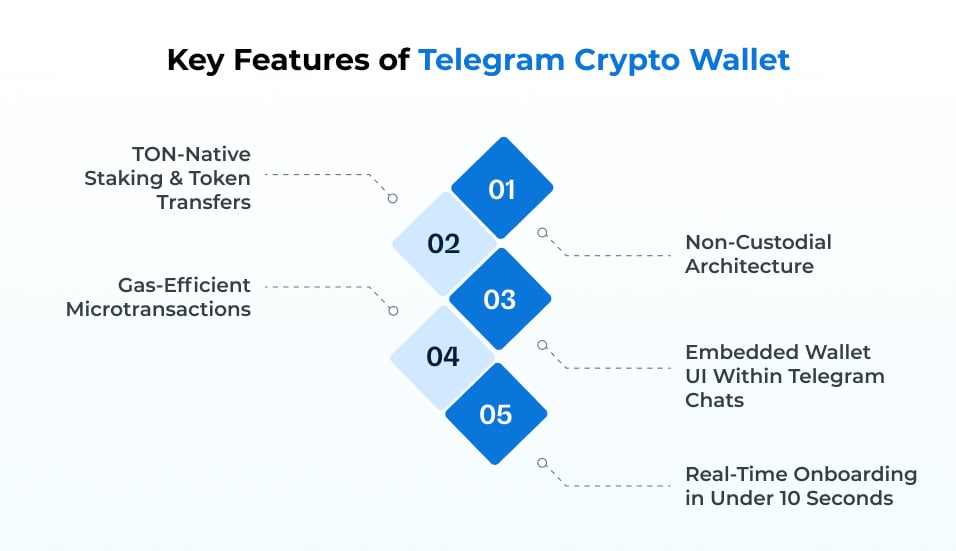
1. Non-Custodial Architecture
Telegram crypto wallet empowers users with full control over their assets—no centralized servers, no intermediaries. This ensures heightened privacy, user autonomy, and true ownership, aligning with the core values of Web3.
2. ON-Native Staking & Token Transfers
Users can stake TON directly within the wallet and earn passive rewards without needing third-party platforms. This native integration boosts both engagement and retention by keeping key DeFi functions within the messaging ecosystem.
3. Embedded Wallet UI Within Telegram Chats
With the wallet seamlessly integrated into Telegram’s interface, users can send, receive, and manage tokens directly from their chat screen, without switching apps. This dramatically improves user experience and increases wallet utility.
4. Gas-Efficient Microtransactions
Built on the TON blockchain, the cryptocurrency wallet development solution supports low-cost transactions, making it ideal for micropayments, tipping, and everyday use. This opens doors for mass adoption where cost has traditionally been a barrier.
5. Real-Time Onboarding in Under 10 Seconds
New users can activate their wallet development solution in seconds through a frictionless onboarding process that doesn’t require complex setups or memorization of a seed phrase, bridging the Web2-to-Web3 experience gap.
6. Biometric Authentication & Secure Key Management
The crypto wallet development solution includes fingerprint/face ID support along with encrypted key storage, ensuring both security and convenience for users managing sensitive crypto assets on their mobile devices.
7. In-Chat Crypto Swaps
Users can instantly swap supported tokens directly from the Telegram interface. This built-in DEX functionality reduces reliance on external apps and keeps liquidity flowing within the platform.
8. Decentralized Identity (DID) Integration
Future-ready wallets like Telegram’s are exploring support for decentralized identity standards, allowing users to authenticate, interact, and manage access across platforms using their wallet as a Web3 passport.
9. TON DNS for Human-Readable Wallet Addresses
Instead of long cryptographic strings, users can interact using usernames or simple handles thanks to TON DNS. This boosts usability and eliminates friction in peer-to-peer payments.
10. Cross-Device Synchronization
The Telegram cryptocurrency wallet ensures consistent access across devices, making it possible to switch between desktop, web, and mobile platforms without losing access or transaction history.
Every one of these attributes reflects the contemporary demands of Web3 users, who now consider security, usability, speed, and native integration to be necessary rather than optional. In order to assist companies in creating next-generation wallets that can rival those of Web3 industry leaders, a prominent cryptocurrency wallet development company incorporates these standards into each wallet project.
The New Web3 Trends of Crypto Wallet Integration
The lines between chatting, spending, and sharing online are quickly fading. Crypto wallets aren’t just standalone tools anymore; they’re becoming part of the apps people already use every day. This shift is transforming the way digital value is handled, making it easier to send, receive, and interact with cryptocurrency in real-time.
Crypto Wallet Integration in Messaging Apps
Telegram’s recent launch of a crypto wallet development solution marks a major step in how financial tools are being woven into everyday communication. Users can now send and manage digital assets without leaving their chats, expanding Telegram’s functionality beyond messaging.
Blending cryptocurrency wallets directly into conversations makes the process feel more natural and less intimidating, especially for those new to Web3. As this strategy gains traction, wallet integration is likely to become a standard feature in messaging apps, changing the way people interact with technology and finance.
The Rise of Social Feed + Wallet Fusion
The way cryptocurrency wallet development solutions are beginning to integrate into social media platforms is one of the most exciting developments in Web3 at the moment. By enabling users to send tips, receive rewards, and even participate in community-led projects directly from their social feeds, wallets are evolving from stand-alone tools to becoming an integral part of the content experience.
Numerous opportunities are being made possible by this trend: DAOs can operate with wallet-based governance, social tokens can represent individual or collective value, and creators can earn cryptocurrency within the app. Even basic functions like tipping and pay-to-access content are getting easier to use and more integrated into the platforms that users are already familiar with. For platforms, this mix of content and wallet functionality isn’t just cool; it’s a smart move. It helps keep users engaged, opens new ways to make money, and prepares the product for where digital communities are heading next.
How to Build a Telegram-Style Crypto Wallet for Your Business?
A simplified crypto wallet development process that combines cutting-edge blockchain functionality with an easy-to-use user interface is necessary to create a cryptocurrency wallet in the vein of Telegram. Real-time transactions, multi-chain operations, and decentralized asset control are supported by the process’s modular and compliant architecture. The following are the essential steps in creating a crypto wallet that is both high-performing and reminiscent of Telegram:
Step 1: Custom Wallet UI/UX Tailored to the Application Environment
In order to guarantee seamless navigation, quicker transaction execution, and brand alignment, a responsive and simple interface is created. The focus is on providing wallet status indicators, real-time feedback, and a simple visual interface that builds user confidence.
Step 2: Multi-Chain Support for Cross-Network Interoperability
Numerous blockchain networks, including TON, Ethereum, BNB Chain, and Polygon, are supported by the wallet’s architecture. This guarantees token-based ecosystem scalability, smooth cross-chain interactions, and wide asset coverage.
Step 3: Web3-Native Functionalities Embedded by Design
Direct access to DeFi capabilities and on-chain activities is made possible by the integration of Web3 functions, such as staking, in-wallet token swaps, smart contract execution, and decentralized identity (DID).
Step 4: Robust Security Infrastructure with Compliance Readiness
Advanced encryption standards are applied for key management, transaction signing, and secure storage. Features such as biometric authentication, hardware isolation, and secure enclaves are included to meet enterprise-grade security demands.
Step 5: Compliant Wallet Architecture Aligned with U.S. Regulations
The architecture was created to abide by regional licensing requirements as well as financial regulations like FinCEN guidelines and KYC/AML mandates. Regulatory alignment is ensured by integrating identity verification and activity monitoring.
Step 6: Modular Codebase for Scalable Feature Expansion
Future additions like NFT integration, more blockchain support, and dApp connectors can be made with a modular framework without interfering with the wallet’s current functionality.
Step 7: Instant Wallet Activation with Real-Time User Onboarding
Users can instantly activate wallets within the host platform thanks to a simple onboarding process, which lowers friction and increases adoption. Accessibility for non-technical users is increased by seedless configurations and social recovery choices.
While preserving security, compliance, and scalability, this multi-layered crypto wallet development framework guarantees that the finished product will satisfy the demands of contemporary Web3 users. In the highly competitive world of digital finance, a wallet similar to Telegram that is constructed with these elements can boost user growth, transaction volume, and brand distinction.
Regulatory View: Launching Crypto Wallets in the U.S. Market
The U.S. market offers high-growth opportunities for crypto wallet development solution adoption, but regulatory complexity is a major consideration. Any platform aiming to build and launch a Telegram-style crypto wallet must align with federal and state laws governing virtual assets. Businesses are expected to implement robust AML/KYC frameworks to prevent misuse, along with data protection and reporting protocols. Multi-state operations may trigger individual licensing requirements, and regulatory scrutiny is heightened when dealing with crypto wallet services that involve custodianship, token swaps, or fiat gateways.
Key U.S. Regulatory & Compliance Bodies/Standards:
- FinCEN (Financial Crimes Enforcement Network)
- SEC (Securities and Exchange Commission)
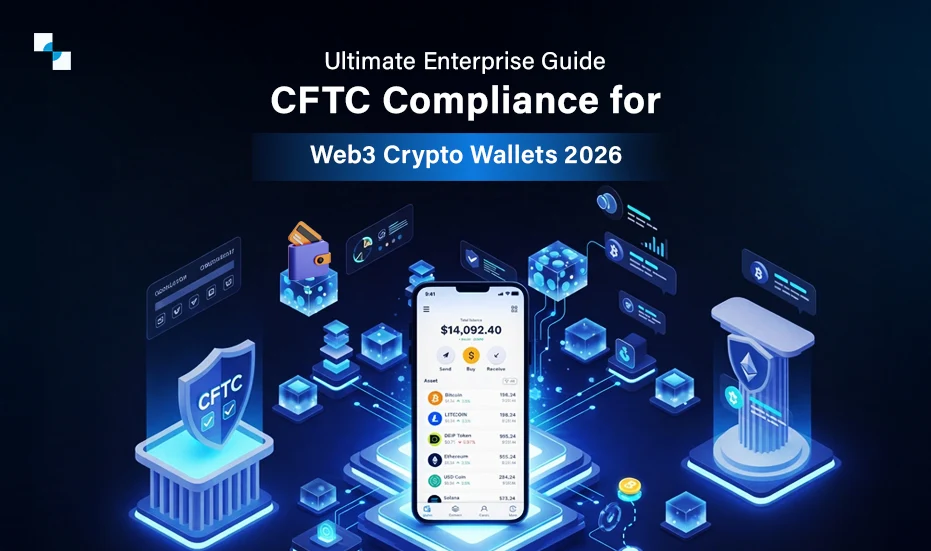
- CFTC (Commodity Futures Trading Commission)
- Bank Secrecy Act (BSA)
- Money Transmitter License (MTL)
- BitLicense (New York)
- SOC 2 Type II
- ISO/IEC 27001
- PCI-DSS
Launching a cryptocurrency wallet like Telegram’s crypto wallet product in the U.S. demands a proactive, compliance-first approach to ensure legality, credibility, and market scalability.
Ready to Launch Your Own Telegram Crypto Wallet? Connect With Antier
Telegram’s launch of a cryptocurrency wallet in the US is more than just a product achievement; it is a watershed moment in the history of digital finance. The fact that 87 million people are now using Web3 tools within a messaging app raises the threshold for wallet technology in terms of security and usability. Competing platforms must now pivot to integrate scalable, compliant, and user-focused wallet infrastructure.
The adoption of cryptocurrency will take place as businesses deliver wallets as part of a product, not as standalone tools. Businesses or enterprises that seize this opportunity have the potential to completely transform the landscape. Hiring a blockchain wallet development company allows businesses to launch customizable, compliance-focused, high-performance wallets in real time, making them faster and smarter. The issue is not whether a platform requires a wallet anymore. Rather, it is how fast a wallet can go live and how competitively it can be deployed. Thus, for any business willing to launch their crypto wallet faster and smoothly, our firm offers white-label crypto wallet services, where the investors can easily launch their solutions in just 2-3 weeks.
Connect with us today!