





AI Summary
- Cryptocurrency development involves designing and launching digital currencies using blockchain technology.
- This blog post explores the evolution of cryptocurrencies, the steps involved in creating one, and the various types of cryptocurrencies businesses can develop.
- It discusses the importance of blockchain networks, smart contracts, and tokenomics in the development process.
- The post also highlights the reasons why businesses are creating their own cryptocurrencies, such as decentralized payments and community incentives.
- Furthermore, it provides a step-by-step guide on how to create a cryptocurrency, emphasizing the significance of technologies like blockchain frameworks, smart contract languages, and security tools.
Cryptocurrency development refers to the process of designing, building, and launching a digital currency using blockchain technology. It involves creating secure token structures, writing smart contracts, selecting a blockchain network, and building the supporting ecosystem required for transactions, governance, and scalability.
Over the past decade, cryptocurrencies have evolved from experimental digital assets to powerful financial and technological tools. Today, startups, fintech companies, gaming platforms, and enterprises are launching their own cryptocurrencies to enable decentralized payments, incentivize users, and build token-driven ecosystems.
This guide explains how to create your own crypto coin, the technologies involved, the cost of building a digital currency, and the steps businesses follow to launch crypto projects in 2026.
What Is Cryptocurrency Development?
Coin development is the technical process of creating blockchain-based digital assets that can be transferred, stored, and verified on decentralized networks.
According to CoinMarketCap data, the global crypto ecosystem includes more than 36 million cryptocurrencies, with a total market capitalization of around $2.3 trillion as of 2026. This rapid expansion highlights the growing demand for blockchain-powered financial systems, dApps (decentralized applications), and tokenized digital economies.
A typical cryptocurrency system includes:
- Blockchain infrastructure
- Token or coin architecture
- Smart contracts
- Consensus mechanisms
- Wallets and transaction interfaces
These components work together to ensure that digital assets can be securely created, distributed, and exchanged without relying on centralized authorities.
Modern crypto coin development often involves multiple blockchain ecosystems. These networks can be broadly categorized into EVM-compatible (Ethereum Virtual Machine) and non-EVM chains, each offering unique benefits in scalability, security, and developer tooling.
| Blockchain | Type | Primary Language | Key Strength / Use Case |
|---|---|---|---|
| Ethereum | EVM | Solidity | Largest smart contract ecosystem and DeFi hub |
| BNB Chain | EVM | Solidity | Low transaction fees and strong DeFi adoption |
| Polygon | EVM (Layer 2) | Solidity | Scalable infrastructure for dApps and gaming |
| Avalanche | EVM | Solidity | High throughput and customizable subnets |
| Arbitrum | EVM (Layer 2) | Solidity | Optimistic rollup scaling for Ethereum |
| Optimism | EVM (Layer 2) | Solidity | Low-cost Ethereum transactions |
| Base | EVM (Layer 2) | Solidity | Fast-growing developer ecosystem |
| Solana | Non-EVM | Rust | Extremely high transaction throughput |
| Aptos | Non-EVM | Move | Parallel execution and high scalability |
| Sui | Non-EVM | Move | Object-centric architecture for speed |
| Cosmos | Non-EVM | Go | Cross-chain interoperability via IBC |
| Polkadot | Non-EVM | Rust | Multi-chain architecture using parachains |
Each blockchain ecosystem offers different trade-offs in performance, security, developer tools, and ecosystem support. Choosing the right network is an important step when working with a crypto coin development company, as it influences scalability, transaction costs, and long-term project growth.
Why Businesses and Startups Are Creating Their Own Cryptocurrencies
Many organizations are exploring cryptocurrencies because digital assets enable entirely new economic models. Businesses can build decentralized ecosystems where value can be transferred, rewarded, and managed without relying on traditional financial intermediaries. As adoption continues to grow, cryptocurrencies are being used for payments as well as for community engagement, platform incentives, and digital ownership models.
Some of the most common reasons businesses launch cryptocurrencies include:
- Decentralized Payments: Crypto tokens allow instant global transactions without traditional banking intermediaries. Businesses can facilitate faster payments, reduce transaction fees, and enable borderless financial interactions across digital platforms.
- Community Incentives: Projects often use tokens to reward users, creators, or contributors within their ecosystems. These incentives help build active communities and encourage long-term participation in the platform.
- DeFi Integration: Cryptocurrencies power DeFi applications that support activities such as lending, staking, liquidity provision, and decentralized trading. This allows projects to create financial services directly within their ecosystems.
- Tokenized Business Models: Companies can build token-driven ecosystems where digital assets represent platform access, rewards, governance rights, or participation in decentralized networks. This approach allows businesses to align incentives between users, developers, and stakeholders.
As a result, the rise of tokenized platforms and dApps has made cryptocurrency creation an important strategy for many startups, Web3 platforms, and technology-driven businesses.
Top 6 Types of Cryptocurrencies Businesses Can Create
Cryptocurrencies can serve different purposes depending on how they are designed and the ecosystem they support. Understanding the major types of cryptocurrencies helps businesses determine the most suitable model for their project.
1. Payment Cryptocurrencies
Payment cryptocurrencies are designed to function as digital money that enables peer-to-peer transactions across decentralized networks.
Examples include:
- Bitcoin
- Litecoin
- Bitcoin Cash
These cryptocurrencies focus on fast, secure, and borderless financial transactions.
2. Utility Tokens
Utility tokens provide access to specific products or services within a blockchain ecosystem.
For example, they may allow users to:
- Access platform features
- Pay for services
- Unlock premium functionalities
Many blockchain platforms launch utility tokens to power decentralized applications.
Not Sure Which Type Of Cryptocurrency Fits Your Project?
3. Governance Tokens
Governance tokens allow holders to participate in decision-making processes within decentralized platforms.
Token holders may vote on:
- Protocol upgrades
- Ecosystem changes
- Treasury allocations
This model is commonly used in decentralized finance platforms.
4. Stablecoins
Stablecoins are cryptocurrencies designed to maintain a stable value by being pegged to real-world assets such as fiat currencies.
Examples include:
- USDT
- USDC
- DAI
Stablecoins are widely used for trading, payments, and decentralized finance applications.
5. Asset-Backed Tokens
Asset-backed tokens represent ownership or value linked to real-world assets.
These may include:
- Real estate
- Commodities
- Financial assets
Tokenization allows these assets to be managed and transferred using blockchain technology.
6. Meme Coins
Meme coins are community-driven cryptocurrencies that often originate from internet culture or viral trends.
Examples include:
- Dogecoin
- Shiba Inu
While many meme coins start as community experiments, some evolve into large ecosystems with active communities.
How to Create a Cryptocurrency (Step-by-Step)
Launching a crypto requires a structured development process that combines:
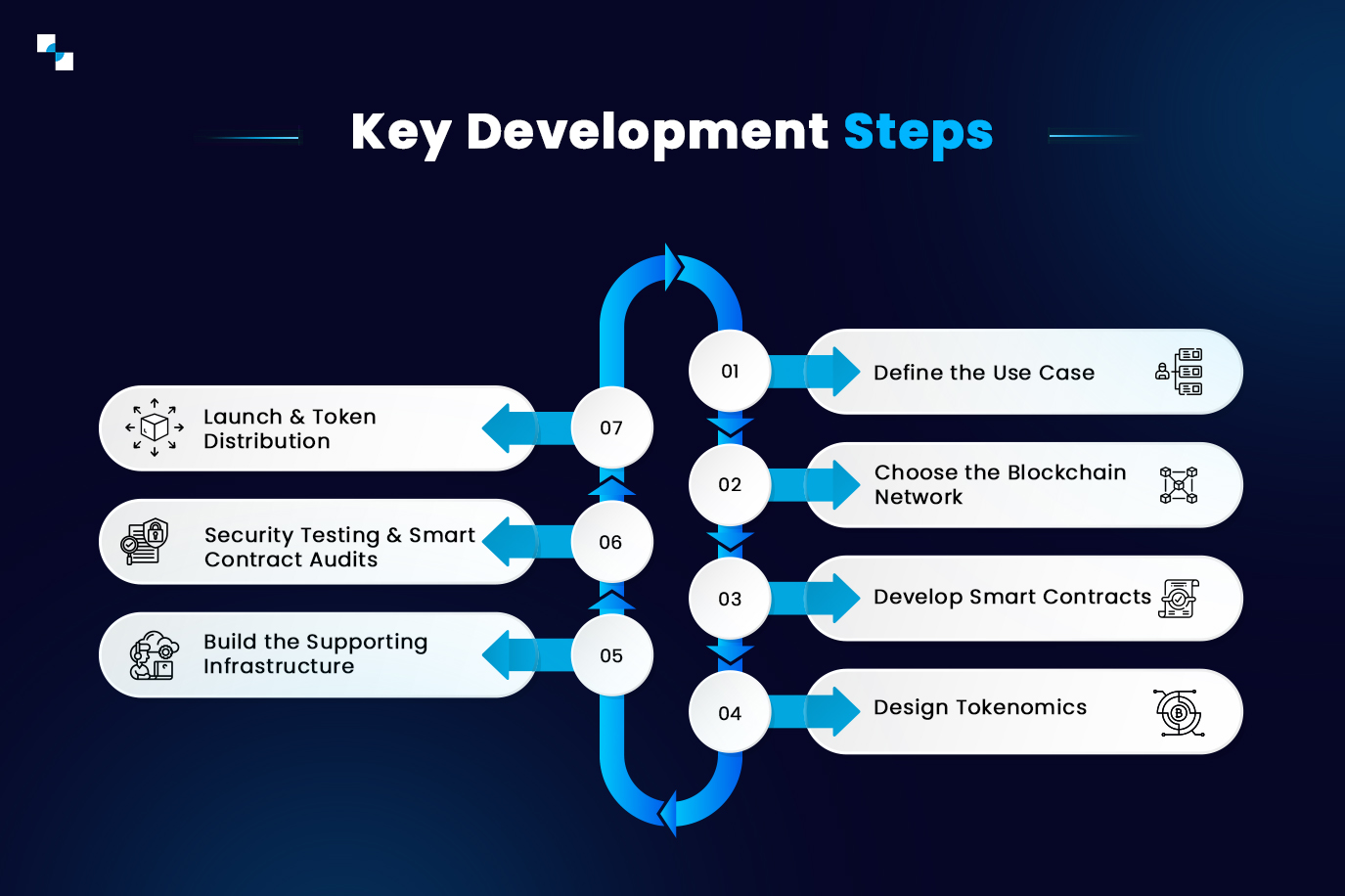
- Define the Use Case
The first step is identifying the purpose of the cryptocurrency and the problem it aims to solve. The use case determines the technical architecture and token design.
Common types of tokens include:
- Payment tokens
- Governance tokens
- Utility tokens for platforms
- Ecosystem reward tokens
Some coin development projects now use AI-driven market analysis tools to evaluate demand, analyze token models, and refine project strategies before development begins.
- Choose the Blockchain Network
The blockchain network determines how the cryptocurrency operates, including transaction speed, security, and scalability. Developers may also use AI-assisted analytics tools to compare network performance metrics such as transaction throughput, network congestion, and fee structures.
- Develop Smart Contracts
Smart contracts are self-executing programs that define how tokens are created, transferred, and managed on the blockchain.
Examples include:
- ERC-20 tokens on Ethereum
- BEP-20 tokens on Binance Smart Chain
These contracts control essential functions such as token minting, transfers, and governance rules. Because smart contracts operate autonomously, they must be carefully coded and audited to avoid vulnerabilities. AI tools are increasingly being used to assist developers in detecting smart contract vulnerabilities and potential security flaws during development.
- Design Tokenomics
Tokenomics defines the economic structure of a cryptocurrency and influences how the ecosystem grows.
Key elements include:
- Total token supply
- Distribution strategy
- Incentive mechanisms
- Governance structure
Some blockchain projects use AI-driven simulation tools to model different token distribution strategies and predict their long-term economic sustainability.
- Build the Supporting Infrastructure
A successful cryptocurrency requires an ecosystem that allows users to interact with the token. This infrastructure often includes:
- Crypto wallets
- Blockchain explorers
- Liquidity mechanisms
- Exchange integrations
AI-powered analytics platforms can also help projects monitor user activity, detect anomalies, and improve ecosystem performance.
- Security Testing & Smart Contract Audits
Security is one of the most critical aspects of development. Projects must perform comprehensive testing before deployment. Common security practices include:
- Smart contract audits
- Penetration testing
- Blockchain security reviews
Advanced security teams may use AI-based vulnerability scanning tools to identify potential threats and reduce risks before launch.
- Launch and Token Distribution
The final stage involves deploying the token on the blockchain and distributing it to the community or investors. Common launch models include:
- ICO (Initial Coin Offering)
- IDO (Initial DEX Offering)
- Ecosystem reward distributions
- Private investor allocations
A well-planned launch strategy helps ensure liquidity, adoption, and long-term ecosystem growth.
While these steps outline the core process of launching a digital asset, executing them effectively requires strong technical expertise and blockchain experience. This is why many startups and businesses collaborate with an experienced crypto coin development company when bringing their cryptocurrency to market.
Discover the 7 key insights behind building a successful cryptocurrency.
Technologies Powering Modern Crypto Coin Development
Modern development relies on a combination of blockchain infrastructure, smart contract frameworks, security tools, and data technologies that enable scalable and secure digital asset ecosystems.
1. Blockchain Frameworks and Protocols
The foundation of any cryptocurrency is the blockchain network that records transactions and maintains the distributed ledger.
Common blockchain technologies include:
- EVM – the execution environment used by many Ethereum-compatible networks
- Solana Runtime – designed for high-throughput decentralized applications
- Cosmos SDK – a modular framework for building custom blockchains
- Substrate – a flexible framework used to build blockchains within the Polkadot ecosystem
These languages allow developers to implement token standards, automate transactions, and build decentralized applications.
2. Token Standards
Token standards define how digital assets operate within a blockchain ecosystem.
Common standards include:
- ERC-20 – the most widely used token standard on Ethereum
- ERC-721 – used for non-fungible tokens (NFTs)
- BEP-20 – the token standard used on Binance Smart Chain
In many cases, projects implement token standards like ERC-1155, TRC-20, and SPL tokens to ensure compatibility across various blockchain ecosystems.
3. Smart Contract Languages
Smart contracts define how tokens behave and how transactions are executed on the blockchain.
Developers commonly use programming languages such as:
- Solidity – widely used for Ethereum and EVM-based networks
- Rust – preferred for performance-focused blockchains like Solana
- Vyper – a Python-like language designed for secure smart contracts
These languages allow developers to implement token standards, automate transactions, and build decentralized applications.
4. Wallet and Infrastructure Integration
Cryptocurrency platforms must integrate with digital wallets that enable users to securely store and transfer assets.
Popular wallet integrations include:
- MetaMask
- Trust Wallet
- Phantom
- WalletConnect
Wallet compatibility improves accessibility and ensures seamless interaction with blockchain networks.
5. AI and Data Analytics Tools
Artificial intelligence is increasingly being used to enhance cryptocurrency ecosystems and improve operational efficiency.
AI technologies can support:
- Blockchain data analytics
- Fraud detection and transaction monitoring
- Smart contract vulnerability detection
- Predictive market insights
By analyzing blockchain data and user activity patterns, AI-driven tools help projects improve security, optimize token ecosystems, and detect potential risks.
6. Security and Smart Contract Auditing Tools
Security is a critical component of cryptocurrency development. Specialized tools help identify vulnerabilities before deployment.
Common tools include:
- MythX – smart contract security analysis
- Slither – static analysis framework for Solidity
- OpenZeppelin libraries – secure smart contract templates
These tools help developers reduce risks and strengthen the reliability of blockchain applications.
How Much Does Cryptocurrency Development Cost?
The scope of crypto development can vary significantly depending on the project’s goals, architecture, and functionality. From creating a simple token to building a full blockchain ecosystem, each project requires different levels of technical design, security measures, and infrastructure.
Several factors influence the development process, including:
- Blockchain Network Selection: The choice of blockchain affects scalability, transaction efficiency, and overall system architecture.
- Smart Contract Architecture: The complexity of smart contracts determines how the cryptocurrency behaves, including token distribution, governance mechanisms, and automated transactions.
- Security and Auditing Requirements: Ensuring the reliability of smart contracts and blockchain infrastructure requires comprehensive security testing and professional audits.
- Platform and Ecosystem Integrations: Many cryptocurrency projects integrate with wallets, exchanges, decentralized applications, and other blockchain services to enhance accessibility and usability.
Because cryptocurrency development involves multiple technical layers, businesses often collaborate with experienced development teams to ensure their digital assets are secure, scalable, and ready for real-world deployment.
Conclusion
Creating a cryptocurrency is no longer limited to large technology firms or early blockchain innovators. Today, startups, fintech platforms, and digital businesses are exploring cryptocurrency development to power decentralized payments, build token-driven ecosystems, and unlock new digital economies. However, building a secure and scalable cryptocurrency requires careful planning, strong blockchain expertise, and the right development strategy. Partnering with an experienced cryptocurrency development company can help transform a concept into a fully functional digital asset while ensuring security, scalability, and seamless ecosystem integration.
With extensive experience in blockchain engineering and token development, Antier works with startups and enterprises to design, develop, and launch secure cryptocurrency projects, helping turn innovative blockchain ideas into practical and scalable solutions. Ready to build your own cryptocurrency? Connect with Antier’s experts today and take the first step toward launching your blockchain-powered digital asset.
Frequently Asked Questions
01. What is cryptocurrency development?
Cryptocurrency development is the process of designing, building, and launching a digital currency using blockchain technology, which includes creating secure token structures, writing smart contracts, and establishing the necessary ecosystem for transactions and governance.
02. What components are typically included in a cryptocurrency system?
A typical cryptocurrency system includes blockchain infrastructure, token or coin architecture, smart contracts, consensus mechanisms, and wallets and transaction interfaces to ensure secure creation, distribution, and exchange of digital assets.
03. What are EVM-compatible and non-EVM blockchain networks?
EVM-compatible networks, like Ethereum and BNB Chain, support the Ethereum Virtual Machine and offer benefits in scalability and developer tooling, while non-EVM chains provide alternative solutions with unique advantages for specific use cases in cryptocurrency development.