


AI Summary
- The blog post delves into the evolution of crypto exchanges towards becoming global fintech platforms through the integration of stablecoin payment rails.
- It discusses the transformative impact of stablecoins on crypto exchange software development, highlighting benefits such as liquidity enhancement, trading efficiency, expanded services beyond trading, diversified revenue streams, and improved user acquisition and retention.
- The post emphasizes the importance of stablecoin rails for enterprise use, detailing the technology underpinnings required for global-scale institutional finance.
- It concludes by advocating for the prioritization of stablecoin rail integration in crypto exchange development and recommends partnering with Antier for expertise in building or upgrading digital asset exchanges with stablecoin payment infrastructure.
The Evolution of Crypto Exchanges and the Rise of Stablecoins
Gone are the days when crypto exchange software served solely as venues for buying, selling, and trading bitcoin and altcoins. Breaking through the moulds, these platforms have transcended beyond their primary roles of enabling price discovery and liquidity for a volatile, nascent asset class. Specifically, following the retail adoption of tokenized cash (popularly known as stablecoins), digital asset trading platforms are emerging as payment rails.
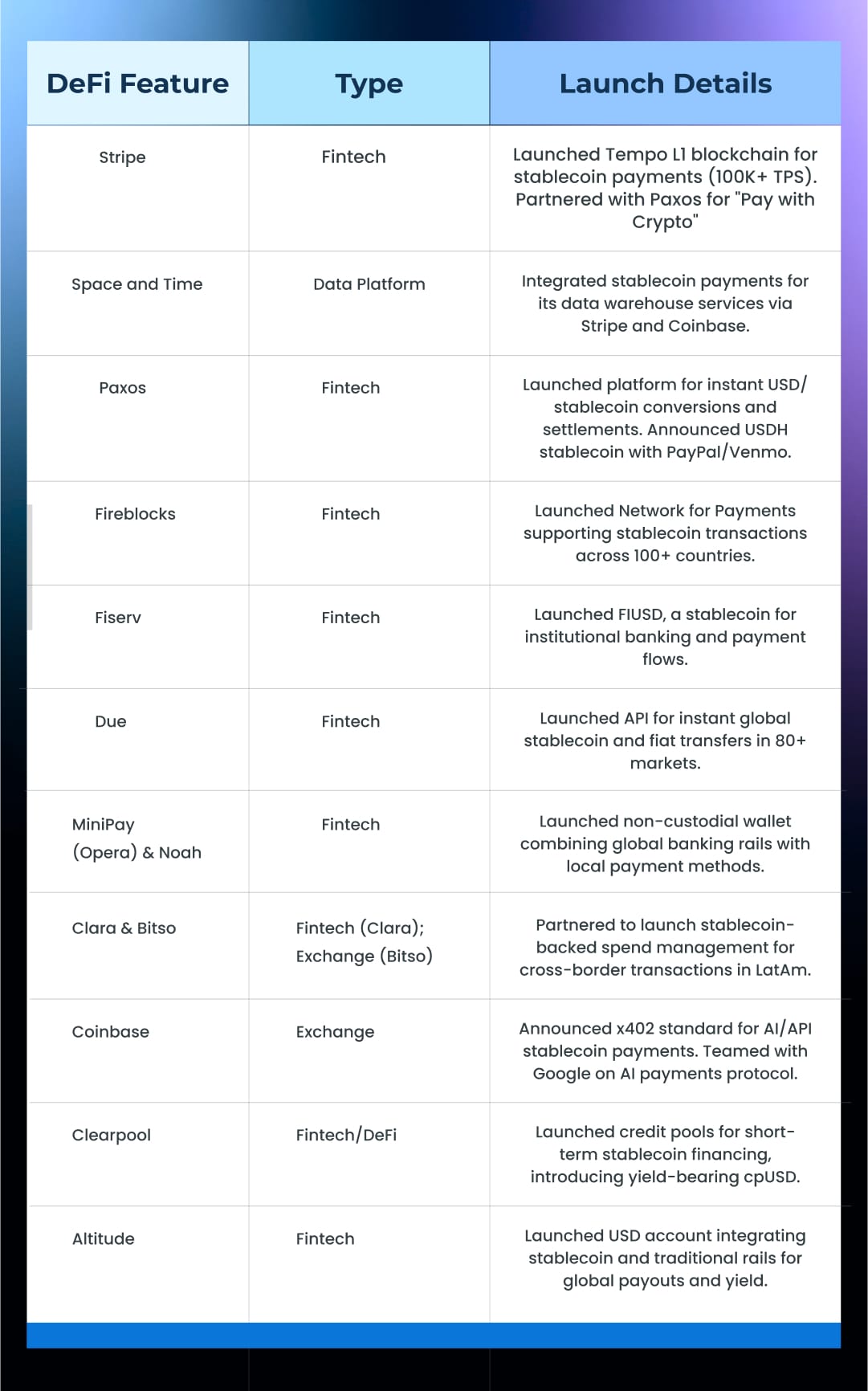
Recently, Bitso reported a stablecoin adoption explosion in Latam during H1 2025. Several other reports highlighted a surge in institutional activity around stablecoins after the US’s Genius Act, MiCA stablecoin regime, and other regional laws. So, if you’re planning your crypto exchange platform development or upgrading your existing platform, integrating stablecoin rails is table stakes. It positions your exchange as a global fintech platform that attracts institutional and enterprise adoption, which extends far beyond being just a trading venue. enterprise use cases that drive sustainable growth.
What Are Stablecoin Payment Rails and Why Do They Matter for Crypto Exchanges?
A stablecoin payment rail is basically an infrastructure that moves stablecoins across parties and platforms. It could be an interface built within a crypto exchange software, lending, or remittance platforms, providing a faster, cheaper, and more reliable alternative to traditional banking rails like ACH, SWIFT, or SEPA.
Unlike other efficiency upgrades, this shift expands cryptocurrency exchanges’ role in the global financial system. In simple words, embedding stablecoin rails means moving beyond the simple trading interfaces and becoming:
- Settlement hubs for global merchant and remittance transactions.
- Liquidity gateways that seamlessly bridge crypto and fiat.
- Multi-Functional Fintech platforms with trading, payment, treasury management, and lending services.
Also read >>> Institutional Grade DEX Development
These smart contract-based faster payment pipes allow programmable, transparent, and easily auditable transfer of tokenized cash. While traditional banks are beginning to experiment with stablecoin integrations, the early adoption is being driven by crypto exchange platforms and fintechs positioning themselves as global fintech platforms.
How Do Stablecoins Transform the Role of Crypto Exchanges?
Stablecoin payment rails are going to transform crypto exchange software development dynamics. It’s no more just about stabilizing trading pairs. Stablecoins as a major component of payment rails are now actually redefining the function of crypto exchange software in the following ways:
1. Enhancing Liquidity and Trading Efficiency
- Volatility Buffer: Traders can shift their funds into stablecoins to protect themselves from exposure to swings. This way, they stay protected without cashing out into fiat. Money stays within the crypto exchange software.
- Stable Trading Pairs: Tokenized cash provides a consistent base asset, deepening liquidity pools and reducing slippage across pairs.
- Faster Settlement: On-chain stablecoin transfers settle in seconds, compared to T+2 or longer in fiat rails.
- Lower Costs: Transaction costs are significantly reduced in stablecoin payment rails, which is particularly attractive to high-frequency traders and institutional desks.
Together, crypto exchange software development and stablecoin payment rail integration make platforms far more attractive to liquidity providers, market makers, and institutional traders.
2. Expanding Exchange Services Beyond Trading
- Cross-Border Payments: Crypto exchange software as stablecoin payment gateways can support instant, low-cost international transfers, bypassing correspondent banking systems.
- Treasury Management: A stablecoin payment rail turns a cryptocurrency exchange into a “digital corporate bank account” for enterprises with global reach, programmability, and yield options that legacy banking can’t match.
- Lending & Borrowing: Stablecoins can be safely used as collateral to borrow other assets, or as the currency that is lent out to earn yield. Unlike volatile crypto assets, stablecoins hold their value, which makes lending markets more stable and attractive to both retail and institutional users.
- Remittances: Crypto exchange software as remittance platforms offer users a faster and cheaper way to send money globally, especially in underserved markets.
3. Diversifying Revenue Models
- Transaction Fees: Stablecoin rails allow exchanges to collect fees on every payment, transfer, or remittance, creating consistent revenue beyond trading.
- Treasury Services: By offering corporate treasury management with stablecoin liquidity, exchanges generate recurring B2B income streams.
- Lending Yields: Stablecoin-based lending and borrowing create stable yield opportunities that exchanges can monetize more effectively than with volatile crypto assets.
- API Integrations: Crypto exchange software can charge institutions and fintechs for settlement and payment APIs, turning infrastructure into a revenue product.
4. Strengthening User Acquisition and Retention
- Frictionless Onboarding: With stablecoin rails, users don’t depend on banks in every geography. This lowers entry barriers for both retail and institutional clients, positioning crypto exchange software for mass adoption.
- 24/7 Settlement: Enterprises and traders benefit from always-on payments and transfers, unlike fiat rails that pause on weekends and holidays. This integration ultimately makes crypto exchange development more user-friendly and profitable.
- Platform Stickiness: Once exchanges’ clients (merchants) integrate their stablecoin-based payments or treasury operations into their workflow, they are less likely to switch to a competitor’s crypto exchange.
Also Read >>> POS Crypto Exchange Integration (2026): Build or Add Merchant Payments
What Technology Underpins Stablecoin Payment Rails for Enterprise Use?
This technology foundation is what makes stablecoin payment rails viable for global-scale institutional finance. The enterprise-grade infrastructure rests on:
- Blockchain Technology: Transparency, immutability, and trustless settlement.
- Security Protocols: Advanced encryption, custody frameworks, and multi-factor authentication.
- Scalability Solutions: Layer-2 systems, custom blockchains, or optimized architectures for high throughput.
- Compliance Integrations: AML/KYC Modules for Regulatory Alignment.
Transform your exchange into a fintech powerhouse
Stablecoin Payment Rails in Crypto Exchange Platform Development: A Strategic Imperative for Global Scale
Stablecoin payment rails are no longer optional for your crypto exchange development. They’re the backbone of the next-gen crypto exchange infrastructure.
- Without them, an exchange is just a local trading interface.
- With them, it becomes a global fintech platform, offering payments, liquidity, treasury, and institutional services.
This is why entrepreneurs and investors must prioritize stablecoin rails integration when building or upgrading a digital asset exchange.
Why Partner with Antier for Stablecoin Rail Integration?
Antier specializes in crypto exchange software development with stablecoin rails at the core. Our solutions empower:
- Startups to launch quickly using scalable, stablecoin-rails–enabled white label crypto exchange software.
- Entrepreneurs to build custom crypto exchanges with integrated stablecoin payment infrastructure.
- Financial institutions to embed crypto exchange, digital asset/ RWA settlement, payment, and treasury services into their platforms.
So why wait? Position your exchange as a global fintech hub built for institutional scale. Get in touch with Antier today to share your requirements.
Frequently Asked Questions
01. Are Stablecoin Payment Rails Safe for Exchanges and Users?
Yes, if implemented correctly. Safety comes from integrating fully backed stablecoins, enterprise-grade custody, and regulatory audits. Exchanges must use secure wallet infrastructure, insurance, and transparency to protect user funds. Done right, stablecoin rails reduce counterparty risks compared to volatile crypto, making them suitable for institutional flows.
02. How Do Stablecoin Rails Impact Compliance for Exchanges?
Stablecoin rails improve compliance by offering transparent, traceable on-chain transactions. Exchanges can embed AML/KYC modules, monitor flows in real time, and generate immutable audit trails for regulators. This helps meet legal requirements, reduces reputational risk, and builds institutional trust, positioning exchanges closer to financial-grade operational and regulatory standards.
03. Can Stablecoin Rails Help Exchanges Scale Globally?
Yes. Stablecoin rails eliminate regional banking dependencies, enabling fast, low-cost transfers across borders. They allow exchanges to onboard global users, settle transactions instantly, and expand into underserved markets without complex fiat integrations. This scalability positions exchanges as global fintech platforms, attracting institutions, enterprises, and traders with cross-border liquidity demands.