




AI Summary
- In a world where language barriers hinder accessibility and engagement in education, a multilingual metaverse platform offers a solution.
- By leveraging real-time AI translation and immersive virtual environments, this platform facilitates seamless communication and learning among individuals from diverse linguistic backgrounds.
- Features such as customizable virtual campuses, cross-cultural engagement tools, and AI-powered translation enhance the educational experience.
- Benefits include improved worldwide reach, enhanced student engagement, and seamless cross-border collaboration.
- Institutions can choose to integrate existing infrastructure with metaverse capabilities or build a platform from scratch based on their needs and budget.
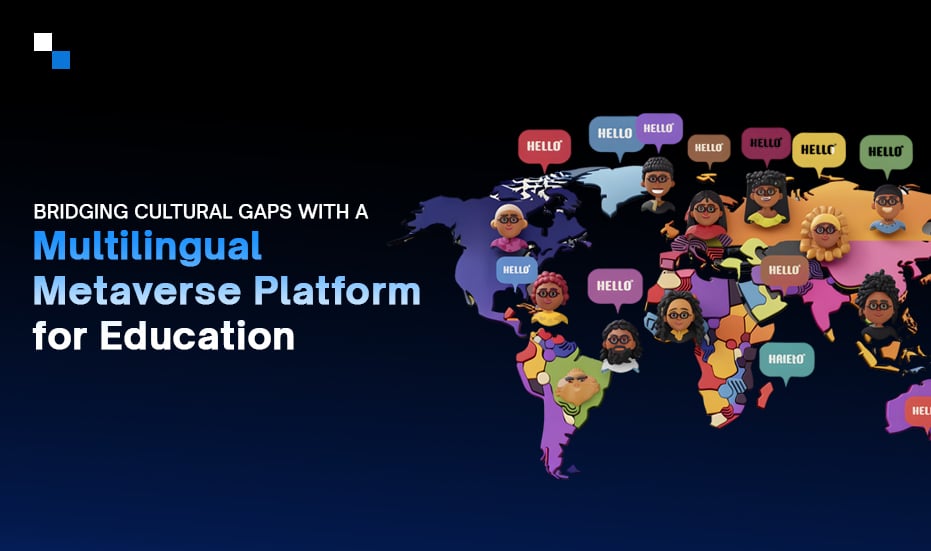
In today’s global world, schools try to reach multilingual learners, but language limitations create barriers to accessibility and engagement. Just imagine a metaverse platform for education in which students and teachers from multilingual backgrounds are able to engage freely, cooperate freely, and learn freely—where language does not pose an obstruction. A multilingual metaverse platform accomplishes this through the incorporation of real-time AI translation, localized interfaces, and immersive virtual learning environments.
With virtual learning platform development, organizations can design inclusive, engaging, and borderless educational environments suited for a global population.
Learn how the metaverse helps in enriching distance learning experiences in this blog.
What is a Multilingual Metaverse Platform
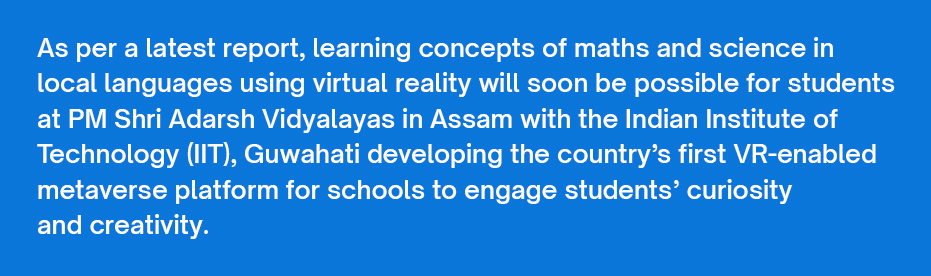
A multilingual metaverse platform is an interactive, language-neutral virtual environment where people from varied linguistic groups can communicate in real-time. Fueled by artificial intelligence-based language translation, speech recognition, and text-processing technologies, the platform facilitates unhindered communication among users from different parts of the world. These platforms are revolutionizing sectors such as education, commerce, and recreation by making interactive engagement possible without linguistic constraints.
Features of a Multilingual Metaverse Platform
In today’s global, borderless digital economy, educational institutions and organizations need more than a minimal virtual learning platform—they need an engaging metaverse platform for education that simulates physical learning yet bridges language and geographical divides. The most evolved multilingual metaverse solutions combine these five revolutionary capabilities to provide next-generation virtual learning platform development:
1. Seamless Multilingual Education with Real-Time AI Translation
Contemporary metaverse platforms for education employ NLP-driven translation that moves beyond simple interpretation to preserve subject-specific vocabulary and cultural context. This virtual learning innovation coordinates translated speech with avatar lip sync, allowing natural cross-language collaboration—vital for global corporate training and international academic programs.
2. Branded Learning Experiences with Customizable Virtual Campuses
Virtual learning platform creation now allows institutions to create digital replicas of physical campuses or imaginative learning spaces. These metaverse learning solutions accommodate full branding customization—from institutional color palettes to interactive mascot avatars—while providing fine-grained control over virtual space configurations and access permissions.
3. Cross-Cultural Engagement Tools for Global Collaboration
Top multilingual metaverse platforms feature:
- AI-driven multilingual chatbots offering 24/7 support
- Culture-aware moderation systems to prevent miscommunication
- Collaborative VR workspaces with shared 3D modeling tools
- Real-time multilingual polling and Q&A systems
4. Enterprise-Level Infrastructure for Scalable Virtual Education
Robust metaverse education platforms include:
- Adherence to international data protection standards (GDPR/ISO 27001)
- Blockchain-validated credentialing systems
- Sophisticated analytics monitoring 30+ engagement metrics
- Scalability for 10,000+ simultaneous users
5. Immersive Learning Experience Through VR/AR Integration
Innovative virtual learning platform development taps into game-engine technology for:
- Medical simulations with haptic feedback
- Engineering students collaborating on 3D prototypes
- Language immersion in culturally authentic environments
- Gamified cybersecurity training modules
Why Your Educational Institute Needs a Multilingual Metaverse Platform?
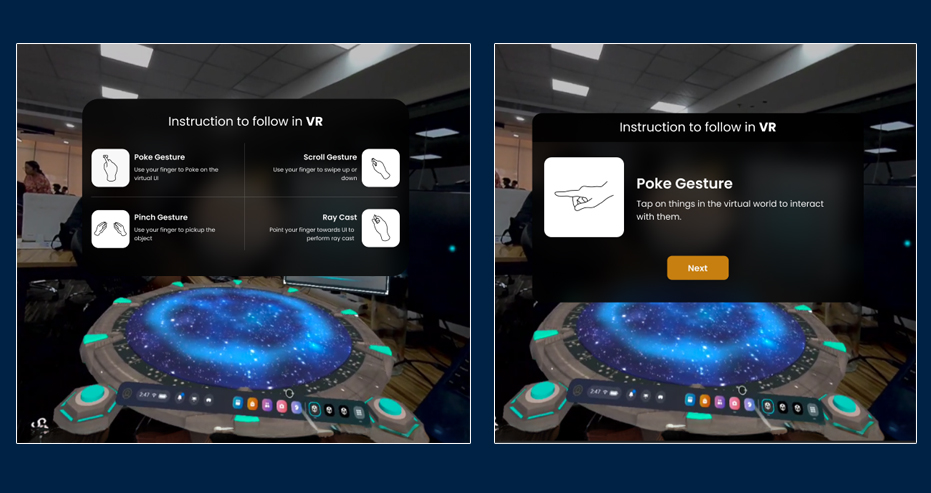
In the modern digital-first era, schools need to adapt to serve a globally diverse student population. Conventional learning models are challenged by language differences, reducing accessibility and interaction. A metaverse platform for education eliminates these constraints by providing an immersive, multilingual virtual environment where students and teachers from across the globe can interact freely. Through virtual learning platform development, schools can transform their teaching practices, making education more interactive, inclusive, and future-oriented.
Learn the top use cases of the metaverse for education in this blog.
1. Improved Worldwide Reach
Institutions of education are not restricted to geographic spaces anymore. An education metaverse platform allows schools, universities, and training institutions to go global with their educational courses available in many languages. It brings foreign students to these institutions, makes campuses culturally diverse, and allows these institutions to make a mark globally as centers for education.
2. Improved Student Engagement
Online learning practices traditionally do not involve a lot of interaction, leaving the student feeling isolated. A metaverse platform for education offers a highly interactive and immersive environment to learn where students are able to visit virtual campuses, undergo simulations, and learn through gamified experiences. Support for multiple languages means learners have the ability to navigate and interact using their own preferred language, augmenting overall engagement.
3. Seamless Cross-Border Collaboration
With virtual learning platform development, learners and teachers of varying linguistic backgrounds collaborate seamlessly. Real-time translation based on AI technology ensures effective communication in virtual classes, group conversations, and international research collaborations. This fosters cross-cultural learning, enabling learners to receive a variety of inputs and establish global networks.
4. AI-Powered Real-Time Translation
A metaverse platform for education combines AI-based translation technologies, providing instant and precise language translation for speech and text. Teachers and students can converse in real-time without language limitations, without the need for human translators or further language learning. This capability maximizes inclusivity and provides a smoother learning experience for everyone.
5. Localized Learning Content
Learning is most effective when it is presented in a language students comprehend best. Institutions can develop customized and localized learning materials such as textbooks, assessments, and interactive content through virtual learning platform development. This way, students can better understand complex topics, resulting in improved knowledge retention and academic performance.
6. Increased Accessibility & Inclusivity
An education metaverse platform makes learning available to all, including disabled students. Voice-to-text, text-to-speech, and sign language detection features offer special assistance to differently-abled students. This creates an inclusive education environment where all students, irrespective of their language or physical capacity, can learn and grow.
7. Competitive Advantage in the Education Industry
Organizations that embrace virtual learning platform development establish a technological superiority over conventional schooling paradigms. With a multilingual metaverse, colleges and institutions enhance their position as leaders in the digital age of education, increase student enrollments, and achieve recognition as future-oriented organizations. This not only enhances student registrations but also augments their worldwide reputation.
By adopting a multilingual metaverse platform, the educational sector can overcome language and geographical barriers, thereby producing a truly global, inclusive, and technologically innovative learning environment.
Cost to Integration or Building From Scratch
If schools are weighing the option to implement a metaverse platform for education, one of the key considerations is whether to integrate existing infrastructure and metaverse capability or build from the ground up. The integration cost varies according to levels of immersion needed, AI-facilitated multilingual support, and the degree of virtual learning platform development in order to meet organizational objectives. Adding a metaverse layer to an existing learning management system (LMS) is usually an affordable solution as it permits institutions to keep their existing learning framework intact while extending it with new virtual collaboration features, AI-based real-time translation, and experiential learning capabilities. Conversely, building a metaverse platform for education from ground up demands heavy investment in infrastructure, 3D content creation, blockchain security, and AI-driven automation.
Yet, it offers full customization, allowing institutions to design a distinctive, scalable, and future-proof learning environment. Although it might cost more in the short term, long-term advantages like lower operational costs, greater global accessibility, and increased student engagement make it an investment worth considering. Institutions need to assess their budgets, technical know-how, and vision for the long term in order to determine the best strategy.
Looking at the Bigger Picture
The introduction of virtual learning platform development to the education system is not merely about bridging language gaps—it’s about changing the face of the learning future.
An education metaverse platform promotes inclusivity, enabling institutions to serve students from different linguistic and cultural backgrounds while providing an immersive, interactive, and engaging experience.
Apart from education, metaverse-based learning also readies students for the digital-first economy, giving them the competencies to work in virtual environments, engage with AI-powered systems, and collaborate with others from different parts of the world. By embracing this technology transformation, institutions set themselves up to be leaders in the future of online education. The long-term advantages are felt far beyond classrooms, affecting research partnerships, corporate training initiatives, and even global partnerships. The metaverse isn’t an enhancement—it’s a requirement for institutions that want to stay current in a more globalized and digital world.
Future-Proof Your Institution with Antier
At Antier, we are experts in developing innovative metaverse platform for education solutions that meet the changing demands of educational institutions worldwide. Whether you require smooth integration with your current system or a completely customized virtual learning platform development, our blockchain, AI, and XR experts provide a scalable, immersive, and multilingual digital learning experience.
Empower your organization with a borderless, language-neutral, and future-oriented education model. Reach out to Antier today to learn how we can assist you in creating a world-class metaverse platform for education that fosters engagement, accessibility, and long-term success.