



AI Summary
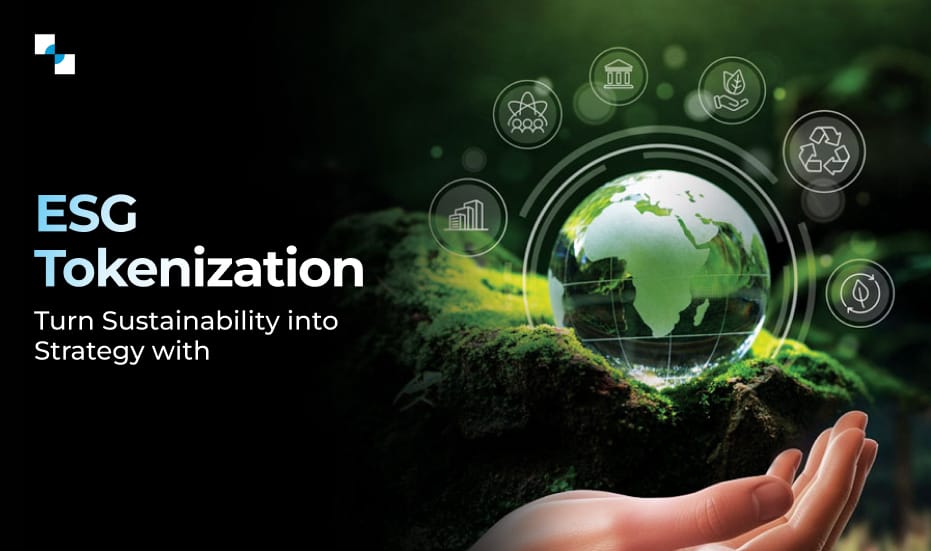
- ESG (Environmental, Social, and Governance) tokenization platforms are transforming sustainability principles into programmable constructs within blockchain ecosystems, offering a path to institutionalize ESG accountability in Web3.
- By embedding sustainability metrics into transaction layers, tokenized ESG investments evolve into self-auditing, transparent, and programmable financial instruments.
- This shift aligns financial logic with sustainability outcomes, turning ESG from a reporting framework into an operational mechanism.
- Market momentum indicates a convergence towards sustainable blockchain economies, with significant tokenization initiatives underway.
- Tokenized ESG assets provide verifiable impact data in real-time, introducing liquidity, risk-adjusted returns, and regulatory alignment.
ESG (Environmental, Social, and Governance) has shifted from ethical intent to a strategic necessity, yet in most cases, it remains a performative exercise rather than a measurable system of accountability. ESG tokenization platform development offers a corrective path by transforming ESG principles into programmable, auditable, and enforceable constructs within sustainable blockchain ecosystems. The critical question is whether tokenization can institutionalize ESG, embedding it into the code of Web3 rather than the language of annual reports. The outcome will hinge on three pillars: architectural design, regulatory precision, and governance integrity, essential for sustainable, trust-driven blockchain economies.
How ESG Is Redefining the Purpose of Tokenization Platforms?
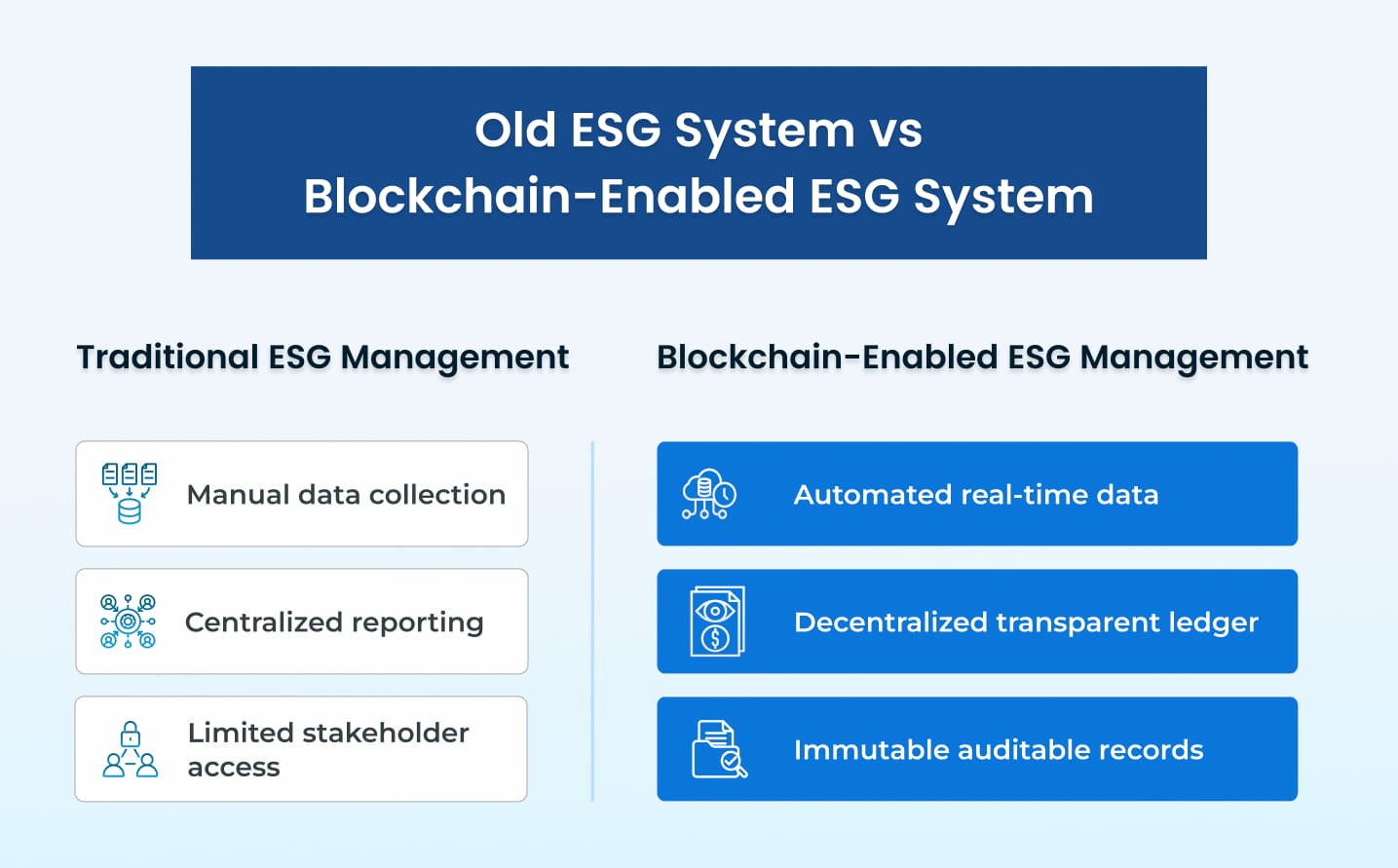
Tokenization platforms were once built to unlock liquidity and fractional ownership. Today, ESG has redefined its very purpose. Now the infrastructure is becoming accountable, where sustainability metrics are coded into the transaction layer itself. Through Tokenized ESG investments:
- Environmental performance, social outcomes, and governance integrity evolve from external audits into embedded logic.
- Ownership, value distribution, and compliance are algorithmic, transparent, and traceable on-chain.
- Sustainability principles can be expressed as protocols, embedded directly into the code and transaction logic of decentralized systems.
It enables the design of financial instruments that are self-auditing, transparent, and programmable in accordance with ESG key performance indicators. Tokenization introduces capabilities that traditional finance has struggled to deliver:
- Fractional participation in high-impact assets such as renewable energy projects, certified green real estate, and verified carbon offset programs.
- Real-time transparency of ownership, asset performance, and ESG impact, with every transaction and metric immutably recorded on-chain.
- Programmatic accountability, where smart contracts automatically enforce compliance, adjusting yields, imposing penalties, or triggering governance actions based on verifiable ESG data.
By aligning financial logic with sustainability outcomes, ESG in tokenized finance transforms ESG from a reporting framework into an operational mechanism.
Market Momentum: The Proof Is in the Numbers
The market is already validating this convergence. The Blubird–Arx Veritas initiative, for example, announced a tokenization pipeline exceeding US $32 billion in ESG-aligned assets, preventing nearly 394 million tonnes of CO₂ emissions. Simultaneously, leading analysts identify tokenized real-world assets as the next growth engine of decentralized finance, underpinning what many now call the sustainable blockchain economy.
This convergence of regulatory pressure, investor expectation, and technological capability is reshaping financial infrastructure. For businesses exploring ESG tokenization platform development, it is crucial to build systems that integrate sustainability as a measurable and enforceable core principle.
Transform Sustainability Goals into Measurable with ESG-Backed Asset Tokenization Platform
Why Investors Are Paying Attention to ESG Tokenization in 2025, and What Businesses Stand to Gain from It
In 2025, capital flows toward accountability. Investors are now seeking verifiable proof of impact, changing how financial instruments are structured, audited, and traded. ESG tokenization platform services are changing how value, trust, and sustainability intersect. Businesses that embed ESG principles into tokenized assets gain measurable advantages that extend beyond compliance and reporting.
Why Are Investors Moving First?
- Measurable Impact, Verified in Real Time: Traditional ESG investments rely on periodic reports and third-party audits. Tokenized ESG assets, however, store impact data directly on the blockchain. Each transaction carries verifiable proof, eliminating ambiguity and reducing the risk of “greenwashing.”
- Liquidity Meets Responsibility: Tokenization allows investors to enter and exit positions in ESG-compliant assets more fluidly, introducing liquidity to markets that were once opaque and illiquid. For example, carbon credits or renewable infrastructure stakes, once locked for years, can now be fractionalized and traded securely on blockchain-based marketplaces.
- Risk-Adjusted, Ethically Aligned Returns: By combining measurable ESG outcomes with yield structures coded into smart contracts, tokenized investments deliver both ethical value and performance predictability.
- Regulatory Alignment: With the EU’s Sustainable Finance Disclosure Regulation, the US SEC’s climate disclosure rules, and similar frameworks taking shape globally, tokenization provides a compliant architecture for impact tracking and disclosure, positioning investors ahead of the regulatory curve.
What Businesses Stand to Gain
- Access to Conscious Capital: Companies that tokenize verified ESG outputs attract a new class of investors, seeking performance and purpose.
Example: A solar energy firm can tokenize its renewable output, allowing investors to buy verified units of clean energy generation, creating recurring, impact-linked revenue. - Turning Impact Into an Asset Class: Businesses can transform every measurable sustainability metric into tradable value on blockchain.
Example: A real estate developer tokenizing its LEED-certified projects can open fractional participation to retail ESG investors globally. - Automated Compliance and Trust: Smart contracts can embed ESG KPIs directly into financial operations, automating reporting and ensuring no room for subjective interpretation or selective disclosure.
- Brand Integrity Through Proof: Each ESG claim becomes verifiable on-chain. That transparency strengthens market trust and brand authority.
How to Build an ESG Tokenization Platform: Architectural Considerations?
Below is a framework outlining how ESG in Web3 tokenization should be structured for technical, legal, and operational integrity.
1. Hybrid Chain Architecture| Public vs Private vs Consortium
Choose a blockchain having:
- A compliance-friendly layer where tokens operate (possibly private/permissioned or consortium) for regulated investors.
- An open-liquidity layer where tokens migrate for broader participation (public L2).
Governance logic that supports cross-chain interoperability (e.g., bridges, wrapped tokens) to enable asset mobility without sacrificing regulatory control.
2. Embedded ESG Smart Contracts|Contract-first Design
Instead of designing tokens first and ESG features later, start with ESG logic as part of smart contract design. For example:
- A “dividend token” that pays a variable yield based on verified environmental outputs.
- A “penalty mechanism” where tokens automatically reduce supply or yield if ESG targets are missed.
- A “governance token” tied to sustainability voting rights (e.g., token-holders vote only if KPIs are achieved).
3. Data & Oracle Infrastructure |Verifiable Impact
Reliable, tamper-resistant data is essential. Consider:
- Use of IoT sensors, satellite imaging, energy meters feeding oracles that update the chain.
- A data registry layer that records certifications tied to token metadata.
- A token metadata model that can be retrieved easily, making ESG data as transparent as token ownership.
4. Liquidity and Secondary Market Mechanics – Real Value
Liquidity design is often underestimated. Build for:
- Token-holder exit options: pre-defined secondary markets, partner exchanges, or bilateral trades.
- Liquidity incentives: e.g., yield enhancement for early retail participants, or bid-ask narrowing for institutional tranches.
- Compliance gating: Mechanisms that control the transfer of tokens across jurisdictions or investor classes without blocking liquidity.
- Fractional ownership: Using sub-tokens to divide exposure.
5. Modular Asset Plug-Ins
Architect modular plug-in modules so the platform can support multiple ESG asset types over time: This delivers reuse, lowers overhead, and attracts a broader investor base.
6. Lifecycle Modelling
Design the full lifecycle. For ESG assets, the “retirement” phase (e.g., carbon credit retirement) is as important as issuance. Make sure token contracts and platform UI support this full flow.
7. Governance & Audit Nodes
Build governance that involves multiple stakeholders. Use smart contracts to enforce audit triggers, e.g., “If the auditor does not verify in 12 months, control rights shift to token-holders” or “If data feed fails, token yield withheld.” This institutionalizes trust rather than relying on goodwill.
Where ESG Tokenization Delivers Real Business and Platform Value: Tangible Use Cases That Convert
- Tokenized Carbon Credits: Traditional carbon markets suffer from opacity, illiquidity, and limited investor trust. Tokenizing verified credits, each representing 1 tCO₂ equivalent, creates auditable, tradable digital assets. Platforms offering real-time dashboards of verified offsets and transparent secondary markets can attract both project originators and sustainability-driven investors.
- Sustainable Real Estate: Green-certified buildings (LEED/BREEAM) can be tokenized to represent ownership or revenue rights. Integrating energy performance and certification data into smart contracts makes each investment verifiable and liquid. With Tokenization Development Services powered by ESG, real estate managers can unlock capital; investors can access transparent, impact-linked yields.
- Renewable Infrastructure Financing: Solar and wind developers can tokenize revenue rights tied to verified energy output (kWh). Smart contracts adjust payouts automatically based on performance data, aligning investor returns with renewable efficiency.
- Sustainability-Linked Bonds: By linking bond coupons to ESG KPIs through programmable smart contracts, issuers prove accountability while investors enjoy a yield correlated with impact.
- Social Impact Projects: Education, healthcare, and microfinance portfolios can be tokenized to track and trade verified social outcomes, making inclusion measurable and investable.
Each of these models transforms ESG from an abstract narrative into an active, auditable business function, bridging purpose with profitability.
Monetization Strategies: How To Make an ESG Tokenization Platform Sustainable
ESG tokenization platforms are profitable engines of sustainability. Builders can create recurring revenue streams while driving measurable impact through:
- Issuance Fees: Charge asset originators for token creation, legal structuring, data validation, and onboarding. These fees form the foundation of early revenue while ensuring compliance-ready issuance.
- Transaction Fees: Collect micro-fees on every trade across primary and secondary markets. Active liquidity converts ESG assets into a continuous income source for the platform.
- Impact Data Monetization: Package and sell verified ESG performance metrics to asset managers, regulators, or insurers seeking transparent sustainability analytics.
- White-Label Licensing: License the platform infrastructure, token standards, dashboards, and KYC/AML modules to institutions entering the ESG asset space.
Embedding commercial logic within sustainability ensures economic durability, where every verified impact contributes to both societal good and steady revenue.
Tips To Overcome the Market Skepticism
Market skepticism toward ESG tokenization development services persists but can be resolved through architecture. Here is how!
- On-Chain Transparency: Immutable blockchain records ensure every ESG claim, from carbon offset to impact yield, is verifiable and tamper-proof.
- Automated ESG Reporting: Smart contracts collect and publish real-time performance data, eliminating selective disclosure and building consistent investor trust.
- Compliance Built into Code: Jurisdiction-aware token standards enforce KYC, AML, and securities regulations by design, creating investor and institutional confidence.
- Verified Data Infrastructure: Integration with oracles, IoT sensors, and accredited auditors delivers indisputable proof of sustainability performance.
Bring Transparency, Liquidity, and Accountability to your Business Ecosystem with ESG Tokenization
Takeaway
Tokenization can elevate ESG from a declarative label to a verifiable, enforceable discipline within Web3. It provides the tools to measure, trade, and govern sustainability with mathematical precision rather than narrative persuasion. For builders, the opportunity is to unlock accountability. The future of sustainable finance will belong to those who can encode trust, transparency, and ethics into the architecture of decentralized systems.
If blockchain once redefined ownership, ESG tokenization will redefine responsibility.
Get in touch with experts at Antier to build an ESG-backed asset Tokenization Platform. From designing compliant smart contracts and audit-ready data frameworks to building tokenized carbon markets, green real estate platforms, and a renewable energy marketplace, our Asset Tokenization Development Company will guide you through each step.
Build a solution that merges impact with profitability and drive the transition toward a sustainable blockchain economy. Partner with our experts today!
Frequently Asked Questions
01. What is the role of ESG in tokenization platform development?
ESG has shifted from ethical intent to a strategic necessity, redefining tokenization platforms to embed sustainability metrics directly into the transaction layer, making them accountable and transparent.
02. How does tokenization enhance ESG accountability?
Tokenization allows for self-auditing financial instruments that are transparent and programmable, ensuring compliance with ESG key performance indicators through smart contracts and on-chain data.
03. What are the benefits of tokenized ESG investments?
Tokenized ESG investments enable fractional participation in high-impact assets, provide real-time transparency of ownership and asset performance, and ensure programmatic accountability through automated compliance mechanisms.