




AI Summary
- This blog post discusses the transition from traditional linear supply chains to circular supply chains, emphasizing the environmental and economic benefits of adopting a circular model.
- It explores how incorporating blockchain technology into supply chain management can enhance transparency, traceability, and accountability, addressing challenges such as material traceability, greenwashing, global stakeholder coordination, and more.
- The post showcases real-world applications of blockchain in various industries like manufacturing, fashion, electronics, food, energy, and healthcare, highlighting how blockchain enables end-to-end traceability, proof of authenticity, smart contract automation, and support for new business models.
- Despite the potential of blockchain in circular supply chains, the post also addresses barriers to adoption such as scalability, integration costs, data privacy concerns, and the need for cross-industry collaboration and regulations.
- Overall, the blog advocates for embracing blockchain solutions to future-proof global supply chains and drive sustainable practices.
Global supply chains have operated in a linear fashion for decades. Raw materials are extracted, processed into products, consumed, and then discarded as waste. This “take-make-dispose” model has driven growth, but at a steep environmental and economic cost. Traditional supply chains have been successful in expanding global trade, but their structure is increasingly unsustainable in a world facing climate change, resource scarcity, and stricter environmental regulations.
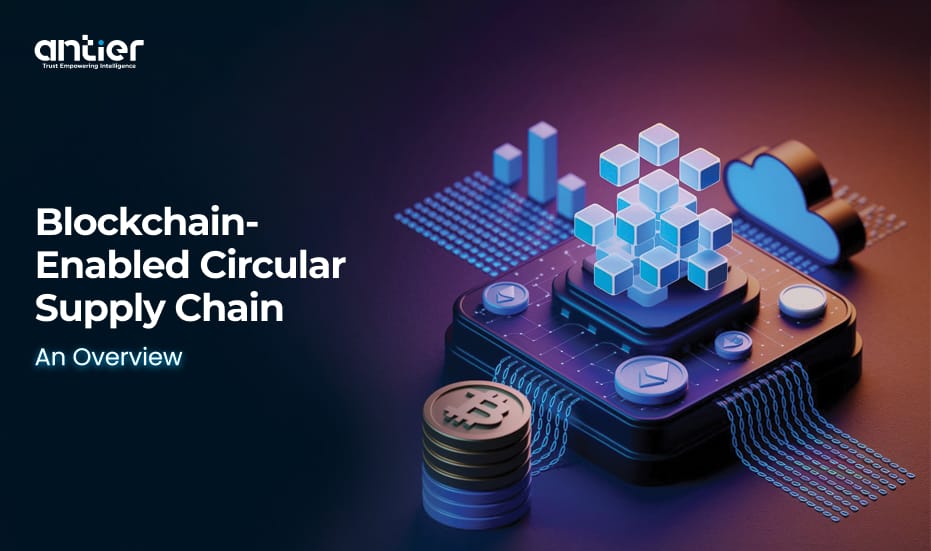
This is where the idea of a circular supply chain comes into play. Unlike the linear model, a circular approach is designed to extend the life of resources. Instead of discarding products at the end of their use, materials are recycled, reused, or repurposed to create new value. The aim is to close the loop so that waste becomes input for future production. Circular supply chain management not only reduces environmental impact but also creates opportunities for new business models, cost savings, and long-term resilience.
Yet, making supply chains circular is not easy. The global trade ecosystem involves thousands of stakeholders spread across different countries, each with its own processes, data systems, and regulatory frameworks. Tracking the origin of materials, ensuring that recycled inputs are genuine, and verifying sustainability claims require more than just goodwill. Without trust, transparency, and reliable data, circular supply chain management remains a challenge. This is where blockchain steps in.
This blog sheds light on how circular supply chain management with blockchain integration is being adopted, the benefits it offers, real-world applications, and the challenges that need to be addressed.
How Circular Supply Chain Management Differs from Traditional Models
- Resource flow: In a linear model, resources flow in one direction until they become waste. In a circular model, they loop back into the system.
- End of life: Linear supply chains end with disposal. Circular supply chains focus on recycling, refurbishing, or reusing.
- Business models: Traditional models rely on selling more products. Circular models often emphasize services, leasing, or resale to extend product use.
- Sustainability: Linear systems are resource-intensive and wasteful. Circular systems aim for sustainability and long-term resilience.
Addressing Key Challenges of Circular Supply Chains with Blockchain
- Traceability of Materials: One of the biggest hurdles in circular supply chain management is tracing materials from origin to recycling. For example, in the electronics sector, rare earth metals need to be tracked to ensure they are recovered and reused. Blockchain provides an immutable record of a material’s journey, ensuring that recycled inputs are genuine and not mixed with uncertified sources.
- Eliminating Greenwashing: Many companies face accusations of overstating their sustainability claims. Blockchain-enabled circular supply chain management reduces this risk by recording proof of recycling, reuse, or sustainable sourcing. When every step is logged on-chain, it becomes nearly impossible to exaggerate or falsify data, creating more trust among consumers, investors, and regulators.
- Coordinating Global Stakeholders: Circular supply chains require collaboration between suppliers, manufacturers, logistics providers, recyclers, and customers. Each player has a different system, but blockchain provides a single source of truth accessible to all. This shared platform improves coordination and reduces disputes.
- Rewarding Circular Practices: Through smart contracts, blockchain can automate incentives for circular behavior. For instance, a company could reward consumers with digital tokens when they return used products for recycling. These tokens, forming part of a crypto circular economy, can be traded or used for discounts, encouraging greater participation in circular supply chains.
- Cross-Border Trade Compliance: In global trade, verifying compliance with environmental regulations is often time-consuming and prone to fraud. Blockchain-powered supply chain management ensures that compliance records are permanent and accessible, making it easier for companies to meet international standards.
Why Blockchain is a Catalyst for Circular Supply Chains?
End-to-End Traceability
Blockchain-powered supply chain management creates a permanent record of every material, from extraction to recycling. This makes it possible to track whether a product advertised as “recycled” truly comes from certified circular processes.
Proof of Authenticity
Circular supply chains often face greenwashing claims, where companies overstate their sustainability efforts. Blockchain-backed digital certificates confirm authenticity, providing reliable proof for both consumers and regulators.
Smart Contract Automation
In circular models, responsibilities such as returning products, refurbishing parts, or recycling materials need coordination between multiple stakeholders. Smart contracts enforce these agreements automatically—for example, releasing payments only when a verified recycler confirms material recovery.
Trust Across Global Trade
A circular supply chain requires cooperation across borders, recyclers in one country, manufacturers in another, and regulators overseeing it all. Blockchain’s distributed structure allows every participant to work on the same shared truth, cutting down on disputes and delays.
Support for New Business Models
The crypto circular economy is emerging, where digital tokens represent recycled materials or sustainability credits. A blockchain-enabled circular supply chain can tokenize materials, allowing companies to trade recycling credits or secondary raw materials securely in global markets.
Lead the Way in Global Trade with our Blockchain Supply Chain Solutions
Blockchain Use Cases in Circular Supply Chains Across Industries
1. Manufacturing & Industrial Goods
- Challenge: Heavy industries such as automotive and machinery face pressure to reuse raw materials, particularly metals and critical minerals.
- Blockchain Solution: Digital records confirm the origin of raw materials, ensuring that recycled components are genuine and suitable for reuse. Smart contracts manage material returns from suppliers and scrap recyclers.
- Impact: Automakers now track EV batteries on blockchain platforms, ensuring valuable resources like lithium and cobalt are recovered and reused rather than discarded.
2. Fashion & Textiles
- Challenge: The fashion sector generates massive waste due to fast-fashion cycles. Consumers increasingly demand transparency about sourcing and recycling.
- Blockchain Solution: Blockchain-enabled circular supply chain management creates digital product passports, where every garment carries a record of materials, dyeing processes, and recyclability. Brands also issue blockchain-backed sustainability certificates.
- Impact: Global fashion labels use blockchain platforms to confirm recycled fabric usage and enable resale or rental models, cutting textile waste significantly.
3. Electronics & E-Waste
- Challenge: Electronic waste is one of the fastest-growing waste streams worldwide, with valuable metals often lost in landfills.
- Blockchain Solution: Blockchain records track every device from production to recycling. Smart contracts enforce e-waste collection agreements, ensuring devices are returned at end-of-life. Tokenization can reward consumers for recycling electronics responsibly.
- Impact: Companies in Asia and Europe are piloting blockchain-powered systems for smartphone and laptop recycling, tying material recovery to crypto incentives.
4. Food & Agriculture
- Challenge: Supply chains in agriculture often waste resources due to poor handling and a lack of traceability. Spoiled or discarded products add to global food insecurity.
- Blockchain Solution: Blockchain in the supply chain ensures every food product can be tracked from farm to consumer, including when it’s repurposed for secondary uses such as animal feed, bioenergy, or compost.
- Impact: Food companies adopt blockchain to reduce food waste, increase consumer trust, and verify whether “circular claims” such as biodegradable packaging are authentic.
5. Energy & Utilities
- Challenge: The energy sector faces the dual challenge of decarbonization and resource reuse, especially for renewable energy infrastructure.
- Blockchain Solution: Blockchain tracks the lifecycle of solar panels, wind turbines, and batteries. Tokenized sustainability credits can be traded in secondary markets, rewarding companies that adopt circular practices.
- Impact: Blockchain-enabled circular supply chain management helps energy providers demonstrate compliance with carbon targets while securing valuable materials for reuse.
6. Pharmaceuticals & Healthcare
- Challenge: Medical waste management is a pressing issue. Improper disposal of plastics, expired drugs, and equipment increases environmental risks.
- Blockchain Solution: Blockchain-powered supply chain management creates traceable records of medical devices, medicines, and disposables. This confirms proper recycling and safe disposal while meeting regulatory compliance.
- Impact: Hospitals and pharma companies are testing blockchain systems to confirm proper recycling of syringes, plastics, and expired drugs.
Challenges & Barriers to Adoption
While blockchain holds promise for circular supply chain management, enterprises face practical barriers that slow down adoption. These challenges are not just technical, but they also touch on costs, organizational change, and global collaboration.
Scalability and Interoperability of Blockchain Platforms
Most supply chains involve thousands of participants spread across multiple countries and industries. A single blockchain platform often cannot handle such large transaction volumes or integrate smoothly with others. For example:
- A fashion brand might use one blockchain for textile recycling, while its logistics partner relies on another. If these systems cannot “talk” to each other, circular supply chain transparency breaks down.
- Public blockchains may struggle with transaction speeds and costs, while private blockchains risk becoming closed silos.
Scalability and interoperability remain major hurdles before blockchain can fully support global circular supply chains.
High Integration Costs and Change Management in Global Supply Chains
Integrating blockchain into supply chains requires upgrading IT systems, training staff, and reconfiguring established workflows. Large enterprises with legacy systems may face resistance to change, while smaller suppliers may lack the budget to participate.
- Setting up blockchain-powered supply chain management is not just a matter of software installation; it involves redesigning procurement processes, logistics contracts, and auditing systems.
- Enterprises must weigh upfront costs against long-term gains like reduced fraud, stronger compliance, and greater resilience.
The expense and effort of change management remain a barrier for many organizations.
Data Privacy Concerns vs. Transparency Demands
Circular supply chains thrive on transparency, but not all data can be shared openly. For instance:
- A manufacturer may want to prove that materials are recycled, but may not want to reveal supplier pricing or trade volumes.
- Public blockchains provide openness but risk exposing sensitive business information.
Finding a balance between transparency and data privacy is critical. Companies must adopt selective disclosure methods, encryption, or hybrid blockchain models to ensure sensitive information is protected while sustainability data remains verifiable.
Need for Cross-Industry Collaboration and Regulations
Circular supply chains depend on cooperation between manufacturers, recyclers, logistics providers, and regulators. Without standardized rules and collaboration frameworks, blockchain adoption risks staying in isolated pilots rather than scaling across industries.
- Governments play a critical role by enforcing sustainability regulations that encourage blockchain-backed verification.
- Industry alliances are essential to set standards for digital product passports, recycling credits, and carbon reporting.
Until there is stronger cross-industry collaboration and regulatory support, the adoption of blockchain in the circular economy will face delays.
Adopt Blockchain Solutions to Future-Proof Your Supply Chain
Conclusion
The transition to a circular economy requires more than pledges. It requires verifiable action, global trust, and scalable systems. Blockchain-enabled circular supply chain management delivers these essentials by embedding transparency, traceability, and accountability into the heart of commerce.
For enterprises, the benefits go beyond compliance. Blockchain-powered circular supply chains reduce risks, unlock new revenue streams through tokenization, and strengthen resilience against supply shortages. At the same time, they address consumer and regulatory demand for sustainability proof.
If your organization is ready to explore this shift and needs guidance on designing and deploying blockchain-powered supply chain solutions, consulting Antier can help turn strategy into reality. Antier helps enterprises design and deploy blockchain supply chain solutions tailored to circular economy models while enabling businesses to achieve transparency, scalability, and long-term sustainability in global trade.
Frequently Asked Questions
01. What is the main difference between a linear supply chain and a circular supply chain?
A linear supply chain follows a "take-make-dispose" model, where resources flow in one direction until they become waste. In contrast, a circular supply chain loops resources back into the system, focusing on recycling, refurbishing, or reusing materials.
02. How does circular supply chain management benefit businesses and the environment?
Circular supply chain management reduces environmental impact by minimizing waste and resource consumption. It also creates opportunities for new business models, cost savings, and long-term resilience.
03. What role does blockchain play in circular supply chain management?
Blockchain enhances circular supply chain management by providing trust, transparency, and reliable data, which are essential for tracking material origins, verifying recycled inputs, and ensuring sustainability claims.