



AI Summary
- In today's business landscape, integrating AI with enterprise systems has become a necessity for organizations looking to enhance efficiency, cut costs, and make informed decisions.
- By incorporating AI into ERPs, CRMs, and APIs, businesses can unleash the full potential of their systems, streamline data flow, and gain valuable insights for strategic planning.
- This blog post delves into the benefits, applications, and best practices of AI integration with enterprise systems.
- From transforming ERP systems with predictive analytics to revolutionizing CRM operations with personalized interactions, AI empowers organizations to make data-driven decisions, boost operational efficiency, enhance customer experiences, and maintain a competitive edge.
- By following best practices and partnering with a trusted AI development company like Antier, businesses can future-proof their operations and drive success in the digital age.
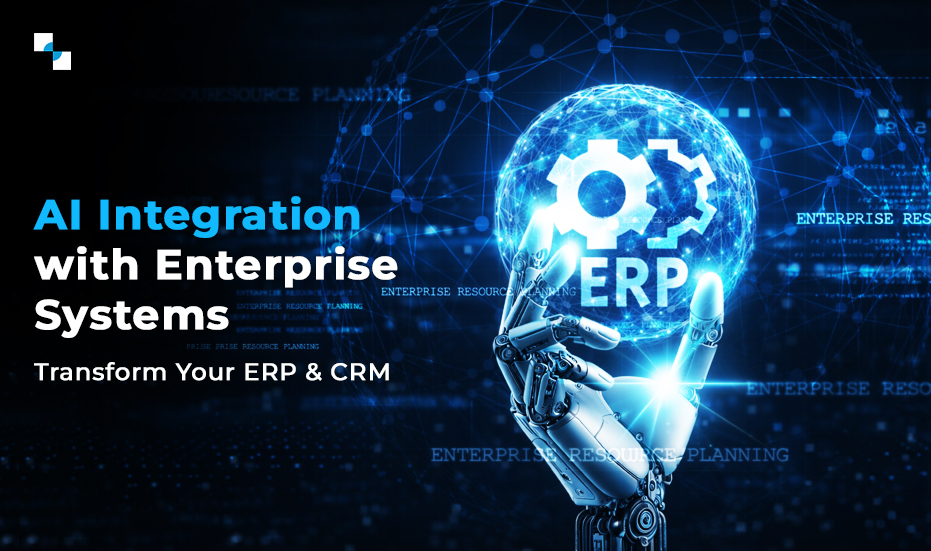
In today’s fast-paced business environment, AI integration with enterprise systems is no longer a luxury – it’s a necessity. Organizations are seeking ways to enhance efficiency, reduce operational costs, and improve decision-making. By integrating artificial intelligence into existing ERPs, CRMs, and APIs, businesses can unlock the full potential of their systems and create a seamless flow of information across departments.
Leading AI development company services are now focusing on delivering tailored solutions that not only automate tasks but also provide intelligent insights for better strategic planning. This blog explores how AI integrates with enterprise systems, highlighting the benefits, practical applications, and best practices to ensure a successful digital transformation.
1. Understanding Enterprise System Integration
Enterprise systems, such as ERPs (Enterprise Resource Planning) and CRMs (Customer Relationship Management), are the backbone of any organization. They manage everything from finance, supply chain, and human resources to customer interactions and sales pipelines.
However, traditional enterprise systems often operate in silos, limiting the ability to make data-driven decisions. This is where AI solutions for business systems come into play. By integrating AI into these platforms, businesses can achieve:
- Real-time insights and predictive analytics
- Automated workflows across departments
- Enhanced decision-making through intelligent recommendations
Intelligent integration ensures that every business function becomes more responsive, agile, and customer-centric.
2. Transforming ERP Systems with AI Software Development for Enterprises
ERPs centralize critical business processes, but the sheer volume of data can make it challenging to extract actionable insights. AI integrates with ERP and CRM systems to optimize these operations in several ways:
1. Predictive Analytics for Inventory & Supply Chain
AI-powered ERPs can forecast demand, optimize inventory levels, and detect potential supply chain disruptions. This reduces overstock, stockouts, and inefficiencies, allowing businesses to save costs and improve customer satisfaction.
2. Intelligent Financial Management
AI algorithms analyze financial transactions, detect anomalies, and provide predictive financial modeling. This helps CFOs make informed decisions, automate reconciliation processes, and ensure compliance with regulations.
3. Workflow Automation
Repetitive tasks such as invoice processing, payroll management, and procurement approvals can be automated with AI, freeing up employees to focus on strategic tasks.
By leveraging AI software development for enterprises, organizations can create ERP systems that are not just transactional but also intelligent and adaptive.
3. Revolutionizing CRM Systems Through AI Solutions for Business Systems
CRMs are the lifeblood of customer relationships, managing everything from sales pipelines to post-sales support. Intelligent enterprise system integration with AI can revolutionize CRM operations.
1. Enhanced Customer Insights
AI analyzes historical customer data to predict buying behavior, segment audiences, and personalize communications. This helps marketing teams craft targeted campaigns that resonate with customers, driving higher conversion rates.
2. Sales Forecasting & Lead Scoring
AI-powered CRMs can automatically score leads based on engagement, buying signals, and historical patterns. Sales teams can prioritize high-value prospects, improving efficiency and revenue generation.
3. AI Chatbots & Virtual Assistants
Integrating AI chatbots into CRMs enables 24/7 customer support, instant responses, and personalized interactions. This enhances customer satisfaction while reducing operational costs.
Through such AI solutions for business systems, CRMs become more than a tool—they evolve into a smart platform that anticipates customer needs and drives growth.
4. Seamless AI Integration Across APIs: Creating an Intelligent Enterprise Ecosystem
APIs (Application Programming Interfaces) connect different software systems and enable data exchange. AI can enhance API-driven integration by providing intelligent automation and predictive capabilities.
1. Seamless Data Flow
AI ensures that data flows accurately and efficiently between systems, eliminating redundancies and minimizing human error.
2. Intelligent Decision-Making
By integrating AI at the API level, businesses can apply machine learning models to data streams in real-time, enabling proactive decision-making. For example, AI can automatically adjust inventory levels based on demand predictions or recommend personalized product offers to customers.
3. Enhanced Security & Compliance
AI-powered monitoring through APIs helps detect unusual activity, potential fraud, or security breaches in real-time, ensuring enterprise systems remain secure and compliant.
Organizations partnering with an AI development company specializing in API-level integration can create a cohesive ecosystem where systems communicate intelligently, enhancing efficiency and scalability.
5. The Competitive Edge of AI Integration with Enterprise Systems
The integration of AI into enterprise systems brings tangible benefits across operations, finance, sales, and customer engagement. Key advantages include:
- Data-Driven Decision Making: AI transforms raw data into actionable insights.
- Operational Efficiency: Automation of repetitive tasks reduces human error and frees up resources.
- Enhanced Customer Experience: Personalized interactions increase engagement and loyalty.
- Cost Optimization: Predictive analytics and workflow automation reduce operational expenses.
- Scalability: Intelligent systems adapt to growing business needs without significant manual intervention.
By investing in AI that integrates with ERP and CRM systems, organizations can future-proof their operations and maintain a competitive edge in an increasingly digital market.
6. Best Practices for Implementing AI in Enterprise Systems
To maximize the impact of AI integration, businesses should follow these best practices:
1. Start with a Clear Strategy: Identify specific business problems that AI can solve and define measurable KPIs.
2. Focus on Data Quality: AI is only as effective as the data it consumes. Ensure clean, structured, and accessible datasets.
3. Choose the Right AI Partner: Collaborate with a trusted AI development company that understands enterprise challenges.
4. Integrate Incrementally: Start with high-impact areas and gradually scale AI integration across systems.
5. Monitor and Optimize: Continuously evaluate AI performance and adjust algorithms for better accuracy and efficiency.
These practices ensure a smooth, impactful adoption of AI solutions for business systems, minimizing disruptions while maximizing ROI.
7. Real-World Use Cases
1. Manufacturing ERP
A global manufacturer integrated AI into its ERP system to predict machine maintenance needs. This reduced downtime by 30% and saved millions in repair costs.
2. Retail CRM
A retail chain implemented AI-powered lead scoring in its CRM. Sales teams saw a 25% increase in conversion rates due to prioritized and targeted customer engagement.
3. API Integration in FinTech
A FinTech company integrated AI through APIs to detect fraudulent transactions in real-time, reducing financial risk and enhancing customer trust.
These examples demonstrate how intelligent enterprise system integration can transform operations, improve customer experience, and drive growth.
Future-Proof Your Business with Intelligent AI Integration Across Enterprise Systems
AI is no longer futuristic – it’s essential for modern enterprise systems. By leveraging AI software development for enterprises, businesses can integrate intelligent automation, predictive analytics, and personalized interactions into ERPs, CRMs, and APIs. Whether optimizing supply chains, enhancing customer relationships, or enabling seamless API-level integration, AI delivers the intelligence enterprises need to stay competitive.
Partnering with Antier, a leading AI development company, ensures solutions are strategic, scalable, and aligned with business goals. With proven expertise in AI integration with enterprise systems, Antier helps organizations transform operations, drive efficiency, and achieve measurable outcomes in today’s dynamic business environment.