




AI Summary
- Tokenization at enterprise scale is a crucial architectural decision, focusing on the underlying white-label platform's integrity.
- It involves considerations like smart contract modularity, compliance logic, custody integration, and upgrade mechanisms for long-term viability and regulatory adaptability.
- A white-label tokenization engine allows organizations to issue and manage tokenized assets under their brand, offering customization while ensuring compliance and governance.
- Choosing a robust tokenization platform impacts long-term scalability, involving aspects like regulatory elasticity, liquidity enablement, and interoperability.
- Scalable compliance architecture, modular smart contract design, multi-asset interoperability, and liquidity enablement are essential for sustainable growth.
Tokenization at enterprise scale is fundamentally an architectural decision. While market conversations often emphasize speed of deployment, the true determinant of long-term viability lies in the structural integrity of the underlying white label tokenization platform.
Smart contract modularity, compliance logic programmability, interoperability layers, custody integrations, and upgrade mechanisms collectively define whether the system can withstand regulatory evolution and transaction scale. Selecting white label tokenization software without evaluating its contract architecture and governance design introduces systemic limitations that compound over time.
The decision framework must therefore begin at the infrastructure layer — not the user interface.
What Is a White-Label Tokenization Engine?
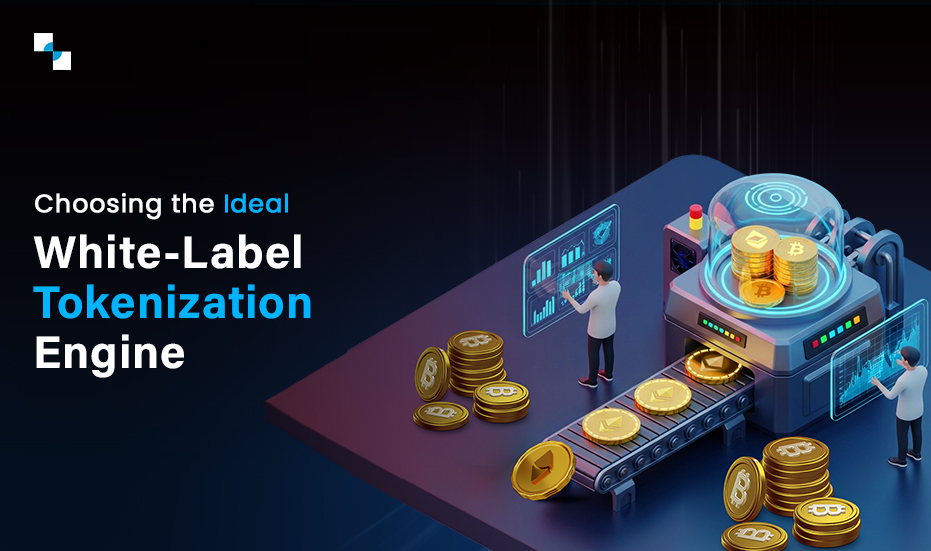
A white-label tokenization engine is a pre-built, customizable blockchain-based infrastructure that enables organizations to issue and manage tokenized assets under their own brand. A white-label tokenization engine is faster to market than a custom-built solution, but still allows for customization and configuration of compliance.
Core capabilities include:
- Token issuance and lifecycle management
- Compliance rule enforcement
- Investor onboarding and KYC integration
- Governance and voting modules
- Smart contract management
- Asset reporting dashboards
When supported by robust white label tokenization development services, such platforms allow enterprises to retain strategic control while minimizing infrastructure risk.
Why the Choice of Tokenization Engine Impacts Long-Term Scalability
Enterprises looking to establish themselves in regulated digital asset markets will find that scalability is about much more than just transaction throughput; it also includes aspects such as regulatory elasticity, architectural modularity, liquidity enablement, operational automation, and ecosystem interoperability.
In this case, the white label tokenization platform will become your programmable underpinning that helps determine if growth will be seamless or stifled by the architecture of your tokenization platform infrastructure
Choosing robust enterprise white label tokenization solution will allow you to scale without having to continually re-build your infrastructure to support the new level of growth. Instead, scalability will be part of the smart contract architecture, governance logic and integration stack from the very beginning.
1. Regulatory Elasticity and Compliance Automation
Regulatory environments are dynamic. Jurisdictional policies evolve, disclosure requirements expand, and investor eligibility criteria shift over time. A technically mature white label tokenization software solution must therefore incorporate a configurable compliance rule engine rather than static rule sets.
Scalable compliance architecture should support:
- Jurisdiction-based transfer restrictions
- Role-based investor permissions
- Whitelisting and blacklisting logic embedded at contract level
- Automated dividend and reporting triggers
- On-chain audit trail generation
When compliance is deeply integrated into smart contract logic, enterprises can scale across borders without redeploying infrastructure. Organizations leveraging robust white label tokenization development services benefit from programmable regulatory adaptability instead of reactive redevelopment cycles.
2. Modular Smart Contract Architecture and Upgradeability
Long-term scalability depends on modularity. Monolithic contract deployments restrict flexibility and introduce systemic risk during updates. A future-ready white label tokenization platform must employ structured contract patterns such as proxy upgrade mechanisms, modular deployment layers, and governance-controlled upgrade pathways.
Scalable architecture includes:
- Separation of logic and storage contracts
- Version-controlled contract upgrades
- Governance-based modification approvals
- Emergency pause and recovery mechanisms
- Deterministic permission hierarchies
A capable white label tokenization platform development company ensures that upgradeability does not compromise security, enabling protocol evolution without disrupting active tokenized assets.
3. Multi-Asset and Multi-Chain Interoperability
Enterprises rarely tokenize a single asset class. Over time, expansion into real estate, debt instruments, equity, structured funds, or commodities becomes a strategic objective. The selected enterprise white label tokenization solutions framework must therefore support multi-asset issuance under a unified infrastructure.
Scalability requires:
- Compatibility with multiple token standards
- Configurable token economics models
- Cross-chain deployment capability
- API-driven interoperability with exchanges and custodians
- Bridge mechanisms for liquidity routing
An interoperable white label tokenization software stack prevents vendor lock-in and supports ecosystem expansion without structural redesign.
4. Liquidity and Secondary Market Enablement
Token scalability is incomplete without liquidity scalability. The ability to integrate secondary trading platforms, digital custodians, and automated settlement layers determines whether tokenized assets achieve sustainable market participation.
A scalable white label tokenization platform should enable:
- Transfer restriction logic aligned with exchange standards
- Custodial wallet compatibility
- Atomic settlement automation
- Fractional ownership models
- Yield distribution and dividend automation
Well-architected white label tokenization development services embed liquidity readiness within the core system rather than retrofitting it later.
5. Performance Engineering and Infrastructure Scaling
As investor participation increases, transaction volume grows. Scalability must extend to system performance, including gas optimization, throughput management, and infrastructure redundancy.
Enterprise-grade enterprise white label tokenization solutions incorporate:
- Layer-2 compatibility or sidechain deployment options
- Gas-efficient contract design
- Cloud-native infrastructure orchestration
- Horizontal scaling capability
- Disaster recovery and failover mechanisms
Without these controls, operational strain increases as adoption grows.
6. Data Orchestration and Reporting Scalability
Institutional markets demand transparency. As asset portfolios expand, reporting complexity intensifies. A scalable white label tokenization software framework must integrate:
- Real-time dashboard analytics
- Automated investor statements
- Regulatory reporting exports
- On-chain/off-chain data synchronization
- Event-driven accounting automation
Data orchestration scalability ensures compliance continuity and investor confidence during growth phases.
7. Governance and Operational Automation
As ecosystems grow, manual oversight becomes inefficient. A technically advanced white label tokenization platform should support automated governance mechanisms, including:
- On-chain voting modules
- Role-based administrative controls
- Multi-signature authorization flows
- Smart contract-based distribution automation
When governance logic is programmable, operational expansion does not proportionally increase administrative complexity.
Transform Your Asset Digitization Vision into Production-Ready Infrastructure
Step-by-Step Decision Framework for Enterprises
To select a white label tokenization platform, organizations need to evaluate the overall architecture, not just conduct a vendor comparison. Because both regulatory and other operational factors affect the issuance of tokenized assets, organizations must evaluate the depth of their infrastructure, as well as its compliance programmability, integration capabilities and upgrade options in order to implement properly.
Organizations must evaluate the criteria listed below when evaluating enterprise white label tokenization solutions for scalable enterprise implementations.
Step 1: Define Asset Class and Jurisdictional Scope
Before evaluating vendors, enterprises must clarify:
- Type of asset (real estate, funds, bonds, commodities)
- Target investor profile
- Operating jurisdictions
- Licensing requirements
Different assets require different compliance logic and token standards. A scalable white label tokenization platform must accommodate multi-asset issuance under varying regulatory environments.
Step 2: Evaluate Compliance and Governance Architecture
Compliance must be programmable. Enterprises should assess whether the platform supports:
- KYC/AML integration
- Investor accreditation verification
- Transfer restrictions
- Dividend and distribution automation
- Voting and governance modules
The strongest white label tokenization development services integrate compliance into smart contract logic rather than treating it as a manual overlay.
Step 3: Assess Smart Contract Architecture and Security
Security is non-negotiable. Key evaluation criteria include:
- Third-party audited smart contracts
- Modular architecture
- Multi-signature controls
- Role-based administrative permissions
- Incident response mechanisms
A credible white-label tokenization platform development company should demonstrate a strong audit history and transparent security documentation.
Step 4: Examine Integration and API Infrastructure
Tokenization does not operate in isolation. Enterprises must verify:
- API accessibility
- Banking and payment gateway integration
- Custodian connectivity
- ERP and CRM compatibility
- Reporting and analytics dashboards
A well-structured white label tokenization software solution integrates seamlessly into existing financial infrastructure.
Step 5: Review Customization Flexibility
White-label does not mean rigid. Evaluate:
- Branding capabilities
- UI/UX customization
- Token economics configuration
- Investor portal personalization
- Workflow modification flexibility
Customization ensures differentiation in competitive markets.
Step 6: Analyze Scalability and Performance
Infrastructure must support growth. Key technical considerations:
- Transaction throughput
- Gas optimization mechanisms
Cloud deployment flexibility - Load balancing architecture
- Disaster recovery systems
An enterprise-grade engine must support large investor volumes without performance degradation.
Must-Have Features in an Enterprise White-Label Tokenization Platform
A production-ready white label tokenization platform must go beyond basic issuance functionality and deliver infrastructure-grade capabilities aligned with regulatory compliance, security resilience, and institutional scalability. Enterprise adoption depends on how deeply the white label tokenization software embeds automation, governance logic, and interoperability within its core architecture.
- Multi-Asset Issuance Support – Enables structured token creation across diverse asset classes within a unified infrastructure.
- Configurable Compliance Engine – Embeds programmable transfer restrictions, investor eligibility rules, and jurisdictional controls directly into smart contracts.
Role-Based Governance Management – Implements hierarchical access controls and on-chain voting mechanisms for structured decision-making. - Automated Dividend and Yield Distribution – Streamlines financial payouts through smart contract-triggered settlement logic.
- Custodial Wallet Integration – Ensures compatibility with institutional-grade custody providers for secure asset management.
- Secondary Market Readiness – Supports compliant token transfers and exchange integrations to facilitate liquidity.
- Real-Time Reporting Dashboards – Provides synchronized on-chain and off-chain data visibility for regulatory and investor reporting.
- Smart Contract Upgradeability – Allows controlled protocol evolution without disrupting active tokenized assets.
Cost of a White-Label Tokenization Platform: What Enterprises Should Expect
The cost of implementing a white label tokenization platform varies significantly depending on architecture depth, compliance complexity, and customization scope. Enterprises must evaluate cost across multiple dimensions rather than focusing solely on licensing fees.
1. Platform Licensing or Base Infrastructure Cost
This includes core smart contract frameworks, admin panels, and issuance modules.
2. Customization & Integration Cost
- UI/UX personalization
- Custody integration
- API development
- Compliance configuration
Advanced white label tokenization development services increase upfront cost but reduce long-term re-engineering expenses.
3. Security & Audit Expenses
Smart contract audits, penetration testing, and compliance validation are non-negotiable for enterprise-grade deployments.
4. Infrastructure & Cloud Hosting
Costs depend on blockchain selection, transaction volume, and deployment model (public, private, or hybrid).
5. Ongoing Maintenance & Upgrade Costs
Includes contract updates, regulatory modifications, technical support, and feature enhancements.
Building Future-Ready Tokenization Infrastructure
Selecting the right white label tokenization platform is a long-term infrastructure decision that directly influences regulatory agility, liquidity scalability, governance automation, and ecosystem expansion. Enterprises that approach this evaluation with architectural rigor — assessing smart contract modularity, compliance depth, interoperability, and upgrade pathways — position themselves to build resilient and future-ready digital asset frameworks.
As a leading white label tokenization platform development company, Antier delivers enterprise-grade tokenization infrastructure engineered for security, configurability, and regulatory alignment. With deep expertise in blockchain architecture, compliance-driven smart contracts, and scalable deployment models, Antier empowers financial institutions, asset managers, and fintech innovators to launch and scale institutional tokenization ecosystems with confidence.
For organizations seeking a strategically aligned tokenization partner, Antier provides the expertise and infrastructure required to transform asset digitization into sustainable market advantage.
Frequently Asked Questions
01. What is a white-label tokenization engine?
A white-label tokenization engine is a customizable blockchain-based infrastructure that allows organizations to issue and manage tokenized assets under their own brand, offering faster market entry and compliance configuration.
02. Why is the choice of tokenization engine important for long-term scalability?
The choice of tokenization engine impacts long-term scalability by ensuring that the architecture supports not just transaction throughput but also regulatory elasticity, operational automation, and ecosystem interoperability.
03. What core capabilities does a white-label tokenization engine provide?
Core capabilities include token issuance and lifecycle management, compliance rule enforcement, investor onboarding and KYC integration, governance modules, smart contract management, and asset reporting dashboards.