




AI Summary
- In the blog post, "Understanding the Cost of Play-to-Earn (P2E) Games in 2025," readers are taken on a deep dive into the intricate financial landscape of developing P2E games.
- The post covers crucial expense categories such as concept and tokenomics design, art and asset production, core gameplay engineering, smart contract and blockchain integration, quality assurance, and security audits.
- It also delves into the financial framework of blockchain integration and NFT creation, discussing key factors like choosing the right blockchain layer, smart contract development, NFT minting, user wallets, and bridges.
- Furthermore, the post highlights how strategic investments in P2E game development can lead to substantial returns through token sales, secondary market fees, in-game purchases, sponsorships, and community-governed upside.
- The author emphasizes the importance of partnering with an experienced P2E game development company to efficiently plan and manage costs while maximizing ROI.
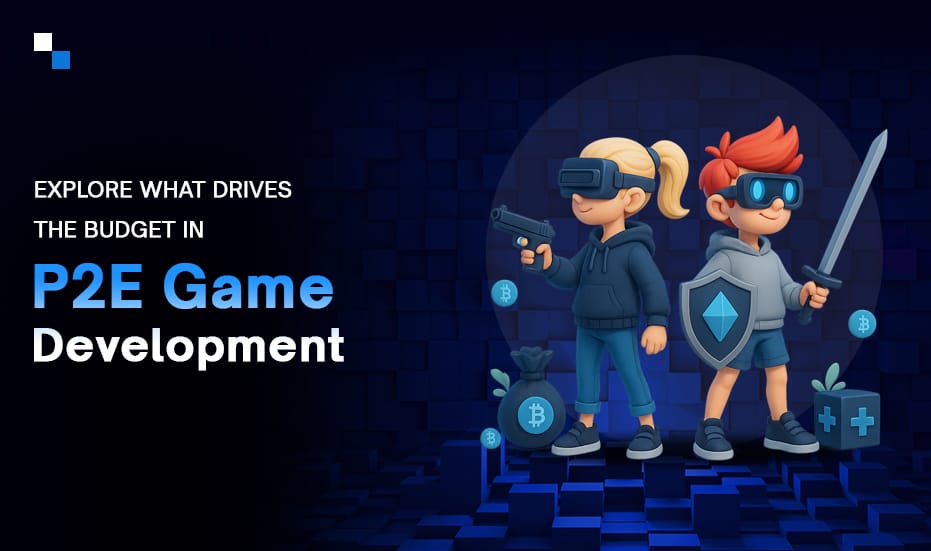
Developing a play-to-earn title in 2025 means navigating a complex landscape of tokenomics, smart contracts, and user-driven economies, all of which directly impact the cost of P2E games. Whether you’re a studio weighing initial outlays or an entrepreneur vetting a P2E game development company, this guide will walk you through each line item, from blockchain integration and NFT minting to team salaries and server hosting. Along the way, you’ll gain a clear, technically rich perspective on budgeting, resource allocation, and projected returns for P2E game development.
In this article, we’ll balance conversational clarity with deep technical insight, ensuring you not only understand cost drivers but also how they interplay to shape ROI.
Understanding the Cost of P2E Games: Core Expense Categories
Accurately forecasting your cost of P2E games starts with breaking down every line item. Here are the vital expense buckets:
- Concept & Tokenomics Design
Crafting reward mechanisms, staking models, and in-game currency economics involves specialized analysts. Iterative simulations ensure that token supply aligns with player behavior, an essential step in professionally developing P2E games. - Art & Asset Production
From 2D character sprites to fully rigged 3D models and animations, art defines user engagement. Deciding between in-house artists or outsourcing to a dedicated P2E game development company can dramatically impact your bottom line. - Core Gameplay Engineering
Whether you choose Unity, Unreal Engine, or a proprietary framework, core development includes server architecture, physics engines, and UI workflows. These technical layers form the backbone of any robust P2E development project. - Smart Contract & Blockchain Integration
Integrating with Ethereum, Polygon, or a Layer-2 network requires smart contract coding, multiple security audits, and gas-optimization strategies. These costs often constitute a significant slice of your budget for the P2E game development. - Quality Assurance & Security Audits
Continuous testing—both on-chain and off-chain- is non-negotiable. Partnering with an experienced P2E game development company can streamline audits and bug bounties, protecting both your project and your players.
By dissecting these categories, you’ll understand where to invest heavily and where leaner solutions may suffice. The right balance of in-house talent and outsourced partners not only controls the cost of P2E games but also accelerates time-to-market.
Blockchain and NFTs: The Financial Framework of P2E Game Development
Blockchain is a cornerstone of P2E game development, enabling true ownership of in-game assets, transparent token economies, and trustless reward distribution. Below, we’ll unpack the major considerations, technical patterns, and budgetary impacts involved in blockchain integration and NFT creation with your P2E game development company.
1. Choosing the Right Blockchain Layer
When assessing your cost of P2E games, one of the earliest decisions is selecting a blockchain network:
- Ethereum (Layer-1): Comes with deep liquidity, mature tooling, a broad developer community, but has high gas fees, network congestion
- Polygon / BNB Smart Chain / Avalanche (Layer-2 / Sidechains): Offers lower transaction fees, faster finality, but possesses a slightly smaller user base and potential centralization risks.
- Solana / Near / ImmutableX (Alternative Layer-1): Supports ultra-fast transactions with near-zero costs, but features newer ecosystems and evolving standards.
Your P2E game development company will guide you through trade-offs: high-security but expensive networks versus cost-effective but emerging blockchains.
2. Smart Contract Development and Security
Smart contracts form the backbone of any blockchain-enabled game. Key cost and technical factors include:
- Contract Architecture
Opting for modular designs like proxy upgradability or the diamond standard boosts flexibility for future features, but adds development time and cost. Monolithic contracts cut upfront expenses yet make later enhancements costly and cumbersome. - Gas Optimization
Writing Solidity or Rust contracts with efficient storage layouts and visibility settings can save users thousands in gas fees. Including both automated tools and manual refactoring for gas tuning is a must when budgeting for P2E game development. - Security Audits & Bug Bounties
Third-party audits are run based on code size and test coverage. Adding more for on-chain and off-chain bug bounties further secures your game before launch.
By investing in rigorous security, you not only protect players but also reinforce your brand’s credibility, an often-overlooked ROI factor when evaluating the cost of P2E games.
3. NFT Minting, Metadata, and Marketplaces
Empowering players to mint and trade NFTs is another core component:
- NFT Standards & Royalty Configurations: Choose based on your asset variety and batch-minting needs. On-chain royalties enforce creator revenue but can complicate cross-chain listings.
- Metadata Storage: IPFS and Arweave offer decentralized storage, depending on redundancy levels. A P2E game development company can use hybrid approaches (on-chain pointers, off-chain assets) to reduce the P2E game development expenses without sacrificing reliability.
- Marketplace Integration: Building custom marketplaces or leveraging existing platforms (OpenSea, Rarible) impacts both development time and ongoing fees. Custom UI/UX for minting flows and wallet onboarding also requires some funds for design and engineering.
4. User Wallets and Bridges
A seamless wallet experience is non-negotiable for player retention:
- Embedded Wallets: Services like WalletConnect, Magic. link, or Portis, let users sign in with minimal friction but carry licensing fees.
- Bridges and Cross-Chain Compatibility: Integrating with bridges (e.g., Wormhole, Hop Protocol) incurs both integration costs and ongoing monitoring expenses.
By carefully architecting your wallet and bridge strategy, you can minimize gas pain points and maximize player satisfaction, crucial for long-term engagement in P2E game development.

How ROI Overpowers the Cost Invested in P2E Game Development
Understanding the cost of P2E games is vital, but appreciating how strategic investments can yield exponential returns is the true game-changer. Here’s why your resource allocation with a P2E game development company often leads to revenue streams that far exceed initial outlays:
- Token Sales and Staking Revenue: When players purchase or stake tokens, your game earns upfront liquidity. As tokenomics are fine-tuned, staking programs encourage long-term holding, creating a recurring income model that amplifies your initial pricing
- Secondary Market Fees: Every NFT trade on integrated marketplaces generates royalties. These ongoing fees convert player-to-player transactions into a perpetual revenue stream, dramatically magnifying ROI relative to the original NFT minting costs.
- In-Game Purchases and Microtransactions: Beyond the play-to-earn paradigm, cosmetic items and boost packs add monetization layers. A well-designed in-game store can transform a modest portion of development expense into a continuous profit center.
- Sponsorships and Partnerships: High-engagement titles attract brand sponsors, tournament organizers, and brand collaborations. These partnerships often provide marketing funds or revenue-sharing agreements that bolster returns well above the core P2E game development budget.
- Community-Governed Upside: Decentralized governance tokens empower players to vote on feature roadmaps. This communal stake drives deeper engagement, and when token value appreciates, the economic upside can dwarf the foundational Cost of P2E games.
Case in Point: Amplifying Margins
Studios that allocate resources to robust tokenomics analysis, strategic marketplace integrations, and dynamic community incentives often see margins improve over time. For example, projects that reinvest a fraction of their marketing budgets into liquidity mining programs can observe a surge in daily active users, which in turn increases both in-game transactions and marketplace fee revenue. This virtuous cycle underlines how P2E game development company expertise in crafting sustainable economies can make ROI outstrip initial costs.
In essence, the secret lies in treating each expense as a lever rather than a burden. When each phase of development, from smart contract deployment to user acquisition, aligns with revenue triggers, the cost of P2E games becomes a catalyst for growth rather than an obstacle.
Consult P2E Game Development Company for Efficient Budget Planning
As you’ve seen, the venture of P2E game development involves nuanced cost considerations, from tokenomics design and blockchain integration to team structuring and beyond. However, with the right strategic partner, these investments can translate into thriving ecosystems and sustained profitability.
At Antier, our team has guided numerous studios through the full spectrum of services, optimizing every dollar you dedicate to the project. Your investment in P2E game development company services with us will not only manage the cost of P2E games but also ensure your ROI story becomes the industry benchmark. Get in touch now and gear up for a profitable business with Antier.