



AI Summary
- In the fast-paced world of crypto, choosing the right Web3 wallet is crucial for storing, moving, and protecting your digital assets.
- In 2026, wallets like Base, MetaMask, Trust Wallet, Exodus, and Phantom prioritize user control over private keys and assets.
- Hardware wallets such as Ledger and Trezor offer top-notch security by keeping private keys offline.
- Your choice of wallet determines true asset ownership and security practices, emphasizing the importance of securely storing your recovery phrase offline.
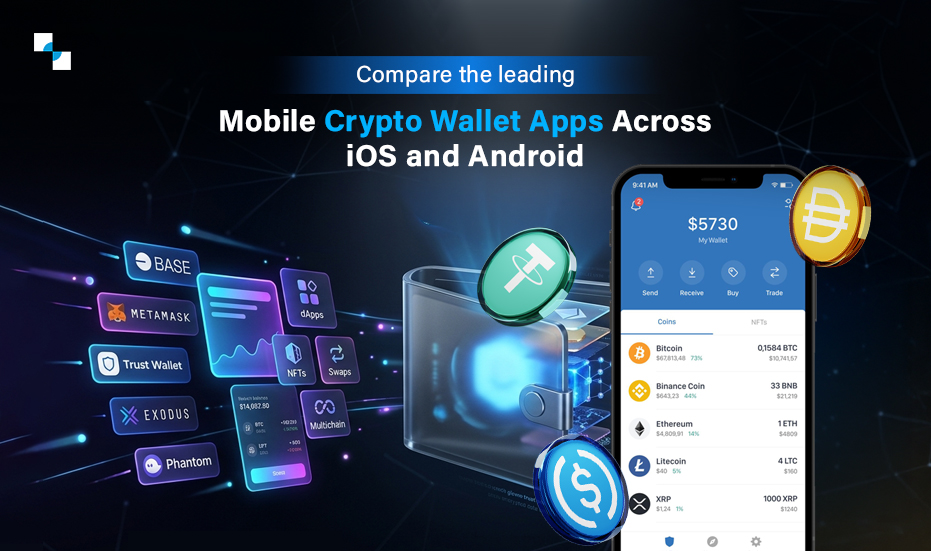
- The best wallets in the USA for 2026, including Base, MetaMask, Trust Wallet, Ledger, Trezor, Exodus, and Phantom, cater to various user needs and preferences.
In crypto, ownership is not a slogan; it is an architecture. The Web3 crypto wallet you choose decides how you store, move, recover, and protect value in a market that rewards speed but punishes carelessness. In 2026, the right wallet is no longer a side tool tucked behind an exchange account. It is the nerve center of your digital asset strategy.
This guide is built for both first-time users and serious investors. If you are just starting out, it will help you understand what matters. If you already know the market, it will help you compare the wallets that actually deserve attention in the U.S. in 2026.
Key Takeaways
- Self-custody is the foundation in 2026 — Wallets like Base Wallet, MetaMask, Trust Wallet, Exodus, and Phantom prioritize user control over private keys and digital assets.
- Hardware wallets remain the gold standard for security — Ledger and Trezor keep private keys offline, significantly reducing exposure to hacks and online threats.
- Private key ownership defines true asset control — The wallet you choose determines whether you truly own your assets or rely on third-party custody.
- Recovery phrase = ultimate access — Your seed phrase is the master key to your wallet; it must be securely stored offline and never shared under any circumstances.
- Security is a continuous practice, not a one-time setup — Strong authentication, safe backups, and phishing awareness are essential to protect digital assets long-term.
Choosing the right crypto wallet
1) Security model
The first question is not “Which wallet looks best?” It is “Who controls the keys?” Coinbase Wallet, now Base, describes itself as a self-custody wallet; MetaMask also positions itself as a self-custodial crypto wallet; Trust Wallet, Exodus, Phantom, Ledger, and Trezor all emphasize direct user control in different forms. For higher-value holdings, hardware wallets matter because Ledger says private keys stay offline, and Trezor says its hardware wallets keep crypto fully offline.
2) Supported assets and chains
A blockchain wallet that cannot keep up with your chain strategy is already behind. Trust Wallet says it supports 100+ blockchains and is trusted by 200M people; Exodus says it supports 1,000,000+ assets; Phantom supports Solana, Ethereum, Bitcoin, Base, and Sui; Base supports trading across multiple major networks; and MetaMask now presents itself as an “everything wallet” for a multichain on-chain experience.
3) User experience
A crypto wallet should feel powerful without feeling punishing. Base is available on iOS, Android, web, and Chrome extension forms; MetaMask is available as a browser extension and mobile app; Trust Wallet offers both mobile and desktop browser extension access; Exodus works across Windows, Mac, Linux, iOS, and Android; and Phantom is built for quick access across leading ecosystems. Good UX is not cosmetic in crypto. It reduces mistakes, speeds onboarding, and makes active use more practical.
The 7 best crypto wallets in the USA for 2026
1) Base, formerly Coinbase Wallet
Base is the most natural starting point for users who want a mainstream custodial crypto wallet with modern onboarding. Coinbase says Base is the new experience for Coinbase Wallet, and its help pages describe it as an all-in-one app for creating, trading, earning, and managing on-chain activity. It is available on iOS, Android, web, and Chrome extension, and Coinbase notes that it does not require a Coinbase account. For U.S. users who want simplicity without giving up self-custody, Base has a strong case.
2) MetaMask
MetaMask remains the default answer for many EVM-heavy users. Its official site describes it as a self-custodial wallet with access to dapps, NFTs, swaps, and broader on-chain activity, and its download page confirms browser extension and mobile support. MetaMask also states it is used by 100+ million people, which makes it one of the most established Web3 wallets in the market. If your activity is centered around Ethereum and EVM ecosystems, MetaMask still sits near the top of the list.
3) Trust Wallet
Trust Wallet is a strong multi-chain crypto wallet option for users who want wide coverage and a familiar mobile-first flow. Its official site says it is trusted by 200M people, independently audited, and ISO certified. Trust Wallet also offers both mobile and desktop browser extension access, and it highlights swaps, staking, NFTs, security, buying crypto, and even smart contract wallet features through SWIFT. For broad retail appeal, Trust Wallet is one of the clearest all-rounders.
4) Ledger
Ledger is the heavyweight choice for users who care most about offline protection. Its official messaging centers on keeping private keys safely offline while still allowing users to buy, sell, send, receive, stake, and connect to dApps through its app. That combination makes it especially attractive for serious holders who want a hardware-backed security model without losing day-to-day control. For larger balances, Ledger remains one of the most compelling names in the market.
5) Trezor
Trezor is the open-source hardware cryptocurrency wallet brand that appeals to users who want transparency alongside security. Its official site says its hardware wallets keep crypto 100% offline and out of reach of hackers and malware, while its Suite app simplifies buy, sell, swap, and portfolio management. Trezor also highlights open-source firmware and a long operating history in Bitcoin. For users who prefer visible, auditable security design, Trezor is a top-tier option.
6) Exodus
Exodus is the polished all-around desktop and mobile crypto wallet that works well for users who want range, simplicity, and a clean interface. Exodus says it supports 1,000,000+ assets, works across Windows, Mac, Linux, iOS, and Android, and includes built-in buy, sell, swap, and staking functionality. It is a particularly attractive choice for users who want one wallet that feels approachable but still offers serious breadth.
7) Phantom
Phantom is the wallet to watch for users active in Solana and increasingly broader multichain environments. Its official site says it supports Solana, Ethereum, Bitcoin, Base, and Sui, and it positions itself as a crypto app for trading, predictions, and everyday spend/send/save activity. For users who want a fast, modern wallet with a strong ecosystem identity, Phantom earns its place on this list.
Ready to Develop a Secure and Scalable Crypto Wallet for your Business?
How Does One Evaluate These Web3 Wallets Like an Investor?
A serious buyer should not stop at branding. Start with the custody model, because that determines who can move the assets. Then check chain coverage, recovery method, and device support. Finally, judge whether the blockchain wallet development solution matches your real behavior: frequent trading, long-term holding, DeFi access, NFT activity, or enterprise-grade treasury use. The right wallet is the one that matches your operating reality, not the one with the loudest marketing. That principle is supported by the clear differences these official products expose in custody, device support, and feature depth.
Security breaches: what matters most?
When a Web3 crypto wallet is compromised, the real danger is usually the recovery phrase. Investor.gov explains that a seed phrase is what allows a wallet to be restored, and Ledger warns that anyone who gets access to it can clone the wallet and spend the funds. That is why recovery phrases should be kept offline, private, and never shared. The FTC also warns that recovery and refund offers are commonly scam behavior, so any message promising to “recover” lost crypto deserves immediate skepticism.
A practical security posture in 2026 is simple: download only from official sources, keep backups offline, use the strongest authentication options your wallet offers, and never type your recovery phrase into a form, message, or website unless you are deliberately restoring a wallet you control. That guidance aligns with the official security positioning of Base, Coinbase Wallet, Ledger, Trust Wallet, and Trezor.
Summary
The best crypto wallet in 2026 is not the one with the most noise. It is the one that gives you the right balance of control, compatibility, usability, and recovery discipline. For everyday users, Base, MetaMask, Trust Wallet, Exodus, and Phantom cover the mainstream experience. For high-value protection, Ledger and Trezor still set the standard for offline security.
For enterprises, the real opportunity is not simply picking a wallet. It is designing the wallet journey around custody, compliance, conversion, and trust. That is where Antier fits in as a partner that can build white-label crypto wallet or clone-style solutions inspired by the same market leaders, then tailor the product to your business requirements, user flows, and launch strategy. With legal expertise, certified specialists, and a strong AI-and-blockchain focus, Antier can help you turn a wallet concept into a market-ready Web3 product. Connect with our experts today to share your vision.