





✨ AI Summary
- Stablecoins have rapidly evolved from a niche tool to the financial backbone of the internet economy, with over $30 trillion in annual transaction volume.
- This growth has sparked a global race among governments to regulate stablecoin issuance and infrastructure.
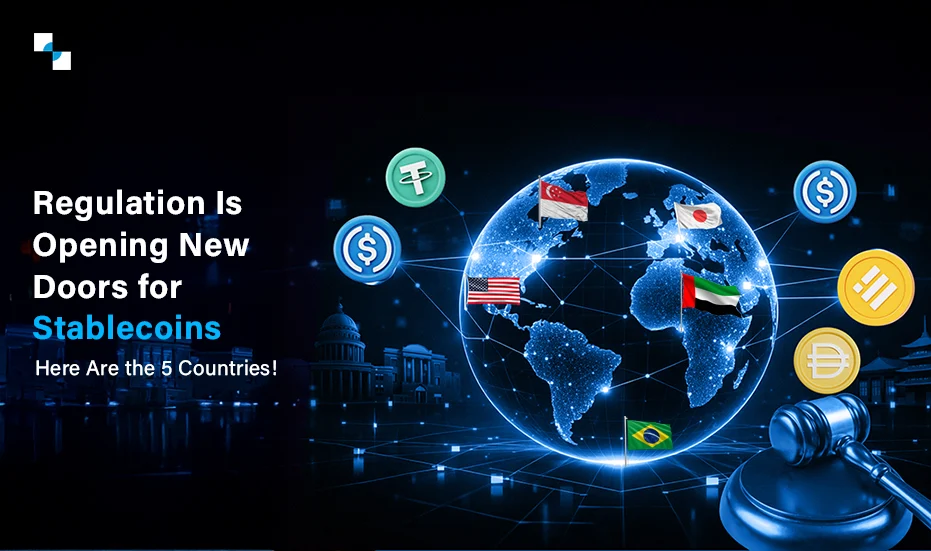
- The United States, European Union, United Arab Emirates, Singapore, and Japan are leading the way with regulatory bills that aim to define the rules for stablecoin development.
- These countries offer clear frameworks for stablecoin issuers, fostering innovation in digital payments, tokenized finance, and blockchain settlement systems.
- Understanding the regulatory landscape is crucial for companies looking to build stablecoin infrastructure for fintech platforms and payment networks.
In 2020, stablecoins were a niche tool used mainly inside crypto trading platforms. Today, they are becoming the financial rails of the internet economy.
Stablecoins now move over $30 trillion in annual transaction volume, surpassing the combined activity of several major global payment networks. Their total market capitalization has crossed $300 billion, and adoption continues to accelerate across fintech platforms, digital banks, and blockchain ecosystems. This explosive growth has triggered a new global race. Governments are now competing to define the rules for stablecoin issuance, reserves, and payment infrastructure. The countries that introduce clear regulatory frameworks today will likely become the global hubs for stablecoin innovation tomorrow.
For founders building fintech platforms, payment networks, or Web3 financial infrastructure, the key question is no longer whether stablecoins will reshape finance. The real question is: Which countries are creating the best environment for stablecoin development?
Understanding this regulatory landscape is critical for anyone exploring:
- How to build a stablecoin?
- How to create stable coin infrastructure for digital payments?
In this article, we examine five countries whose regulatory bills are shaping the future of stablecoin and why these jurisdictions are becoming strategic destinations for companies building the next generation of digital currency systems.
The Global Stablecoin Market at a Glance
Before exploring regulation, it is important to understand the scale of the stablecoin ecosystem today.
| Metric | Value |
|---|---|
| Global stablecoin market cap | ~$300B |
| Annual stablecoin transaction volume | $33T |
| Estimated payment-related volume | ~$390B |
| USD-backed stablecoin dominance | ~99% |
| Stablecoin share of crypto transactions | ~30% |
Industry analysts project the market could grow two to three times in the coming years, potentially reaching between $500 – $750 billion as adoption expands across payments and financial services.
Stablecoins are also becoming important for real-world payments. Research shows that identifiable payment flows reached approximately $390 billion in 2025, more than double the previous year. These numbers explain why stablecoin development for fintech companies and payment platforms has become a major focus across the financial technology ecosystem.
Get a First Look at Enterprise-Grade Stablecoin Infrastructure.
Top 5 Countries Leading Stablecoin Development Through Regulatory Bills
1. United States
The United States has introduced several legislative proposals designed to regulate stablecoin issuance. Key initiatives include federal frameworks requiring issuers to maintain 1:1 reserves backed by cash or short-term treasury assets.
- Regulatory Highlights
- Mandatory reserve backing
- Issuer audits and transparency requirements
- Federal oversight of stablecoin issuers
- Integration with financial institutions
These developments could allow both banks and licensed fintech companies to issue stablecoins, creating a large market for stablecoin development for payment platforms.
The U.S. market remains one of the most attractive destinations for companies learning how to create a stablecoin like USDT.
2. European Union
The European Union introduced the Markets in Crypto-Assets (MiCA) regulation, which establishes a unified regulatory framework for digital assets.
MiCA requires stablecoin issuers to:
- Obtain authorization from regulators
- Maintain fully backed reserves
- Provide transparency reports
- Protect consumers and investors
Why MiCA Matters?
MiCA creates a consistent legal environment across all 27 EU member states. This regulatory clarity is encouraging companies to invest in stablecoin development services aimed at EU markets.
The framework also supports innovation in:
- Digital payments
- Tokenized finance
- Blockchain settlement systems
3. United Arab Emirates
The UAE has become one of the most progressive regions for digital asset innovation. Regulators such as VARA and ADGM have created clear frameworks governing crypto assets, exchanges, and stablecoins.
Key Advantages
- Pro-innovation regulation
- Government support for blockchain adoption
- Growing fintech ecosystem
- Global financial connectivity
In 2026, the Central Bank of the UAE approved the launch of DDSC, a dirham-backed stablecoin developed by International Holding Company, Sirius International Holding, and First Abu Dhabi Bank. The stablecoin is designed to support regulated blockchain payments, trade settlement, and institutional financial infrastructure.
The introduction of a regulated AED-backed stablecoin signals the country’s ambition to build a compliant digital financial ecosystem and strengthen its position as a global blockchain hub.
This environment has made the UAE an attractive destination for companies exploring stablecoin development for fintech companies and digital payment platforms.
4. Singapore
Singapore continues to position itself as a leading fintech hub with strong digital asset regulation. The Monetary Authority of Singapore has introduced rules specifically for stablecoins pegged to major currencies. MAS Stablecoin Framework
The regulatory approach includes:
- Reserve asset requirements
- Redemption guarantees
- Licensing for stablecoin issuers
- Risk management standards
These policies provide businesses with a clear pathway for building a stable coin within a regulated financial environment. Singapore’s financial infrastructure and innovation ecosystem make it ideal for stablecoin development targeting cross-border payments.
See How the Next Generation of Stablecoins Is Built.
5. Japan
Japan has introduced one of the most structured regulatory frameworks for stablecoins, focusing on financial stability and consumer protection. Under Japan’s revised Payment Services Act, stablecoins can only be issued by licensed entities such as banks, registered money transfer companies, or trust companies. These issuers must maintain fully backed reserves and comply with strict financial oversight.
The regulations also require stablecoin issuers to ensure redemption rights, transparency in reserve management, and compliance with anti-money laundering standards.
Impact on Stablecoin Innovation:
Although Japan’s regulatory framework is strict, it increases trust and transparency within the digital asset ecosystem. This approach is expected to support institutional participation and encourage enterprise-grade stablecoin infrastructure, creating new opportunities for companies exploring stablecoin development and compliant digital payment systems.
Stablecoin Development Opportunities for Fintech and Payments
Stablecoins are creating new opportunities across multiple sectors.
- Cross-Border Payments
Traditional international transfers can take days and involve high fees.
Stablecoins enable instant global settlement with minimal transaction costs.
- Digital Banking
Fintech platforms can use stablecoins as a digital cash infrastructure for savings, transfers, and remittances.
- Tokenized Assets
Stablecoins provide settlement currency for:
- Tokenized real estate
- Digital securities
- On-chain financial instruments
- Global Commerce
Stablecoins allow merchants to accept payments globally without traditional banking barriers.
These applications are driving demand for stablecoin development services across fintech and payment industries.
Final Words
Countries introducing clear regulatory frameworks are positioning themselves as hubs for blockchain finance. For businesses exploring how to make a stable coin, how to build a stable coin, or how stablecoins work in blockchain, understanding these regulatory environments is essential before launching a project.
Most innovators exploring stablecoin for fintech companies and payment platforms ultimately want a solution that is compliant, secure, scalable, and ready for real-world financial use. That is why many organizations partner with a trusted stablecoin development company to handle token architecture, smart contracts, compliance systems, and payment integrations. Antier stands out as a leading provider of stablecoin development services, helping startups, fintech platforms, and enterprises launch reliable stablecoin ecosystems aligned with global regulations.
Planning to build your own stablecoin? Connect with Antier’s experts and start your stablecoin development journey today.
Frequently Asked Questions
01. What are stablecoins and how have they evolved since 2020?
Stablecoins are digital currencies designed to maintain a stable value, primarily used within crypto trading platforms in 2020. Today, they have become integral to the internet economy, moving over $30 trillion in annual transaction volume and surpassing several major global payment networks.
02. Why is understanding the regulatory landscape for stablecoins important?
Understanding the regulatory landscape is crucial for fintech founders and companies as it helps them navigate the rules for stablecoin issuance and payment infrastructure, enabling them to build effective digital currency systems in jurisdictions that support innovation.
03. What is the projected growth of the stablecoin market in the coming years?
Industry analysts project that the stablecoin market could grow two to three times in the coming years, potentially reaching a market cap between $500 billion and $750 billion as adoption expands across payments and financial services.