



✨ AI Summary
- The blog post discusses the transformation of film financing through asset tokenization platform development in 2026.
- Previously, the film industry operated within a centralized, exclusive system, hindering independent creators and retail investors.
- The emergence of asset tokenization platforms offers solutions to traditional inefficiencies by providing liquidity, transparency, and diversified investment opportunities.
- These platforms enable studios and producers to modernize their capital-raising strategies, issue compliant tokens, and automate revenue allocation.
- By digitizing film assets and implementing smart contracts for revenue sharing, tokenization enhances fractional ownership, reduces investment barriers, and improves liquidity.
In the past few decades, the global film industry relied on a centralized capital system that has been dominated by studios, institutional financiers, and private equity syndicates. While the traditional capital structure has allowed for the creation of high production value cinematic works, it has also limited the number of independent creators who are able to produce content, while excluding many retail investors from participating in the film industry in meaningful ways. As production costs ascend and audience fragmentation continues to grow into 2026, traditional capital structures are likely to expose structural inefficiencies.
As an increasing number of investors desire greater levels of liquidity, transparency, and diversified exposure, and filmmakers desire faster access to capital as well as greater creative control, traditional funding sources, which rely heavily on intermediaries and entail opaque reporting processes, will have difficulty satisfying these modern investor and filmmaker requests.
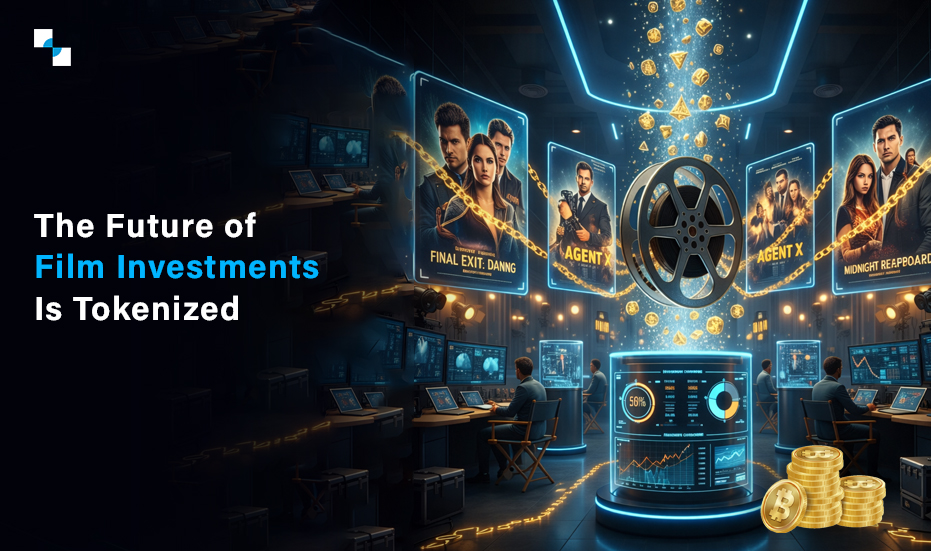
Through the advancement of asset tokenization platform development, a massive structural solution is emerging that will allow studios and independent producers to modernize their approach to raising capital. In addition, through the use of comprehensive asset tokenization services, studios and independent producers will be able to issue tokens that comply with legal requirements, allocate revenue automatically based on contractual structures, and include a broader range of potential investors.
Key Drivers:
- Demand for alternative yield-generating asset classes
- Escalating production and distribution costs
- Investor preference for programmable financial instruments
- Regulatory evolution supporting compliant digital securities
Legacy Market Inefficiencies Holding Back Film Capital
Prior to the advent of asset tokenization platform development, the film financing industry was a closed system, relationship-based, and geographically limited in terms of capital access and structural centralization. The lack of flexible ownership distribution and investor engagement, due to the unavailability of scalable tokenization platform development infrastructure, made the system inefficient.
The lack of organized asset tokenization services made revenue sharing, cap table management, and royalty reporting highly manual and prone to errors. With the growing global need for digital content, such inefficiencies are no longer tenable.
Capital Concentration in Institutional Networks
Prior to the advent of asset tokenization platform development, the film financing industry remained a concentrated system, controlled by the film studios, and restricted access to new entrants unless they had connections with established industry insiders.
The lack of an organized tokenization platform development infrastructure made fractional ownership engagement limited and exclusive. This is now remedied by modern asset tokenization services, which provide programmable engagement mechanisms.
Impact:
- Restricted access for independent producers
- Limited cross-border capital participation
- Narrow storytelling diversity
- Overreliance on centralized approval systems
High Investment Barriers for Retail Inclusion
The traditional process of film financing involved high capital investment barriers. Without asset tokenization platform development, fractionalization structures were complex and not unified from a legal perspective.
With the development of asset tokenization platforms, film assets can be broken down into programmable units that comply with regulatory requirements. The use of integrated asset tokenization services reduces investment barriers while maintaining regulatory requirements.
Impact:
- Retail investor exclusion
- Concentrated risk exposure
- Limited portfolio diversification
- Weak alignment between audiences and financial upside
Extended Lock-In Periods and Liquidity Issues
The traditional process of film investment involves extended periods of film production and monetization. Without asset tokenization platform development, which facilitate secondary markets, investors are subject to extended capital lock-in periods.
The asset tokenization platform development embeds exit strategies into digital infrastructure.
Impact:
- Capital tied up for extended periods
- Reduced investment agility
- Elevated opportunity costs
- Lower comparative attractiveness versus liquid alternatives
Fragmented Royalty Reporting and Manual Reconciliation
The traditional revenue reporting infrastructure is based on middlemen, ranging from distributors to exhibitors and streaming services. Without development in the asset tokenization platform, it was impossible to execute smart contracts automatically.
The development of the tokenization platform incorporates programmable revenue sharing, and sophisticated asset tokenization capabilities provide audit-compliant transparency.
Impact:
- Delayed settlements
- Accounting discrepancies
- Reduced investor trust
- Administrative inefficiencies
Ready to modernize your film financing strategy through asset tokenization platform development?
The Tokenization Framework: Infrastructure-Led Resolution of Film Finance Bottlenecks
The shift in film financing in 2026 is not based on speculative digital innovation—it is based on infrastructure renewal. The development of asset tokenization platforms represents a paradigm shift in the management of intellectual property, revenue streams, and investment access. Instead of applying technology to existing infrastructure, tokenization rebuilds the financing infrastructure itself.
With robust tokenization platform development, film initiatives are created as digitally native financial systems. Ownership tokens, revenue streams, and governance rights are encoded in smart contracts, allowing for autonomous execution without the need for disparate intermediaries. Full-service asset tokenization solutions provide for regulatory compliance, secure issuance, and transparent reporting.
This infrastructure-centric strategy specifically targets the pain points enumerated above—capital concentration, lack of accessibility, illiquidity, and fragmented reporting.
Structural Digitization of Film Assets
At the core of asset tokenization platform development is the digitization of underlying rights. Film-related assets—including distribution rights, licensing agreements, streaming revenues, and profit participation models—are mapped into programmable digital tokens.
This structured conversion creates:
- Fractional ownership units tied to defined revenue streams
- Immutable records of entitlement and allocation
- Automated enforcement of contractual conditions
- Transparent cap table representation
Unlike traditional agreements stored across legal silos, digitally structured assets exist within a unified, tamper-resistant environment. This ensures clarity in ownership hierarchy and eliminates ambiguity in entitlement calculations.
Automated Revenue Allocation Through Smart Contracts
One of the most critical inefficiencies in legacy film finance lies in royalty distribution. Tokenization platform development replaces manual reconciliation with smart contract–based automation.
Under this model:
- Revenue inflows are programmatically routed to token holders
- Predefined waterfall structures execute automatically
- Distribution timelines are reduced from months to near real-time
- Administrative overhead is significantly minimized
Integrated asset tokenization services manage ongoing reconciliation across theatrical releases, streaming platforms, syndication channels, and international licensing deals. This reduces disputes, enhances transparency, and builds investor confidence through consistent reporting mechanisms.
Capital Democratization Through Programmable Fractionalization
Traditional financing structures require high minimum investment thresholds. Asset tokenization platform development resolves this through compliant fractionalization mechanisms.
By segmenting intellectual property into regulated digital units, studios can:
- Lower entry barriers while maintaining compliance
- Expand participation to geographically diverse investors
- Enable diversified exposure across multiple productions
- Align audience communities with financial participation
Well-structured tokenization platform development ensures that these fractional offerings adhere to securities classifications and jurisdictional regulations. Meanwhile, end-to-end asset tokenization services manage investor onboarding, KYC/AML verification, and governance rights distribution.
Embedded Liquidity Architecture
Liquidity constraints have historically discouraged broader participation in film investments. Infrastructure-focused asset tokenization platform development incorporates secondary trading enablement directly into the framework.
This includes:
- Regulated marketplace integrations
- Peer-to-peer transfer functionality within compliance parameters
- Automated lock-up enforcement where required
- Transparent pricing mechanisms
Through advanced tokenization platform development, liquidity is no longer an afterthought—it becomes an engineered component of the financing ecosystem. Asset tokenization services ensure these liquidity pathways remain compliant and operationally secure.
Integrated Compliance and Governance Controls
Regulatory compliance remains central to sustainable adoption. Enterprise-grade asset tokenization platform development integrates:
- Jurisdiction-specific securities rule alignment
- Automated investor accreditation validation
- Transaction monitoring systems
- Governance voting modules
Rather than relying on manual legal oversight, compliance becomes embedded within the digital architecture. Comprehensive asset tokenization services continuously update compliance frameworks in response to regulatory evolution, ensuring long-term viability.
This governance integration strengthens institutional confidence and positions tokenized film financing within mainstream capital markets rather than speculative environments.
Real-Time Transparency and Investor Intelligence
Modern investors demand visibility. Through scalable tokenization platform development, stakeholders gain access to real-time dashboards displaying:
- Revenue performance metrics
- Token distribution records
- Transaction history logs
- Forecasted payout schedules
These reporting capabilities, delivered via structured asset tokenization services, eliminate informational asymmetry between producers and investors. Transparency becomes operational rather than aspirational.
Strategic Infrastructure Impact
By embedding automation, compliance, liquidity, and transparency within the core framework, asset tokenization platform development transitions film financing from relationship-driven exclusivity to programmable scalability.
The infrastructure-led model delivers:
- Reduced fundraising cycle durations
- Diversified global capital access
- Lower operational overhead
- Enhanced investor trust
- Improved financial predictability for studios
In 2026, tokenization platform development is not simply enabling new fundraising channels—it is redefining how entertainment assets function within digital capital markets. Through structured asset tokenization services, film financing evolves into a secure, transparent, and globally accessible financial ecosystem.
Conclusion
Film financing in 2026 is transitioning from centralized gatekeeping to infrastructure-driven democratization. Asset tokenization platform development removes structural barriers while maintaining compliance integrity. Tokenization platform development introduces liquidity, automation, and operational efficiency.
Integrated asset tokenization services provide the technological backbone enabling transparent collaboration between creators and investors. By digitizing intellectual property rights into programmable financial instruments, the industry is redefining capital participation.
Film financing is no longer exclusively studio-controlled—it is increasingly infrastructure-enabled, globally accessible, and strategically programmable.
Frequently Asked Questions
01. What challenges does the traditional film financing system face?
The traditional film financing system is challenged by centralized capital structures that limit independent creators, exclude retail investors, and struggle to meet modern demands for liquidity, transparency, and faster access to capital.
02. How can asset tokenization benefit the film industry?
Asset tokenization can benefit the film industry by allowing studios and independent producers to modernize capital raising, issue compliant tokens, automate revenue allocation, and engage a broader range of investors.
03. What are the key drivers for change in film financing?
Key drivers for change in film financing include the demand for alternative yield-generating assets, rising production and distribution costs, investor preference for programmable financial instruments, and regulatory evolution supporting compliant digital securities.