




✨ AI Summary
- In the evolving landscape of metaverse digital real estate, the focus has shifted from speculative asset to strategic digital infrastructure supporting commerce, engagement, and revenue channels.
- Enterprises are now exploring how virtual real estate can enhance their business models, with leading metaverse platforms seeing over $1.6 billion in digital land sales in 2022.
- Virtual real estate represents more than just 3D parcels; it offers persistent brand presence, immersive commerce opportunities, new revenue models, and community ownership benefits.
- Forward-thinking organizations are investing in developing their own metaverse environments, integrating blockchain technology, and prioritizing infrastructure design, user experience, monetization, security, and scalability.
- Early adoption in this space offers advantages in category authority, positioning, loyalty, and ecosystem control.
For a few years, metaverse digital real estate was treated like a gold rush. Headlines focused on million-dollar virtual land sales, celebrity plots, and speculative flipping. Many enterprises watched from the sidelines, unsure whether this was innovation or hype. Today, the conversation has matured.
Forward-thinking organizations are no longer asking “Should we buy virtual land?”
They’re asking “How can virtual real estate support our business model?”
That shift changes everything.
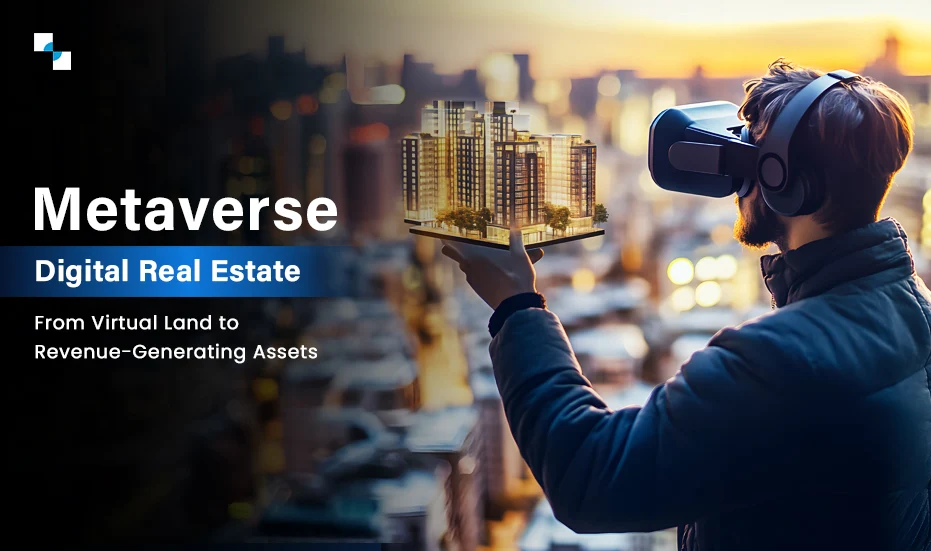
Metaverse digital real estate is evolving from a speculative asset into a strategic digital infrastructure layer, one that supports commerce, customer engagement, brand presence, and new revenue channels. Moreover, enterprises that understand this transition are beginning to build long-term advantages.
Analytics from DappRadar indicate that virtual land sales in leading metaverse platforms surpassed $1.6 billion in 2022, reflecting continued demand for digital real estate even amid market fluctuations. This gives a clear indication of the opportunity in the market in the time to come.
What Metaverse Digital Real Estate Really Means
Virtual real estate is not just a 3D parcel on a map. In a business context, it is:
- A persistent digital environment
- A programmable commercial space
- A branded engagement hub
- A community ecosystem
- A revenue-generating digital asset
Think of it less like buying land and more like owning prime digital territory where your audience interacts, shops, learns, and socializes. Just as websites and mobile apps became essential digital assets in the past decade, immersive environments are emerging as the next layer of digital presence.
The difference?
These spaces are experiential, interactive, and monetizable in ways traditional platforms are not.
Why Enterprises Are Taking Virtual Real Estate Seriously
1) Persistent Brand Presence
Unlike campaign-based digital marketing, metaverse spaces are persistent. Your environment exists 24/7 as a branded world users can revisit.
Enterprises use this for:
- Virtual showrooms
- Product demos
- Immersive brand storytelling
- Community hubs
This helps create long-term brand recall rather than one-time impressions.
2) Immersive Commerce Opportunities
Virtual real estate enables experiential commerce. Instead of browsing a catalog, users explore environments, interact with products, and engage socially.
A few of the prominent examples include:
- Virtual retail stores
- Digital product launches
- NFT-backed collectibles
- Token-gated experiences
This blurs the line between entertainment and commerce, a powerful driver of engagement & sales.
3) New Revenue Models
Well-designed metaverse environments can generate revenue through:
- Digital asset sales
- Event hosting
- Advertising placements
- Premium experiences
- Membership ecosystems
- Virtual leasing spaces
In other words, digital real estate can become an income-producing asset, not just a marketing experiment.
4) Community Ownership & Loyalty
Blockchain-enabled virtual real estate allows fractional ownership, governance tokens, and user participation. When users feel ownership, they stay longer. When they stay longer, ecosystems grow stronger. Here enterprises benefit from:
- Higher retention
- Community advocacy
- Organic growth loops
Looking for Metaverse Real Estate Development Services?
The Real Risk: Not Strategy, But Execution
Many early metaverse projects failed not because the concept was wrong but because execution was poor. Some of the most common pitfalls include:
- Empty virtual spaces with no utility
- Weak user experience design
- No monetization logic
- Scalability issues
- Lack of interoperability
- No long-term roadmap
Buying land without building value on it is like owning a mall with no stores. This is where strategy and development expertise matter.
From Buying Land to Building Platforms
Smart enterprises are moving away from simply purchasing parcels on third-party platforms. Instead, they are:
- Building their own environments
- Creating branded virtual ecosystems
- Designing commerce-ready spaces
- Integrating blockchain ownership layers
- Developing scalable metaverse infrastructure
This approach provides control, flexibility, and long-term ROI. However, enterprises need to keep in mind that choosing the right metaverse development company is the key to success.
What a Metaverse Development Company Actually Enables
Serious and strategic metaverse real estate development services do not represent a design project, it’s a technology, product, and business initiative.
A professional metaverse development company helps enterprises with:
1. Infrastructure Design
Building scalable, high-performance environments capable of supporting large user bases.
2. Blockchain Integration
Enabling asset ownership, NFTs, tokenization, and secure transactions.
3. Experience Design
Crafting environments users actually want to explore and return to.
4. Monetization Architecture
Designing revenue models that align with business goals.
5. Security & Compliance
Ensuring safe asset management and data integrity.
6. Long-Term Scalability
Planning for growth, updates, and evolving use cases.
Without these pillars, virtual real estate remains an experiment instead of becoming a business asset.
Who Should Invest in Metaverse Digital Real Estate?
This space is especially relevant for:
- Retail and eCommerce brands
- Real estate developers
- Gaming companies
- Education providers
- Event and entertainment firms
- Luxury and lifestyle brands
- Enterprises building digital communities
If your business depends on engagement, experience, or community, virtual real estate has strategic potential.
Why Early Builders Gain an Advantage
Just like early website adopters dominated search and early app adopters captured mobile markets, early metaverse builders gain:
- Category authority
- Prime digital positioning
- Community loyalty
- Ecosystem control
- Learning curve advantages
Waiting until the market is saturated increases costs and reduces differentiation. The key is not rushing blindly but building strategically.
Conclusion
It is ideal to approach virtual real estate as a business infrastructure project, not a speculative venture. Antier, as a leading metaverse development company helps enterprises:
- Design immersive branded environments
- Build blockchain-enabled ownership layers
- Develop commerce-ready virtual spaces
- Create scalable metaverse platforms
- Launch monetizable digital ecosystems
The focus is always on utility, scalability, and ROI. It is because in the long run, the value of virtual real estate comes from what you build on it, not what you pay for it.
Metaverse digital real estate is moving past speculation. It is becoming a strategic channel for digital presence, engagement, and revenue. Enterprises that treat it as infrastructure and just not hype will be the ones that capture real value. So, the ultimate question is no longer “Is virtual real estate real?” It’s “How will your business use it?”
Frequently Asked Questions
01. What is metaverse digital real estate?
Metaverse digital real estate refers to virtual spaces in a digital environment that serve as persistent, programmable commercial areas for brand engagement, community interaction, and revenue generation.
02. Why are enterprises investing in virtual real estate?
Enterprises are investing in virtual real estate to establish a persistent brand presence, create immersive commerce opportunities, and build long-term advantages in customer engagement and revenue channels.
03. How much did virtual land sales in leading metaverse platforms exceed in 2022?
Virtual land sales in leading metaverse platforms surpassed $1.6 billion in 2022, indicating strong demand for digital real estate despite market fluctuations.