




AI Summary
- The blog post discusses the Intelligence Supercycle that began in 2026, marking a significant shift as Artificial Intelligence becomes foundational for modern organizations.
- Enterprises are increasingly turning to AI development companies to drive efficiency and competitive advantage.
- Key growth drivers shaping the AI market from 2026 to 2030 include the transition to Agentic AI, vertical-specific AI solutions, and the importance of Sovereign AI and edge computing.
- Strategic investment opportunities lie in enterprise AI platforms and industry-focused AI solutions.
- The post also highlights enterprise pain points such as integration with legacy systems and talent gaps, as well as risks like energy consumption and regulatory challenges.
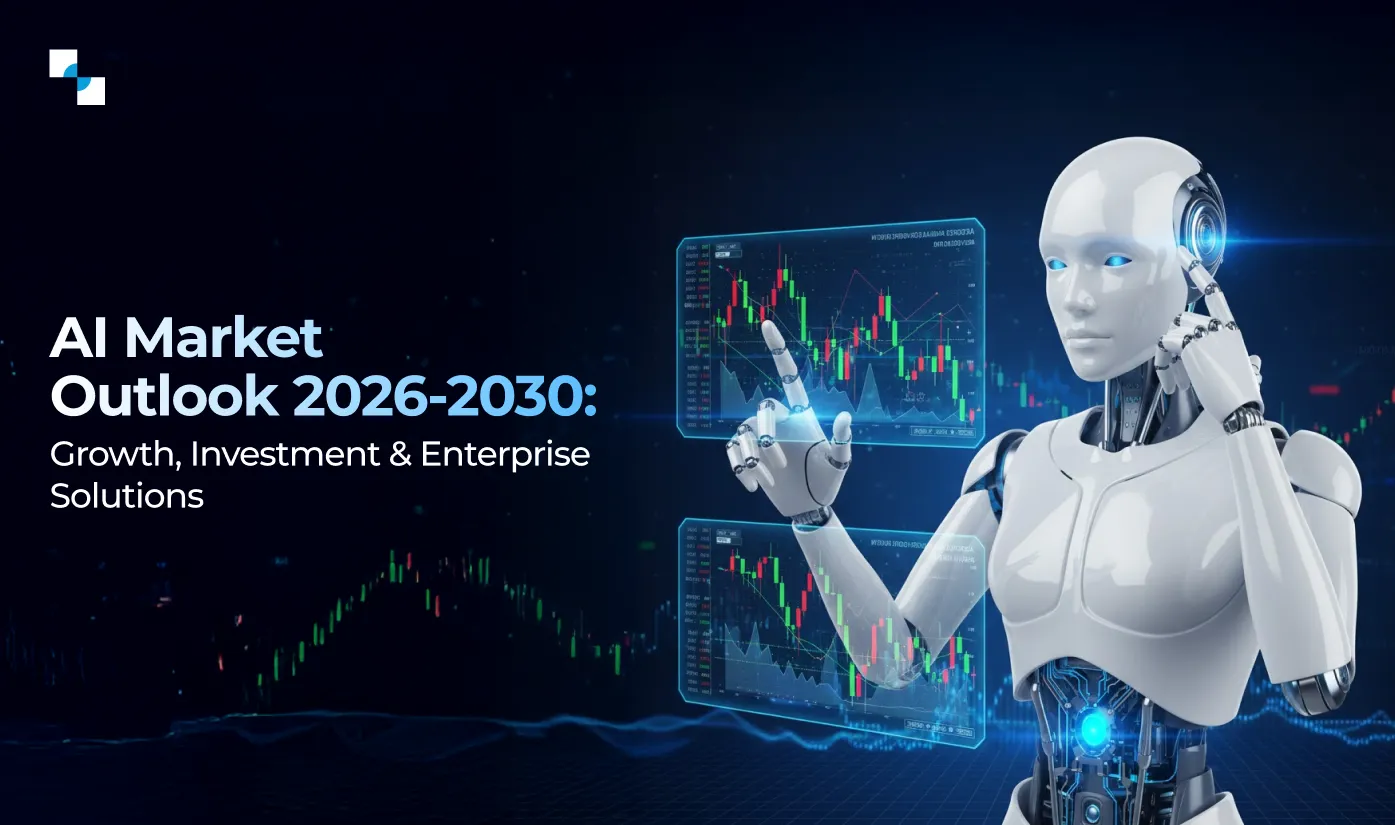
The global economy entered what industry leaders now define as the Intelligence Supercycle in 2026. Artificial Intelligence is no longer an experimental add-on within enterprises; it is rapidly becoming the foundational infrastructure that modern organizations are built upon. As an increasing number of enterprises turn to an AI development company to accelerate adoption, the conversation in boardrooms has shifted decisively. Leaders are no longer debating whether AI will transform operations – they are focused on how quickly their enterprises can operationalize AI at scale to drive efficiency, resilience, and long-term competitive advantage.
Across industries, enterprises are re-architecting workflows, decision systems, and customer experiences around AI-driven intelligence. This shift is driving unprecedented demand for advanced artificial intelligence software development, enterprise-grade platforms, and trusted AI development companies capable of delivering secure, scalable, and governed solutions. This blog presents a strategic outlook on the Global AI Market from 2026 to 2030, examining the forces driving growth, where investment value is concentrating, and the risks enterprises must actively manage.
The Global AI Market at a Strategic Inflection Point
The numbers behind AI adoption are no longer speculative – they are structural. By early 2026, the global AI market crossed the USD 430 billion mark and is projected to exceed USD 2.5 trillion by 2031, growing at a CAGR of over 40%. What makes this growth unique is not just its scale, but its source: enterprise adoption.
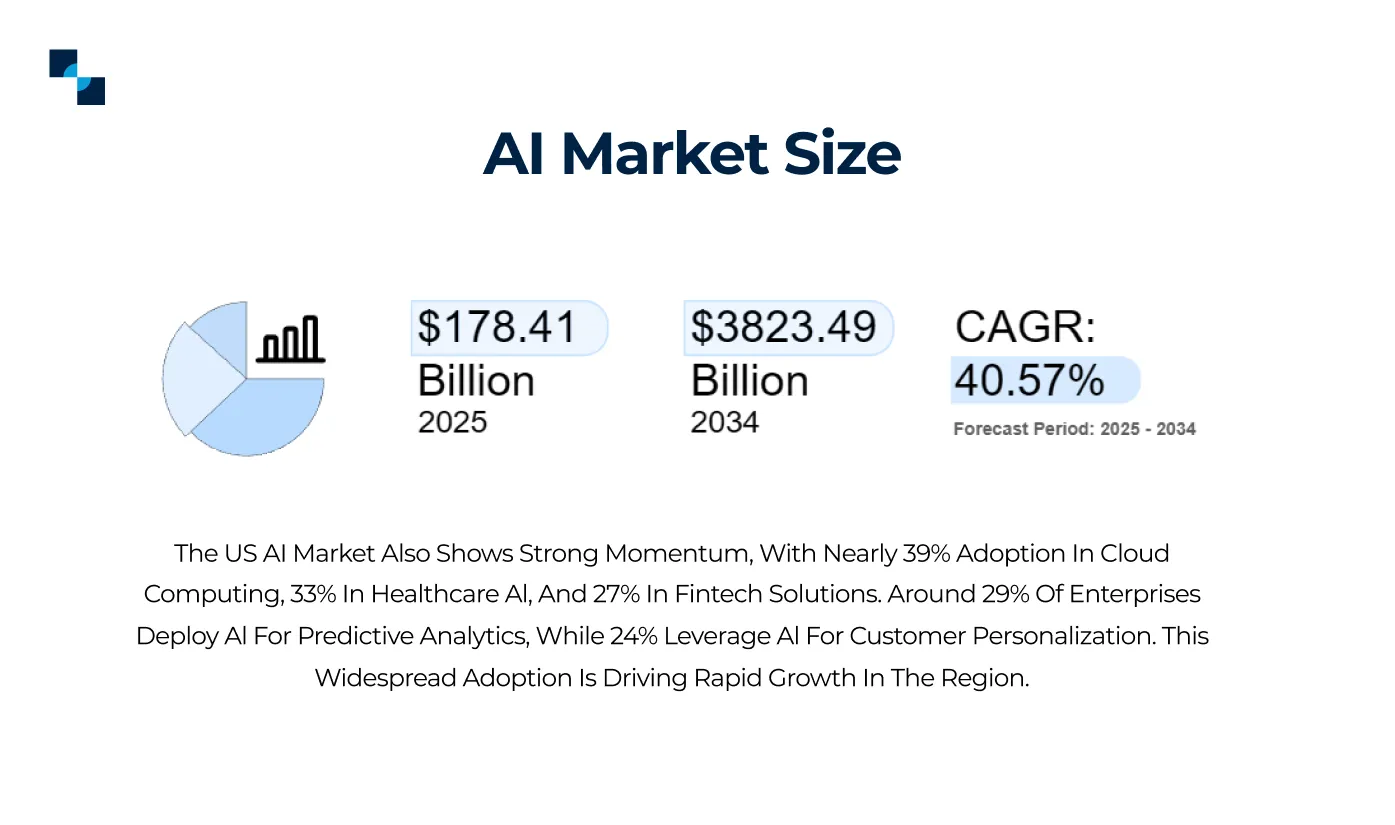
Source link: https://www.globalgrowthinsights.com/market-reports/ai-market-119769
Unlike earlier technology waves driven by consumer platforms, AI’s expansion is being fueled by enterprises investing in automation, predictive intelligence, and autonomous systems. Manufacturing plants, financial institutions, healthcare providers, logistics networks, and governments are embedding AI directly into mission-critical operations.
As a result, enterprises are shifting from fragmented AI pilots to comprehensive engagements with enterprise AI solutions providers that can align AI initiatives with business outcomes, regulatory frameworks, and long-term scalability.
1. Key Growth Drivers Shaping the AI Market (2026-2030)
1.1 From Assistive AI to Agentic AI
The first major growth driver is the transition from assistive AI systems to Agentic AI – systems capable of reasoning, planning, and executing multi-step tasks autonomously under human supervision.
Where chatbots and recommendation engines once dominated enterprise AI, organizations are now deploying AI agents for procurement automation, financial reconciliation, fraud detection, IT operations, and customer lifecycle management. These systems operate continuously, learn from feedback, and integrate across enterprise applications.
By the end of the decade, agentic systems are expected to handle a significant share of operational workflows in large enterprises. This shift places immense importance on robust artificial intelligence software development that prioritizes reliability, explainability, and governance – not just model accuracy.
1.2 Vertical-Specific AI and Domain Intelligence
General-purpose AI models are rapidly becoming commoditized. Competitive differentiation is now emerging from verticalized AI solutions trained on industry-specific data, workflows, and compliance requirements.
Healthcare organizations are adopting AI for diagnostics, imaging analysis, genomics, and virtual care. Financial institutions are deploying AI for real-time risk modeling, regulatory monitoring, and autonomous fraud prevention. Manufacturers are using AI-powered digital twins to simulate operations and optimize supply chains.
This evolution has increased demand for enterprise AI solutions providers with deep domain expertise and the ability to design custom models tailored to real-world constraints. Enterprises no longer want generic AI – they want intelligence that understands their business.
1.3 Sovereign AI and the Edge Computing Shift
Data privacy regulations, geopolitical fragmentation, and operational latency requirements are reshaping how AI infrastructure is deployed. By 2026, Sovereign AI – AI systems that operate within specific legal and geographic boundaries has become a strategic priority for enterprises and governments alike.
At the same time, AI workloads are moving closer to where data is generated. Edge computing is enabling AI inference at factories, hospitals, vehicles, and energy grids, reducing latency and increasing resilience.
This shift is driving demand for flexible AI platform development services that support hybrid deployments across cloud, on-premises, and edge environments while maintaining centralized governance and security.
Build Industry-Ready AI That Delivers Real ROI
2. Strategic Investment Opportunities in the AI Ecosystem
As the AI market matures, capital is concentrating in areas that offer sustainable, defensible value rather than short-term hype.
2.1 Enterprise AI Platforms and Orchestration Layers
One of the most attractive investment areas is enterprise AI platforms that orchestrate data pipelines, models, agents, and governance frameworks. These platforms act as the control layer for enterprise intelligence, enabling organizations to deploy AI consistently across departments.
Enterprises increasingly prefer platforms that offer low-code capabilities, interoperability with existing systems, and built-in compliance. This is where advanced AI platform development services create long-term value by reducing deployment friction and accelerating ROI.
2.2 Industry-Focused AI Solutions
Sector-specific AI solutions continue to attract strong investment due to their clear business impact:
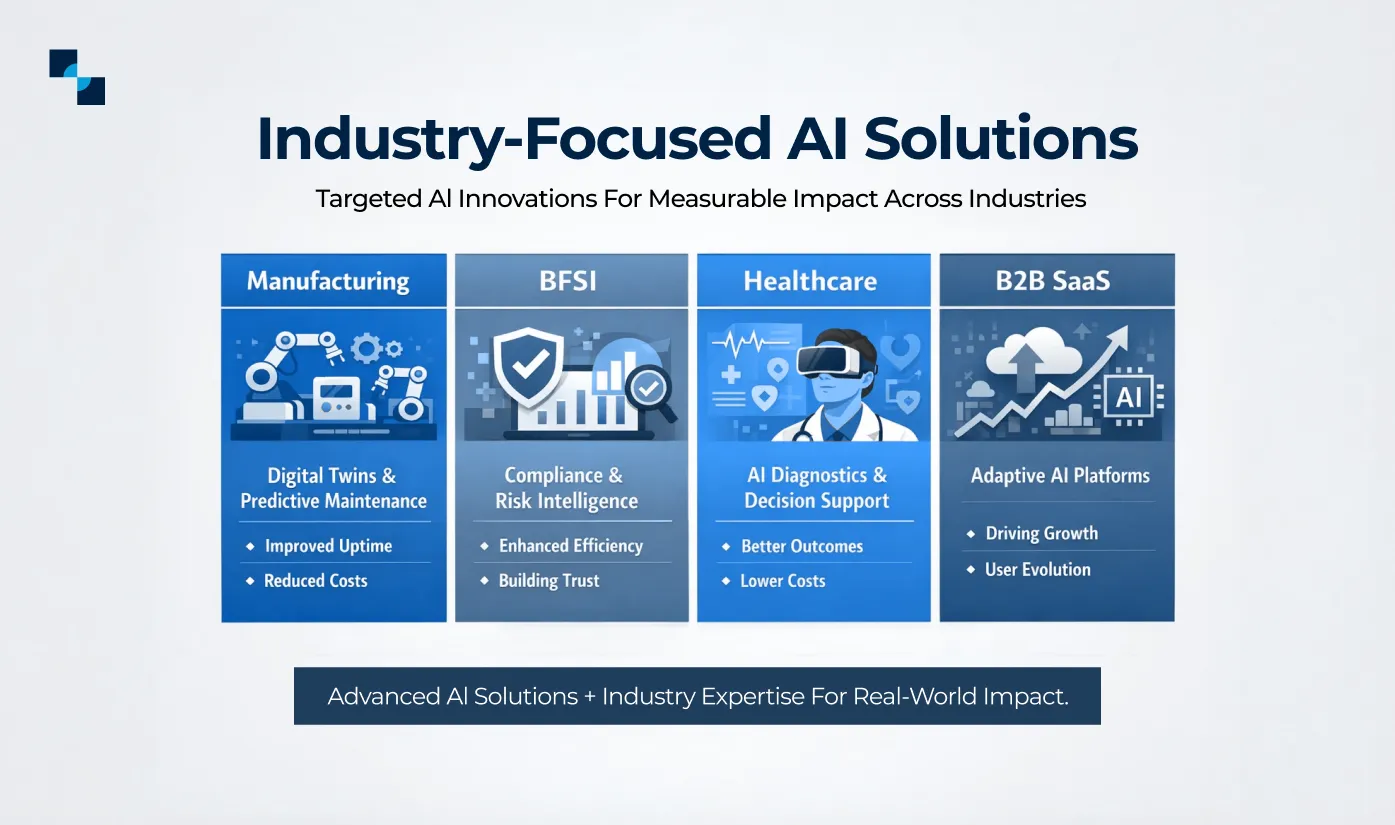
- Manufacturing: Digital twins and predictive maintenance are improving uptime and reducing operational costs.
- BFSI: AI-driven compliance, risk intelligence, and autonomous monitoring systems are enhancing efficiency and trust.
- Healthcare: AI-enabled diagnostics and clinical decision support are improving outcomes while reducing systemic costs.
- B2B SaaS: AI-native platforms that evolve continuously based on user behavior are redefining software economics.
These opportunities favor AI development companies that combine technical depth with industry understanding.
3. Enterprise Pain Points and How AI is Solving Them
Despite rapid growth, AI adoption at scale remains challenging. Successful enterprises are addressing these pain points through strategic AI implementations.
3.1 Integration with Legacy Systems
Many enterprises operate complex legacy environments that were not designed for AI. Modern enterprise AI solutions providers address this challenge through API-driven architectures and modular platforms that integrate seamlessly with existing systems.
3.2 Data Quality and Governance
AI systems are only as effective as the data they consume. Poor data quality, fragmented ownership, and compliance risks can undermine AI initiatives. Enterprises are increasingly investing in governed data pipelines, lineage tracking, and explainable AI frameworks to ensure trust and transparency.
3.3 Talent and Skill Gaps
AI expertise remains scarce. Rather than relying solely on hiring, enterprises are adopting platforms and services that abstract complexity and enable business teams to deploy AI safely. This has elevated the role of AI platform development services in democratizing AI adoption.
4. Risk Analysis: Navigating the AI Reckoning
4.1 Energy and Infrastructure Constraints
AI’s rapid growth has significant energy implications. Data centers supporting AI workloads are consuming unprecedented levels of electricity, creating cost and sustainability challenges. Enterprises must prioritize efficient architectures, optimized inference, and green AI practices.
4.2 Regulatory and Governance Risks
As AI regulation matures globally, non-compliance risks are increasing. Enterprises must embed governance, auditability, and explainability into AI systems from day one. This has become a defining capability of mature enterprise AI solutions providers.
4.3 Workforce Transformation
AI is reshaping job roles rather than eliminating them. The most resilient enterprises are adopting Human-in-the-Loop models where AI augments human expertise. Success depends on reskilling programs and organizational change management.
Why Choosing the Right AI Development Partner Matters
The window for experimentation is closing. Between 2026 and 2030, AI adoption will increasingly follow a winner-takes-advantage pattern, where early movers compound their gains through data, automation, and learning effects.
Partnering with a trusted AI development company is no longer a tactical decision – it is a strategic one. Enterprises need partners that understand security, compliance, scalability, and industry realities, not just algorithms.
Partner with Us to Develop Future-Ready AI Solutions
Why Antier
Antier stands at the intersection of strategy, engineering, and enterprise execution. As a trusted enterprise AI solutions provider, Antier delivers:
- End-to-end artificial intelligence software development
- Scalable and secure AI platform development services
- Industry-specific AI architectures for regulated and high-impact environments
- Governance-first, privacy-centric AI systems designed for long-term value
Antier helps enterprises move beyond experimentation to build AI systems that deliver measurable business outcomes.
Engineering the AI-Driven Enterprise Future
The global AI market between 2026 and 2030 will be defined by execution at scale, not experimentation. Enterprises that succeed will embed intelligence into their core systems, align AI with governance, and deploy solutions that create measurable business value. As AI evolves from standalone tools to autonomous, enterprise-wide capabilities, partnering with an experienced AI development company is essential. Antier helps businesses operationalize intelligence seamlessly, delivering scalable, industry-ready solutions. By integrating advanced AI into mission-critical operations through enterprise AI solutions, enterprises can unlock sustainable growth, enhanced efficiency, and a lasting competitive advantage.