






✨ AI Summary
- In a transformed ICO market, projects are smarter, investors cautious, and compliance key.
- The revival is grounded in growth numbers, now projected to hit $11.53 billion annually by 2031.
- Modern ICO development models prioritize purposeful tokens, smart tokenomics, compliance, governance, community trust, product execution, and strategic fundraising.
- These models aim to prevent past mistakes such as unclear token utility, weak tokenomics, compliance ignorance, poor governance, product failure, and overfunding.
- Successful ICOs today focus on clear purpose, robust tokenomics, compliance, community engagement, and sustained growth through MVP launches.
The ICO market is booming again, but this time it bears little resemblance to the chaos of 2017. Projects are smarter, investors are cautious, and compliance has become the new foundation of fundraising. Startups across the Web3 ecosystem are embracing modern ICO development models that merge transparency, technology, and trust. Exchanges are launching regulated token-sale platforms, and institutional investors are re-entering the space with confidence.
The ICO market’s revival is grounded in numbers. It has grown from US$6.3 billion in 2017 to US$79 billion by 2023, and is projected to reach US$11.53 billion annually by 2031, with a 12.5% compound growth rate. Success rates now stand at 34.5 %, far higher than in the early hype era. The truth is simple: the ICO has evolved. With professional ICO development services, founders can now raise capital through compliant frameworks that ensure investor safety and project sustainability. For those ready to launch, partnering with a reliable company is no longer optional; it’s essential.
In this blog, we’ll walk you through the major mistakes of the past and show how modern models prevent them. Grab your developer mindset, founder hat, or agency strategist cap; this one’s for you.
6 Costly ICO Mistakes and How Modern ICO Development Solves Them
1) Mistake #1: Lack of Clear Purpose & Token Utility
- The Past: “Raise Now, Build Later”
During the 2017–2018 ICO wave, projects often sold tokens on promises rather than real products. Tokens acted as fundraising tools, not parts of functioning ecosystems. As a result, investors lost trust and dumped tokens soon after listings.
- The Modern Model: Purpose-First, Token-Second
A professional ICO development company ensures that today’s token launches are built on defined utility, governance rights, staking, or network access, with MVPs ready before the sale. The focus is to make the token a functional element of the ecosystem, not just speculative paper. Projects with purposeful tokens retain investor confidence and promote long-term ecosystem value.
2) Mistake #2: Weak Tokenomics & Poor Distribution
- The Past: Oversupply and Quick Dumps
Early ICOs suffered from inflated supplies, no vesting schedules, and unbalanced allocations. Founders released tokens too early, creating market dumps and instability.
- The Modern Model: Smart Tokenomics Framework
Today, ICO development services design transparent supply models, define circulating vs locked tokens, and integrate structured vesting. Balanced allocations between the community, team, and investors ensure fair participation. Modern tokenomics also includes deflationary mechanisms such as staking rewards and token burns, strengthening long-term value stability. Strong tokenomics maintain liquidity, prevent speculative crashes, and align all stakeholders.
3) Mistake #3: Ignoring Compliance and Regulation
- The Past: “Utility Token” Excuses
Many early ICOs misclassified their tokens and ignored regulatory obligations, leading to lawsuits and penalties. Lack of KYC/AML, unverified investors, and non-compliant promotions hurt both projects and investors.
- The Modern Model: Compliance Built-In
Modern frameworks offered by advanced ICO token development firms incorporate legal consultation, regional KYC/AML compliance, and automated whitelisting. Marketing materials are now fully compliant with securities laws, ensuring transparent fundraising processes. Integrating compliance early builds institutional trust and eliminates regulatory risks, a critical factor for sustainable token success.
4) Mistake #4: Poor Governance & Weak Community Trust
- The Past: Hidden Teams and Broken Promises
Many early projects lacked transparent communication. Anonymous founders, vague roadmaps, and no progress updates led to massive community backlash and credibility loss.
- The Modern Model: Governance and Transparency at the Core
Modern ICO Development frameworks emphasize visible teams, verifiable audits, and DAO-based decision-making. Transparent roadmaps and consistent updates turn token holders into active community participants. Governance clarity and open communication transform passive investors into loyal stakeholders, strengthening project longevity.
5) Mistake #5: Execution Gaps & Product Failure
- The Past: Raised Funds, No Product
Some projects collected millions but failed to deliver. Delays, weak scalability, and unverified code created distrust and crashed token prices.
- The Modern Model: Agile & MVP-Ready Launches
Every reputable ICO development company now prioritizes agile development. Smart contracts undergo multiple audits, MVPs are live before sale, and modular architectures ensure faster deployment. Scalability across multi-chain networks is built in from the start. Execution-first strategies prevent post-sale failures and show investors that the project is product-driven, not hype-driven.
6) Mistake #6: Overfunding & Speculator-Driven Raises
- The Past: Unrealistic Goals and Investor Dumping
Early ICOs chased massive fundraising targets without project feasibility. Overly generous bonuses attracted speculators, not genuine users, leading to short-term pumps and long-term dumps.
- The Modern Model: Strategic Fundraising & Incentive Alignment
Today’s ICO Development Services emphasize realistic soft and hard caps aligned with actual project costs. Fundraising is staged, with milestones tied to product progress. Incentives now reward long-term ecosystem participation instead of quick exits. Aligning the interests of investors, founders, and users creates sustainable project growth and reduces volatility after the token launch.
Before you launch, get Antier’s expert guidance on tokenomics, compliance, and success.
Bringing it All Together: What Modern ICO Development Looks Like
Modern ICOs are no longer speculative fundraising tools. They are structured ecosystems built for transparency, compliance, and lasting value. Here’s what defines the new era of token launches.
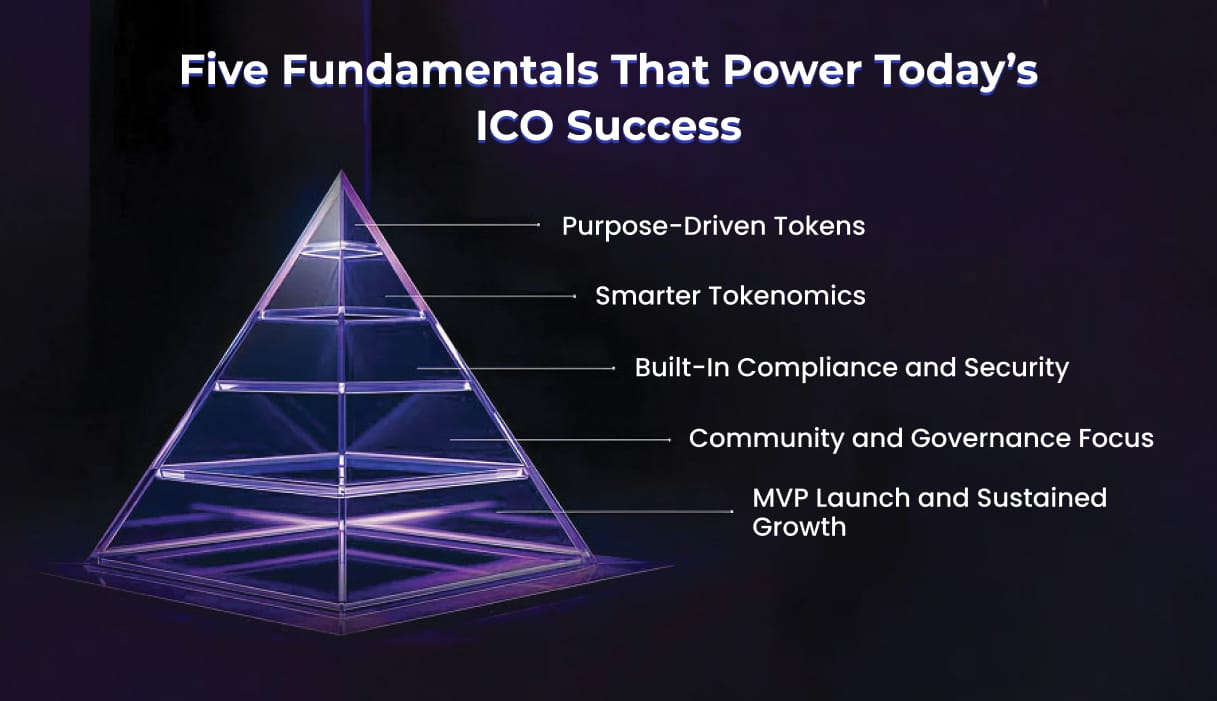
- Purpose-Driven Tokens: Every successful ICO now starts with a clear purpose. Tokens are designed around real use cases such as staking, governance, and platform access. A leading ICO development company ensures the token has a working role in the ecosystem, connecting directly to a live product or MVP that supports real user adoption.
- Smarter Tokenomics: Modern services are built on strong tokenomics models that prevent market instability. Clear supply limits, vesting periods, and fair allocations align the interests of the team, investors, and community. This structure encourages long-term holding, prevents token dumping, and supports healthy project growth.
- Built-In Compliance and Security: The latest ICO token development frameworks integrate regulatory compliance and smart contract security at every stage. Features such as KYC and AML verification, audit-certified code, and investor whitelisting ensure the token sale process is transparent, compliant, and trustworthy.
- Community and Governance Focus: Modern ICOs prioritize community participation. Transparent communication, DAO voting rights, and milestone updates help transform investors into active ecosystem partners. Engaging governance and two-way dialogue strengthens credibility and builds user-driven project momentum.
- MVP Launch and Sustained Growth: An effective ICO development strategy always starts with an MVP or working prototype before the token sale. After launch, teams maintain growth through staking programs, token burns, and ecosystem integrations. This continuous value delivery keeps investor trust intact and the project moving forward.
See how your ICO could look before launch and explore your custom demo today.
Why It Pays to Care Before You Begin ICO Development
Two startups launched ICOs last year. Both had innovative ideas, experienced teams, and solid community traction. Yet only one of them is still growing today.
The difference? Preparation.
Startup A took the time to do it right. They partnered with an experienced ICO development company to refine their tokenomics, implement vesting schedules, conduct contract audits, and structure legal compliance before the token sale went live. Their roadmap was transparent, their smart contracts were audited, and their investor onboarding process was compliant from day one. The result was a steady rise, strong liquidity, and long-term investor confidence.
Startup B, on the other hand, rushed to market. Their tokenomics lacked structure, no KYC/AML process was in place, and the smart contracts went untested. The launch generated initial buzz, but within weeks, liquidity dried up, regulatory concerns emerged, and community trust collapsed.
“The contrast between both cases shows a clear truth: successful ICOs don’t begin with code; they begin with planning.”
By investing time in token design, legal frameworks, and technical security, founders protect both their investors and their reputation. Strategic preparation transforms an ICO from a short-term fundraising event into a sustainable, growth-oriented ecosystem. In the end, the projects that take the time to prepare before launch are the ones that survive market volatility, earn regulatory confidence, and retain long-term value.
Key Takeaways & Action Checklist
Before launching your ICO, it’s crucial to ensure that every element, from concept to compliance, is built on solid ground. Use this quick checklist to assess your readiness:
- Have you clearly defined your token’s purpose and real-world utility?
- Is your tokenomics model transparent, balanced, and aligned with long-term growth?
- Have you integrated legal compliance, KYC/AML verification, and jurisdictional approvals?
- Is your team credible, your product functional, and your roadmap achievable?
- Do you have a security-audited smart contract and a clear post-launch execution plan?
Success in today’s market depends on structure, not speed. Every step you take before launch shapes investor trust and regulatory confidence. For founders who want to do it right from day one, Antier delivers comprehensive ICO development solutions, from token design and audit to compliant fundraising and post-launch support, ensuring your project stands strong in any market.
Frequently Asked Questions
01. What has changed in the ICO market since 2017?
The ICO market has evolved significantly, with smarter projects, cautious investors, and a focus on compliance. Modern ICOs emphasize transparency, technology, and trust, leading to higher success rates and a more stable fundraising environment.
02. How much has the ICO market grown from 2017 to 2023?
The ICO market has grown from US$6.3 billion in 2017 to US$79 billion by 2023, with projections of reaching US$11.53 billion annually by 2031, reflecting a 12.5% compound growth rate.
03. What are the key mistakes of past ICOs that modern models aim to prevent?
Modern ICO models aim to prevent mistakes such as lack of clear purpose and token utility, weak tokenomics, and poor distribution by ensuring tokens have defined utility, transparent supply models, and proper vesting schedules.