


Bringing Real-World Assets On-Chain with Our Asset Tokenization Platform

Antier delivers enterprise-grade asset tokenization platforms engineered to support diverse real-world asset classes, including equities, funds, real estate, commodities, and alternative assets. These platforms are built with compliance-ready workflows, modular architecture, and white-label flexibility, enabling issuers to manage the full asset lifecycle-from issuance and fractionalization to distribution, governance, and on-chain reporting- within a secure and scalable environment.

Backed by deep expertise in blockchain architecture, smart contract engineering, and regulated financial infrastructure, our asset tokenization development company enables institutions, asset owners, and ecosystem innovators to deploy robust RWA solutions with speed and certainty.
Asset Tokenization Platform Case Study

Break Down Barriers to Real-World Investment

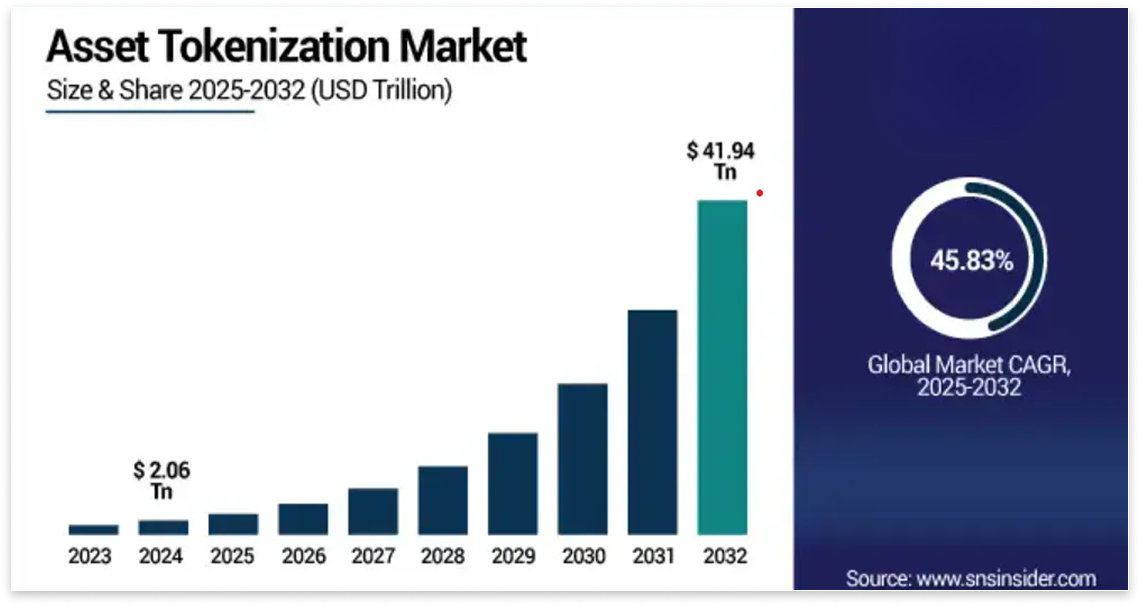
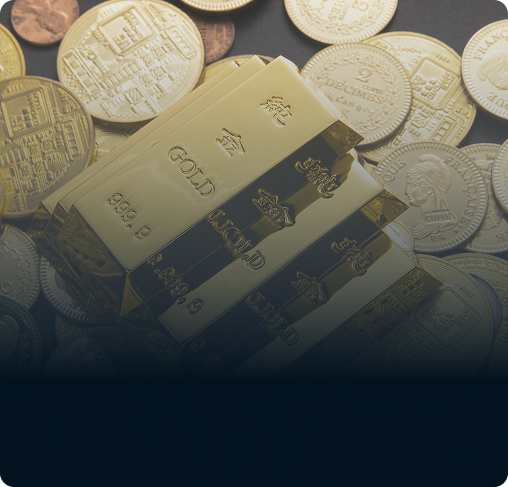
Asset Tokenization Market Scope

Asset tokenization market is expected to reach USD 41.94 trillion by 2032, growing at a CAGR of 45.83% over 2025-2032.

Future-Ready & Scalable RWA Tokenization Solutions Powered by AI & Web3

Antier delivers future-ready, scalable RWA tokenization solutions designed to meet the demands of institutional-grade markets. By integrating AI-driven intelligence across asset onboarding, valuation, and compliance workflows, Antier enables organizations to launch high-performance tokenization platforms that remain resilient as asset volumes, users, and regulatory requirements grow.

Powered by Web3-native architecture, Antier’s solutions support multi-asset tokenization, programmable ownership, and seamless interoperability across blockchain networks. This combination of AI precision and Web3 scalability positions Antier as a trusted technology partner for enterprises building the next generation of tokenized asset ecosystems.

Our Services

Our services are designed to help institutions tokenize, manage, and scale real-world assets with confidence. From platform development to compliance alignment, every solution is built for enterprise adoption.

Real-World Use Cases

As a World Asset Tokenization Platform Development Company, Antier provides an end-to-end ecosystem for enterprises to unlock the vast potential of tokenomics. Our white-label asset tokenization platform benefits asset owners with immutable records & transparent transactions, helping platform owners expand their horizons.

World-class Asset Tokenization Development Company
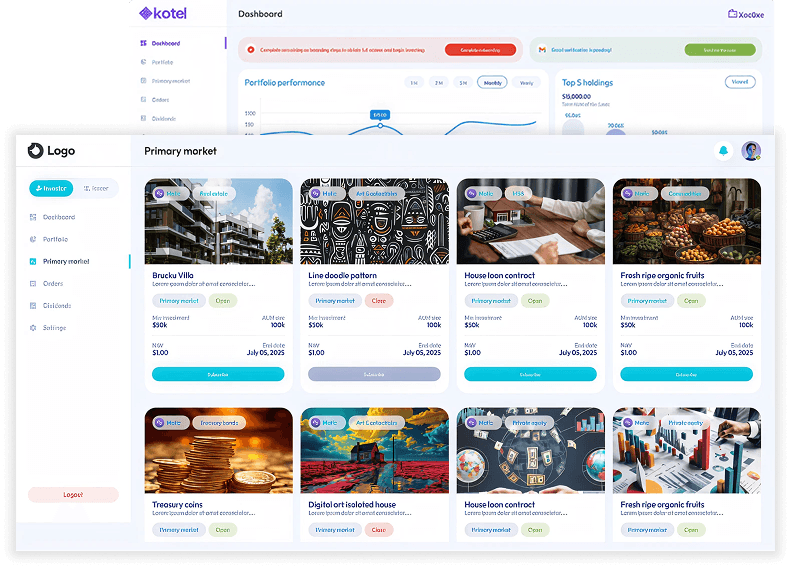
As a leading Real World Asset Tokenization Platform provider, we take into account every minute detail to provide exceptional solutions. Antier has worked on some of the most prestigious products. Whether it’s building top-notch real estate tokenization platforms or private equity tokenization platforms, we have the resources to provide you with world-class asset tokenization services.

Modules of our Asset Tokenization Ecosystem

The asset tokenization ecosystem comprises specific modules that are vital for ensuring success. Real-world asset tokenization system developed by Antier, the best asset tokenization services provider, is underpinned by the following to achieve world-class user experience

Open New Revenue Channels with Digital Asset Tokenization

Experience seamless token issuance, management and investor onboarding in one platform.

Business Benefits of Our Asset Tokenization Platform

As a World Asset Tokenization Platform Development Company, Antier provides an end-to-end ecosystem for enterprises to unlock the vast potential of tokenomics. Our white-label asset tokenization platform benefits asset owners with immutable records & transparent transactions, helping platform owners expand their horizons.

Our End-to-End Tokenized Asset Lifecycle

1. Deal Structuring
In the deal structuring stage, crucial decisions need to be made regarding the terms and conditions of the security token. Deal structuring is an integral part of any securities offering, irrespective of the technology employed. Compliance with legal requirements is essential, and technology can enhance operational processes for innovative financial solutions.
2. Digitization
The digitization stage is where information traditionally stored in paper or document form is uploaded to the blockchain and coded in smart contracts, and security tokens are issued. Digital Asset Tokenization unlocks liquidity by enabling fractional ownership and lowering the barriers to entry for investment in illiquid assets.
3. Primary Distribution
Primary distribution is the process where tokens are distributed to investors and early adopters in exchange for investment capital, and the investors' information is recorded on the digital ROM. Primary distribution can be done through various methods like Initial Coin Offerings (ICOs), Security Token Offerings (STOS) and direct sales.
4. Post Tokenization Management
Post-tokenization management involves corporate action management processes including dividend distribution and shareholder voting, many of which can be automated by smart contracts coded on the token. Post- tokenization management can be a complex and time- consuming process. However, it is essential for ensuring the success of any asset tokenization project.
5. Secondary Trading
The final stage, and where the value of tokenization in enhancing liquidity is realized, is secondary trading. Secondary trading is the buying and selling of tokens after they have been issued in the primary market. It can take place on a variety of platforms, including exchanges, OTC desks, and peer-to-peer networks.
1. Deal Structuring
2. Digitization
3. Primary Distribution
4. Post Tokenization Management
5. Secondary Trading
At this stage, asset terms, ownership rights, investor eligibility, and regulatory considerations are defined. The structure determines how the asset will be tokenized, governed, and distributed. Strong deal structuring ensures legal alignment, investor clarity, and a scalable foundation for the tokenized asset lifecycle.
During digitization, asset data and legal documentation are converted into blockchain-based representations. Smart contracts encode ownership rules, transfer conditions, and compliance logic. This step enables fractional ownership, immutability, and transparent on-chain records for traditionally illiquid assets.
Primary distribution involves issuing tokens to approved investors in exchange for capital. Allocation rules, pricing mechanisms, and investor records are managed digitally. This stage establishes initial ownership and ensures compliant onboarding through integrated KYC, AML, and eligibility checks.
After issuance, ongoing asset management is handled through automated workflows. Smart contracts support dividend distributions, governance actions, reporting, and compliance enforcement. This phase ensures operational efficiency while maintaining transparency across the asset’s lifecycle.
Secondary trading enables token holders to buy and sell assets after initial issuance. Transactions can occur on regulated exchanges, OTC platforms, or secure peer-to-peer networks. This stage enhances liquidity, price discovery, and sustained market participation for tokenized assets.
1. Asset Valuation
2. Tokenization
3. Token Offering
4. Secondary Market
5. Income Generation
In the deal structuring stage, crucial decisions need to be made regarding the terms and conditions of the security token. Deal structuring is an integral part of any securities offering, irrespective of the technology employed. Compliance with legal requirements is essential, and technology can enhance operational processes for innovative financial solutions.
The digitization stage is where information traditionally stored in paper or document form is uploaded to the blockchain and coded in smart contracts, and security tokens are issued. Digital Asset Tokenization unlocks liquidity by enabling fractional ownership and lowering the barriers to entry for investment in illiquid assets.
Primary distribution is the process where tokens are distributed to investors and early adopters in exchange for investment capital, and the investors' information is recorded on the digital ROM. Primary distribution can be done through various methods like Initial Coin Offerings (ICOs), Security Token Offerings (STOS) and direct sales.
Post-tokenization management involves corporate action management processes including dividend distribution and shareholder voting, many of which can be automated by smart contracts coded on the token. Post- tokenization management can be a complex and time- consuming process. However, it is essential for ensuring the success of any asset tokenization project.
The final stage, and where the value of tokenization in enhancing liquidity is realized, is secondary trading. Secondary trading is the buying and selling of tokens after they have been issued in the primary market. It can take place on a variety of platforms, including exchanges, OTC desks, and peer-to-peer networks.

What Token Standards Do We Use for Asset Tokenization Platform Development?

Token standards for asset tokenization platform development define the structure, behavior, & functionality of tokens, enabling seamless integration & interaction within the tokenized asset ecosystem. Some of the most popular standards include.
Group 1686552900 (3)

ERC-20

ERC-20 standard is the most common token standard on the Ethereum blockchain. It is a fungible token standard, which means that all tokens are identical and interchangeable. ERC-20 tokens can be used to represent a variety of assets, including securities, commodities and tokenization of real estate.
Group 1686552900

ERC-1404

ERC-1404 standard is an extension of ERC-20 that allows for the issuance of tokens with transfer restrictions. This makes it possible to create tokens that are only transferable to certain individuals or entities, which can be useful for complying with securities regulations.
Group 1686552900 (4)

ERC-721

ERC-721 is used for representing unique, indivisible assets. It allows for the creation of tokens that represent distinct items, such as digital art, collectibles, or real-world assets like real estate, providing each token with a unique identity and properties.
Group 1686552900 (1)

ERC-1155

ERC-1155 standard is a hybrid standard that allows for the creation of both fungible and non-fungible tokens. ERC-1155 tokens are often used to represent gaming items, virtual real estate and other assets that have both fungible and non-fungible characteristics.
Group 1686552900 (5)

ERC-3643

ERC-3643 is a comprehensive security token standard that is designed to be fully compliant with all applicable securities regulations. It has the ability to enforce transfer restrictions, create different types of tokens, like equity tokens, debt tokens and asset-backed tokens.
Group 1686552900 (2)

ERC-1462

ERC-1462 is a token standard for digital securities on the Ethereum blockchain. It was first published in 2018. It adds a number of features that are designed to make it easier for companies to issue and trade digital securities on the Ethereum blockchain

Our Clients

  • qubetics
  • Skoda
  • tata-steel
  • pidilite
  • weow
  • coin-trade
  • Shiv
  • crisil
  • 5ire

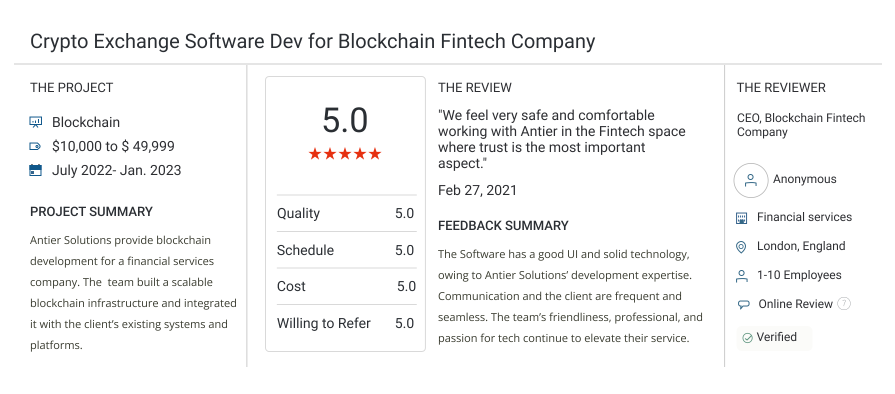
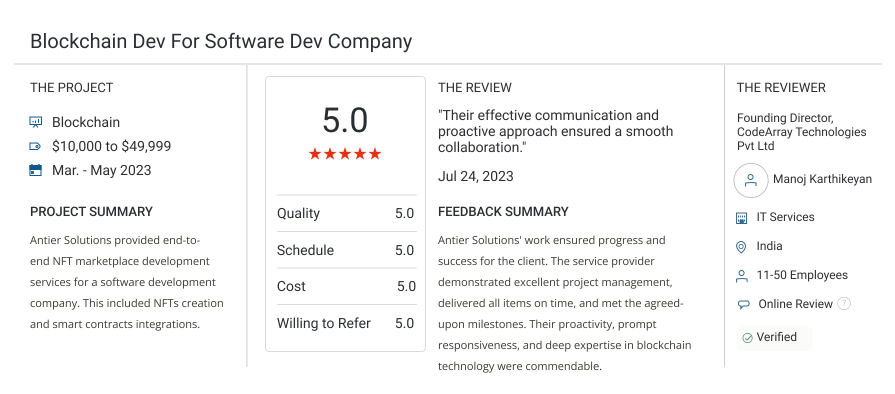
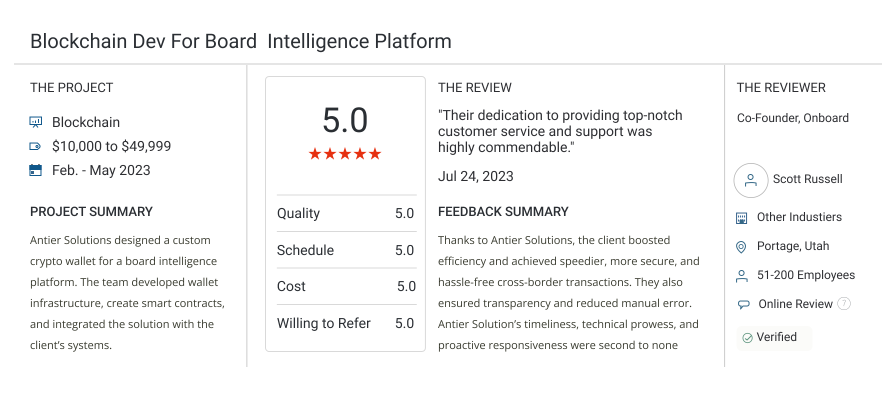
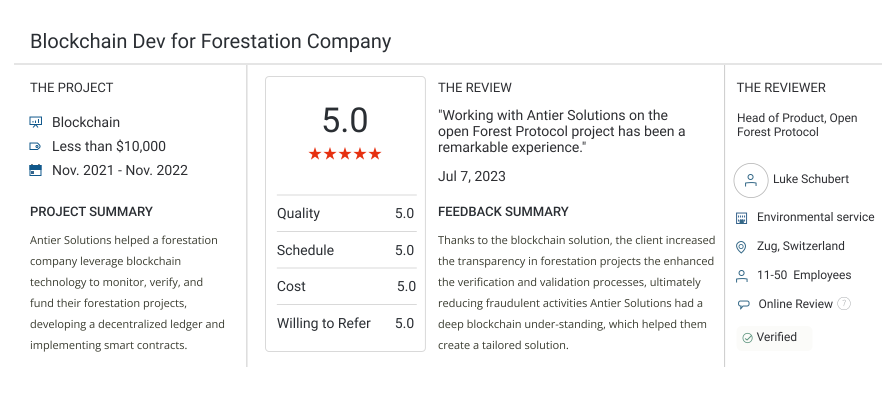
What Clients Say
Frequently Asked Questions

01.
What types of assets can be tokenized using Antier’s platform?
02.
How does Antier ensure regulatory compliance across jurisdictions?
03.
How is asset ownership tracked and managed on-chain?
04.
Can the platform be customized or white-labeled?
05.
What makes Antier different from generic tokenization platforms?