





Stablecoin Cross-Border Payments Platform Development Company
Antier develops FinCEN-compliant, white-label stablecoin remittance platforms for US-based financial institutions, MSBs, and enterprise fintechs. Our infrastructure enables T+0 cross-border settlements, API-first fiat on/off-ramping, and automated AML/KYC compliance using regulated USD-pegged assets like USDC, PYUSD, and USDP.
 Near to Instant
- QR Payments

- Cut Fees by 90%
- Pay in Over 30+ Currencies
“Traditional finance settles in T+2 or T+1 cycles (where T is the transaction date and the +1 or +2 indicates business days to settlement), creating delays, liquidity constraints, and risk. Today, we stand at the dawn of the T+0 era—real-time & cross-border settlement.”
The Growing Global Stablecoin Remittance Market
The stablecoin market has grown significantly, expanding from under $30 billion in 2020 to over $300 billion today. Projections suggest it could reach $2–4 trillion by 2030, driving strong interest among financial institutions exploring stablecoins for payments and settlement use cases.

Our Clients









Core Platform Capabilities for US Remittance Systems
Our stablecoin remittance platform development helps US businesses build advanced infrastructure for cross-border payments using stablecoins. It enables faster settlement, lower fees, and seamless integration with banking systems, wallets, and payment gateways. The platform ensures compliance, supports multi-currency transactions, and provides real-time visibility across global remittance flows.
01
02
03
04
05
Cut Remittance Costs by Up to 90% with Stablecoin Infrastructure
Launch a platform designed for faster settlement, lower fees, and global payment scalability.
Real-World Stablecoin Remittance Use Cases
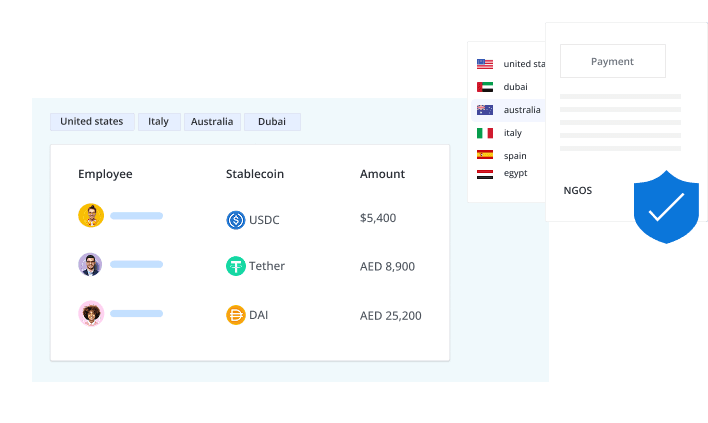
Discover how banks, e-commerce companies, travel agencies, and payment processors leverage stablecoin remittance platforms for faster, cheaper, and more transparent cross-border transactions.




Stablecoin vs Traditional Remittance
Traditional remittance systems rely on multiple intermediaries, resulting in slower settlement times, higher fees, and limited availability. In contrast, stablecoin remittance platforms supporting US cross-border payments use blockchain infrastructure to enable faster, more efficient, and cost-effective global transactions
| Feature | Traditional Remittance | Stablecoin Remittance |
|---|---|---|
| Settlement Time | 2–5 business days | Seconds to minutes |
| Transaction Fees | 5–12% | Less than 1% |
| Availability | Limited to banking hours | 24/7 global access |
| Intermediaries | Multiple banks and processors | No intermediaries |
| Transparency | Limited tracking visibility | Real-time on-chain tracking |
| Processing Speed | Delayed due to clearing systems | Instant blockchain settlement |
Stablecoin Remittance Payment Flow: From Sender to Recipient
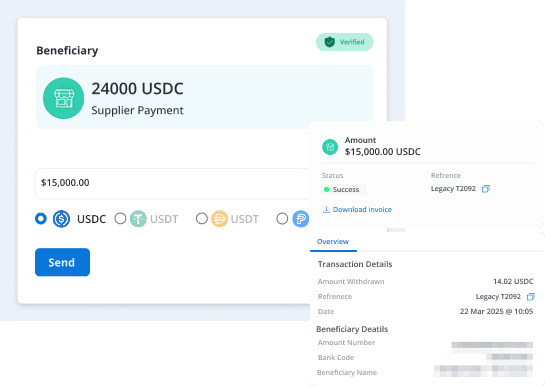
This section describes how a stablecoin remittance platform processes cross-border payments, from fiat on-ramp to final fund delivery. It provides a clear breakdown of the stablecoin-based remittance transaction flow.
01
02
03
04
05
06
07
Build This Payment Flow Into a Production-Ready Platform
We help you implement blockchain settlement, APIs, and compliance systems end-to-end.
What We Integrate into Your Stablecoin Remittance Platform
We integrate enterprise-grade components to help you launch a secure, scalable, and compliant stablecoin remittance platform in the USA. Our approach focuses on building a complete payment infrastructure with modular integrations and production-ready capabilities.

Plug-and-Play API Integration
Enable seamless connectivity with banking systems, wallets, and third-party services using robust APIs. This ensures efficient payment processing and smooth system interoperability across platforms.

AI-Powered Transaction Optimization
Leverage AI-driven systems to optimize routing, reduce transaction costs, and improve processing speed. This ensures efficient execution across stablecoin-based cross-border payment flows.

Multi-Chain Network Integration
Support multiple blockchain networks such as Ethereum, Solana, and Tron for flexible transaction handling. This ensures reliable and scalable stablecoin transfers across different network environments.

Stablecoin Wallet Infrastructure
Integrate secure wallet systems for storing, sending, and receiving digital assets. This ensures complete control over user balances and transaction management within the platform.

Liquidity & Payment Routing Layer
Enable efficient currency conversion and routing through integrated liquidity pools. This ensures smooth transaction execution across global remittance corridors without delays or inefficiencies.

Compliance & Risk Management Systems
Implement KYC/KYB verification, AML screening, and fraud detection aligned with US regulations. This ensures regulatory compliance while minimizing operational and financial risks.

Fiat On/Off-Ramp Integration
Connect with banking networks and payment gateways to enable fiat-to-crypto conversions. This ensures seamless movement between traditional financial systems and blockchain infrastructure.

Real-Time Transaction Monitoring
Track transactions in real time with full on-chain visibility and auditability. This ensures transparency and operational control across all payment activities.

Compliance & Risk Management Systems
Implement KYC/KYB verification, AML screening, and fraud detection aligned with US regulations. This ensures regulatory compliance while minimizing operational and financial risks.
Technology Layers of a Stablecoin Payment System
The technology layers of a stablecoin payment system include blockchain networks, APIs, custody infrastructure, and compliance components that work together to enable secure and scalable cross-border payments.

How We Develop a Stablecoin Payment System for the USA
We follow a structured approach to build a stablecoin payment system aligned with US regulations, payment standards, and global scalability requirements.



Case Study: US–Latin America Remittance Platform
Key Highlights:
- 38-sec settlement time
- 75% fee reduction (5–7% → 1.2%)
- $410K+ volume in pilot phase
- 1,800+ users onboarded

What We Built?
A compliant stablecoin remittance platform with US licensing, fiat on/off-ramps, and blockchain-based settlement for faster cross-border payments.
Explore the complete roadmap, compliance strategy, & architecture behind this platform.
Why Choose Antier?
Antier specializes in stablecoin remittance platform development, helping businesses in the USA build compliant and scalable cross-border payment systems using blockchain technology. The focus is on fast settlement, lower costs, and reliable payment infrastructure.